From overseeing drilling operations to supervising them for the client: field realities from Uganda

By Ayebale Ared (Welthungerhilfe)

With this blog, I would like to share a few short reflections from my experiences overseeing and supervising drilling activities over the past ten years, both from the contractor’s and the INGO/client’s perspectives.

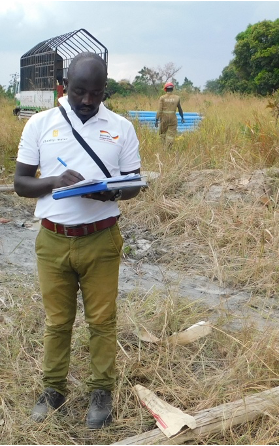
Figure 1: Ayebale Ared on the field (Welthungerhilfe)

From the drilling contractor’s side – overseeing drilling operations

I was fortunate to work with a drilling firm that prioritized quality, accountability, and training. The work culture encouraged flexibility, allowing us to try out different drilling methodologies. One of the most valuable aspects was the emphasis on real-time logging and decision-making based on live site observations. As the overseer of the drilling operations, I had to be physically present in the field, equipped with a laptop, drilling logs, a handheld GPS, a tape measure, a V-notch Weir, a dip meter, an E.C & a pH meter, and a camera, to support real time supervision and technical decisions as drilling progressed.

There was no remote oversight; everything was site-based and collaborative. Communication within the team was strong both for daily updates and for collectively addressing any issues that had financial or technical implications.

Figure 2 (above) Sample box containing drill cuttings (Source: Ayebale Ared)

However, there were limitations.

At the time, our machinery could not compete for larger contracts, particularly those requiring the drilling of production boreholes with casing diameters larger than 5″ internal diameter (ID). While we successfully drilled several open-hole design boreholes, which are suitable for handpumps these cannot be upgraded to accommodate technologies such as solar-powered water systems (SPWS) due to initial design constraints.

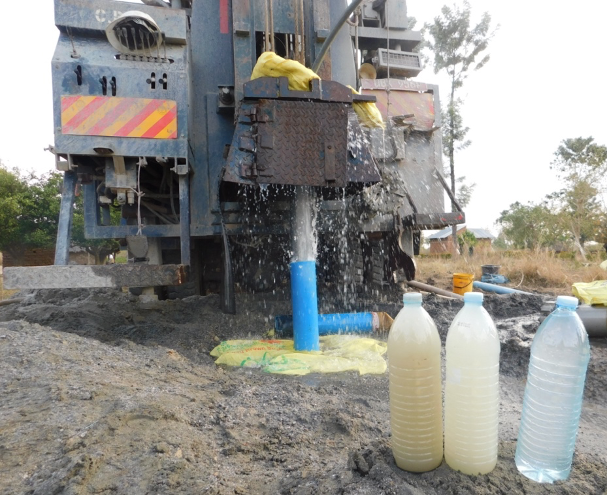
Figure 3 (above) Water Sampling during borehole development showing decreasing turbidity (Source: Ayebale Ared)

From the Client’s Side (INGO) – supervising drilling

Switching to the client’s side offered me the opportunity to work with a range of drilling firms year after year. By then, I had completed the Rural Water Supply Network (RWSN) Professional Drilling and Borehole Management course (2019), and I was actively applying the knowledge in the field. I have worked with drillers with different equipment, resulting in more efficient drilling, constructing cased, rather than open holes. I also have had the chance to mentor and train new supervisors in professional supervision practices, proper borehole logging, and how to make sound real-time decisions at the site.

However, not all experiences have been positive

Remote, or part time supervision is common with a bigger percentage of the drilling firms I have worked with, often resulting in decisions made by drillers to minimize cost rather than address real-time field conditions which are not supervised in the field by the client. Some drilling firms opt for untrained, inexpensive overseers, which undermines the quality of work. As an example, many have no idea what real time logging is but just write a number of pipes and send short video clips to their bosses in office who make remote decisions. This usually becomes a challenge with the client’s supervisor ends up being painted bad as “a bad guy”. Without a qualified client supervisor on-site, the narrative of events can shift dramatically. I’ve observed poor siting practices, with boreholes positioned near anthills or trees leading to complex drilling challenges and post-installation issues such as silting, root intrusion, and compromised water quality. This has been subsequently verified through borehole video inspections and microbial tests. Additionally, poor gravel packing techniques have led to bridging, and inadequate borehole development has left screens poorly cleaned and functioning below standard.

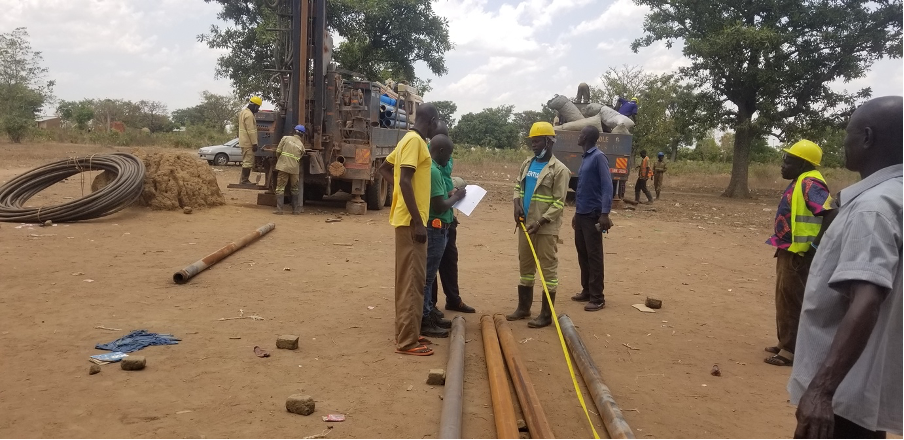
Figure 4 (above) Measuring drill pipe lengths (Source: Ayebale Ared)

These reflections underline the critical importance of professional supervision, well-trained personnel, good oversight by the drilling contractor, and appropriate on-site decision-making throughout the drilling process.

I hope these insights are helpful as we continue to improve and uphold quality in our water supply interventions.

Ayebale Ared has over 10 years of experience in the water sector, specializing in WASH programs, borehole drilling, and rehabilitation in Uganda. He has worked on both the contractor and client sides, gaining a well-rounded perspective on best and worst drilling supervision experiences and practices

Pastoralists and Water 1 – my first blog on the topic

Dr Kerstin Danert, Ask for Water Ltd, Edinburgh, Scotland

It was in 1998 when I started to work and then live in Uganda that I first really started to hear the term “Pastoralist”. That was in relation to the Karamojong (also spelt or Karimojong) – a group of people living in the semi-arid environments of north-eastern Uganda. At the time, although my knowledge of pastoralism was extremely poor, I was not fully comfortable with some of the derogatory language used about these people. However, it was hard to counteract the stereotyping and stigma that I was hearing. My efforts in relation to rural water supply had started, and continued to be with communities that were fairly, or very well settled; and if they moved in large numbers, this was primarily to flee widespread conflict and danger or settle back home again.

In my decade as a resident of the ‘Pearl of Africa’, it was largely considered too dangerous to travel through the districts of (now) Kaabong, Kotido, Moroto, Nakapiripiri, Napak and Amudet where the Karamojong and neighbouring agro-pastoral groups including the Pokot, Jie and Labwor lived. Cattle raiding (with use of firearms) and conflicts were frequent and could be deadly. On the other hand, I heard stories of Italian priests who lived among the Karamojong, plus stories of a few others. And occasionally my friends and colleagues would relate tales of some adventurous travel, or of tourists that flew up to Kidepo National Park. I never met a single Karamojong back then. 

When I started to work in Kaproron, on the lush northern slopes of the extinct volcano of Mount Elgon, and staying in the residence of the local priest, I was able to look over the cliff edge onto the plains where the Karamojong lived. It was here in Kaproron that I heard stories from my colleagues and their families of their land that had been abandoned when the conflict was particularly bad. I learned a bit more about cattle raiding, but all in all, the Karamojong remained a mystery for me. 

Photo (above): A view northwards from Kaproron
(Source: Kerstin Danert, 2005)

In the subsequent years, other pastoral groups have fleeted in and out of my circle of attention, including the Maasai with their beautiful blankets, the Fulani with their marvellous hats and the Tuareg wearing exquisite blue. While curiosity was certainly there, my knowledge remained superficial.

It was in 2014, when working in Chad, that my path physically intersected with pastoralists. I was simply in awe as I watched what I later learned was a transhumant family travelling southwards. Asking questions, I was struck by similar, and familiar derogatory language as it was explained that for their entire lives these people travel south and then north again with the movement of the rains. I do not wish to repeat in detail some of the things that I heard. Once again though, I had no interaction with these transhumant people themselves, and was simply left with an uncomfortable feeling – one that I now recognise as my own inner reaction when I am faced with hearing stigma towards others and am at a loss for a response.

Photo (above): Transhumance in Chad
(Soure: Kerstin Danert, 2014)

The discomfort I felt in Uganda, Chad and other places when listening to people talk about pastoralists never really left me. Thus, in 2020, while supporting UNICEF in preparing their Guidance Note on Leaving No One Behind in WASH, I decided to find out more about this group of people and include them in the publication. This turned out to be the start of a journey – a journey that continues. By this time, I had finally knowingly interacted with one single person from Karamoja: a woman police officer working in Kampala. She described the beauty of her home, how she travels back frequently, and how she loves to look at the stars when there. She told me that the conflicts have also eased over the years. I understand that following disarmament in 2001-2008 there was a period of stability, which was disrupted following rearmament in 2019 that degenerated into commercial raiding and involved the army, politicians and business people. You can read more here. Conflict continues with another round of disarmament underway.

In 2022 the United Nations General Assembly proclaimed that 2026 will be the International Year of Rangelands and Pastoralists (IYRP). You can learn more here in this lovely short animated film. I have to say that the openness of the international communities that concern themselves with the IYRP, and their eagerness to share has been a warm welcome for me into this new world.  When I first contacted one of those communities – FAO’s online community on pastoralism – and asked the very naïve question on how to define pastoralism, I was blown away by the many helpful responses from the community. Thank goodness, for I was lost as I tried to understand more in preparing the aforementioned guidance note

And so, in support of IYRP 2026 and particularly with a view to the linkages with water, this is my first in a series of blogs on pastoralists and water. You are most welcome to join me as I share my own journey of discovery.

Dr Kerstin Danert is a Water Specialist, Researcher and Facilitator and together with Adrian Cullis, co-facilitates the IYRP Pastoralists and Water Working Group.

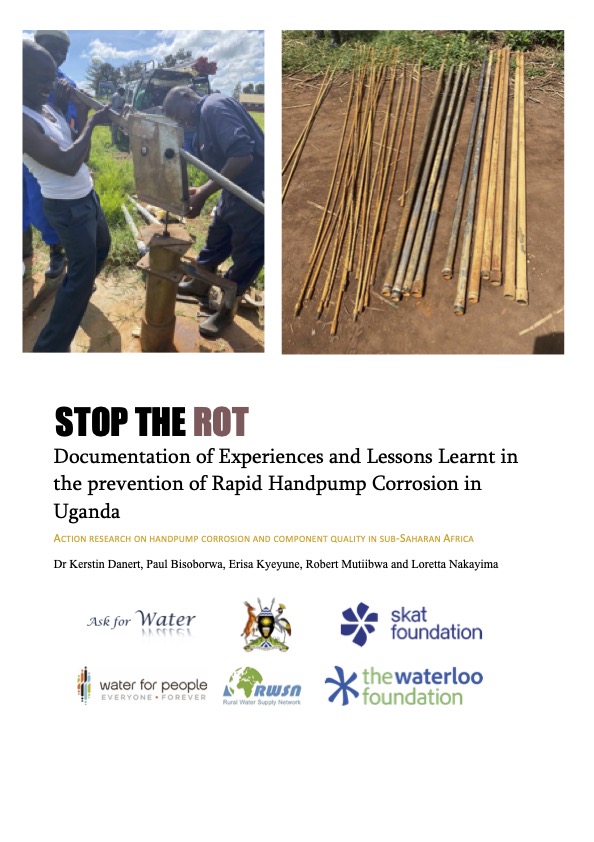
Stop the Rot: Uganda

Documentation of Experiences and Lessons Learnt in the prevention of Rapid Handpump Corrosion in Uganda

Report by Kerstin Danert, Paul Bisoborwa, Erisa Kyeyune, Robert Mutiibwa and Loretta Nakayima

The full report is available here.

About 67% of the population of rural Uganda rely on a handpump, and, according to the Ministry of Water and Environment (MWE) database, the country currently has an asset base of over 63,000 handpumps. While there is a policy shift towards piped supplies (including using solar-driven pumps), handpumps will remain important in providing water to Uganda’s rural population for the foreseeable future. The U2 and U3 (known elsewhere as the India Mark II and Mark III), as well as the Uganda 3 Modified Pump (U3M) are the standardised pumps used in the country.

The rapid corrosion of submerged handpump riser pipes and rods has been well documented in Uganda, with over a dozen reports, and studies, including academic publications on the subject. When handpumps corrode, the red, badly-tasting water of the supply is often rejected and sources abandoned, with users returning to more distant and contaminated supplies. Rapid corrosion also leads to premature failure of the supply as riser pipes leak or even break completely. It is widely accepted that galvanised iron (GI) riser pipes and rods corrode in aggressive groundwater where pH levels are low (<6.5). High levels of salinity and high chloride concentrations are also highly corrosive.

In recognition of the widespread corrosion problem in Uganda, in 2016 MWE issued a letter suspending the use of galvanised iron riser pipes. Despite the fact that rapid corrosion is a problem in at least 20 countries in sub-Saharan Africa (plus Sudan), Uganda is one of the very few countries to have taken affirmative action to address the issue.

This short study, funded by The Waterloo Foundation, set out to document Uganda’s experience and lessons learnt in preventing rapid corrosion. It is intended to provide insights and recommendations for Uganda and other countries. The in-country study was undertaken in October/November 2023, and comprised interviews with 55 stakeholders from government, suppliers, NGOs, drillers and handpump mechanics as well as a review of select documentation and analysis of quantitative data collected in 16 districts by the NGO Water for People. As well as discussing with stakeholders based in Kampala, the study involved visits to Mityana, Kibaale, Kyegegwa, Mubende, Kamwenge and Masindi Districts, including some observations of components and handpump removal.

The study has found qualitative evidence that the suspension of use of GI pipes on handpump installations in Uganda has had an overall positive effect on reducing the phenomenon of handpump corrosion in the country. It took a few years for stakeholders to adjust to the suspension, including availing alternative materials and determining which grades of stainless steel to be used. In the early years, there were issues of availability and supply of alternatives, gaps in information among some stakeholders alongside cost concerns. Initially, some organisations installed grade 202 stainless steel, which was also found to corrode rapidly. In addition to stainless steel pipes, uPVC (with uPVC connectors) and uPVC pipes with stainless steel connectors are used.

While most stakeholders seem to be aware of the suspension of GI riser pipes and rods, this does not seem to be fully adhered to, with some district local governments, NGOs and communities apparently still installing GI on new installations or for replacements. The study witnessed “mixed” installations comprising GI, and stainless steel (which also sometimes appeared to comprise different grades). Such installations risk creating problems through galvanic corrosion, a phenomenon whereby dissimilar metals submerged in water increase corrosion.

The study concludes with a number of recommendations as summarised below:

Studies and research

  • Explore reasons why some stakeholders are not adhering to the suspension of GI riser pipes and pump rods and how to effectively overcome these barriers.
  • Undertake analysis of quantitative data including MWE Management Information System (MIS) data on shallow wells and boreholes (including their functionality status/due for decommissioning). Quantify the extent to which handpumps with corroding GI components have been replaced in the country, and also estimate the cost and human capacity implications of replacing poorly functioning or abandoned sources as a result of corrosion. 
  • Monitor installations to determine if there are any problems with corrosion of the water tank and cylinder when connected to a stainless steel pipe as a result of galvanic corrosion or poor installation, and consider checking for the release of contaminants, including lead.
  • Clarify maximum installation depths for alternative materials through testing, and communicate this clearly to all stakeholders through written guidance (discussed below).
  • Developa short document (and film) on what users can measure and inspect directly. This could support stakeholders in assuring quality.
  • Undertake further research on the relationships between pH, salinity, other water quality parameters and the quality of the galvanising (particularly the thickness of the galvanising).
  • Explore alternatives to the nationwide suspension of GI, such as lifting the suspension locally based on very clear, scientifically robust criteria in relation to pH and salinity.
  • The appropriateness of the discontinuation of funding for shallow wells should be further studied and reviewed for appropriateness.

Recommended actions for Uganda

  • Support quality assurance efforts by updating the Uganda Standard Specifications for the India Mark deepwell and shallow well handpumps, referred to in Uganda as the U2 and U3 pumps.
  • Develop a certification mechanism for the suppliers of handpumps/components to ensure quality and include labelling requirements to help consumers identify appropriate parts.
  • Raise awareness and improve knowledge of (i) the GI suspension, and the rationale behind it, (ii) how to determine whether iron in water is naturally occurring or caused by corrosion, (iii) appropriate alternatives (iv) key issues with respect to grades of stainless steel and depth limitations and (v) identifying appropriate parts. Written guidance should be provided.
  • Provide training for handpump mechanics and handpump installers across the country on the correct handling of the uPVC and stainless-steel alternatives currently available on the market in Uganda, and ensure that they have the appropriate toolkits to handle these materials.
  • Incorporate inspection of handpump component quality and installation in post-construction monitoring by government, NGOs, the Uganda Drilling Contractors Association (UDCA) and funding agencies.
  • Continue to engage with and support innovations such as the Handpump Improvement Project.
  • MWE, in collaboration with NGOs and District Local Governments should find ways of supporting poor and vulnerable communities with ongoing corrosion problems to replace GI pipes and rods.

Lessons for other countries

Based on the experiences of Uganda, key lessons for other countries that are considering taking affirmative action to address rapid handpump corrosion are:

  • Undertake an in-country study to document the extent of the problem and any efforts that may have been undertaken to address it in the past. If rapid handpump corrosion is found to be a widespread problem in the country, and is related to GI installed in aggressive groundwater, consider suspending the use of GI – carefully considering the pros and cons of a nationwide or more localised suspension as well as the feasibility of using alternative parts.
  • Prior to any suspension, undertake extensive and transparent stakeholder consultation, taking on board concerns and developing a suitable timeline. Provide user-friendly guidance on alternative materials and their handling. In advance of any suspension, ensure that all stakeholders are informed of it, and are made aware of any implications for programmes and budgets.
  • Government should either refer to suitable international standard specifications, update national standard specifications or (as an interim measure) provide clear guidance regarding alternative materials, components and dimensioning that should be used. Evaluation is needed to ensure that materials are safe for contact with drinking water. Guidance should include information on depth limitations and material handling.
  • Document the process of suspension, and monitor adherence, as well as challenges faced by organisations and communities, and consider how to adapt programmes and policies to enable changes to be effective.
  • Ensure that handpump mechanics and others across the country are trained in the correct handling of the alternatives to GI. They should also be provided with appropriate toolkits for handling the stainless-steel and uPVC pipe materials.
  • The responsible line ministry should work with the agency responsible for standards to ensure the importation of quality handpump components and consider certification of suppliers.

The full report is available here.

Rural Water Point Functionality: Evidence From Nine Countries in Sub-Saharan Africa and South Asia

by Dr Anna Murray, Deputy Director of Research, The Aquaya Institute

The sustainability of drinking water supply infrastructure remains a challenge in rural areas of low-and middle-income countries. Through this research to identify factors contributing to functionality, we analyzed monitoring data from ten non-governmental organization drinking water supply programs across nine sub-Saharan African and South Asian countries. Data were from 1,805 randomly selected water points, including tap stands, spring protections, rainwater collection systems, and hand pumps.

We found an impressive 92% of sampled water points constructed within the prior year were functional, versus only 79% of those constructed earlier (average 3.5 years, range: 1–12 years old).

Tap stands from piped water systems exhibited 74% lower odds of functioning than boreholes with hand pumps within the older construction sample. This disparity underscores the necessity of considering the suitability and reliability of various water supply systems in rural contexts.

As global efforts to expand piped water services align with international development goals, our results advocate for a nuanced approach. Higher water service levels offer undeniable benefits, but the accompanying technological, institutional, and financial requirements must be carefully weighed. Particularly in rural settings, where challenges of limited resources and infrastructure maintenance persist, comprehensive strategies are essential to mitigate risks and maximize the effectiveness of water supply interventions.


Read the full Open Access paper here:

Murray, A. L., Stone, G., Yang, A. R., Lawrence, N. F., Matthews, H., & Kayser, G. L. (2024). Rural water point functionality estimates and associations: Evidence from nine countries in sub-Saharan Africa and South Asia. Water Resources Research, 60, e2023WR034679. https://doi.org/10.1029/2023WR034679

The dataset is available here.

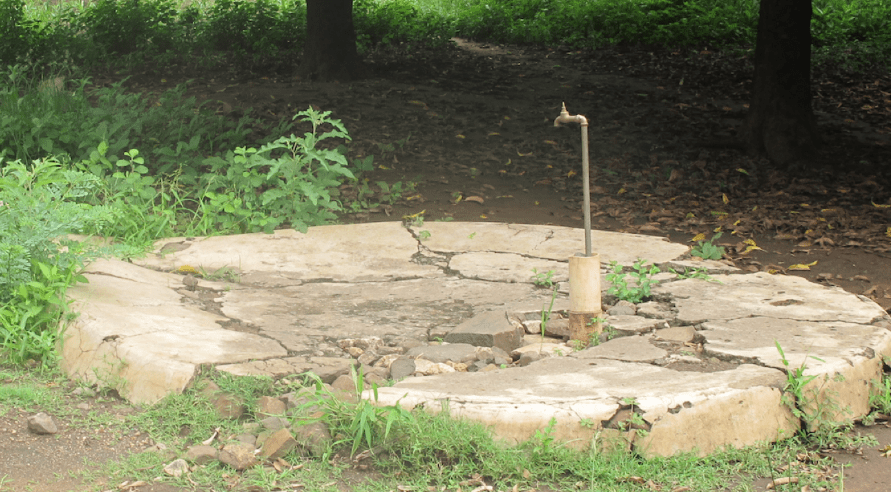
Photo: An abandoned tap stand. Credit: A. Murray

Measuring water point functionality is trickier than you’d think. Here’s how we tried to make it more reliable in Uganda.

If you measure something, how do you know that someone else would get the same result? This is a fundamental question in many fields including medicine and psychology, but it is rarely considered in rural water supply.

This is a guest blog by Daniel W. Smith, a Water & Sanitation Advisor at the Center for Water Security, Sanitation, and Hygiene at USAID in Washington, DC.

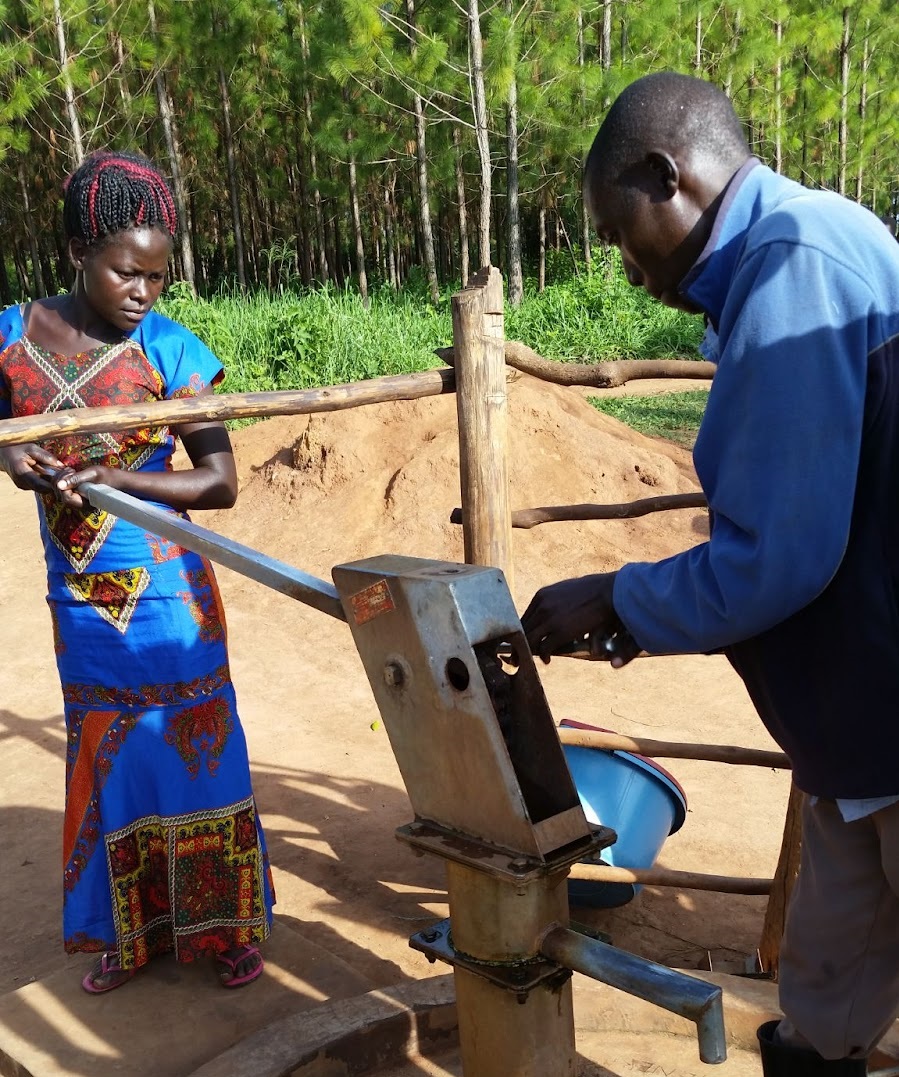
Photo: A handpump mechanic performs preventive maintenance in Uganda
(Photo: Daniel W. Smith)

If you measure something, how do you know that someone else would get the same result? This is a fundamental question in many fields including medicine and psychology, but it is rarely considered in rural water supply.

This problem became painfully apparent during a recent study of professionalizing handpump maintenance in Uganda conducted by the Program for Water, Health, and Development at the Stanford Woods Institute for the Environment and International Lifeline Fund. Our data collection team had a seemingly straightforward instruction: Count a handpump as functional if it provides water. But different data collectors interpreted the instruction differently. Some would count a handpump as functional even if it took a long time to get a little water. Others counted handpumps in a similar condition as nonfunctional. We needed a clearer, more reliable procedure to ensure that handpump functionality measured by different people would be comparable.

Continue reading “Measuring water point functionality is trickier than you’d think. Here’s how we tried to make it more reliable in Uganda.”

Ugandan drillers receive training at the Water Resources Institute

Being back in Uganda again after an absence of five years gives me immense joy. This country of warmth, friendliness and humour, where one can literally have an engaging conversation with anyone, whether askari (guard), taxi driver, fruit and vegetable seller, driller or civil servant. Thus, my few days here have been filled with shared laughter and kaboozi (Luganda for conversation or gossip, but the word conveys so much more).

My visit to Kampala has coincided with the first day of a three-day training entitled “Practical Skills in Drilling” by Uganda’s Water Resources Institute. The training is for 25 drillers and assistant drillers, and comprises a classroom day, followed by two days in the field. As we sit waiting for the training to commence, I ask the participants (all men so far) why there are no women drillers. We talk about the man’s world of drilling (stamina needed), and the women’s world of fetching water (stamina needed). The discussion is engaging and together we reflect on the role of women and men in society and the home. For my side I feel proud to be one of the few women involved in drilling and talk about the two manual companies that I have heard about in Zambia which are run by women. On the spot, I really wish that there were many more of us….

The training commences. The course is a collaboration between the Ministry of Water and Environment (MWE) Water Resources Institute (WRI) and the Uganda Drilling Contractors Association (UDCA). The Chair of the Association, Dr Flavio Pasqualato from Draco (U) Ltd., gives a his opening words of encouragement, followed by the Managing Director, Anthony Luutu of Aquatech Ltd. I am invited to say a few words, and express my delight at seeing training of drillers that I wish was happening on a regular basis in ALL countries on the African continent and beyond.

Training 1

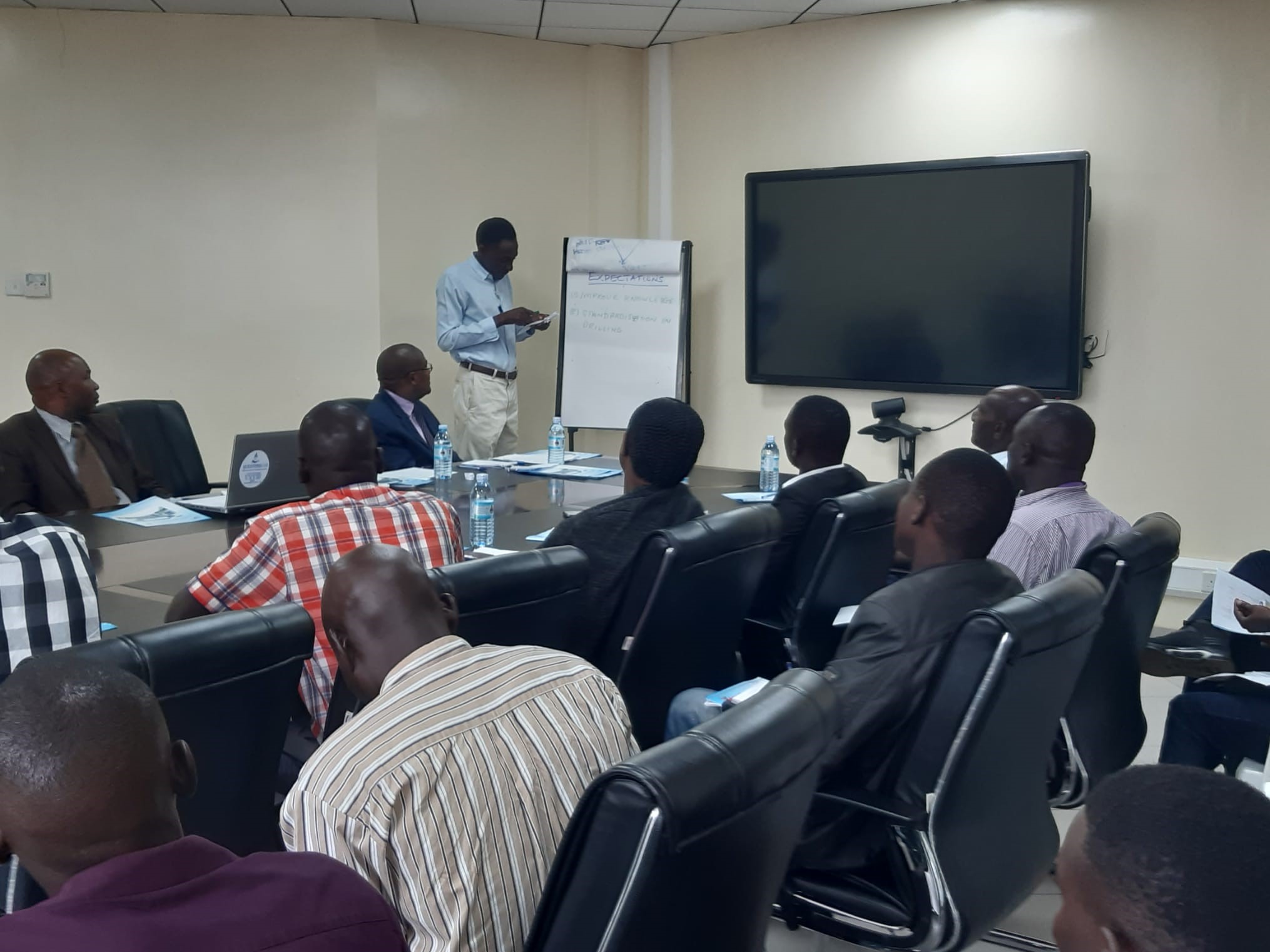
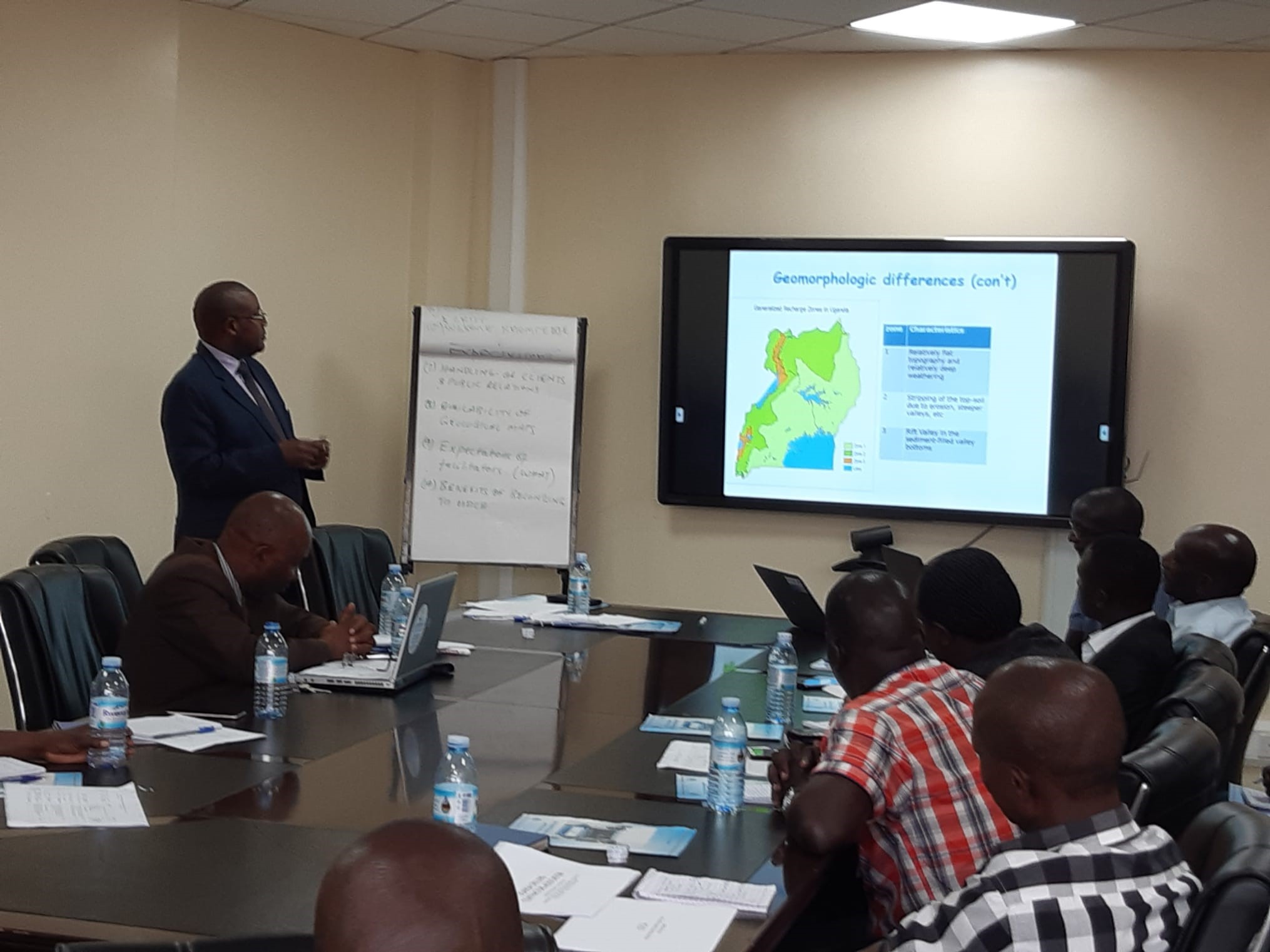
Gracious Sembali systematically collects the expectations of the participants

Dr Callist Tindimugaya (MWE) officially opens the training, pointing out that when people are learning informally from each other, that the message will change over time. I think of the game of Chinese whispers and vow to include it as an icebreaker at the start of my next drilling training course make his point. Callist also adds that “Nobody has all the knowledge; you can learn from each other”, something that is key in adult education.

Training 2

Dr Callist Tindimugaya explains the hydrogeology of Uganda to participants

Trying to raise drilling professionalism is a significant undertaking, and I am struck by the pragmatic messages that Callist conveys to all of us. “If you and your colleagues are doing a good job, you will raise the respect for drillers in Uganda…..we want drillers to be seen as serious and doing good quality work”.

It is clear that the training that the institute has been undertaking has had an effect on training methods. Gracious Sembali from Hippo Technical Services systematically collects the expectations of the participants, and writes them up on a flip chart, carefully grouping them:

  1. Improve knowledge and skills (e.g. when to stop drilling, mud drilling techniques, formation collapse, drilling in sediments)
  2. Standardisation in drilling
  3. Knowledge of different formations
  4. Certification as a driller by UCDA
  5. Knowledge-sharing including experiences
  6. Hydrological aspects and siting
  7. Handling of clients and public relations
  8. Availability of geological maps
  9. Expectations of facilitators
  10. Benefits of UCDA membership and recognition

As I listen, I am struck by the number of issues that are beyond the training course itself, something I have also observed in the course I have run, or managed. The specific skills sought and wider concerns are intertwined.

Alas, I am only able to attend the first presentation, an overview of Uganda’s geology and hydrogeology. I learn a lot, and observe the participants taking notes, and later asking questions. There is so much to be learnt, and the eagerness of these drillers and assistant drillers is apparent. I am delighted at what I see, encouraged, and then start thinking about the number of drillers on the African continent, and that this is needed for all. I try not to get disheartened. There are national training institutes undertaking short courses like these, or longer courses in Nigeria and Ethiopia. In some countries, people are more than aware of the need, and the demand, but are looking left and right for funding, without success. I am glad to have run similar courses, but am so aware that to date these have been ad hoc.

So my closing words? A huge thank you to the Ministry of Water and Environment’s Water Resources Institute and the Uganda Drilling Contractors Association (UCDA) for what you are doing. It is inspirational.

Now, how can training in drilling professionalism be institutionalised elsewhere?

Photo credits: Dr Kerstin Danert.

How a radio talk show is promoting WaSH in Northern Uganda

This is a guest blog by Justine Olweny, a Ugandan WASH entrepreneur and resource centre founder. You can find out more about his activities here.

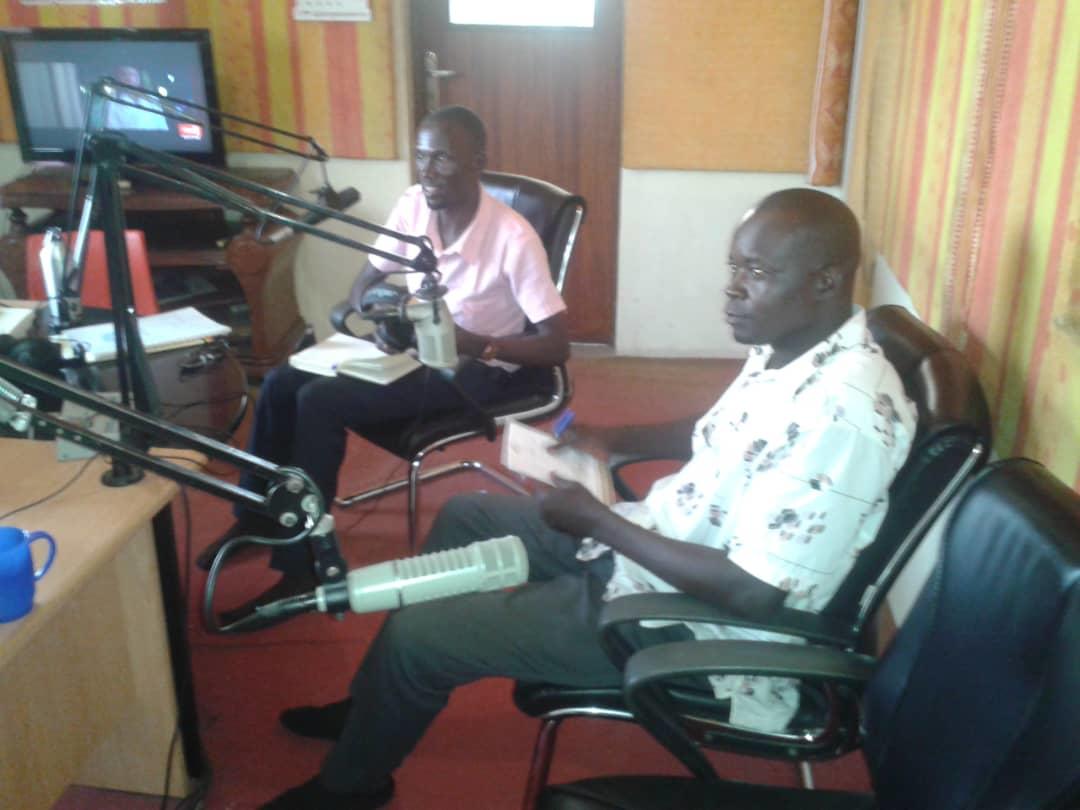
“YOT KOM LONYO” (meaning “Health is wealth”) is a WaSH campaign radio program talk show conducted every Thursday from 16:00–17:00 hours East African Time. It encourages the involvement of local entrepreneurs, school leaders, pupils, politician, district technocrats, and partner representatives on water, sanitation and hygiene (WaSH) promotion discussions. It has promoted the utilisation and ownership of WaSH products among the communities of Kitgum District.

The weekly talk show was started in September, 2018 and has so far covered 7 WaSH topics within 22 episodes.This involves the engagement of eight stakeholders within the region being represented in at least two sessions. This talk show was motivated by the need for community ownership in safe WaSH infrastructures created by difference agencies, including the government.

Mightyfire 91.5FM has a total coverage of about 1,500,000 listeners in Northern Uganda. It has made significant progress in reaching out to the majority of refugees from South Sudan in the local language Acholi, which is spoken by them. The intention was to prepare for the rainy season, which often leads to an increase in the prevalence of waterborne diseases, including cholera, through the production of short radio spots to promote hand-washing with soap before eating and boiling drinking water to avoid illness.

This 6-month partnership between Mightyfire 91.5FM and Water Access Consulting is a pilot project to explore the possibilities of promoting hygiene and sanitation products and services led by the communities of Kitgum District. It was inspired by the webinar From Beneficiaries to Business: Promising findings from customer-centered approaches to sustainable water services.

Achievements:

  • Improved pit toilets (DuraSan and the SaTo pan supported by the “Sanitation as a business” programme of Water for people Uganda) are being constructed by landlords, while demand for improved pit toilets has increased together with the services provided by the pit-emptying gulpers team of the Municipality.
  • The radio programme materials were developed in accordance with the context, with compelling radio programmes that engage listeners in good hygiene practices, and with references to Lifewater mWaSH and UNHCR WaSH manuals.

Learnings:

  • The materials and topics discussed are generated by the audience themselves, for example during a school Q&A session, and during interviews
  • The audience pay a lot of attention to jingles, and they memorise short spot messages instead of the entire radio talk show
  • It is very motivating for both parents, elders and pupils to listen to their recorded debate play over the radio.

What do you think? How can we create more WaSH service demand using media? Do you have any examples of good WaSH campaigns in the media, that have contributed to behavior change in WaSH? Please share your experiences below.

(Photo credit: Water Access Consulting Archive)

Regulating the private sector

This is the fourth and final post in a series of four blogs entitled “Professional Borehole Drilling: Learning from Uganda” written by Elisabeth Liddle, and a RWSN webinar in 2019 about professional borehole drilling. It draws on research in Uganda by Liddle and Fenner (2018). We welcome your thoughts in reply to this blog below.

Great gains have been made in recent years regarding access to improved water sources in rural sub-Saharan Africa. Concerns have been raised, however, over the extent to which these sources are able to provide a reliable and safe water supply in the medium to long term (for example, Foster et al., 2018; Kebede et al., 2017; Owor et al., 2017; Adank et al., 2014).

There has been considerable focus on post-construction operations and maintenance, but increasing attention is on the quality of the implementation to prevent water point failure in the future (UNICEF/Skat, 2016, Bonsor et al., 2015; Anscombe, 2011; Sloots, 2010).

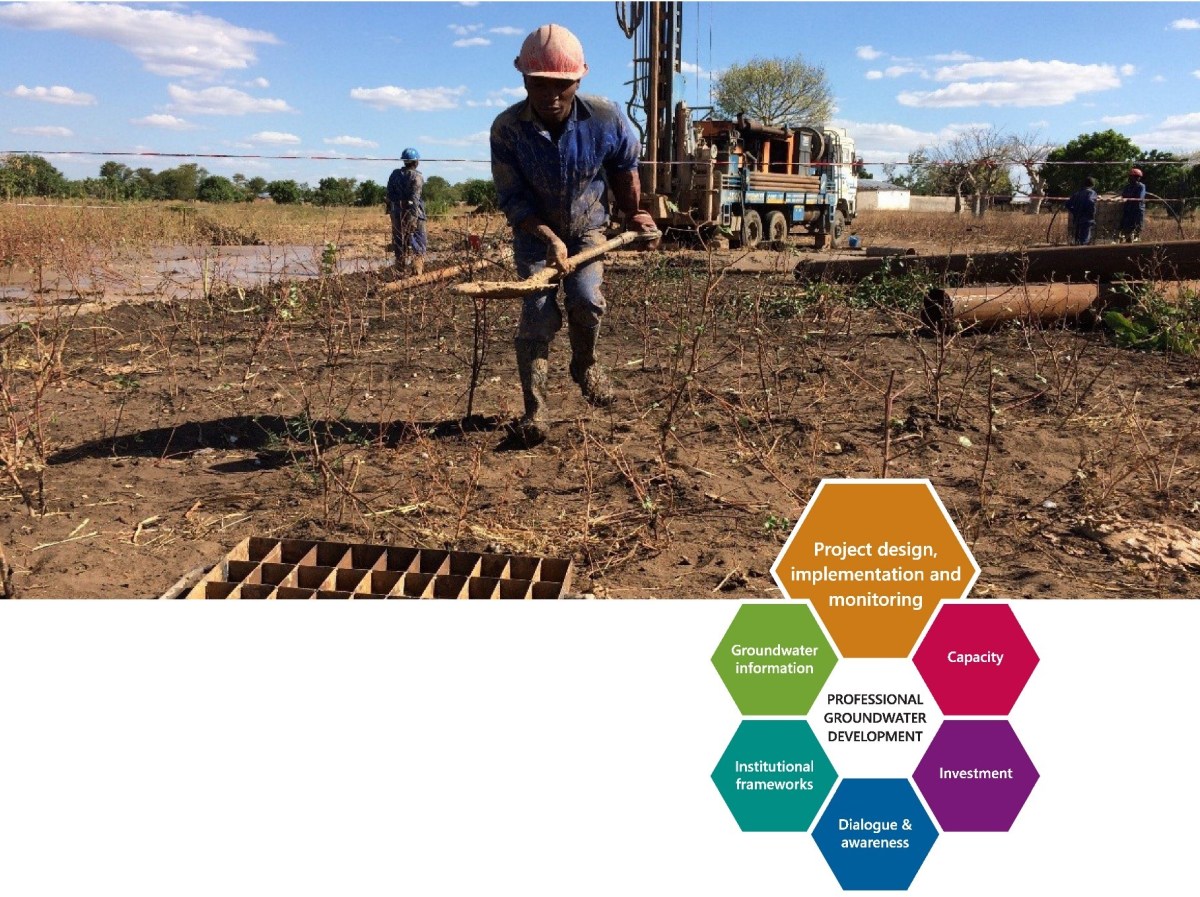
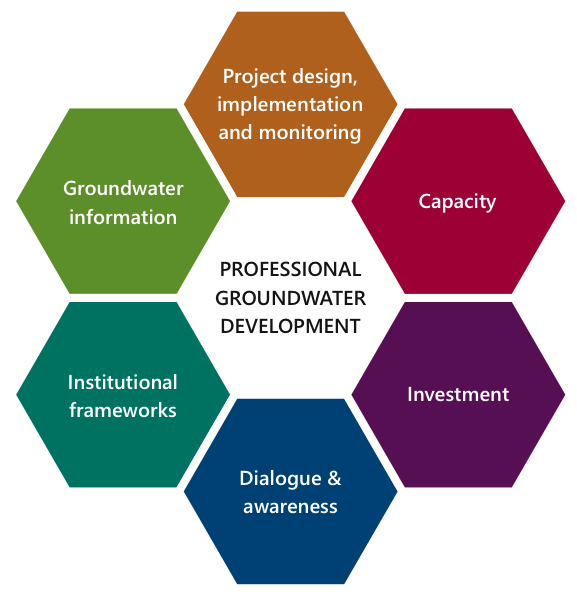
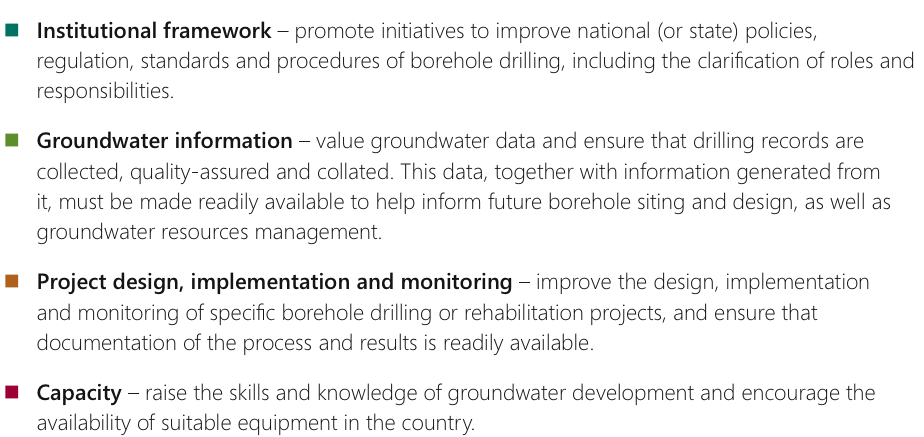
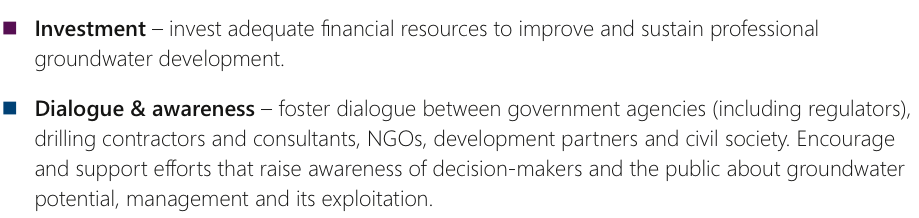
Skat Foundation and UNICEF have been key actors here, jointly advocating for an increase in drilling professionalism across sub-Saharan Africa. They recently released a guidance note on drilling professionalism (UNICEF/Skat, 2016), highlighting six key areas that need to be addressed to increase the quality of implementation work (see Figure 1).

In this blog I focus on the ‘institutional frameworks’ aspect in Figure 1, with specific attention on the ways in which Uganda has sought to improve regulation of the private sector in recent years by introducing licensing systems for both drilling contractors and consultants.

pic1pic2pic3


For the past two decades, Uganda has strongly encouraged the involvement of the private sector in the siting and drilling of rural water points (Danert et al., 2003). Having encouraged privatisation, however, the Ministry of Water and the Environment (MWE) recognised that they had a crucial role to play within this: regulation of the private sector. Regulation efforts began in 1999 with the introduction of drilling contractor licenses. To gain a license, drilling contractors must submit documentation outlining their equipment, their staff and CVs, and their work history. Premises and equipment are then assessed, with the drilling contractor’s technical and financial capacity being at the forefront throughout. Drilling contractor licenses must be renewed annually. Updated lists of licensed drilling contractors are published in national newspapers and online every July.

Recent research in Uganda (Liddle and Fenner, 2018) found that drilling contractor licenses have greatly helped the procurement process within Uganda’s implementing agencies, with the drilling contractor license list typically being the first port of call during bid evaluation.

In recent years, MWE recognised the essential need to extend this licensing system to consultants/hydrogeologists, given the proliferation of ‘briefcase consultants’ in the country (those with no formal geology or hydrogeology training). The issue of briefcase consultants is discussed in blog 1 of this series. Briefcase consultants were bidding for the siting and supervision work, yet evaluation teams within implementing agencies had no way of identifying those that were truly qualified for this work, and those whose bidding documents (e.g. work experience, degrees etc) were fake. Poor quality work then proceeded as briefcase consultants began winning contracts.

To address this problem and provide guidance for evaluation teams, the MWE started the process of issuing hydrogeologist/consultant licenses in 2016 (Tindimugaya, 2016). Consultants can apply for an individual hydrogeologist license or a groundwater firm license. For an individual to gain a license, they must submit their academic documents, CV, and an overview of past work. The individual must have hydrogeology specific qualifications (short course, diploma, or degree); geology qualifications alone are insufficient. Premises and equipment are then assessed and a practical assessment and interview are conducted. For a firm to gain a license, the director must gain an individual license. The firm then needs to submit their company registration details, a list of staff and CVs, and details of past work. By July 2018, licenses had been issued to 65 individuals and 15 firms. As with drilling contractor licenses, consultant licenses are renewed annually and updated lists of licensed consultants are published in national newspapers and online every July.

While these licensing systems have greatly helped Ugandan implementing agencies, similar licensing systems across SSA, especially for consultants, appear to be rare. According to Danert and Theis (2018), of the 14 sub-Saharan Africa countries listed in their report, only three had licensing systems in place for consultants, while ten had licensing systems in place for Drilling Contractors. It is now essential that additional sub-Saharan African governments follow Uganda’s lead, and begin the regulate the private sector, especially consultants given the essential role that siting and supervision are known to play when considering the quality of the implementation work (UNICEF/Skat, 2016; Anscombe, 2011; Danert et al., 2010).

What do you think?

So what do you think? Do you have experiences of trying to select qualified and experiences groundwater professionals? Do you think that licensing professionals is the way forward within your context? Are there any efforts to better regulate the private drilling sector in your country? You can respond below by posting in the reply below, or you can join the live webinar on the 14th of May (register here).

References

Adank, M., Kumasi, T.C., Chimbar, T.L., Atengdem, J., Agbemor, B.D., Dickinson, N., and Abbey, E. (2014). The state of handpump water services in Ghana: Findings from three districts, 37th WEDC International Conference, Hanoi, Vietnam, 2014.

Anscombe, J.R. (2011). Quality assurance of UNICEF drilling programmes for boreholes in Malawi. Lilongwe, Malawi: Ministry of Agriculture Irrigation and Water Development, Government of Malawi.

Bonsor, H.C., Oates, N., Chilton, P.J., Carter, R.C., Casey, V., MacDonald, A.M., Etti, B., Nekesa, J., Musinguzi, F., Okubal, P., Alupo, G., Calow, R., Wilson, P., Tumuntungire, M., and Bennie, M. (2015). A Hidden Crisis: Strengthening the evidence base on the current failure of rural groundwater supplies, 38th WEDC International Conference, Loughborough University, UK, 2014.

Danert, K., Armstrong, T., Adekile, D., Duffau, B., Ouedraogo, I., and Kwei, C. (2010). Code of practice for cost effective boreholes. St Gallen, Switzerland: RWSN.

Danert, K. and Theis, S. (2018). Professional management of water well drilling projects and programmes, online course 2018, report for course participants, UNICEF-Skat Foundation Collaboration 2017-2019. St Gallen, Switzerland: Skat.

Danert, K., Carter, R.C., Rwamwanja, R., Ssebalu, J., Carr, G., and Kane, D. (2003). The private sector and water and sanitation services in Uganda: Understanding the context and developing support strategies. Journal of International Development, 15, 1099-1114.

Foster, T., Willetts, J., Lane, M. Thomson, P. Katuva, J., and Hope, R. (2018). Risk factors associated with rural water supply failure: A 30-year retrospective study of handpumps on the south coast of Kenya. Science of the Total Environment,, 626, 156-164.

Kebede, S., MacDonald, A.M., Bonsor, H.C, Dessie, N., Yehualaeshet, T., Wolde, G., Wilson, P., Whaley, L., and Lark, R.M. (2017).  UPGro Hidden Crisis Research Consortium: unravelling past failures for future success in Rural Water Supply. Survey 1 Results, Country Report Ethiopia. Nottingham, UK: BGS (OR/17/024).

Liddle, E.S. and Fenner, R.A. (2018). Review of handpump-borehole implementation in Uganda. Nottingham, UK: BGS (OR/18/002).

Owor, M., MacDonald, A.M., Bonsor, H.C., Okullo, J., Katusiime, F., Alupo, G., Berochan, G., Tumusiime, C., Lapworth, D., Whaley, L., and Lark, R.M. (2017). UPGro Hidden Crisis Research Consortium. Survey 1 Country Report, Uganda. Nottingham, UK: BGS (OR/17/029).

Sloots, R. (2010). Assessment of groundwater investigations and borehole drilling capacity in Uganda. Kampala, Uganda: Ministry of Water and Environment, Government of Uganda, and UNICEF.

Tindimugaya, C. (2016). Registration of groundwater consultants in Uganda: rationale and status. RWSN Forum, 2016, Abidjan, Côte d’Ivoire.

UNICEF/Skat (2016). Professional water well drilling: A UNICEF guidance note. St Gallen, Switzerland: Skat and UNICEF.


La réglementation du secteur privé

Il s’agit du dernier d’une série de quatre blogs intitulée “Le forage professionnel de puits d’eau: Apprendre de l’Ouganda” de Elisabeth Liddle et d’un webinaire en 2019 sur le forage de puits professionnel. Cette série s’appuie sur les recherches menées en Ouganda par Liddle et Fenner (2018). Nous vous invitons à nous faire part de vos commentaires en réponse à ce blog ci-dessous.

Si l’accès à des sources d’eau améliorées a été amélioré de manière progressive dans l’ensemble de l’Afrique subsaharienne rurale, plusieurs études ont soulevé des problèmes concernant la capacité de ces sources à fournir des quantités d’eau sûres et adéquates à long terme (Foster et al., 2018 ; Kebede et al., 2017 ; Owor et al., 2017 ; Adank et al., 2014).

Le secteur se focalise sur l’exploitation et l’entretien après la construction, mais également de plus en plus sur la qualité de la mise en œuvre afin de prévenir la défaillance des points d’eau dans l’avenir. (UNICEF/Skat, 2016, Bonsor et al., 2015; Anscombe, 2011; Sloots, 2010).

La Fondation Skat et l’UNICEF sont des acteurs clés dans ce domaine, plaidant conjointement en faveur d’une professionnalisation accrue du forage en Afrique subsaharienne. Ils ont récemment publié une note d’orientation sur le professionnalisation en matière de forage (UNICEF/Skat, 2016), soulignant six domaines clés qui doivent être abordés pour améliorer la qualité du travail d’exécution (voir Figure 1).

Dans ce blog, je me concentre sur l’aspect “cadres institutionnels ” de la Figure 1, avec une attention particulière sur la manière dont l’Ouganda a cherché à améliorer la réglementation du secteur privé ces dernières années en introduisant des systèmes de permis pour les entrepreneurs et les consultants en forage.


Screen Shot 2019-04-01 at 4.58.03 PMScreen Shot 2019-04-01 at 4.57.43 PM

Fig. 1: Six domaines d’engagement pour l’exploitation professionnelle des eaux souterraines (Skat/ UNICEF, 2018)

Des recherches récentes en Ouganda (Liddle et Fenner, 2018) ont montré que les permis d’entrepreneur de forage ont grandement facilité le processus de passation de marché au sein des organismes d’exécution de travaux en Ouganda, la liste des permis d’entrepreneur de forage étant généralement le premier point de contact pendant l’évaluation des offres.

Ces dernières années, le Ministère de l’Eau et de l’Environnement a reconnu le besoin essentiel d’étendre ce système de permis aux consultants/hydrogéologues, étant donné la prolifération des “consultants à mallette” dans le pays (ceux qui n’ont aucune formation formelle en géologie ou en hydrogéologie). La question des consultants en mallettes est abordée dans le premier blog de cette série. Les consultants en mallettes soumissionnaient pour les travaux d’implantation et de supervision, mais les équipes d’évaluation au sein des organismes d’exécution n’avaient aucun moyen d’identifier ceux qui étaient réellement qualifiés pour ces travaux et ceux dont les documents d’appel d’offres (par exemple, expérience professionnelle, diplômes, etc.) étaient des faux. Le travail de qualité médiocre s’est ensuite poursuivi car les “consultants à mallette” remportaient de plus en plus de contrats.

Pour résoudre ce problème et fournir des conseils aux équipes d’évaluation, le Ministère de l’Eau et de l’Environnement a entamé le processus de délivrance de permis d’hydrogéologue/consultant en 2016 (Tindimugaya, 2016). Les consultants peuvent demander un permis individuel d’hydrogéologue ou un permis d’entreprise en lien avec les eaux souterraines. Pour qu’une personne obtienne un permis, elle doit soumettre ses documents universitaires, son CV et un aperçu de son expérience professionnelle. La personne doit posséder des qualifications spécifiques en hydrogéologie (cours de courte durée, diplôme ou licence) ; des études en géologie seulement sont insuffisantes. Les locaux et l’équipement sont ensuite évalués, et une évaluation pratique ainsi qu’un entretien sont menées. Pour qu’une entreprise obtienne un permis, le directeur doit avoir un permis individuel. L’entreprise doit ensuite fournir les détails relatifs à l’inscription de son entreprise, une liste de son personnel et de leurs CV, ainsi que les détails de ses travaux antérieurs. A compter de juillet 2018, 65 personnes et 15 entreprises avaient reçu des permis. Comme pour les permis d’entrepreneur de forage, les permis des consultants sont renouvelés chaque année et des listes de consultants autorisés mises à jour sont publiées dans les journaux nationaux et en ligne chaque année en juillet.

Si ces systèmes d’octroi de permis ont grandement aidé les organismes d’exécution ougandais, des systèmes d’octroi de permis similaires, en particulier pour les consultants, semblent être rares dans le reste de l’Afrique subsaharienne. Selon Danert et Theis (2018), sur les 14 pays d’Afrique subsaharienne énumérés dans le rapport, seulement trois avaient mis en place des systèmes de permis pour les consultants, tandis que dix avaient mis en place des systèmes de permis pour les entreprises de forage. Il est maintenant essentiel que d’autres gouvernements d’Afrique subsaharienne suivent l’exemple de l’Ouganda et commencent à réglementer le secteur privé, en particulier les consultants, étant donné le rôle essentiel qu’ils jouent dans la qualité du travail d’exécution, l’implantation et la supervision des forages (UNICEF/Skat, 2016 ; Anscombe, 2011 ; Danert et al., 2010).

Qu’en pensez-vous?

Alors, qu’en pensez-vous? Avez-vous de l’expérience dans la sélection de professionnels qualifiés et expérimentés dans le domaine de l’eau souterraine ? Pensez-vous que l’octroi de permis aux professionnels est la voie à suivre dans votre contexte ? Y a-t-il des efforts pour mieux réglementer le secteur privé du forage dans votre pays ? Vous pouvez répondre ci-dessous en postant un commentaire, ou vous pouvez participer au webinaire en direct le 14 mai (inscriptions ici)

Références

Adank, M., Kumasi, T.C., Chimbar, T.L., Atengdem, J., Agbemor, B.D., Dickinson, N., and Abbey, E. (2014). The state of handpump water services in Ghana: Findings from three districts, 37th WEDC International Conference, Hanoi, Vietnam, 2014.

Anscombe, J.R. (2011). Quality assurance of UNICEF drilling programmes for boreholes in Malawi. Lilongwe, Malawi: Ministry of Agriculture Irrigation and Water Development, Government of Malawi.

Bonsor, H.C., Oates, N., Chilton, P.J., Carter, R.C., Casey, V., MacDonald, A.M., Etti, B., Nekesa, J., Musinguzi, F., Okubal, P., Alupo, G., Calow, R., Wilson, P., Tumuntungire, M., and Bennie, M. (2015). A Hidden Crisis: Strengthening the evidence base on the current failure of rural groundwater supplies, 38th WEDC International Conference, Loughborough University, UK, 2014.

Danert, K., Armstrong, T., Adekile, D., Duffau, B., Ouedraogo, I., and Kwei, C. (2010). Code of practice for cost effective boreholes. St Gallen, Switzerland: RWSN.

Danert, K. and Theis, S. (2018). Professional management of water well drilling projects and programmes, online course 2018, report for course participants, UNICEF-Skat Foundation Collaboration 2017-2019. St Gallen, Switzerland: Skat.

Danert, K., Carter, R.C., Rwamwanja, R., Ssebalu, J., Carr, G., and Kane, D. (2003). The private sector and water and sanitation services in Uganda: Understanding the context and developing support strategies. Journal of International Development, 15, 1099-1114.

Foster, T., Willetts, J., Lane, M. Thomson, P. Katuva, J., and Hope, R. (2018). Risk factors associated with rural water supply failure: A 30-year retrospective study of handpumps on the south coast of Kenya. Science of the Total Environment,, 626, 156-164.

Kebede, S., MacDonald, A.M., Bonsor, H.C, Dessie, N., Yehualaeshet, T., Wolde, G., Wilson, P., Whaley, L., and Lark, R.M. (2017).  UPGro Hidden Crisis Research Consortium: unravelling past failures for future success in Rural Water Supply. Survey 1 Results, Country Report Ethiopia. Nottingham, UK: BGS (OR/17/024).

Liddle, E.S. and Fenner, R.A. (2018). Review of handpump-borehole implementation in Uganda. Nottingham, UK: BGS (OR/18/002).

Owor, M., MacDonald, A.M., Bonsor, H.C., Okullo, J., Katusiime, F., Alupo, G., Berochan, G., Tumusiime, C., Lapworth, D., Whaley, L., and Lark, R.M. (2017). UPGro Hidden Crisis Research Consortium. Survey 1 Country Report, Uganda. Nottingham, UK: BGS (OR/17/029).

Sloots, R. (2010). Assessment of groundwater investigations and borehole drilling capacity in Uganda. Kampala, Uganda: Ministry of Water and Environment, Government of Uganda, and UNICEF.

Tindimugaya, C. (2016). Registration of groundwater consultants in Uganda: rationale and status. RWSN Forum, 2016, Abidjan, Côte d’Ivoire.

UNICEF/Skat (2016). Professional water well drilling: A UNICEF guidance note. St Gallen, Switzerland: Skat and UNICEF.

Remerciements

Ce travail fait partie du projet Hidden Crisis du programme de recherche UPGro – cofinancé par le NERC, le DFID et l’ESRC.

Le travail de terrain entrepris pour ce rapport fait partie de la recherche doctorale des auteurs à l’Université de Cambridge, sous la supervision du Professeur Richard Fenner. Ce travail sur le terrain a été financé par le Ryoichi Sasakawa Young Leaders Fellowship Fund et UPGro : Hidden Crisis.

Merci à ceux d’entre vous de l’Université de Makerere et de WaterAid Ouganda qui m’ont apporté un soutien logistique, y compris sur le terrain, pendant que je menais les entretiens pour ce rapport (en particulier le Dr Michael Owor, Felece Katusiime et Joseph Okullo de l’Université Makerere et Gloria Berochan de WaterAid Uganda). Merci également à tous les répondants d’avoir été enthousiastes et disposés à participer à cette recherche.

Photo: E.S. Liddle

Attracting the best: Why some experienced consultants and drilling contractors are no longer willing to work for district local government

This is the third in a series of four blogs entitled Professional Borehole Drilling: Learning from Uganda written by Elisabeth Liddle, and a RWSN webinar in 2019 about professional borehole drilling. It draws on research in Uganda by Liddle and Fenner (2018). We welcome your thoughts in reply to this blog below.

Several recent reports have raised concerns over the quality of the boreholes that are being sited and constructed in rural sub-Saharan Africa (UNICEF/Skat, 2016, Bonsor et al., 2015; Anscombe, 2011; Sloots, 2010). If high-quality boreholes are to be sited and constructed, skilled experienced personnel are needed to conduct this work. Recent research in Uganda, highlights that a number of the most experienced consultants and drilling contractors in Uganda (those who have been in business for fifteen – twenty years) are no longer willing to bid for district local government contracts (Liddle and Fenner, 2018). This is concerning, given that district local government projects accounted for 68% of new deep boreholes drilled in the financial year 2016/17 (MWE, 2017).

In this blog I outline why these consultants and drilling contractors are no longer willing to work for districts.

1. Low prices


A number of the consultants and drilling contractors interviewed are simply dissatisfied with the prices that district local governments are willing to pay compared to that of non-governmental organisations (NGOs). The consultants interviewed, for example, stated that districts are typically willing to pay UGX 1 million – UGX 2 million (US $276 – $552[1]) for siting and supervision, while NGOs are typically willing to pay UGX 2.5 million – UGX 3.5 million (US $691 – $967) for the same work. The price districts are willing to pay is reportedly not realistic, and as a result, these consultants would have to take shortcuts in their work. The same issues were reported among the drillers who are no longer willing to work for the district local governments. These consultants and drillers are not willing to undertake sub-standard water points for communities, take shortcuts in their work, nor tarnish the reputation of their companies.

2. Misuse of ‘lump sum, no-water-no-pay’ payment terms


As explained in blog “Turnkey contracts for borehole siting and drilling”, drilling under a turnkey contract was found to be common during this research: 26 of the implementing agencies interviewed in Uganda (n = 29), for example, were procuring the private sector for the implementation work, 19 of whom were using turnkey contracts for the siting and drilling work and paying the driller via lump sum, no-water-no-pay payment terms. Typically, under these combined ‘lump sum, no-water-no-pay’ payment terms, if a borehole is unsuccessful (is dry or low-yielding), the driller is not paid. If the borehole is successful, the driller should be paid the full lump sum price, regardless of the costs incurred on-site. A number of districts, however, are deviating from lump sum, no-water-no-pay payment term norms. Instead of paying the full lump sum as they should do, they are only paying for the actual work done and materials used (known as BoQ payment or admeasurement payment in Uganda). While this may be specified in the driller’s contract, it is concerning given that the whole premise behind lump sum no-water-no-pay payment terms is that, while drillers will lose money on unsuccessful boreholes, they will be able to recover these costs from the full lump sums they are paid for the successful boreholes. Without full lump sum payment, drillers are unable to their losses..

3. Bribes during the bidding process


Demands for bribes are reportedly common when bidding for district local government contracts. When a bribe is demanded, consultants and drillers struggle to account for this cost: if they account for this in their quote, their quote will be too high, thus, they will not win the contract. If, however, they do not account for the price of the bribe in their quote, the consultant or driller will then need to recover this cost at some stage, usually through taking shortcuts on-site. If consultants and drillers do not want to take shortcuts in their work they will not bid.

4. Late payment


Receiving the full payment from districts for completed works can be challenging, with several drilling contractors reporting that in some cases, they had to wait over a year to receive their full payment. This makes business difficult; it is much easier to only work for NGOs who are known for paying on time.

The following quotes help to exemplify the above issues:

“But I tell you, for the last few years I have not bided for a district job because the bidding process is just so silly. You know, they will already know who is going to win the contract before they even advertise…And the terms and conditions in the contract are very unfavourable to the driller… So I have not drilled for the district for the last five years as there is no guarantee that they will pay us, this is not a viable business model for us…They only pay on time 50% of the time. Even when the borehole is successful, they will say, oh we don’t have any money, we’ll have to pay in next quarter. Sometimes this has gone on for a whole year. It was with a district that it took 14 months for me to be paid once… The guarantee of receiving payment is frustrating” (Drilling Contractor).

“I strongly believe bidding is just a procedure for most projects. In most cases the districts are giving contracts after they [the bidder] has paid them for the contract. So, say it is a contract for 100 million, they will want 20 million during bidding. This problem is with district, not NGOs, not the ministry… So I have stopped drilling for districts, it was too expensive” (Drilling Contractor).

“I don’t like working for the district. To be honest they are simply corrupt. It is very hard to get a contract from them, you’ve often got to bribe to simply get the contract. They’ll always ask for extra money. It is disturbing. If you don’t agree to pay them, they will find a way of explaining why you did not get the contract” (Consultant).

Districts are now beginning to notice this issue as well, as explained by one district water officer below:

“So many of them [drillers] are so business orientated that even during the time of bidding they under quote so they can win the contract…now because of that they have made serious drillers pull out of district work as they cannot win government contracts. Most of the serious drillers are now dealing with NGOs because they know the procurement process is much more transparent and they will be able to get the money that they need to do a good job. But for local government, they cannot. So we have lost some really good drillers because of this, because they cannot compete and most times most local government want to select the lowest bidder… So we have a big challenge here because we don’t want government to lose money by selecting the more expensive driller but this means the really high quality ones have left district work” (District Water Office).

These quotes highlight the long-term consequences for district local governments who are known for engaging in practices such as paying low prices, offering unfavourable payment terms, soliciting bribes, and making late payments. Finding solutions to these problems is essential to ensure that experienced consultants and drilling contractors are willing to support district work going forward.

What do you think?

So what do you think? Do you have experiences of unrealistically low prices (or the opposite), unfavourable payment terms, bribery in the procurement process or late payments. Or can you share any particularly promising practices with us? You can respond below by posting in the reply below, or you can join the live webinar on the 14th of May (register here).

References

Anscombe, J.R. (2011). Quality assurance of UNICEF drilling programmes for boreholes in Malawi. Lilongwe, Malawi: Ministry of Agriculture Irrigation and Water Development, Government of Malawi, Available from http://www.rural-water-supply.net/en/resources/details/509

Bonsor, H.C., Oates, N., Chilton, P.J., Carter, R.C., Casey, V., MacDonald, A.M., Etti, B., Nekesa, J., Musinguzi, F., Okubal, P., Alupo, G., Calow, R., Wilson, P., Tumuntungire, M., and Bennie, M. (2015). A Hidden Crisis: Strengthening the evidence base on the current failure of rural groundwater supplies, 38th WEDC International Conference, Loughborough University, UK, 2014, Available from https://wedc-knowledge.lboro.ac.uk/resources/conference/38/Bonsor-2181.pdf

Liddle, E.S. and Fenner, R.A. (2018). Review of handpump-borehole implementation in Uganda. Nottingham, UK: BGS (OR/18/002). https://nora.nerc.ac.uk/id/eprint/520591/

MWE (2017) Sector Performance Report 2017, Ministry of Water and Environment, Government of Uganda, Available from https://www.mwe.go.ug/sites/default/files/library/SPR%202017%20Final.pdf

Sloots, R. (2010). Assessment of groundwater investigations and borehole drilling capacity in Uganda. Kampala, Uganda: Ministry of Water and Environment, Government of Uganda, and UNICEF, Available from http://www.rural-water-supply.net/en/resources/details/133

UNICEF/Skat (2016). Professional water well drilling: A UNICEF guidance note. St Gallen, Switzerland: Skat and UNICEF, Available from http://www.rural-water-supply.net/en/resources/details/775

[1] May 2017 exchange rate.

Photos

photo #1: “Bidding process poster on display in a District Procurement Office” (Source: Elisabeth Liddle).

Acknowledgements

This work is part of the Hidden Crisis project within the UPGro research programme – co-funded by NERC, DFID, and ESRC.

The fieldwork undertaken for this report is part of the authors PhD research at the University of Cambridge, under the supervision of Professor Richard Fenner. This fieldwork was funded by the Ryoichi Sasakawa Young Leaders Fellowship Fund and UPGro: Hidden Crisis.

Thank you to those of you from Makerere University and WaterAid Uganda who provided logistical and field support while I was conducting the interviews for this report (especially Dr Michael Owor, Felece Katusiime, and Joseph Okullo from Makerere University and Gloria Berochan from WaterAid Uganda). Thank you also to all of the respondents for being eager and willing to participate in this research.