Understanding the invisible: Uganda’s efforts to increase access to detailed groundwater data

This is the second in a series of four blogs entitled Professional Borehole Drilling: Learning from Uganda written by Elisabeth Liddle, and a RWSN webinar in 2019 about professional borehole drilling. It draws on research in Uganda by Liddle and Fenner (2018). We welcome your thoughts in reply to this blog below. [Note: The original blog was revised on 03 April 2019 to correct an inaccurate representation of the situation].

While access to improved water sources has steadily increased across rural sub-Saharan Africa, several studies have raised concerns over the extent to which these sources are able to provide safe and adequate quantities of water over the long term (Foster et al., 2018; Kebede et al., 2017; Owor et al., 2017; Adank et al., 2014). Borehole design and siting are essential to ensure that the subsequent water point will continue to provide safe and adequate quantities of water. Access to detailed and accurate groundwater information can greatly aid siting and borehole design (UNICEF/Skat, 2016; Carter et al., 2014).

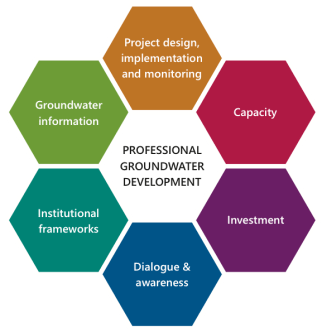
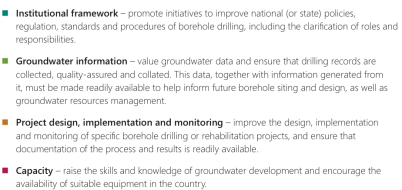
Skat Foundation and UNICEF have been key advocates for increasing access to detailed groundwater data including the recent guidance note which pointed out that ‘groundwater information’ is essential when seeking to improve the quality of borehole implementation in low- and middle-income countries (see Figure 1; UNICEF/Skat, 2016). In this blog I provide some insights into the ways in which Uganda has sought to increase access to groundwater data is recent years.
pic1

pic2

pic3

Fig. 1: Six areas of engagement for increasing drilling professionalism (Skat/UNICEF, 2016).

Groundwater resource mapping in Uganda

Significant steps have been taken in recent years to increase access to detailed groundwater data in Uganda. Much of this began in 2000 when the Directorate of Water Resources and Management (DWRM) within the Ministry of Water and the Environment (MWE) began a nationwide groundwater mapping project. Using data sourced from the borehole completion reports that drilling contractors are required to submit every quarter, DWRM has developed are series of maps for each district. These include:

  1. Water source location map, underlain by a geology map.
  2. Recommended water source technology map (technology recommendation is based on main water strike depth and yield information).
  3. Hydrogeological condition map – includes 4 sub-maps:
    • inferred first water strike depth[1],
    • inferred main water strike depth[2],
    • inferred thickness of overburden[3], and
    • inferred static water level depth[4].
  4. Groundwater quality map: highlights areas where water quality is expected to be problematic.
  5. Groundwater potential – Drilling success rate map: combines expected yield success rate[5] coupled with expected water quality conditions.

Tindimugaya (2004) explains these maps in greater detail, along with the ways in which such maps can help the implementation process. An example of these maps for Kibaale district is available on the MWE’s website.

This mapping work is ongoing, however, by May 2017 DWRM had mapped 85% of Uganda’s districts. The magnitude of these maps and the level of detail they capture is remarkable. These maps have become a great asset for district local governments, non-governmental organisations, and others responsible for water point siting and construction.

Ongoing challenges

While Uganda has made remarkable progress in recent years with their groundwater mapping efforts, there have been several challenges along the way (Liddle and Fenner, 2018), mostly related to data accuracy. When interviewing those in Uganda for this research, there were reports that in some (but not all) cases, inaccurate data is submitted. When looking at why inaccurate data is sometimes submitted, two key issues were noted:

  1. There often isn’t a qualified consultant on site full-time for drilling supervision. While it is the drilling contractor’s responsibility to have a member of staff recording the drilling log, an independent supervisor should also keep a log and check the driller’s log for accuracy before this is submitted to DWRM. Without full-time supervision, however, this cannot happen. Furthermore, even with full-time supervision, if the supervisor is not a hydrogeologist, it is unlikely that they will be keeping accurate and detailed logs.
  2. The lump sum no-water-no-pay payment terms via which Ugandan drillers are often paid (see blog “Turnkey contracts for borehole siting and drilling”). When these contract terms are used, to be paid, drillers need to prove that they have drilled a successful borehole; as a result, there were reports of drillers exaggerating a given borehole’s yield in order to be paid. Skewing data in this way is concerning, as not only will these boreholes struggle to provide adequate quantities of water post-construction, but this high-yield data is then entered into the drilling log database and used to produce the hydrogeological maps. Increasing the quality of drilling supervision and ensuring data is not skewed in this way is essential if the accuracy of DWRM’s maps is to increase going forward.

Overall, Uganda has made remarkable progress over the past two decades in increasing the level of groundwater information available in-country. There are very few examples in the African continent comparable to what Uganda has achieved! As noted above, the resultant maps have become a great asset for district local governments, non-governmental organisations, and others responsible for water point siting and construction.

Increasing the accuracy of borehole completion reports is an essential next steps for Uganda. Furthermore, other countries should be aware of these challenges as they embark on their own mapping exercises and ensure necessary measures are in place to prevent these problems in their own contexts.

What do you think?

So what do you think? Do you have experiences of collecting and collating groundwater data, or using groundwater maps? Is this something that should be started in your country? You can respond below by posting in the reply below, or you can join the live webinar on the 14th of May (register here).

[1]‘Expected first water strike depth’ = the depth at which a driller is likely to first encounter groundwater. In most cases the driller will need to continue drilling past this point if the borehole is to be able to provide sufficient quantities of water for users.

[2] ‘Expected main water strike depth’ = the depth at which a driller is likely to find the main aquifer that will be able to provide sufficient quantities of water for users.

[3] Overburden refers to the unconsolidated material that overlays the bedrock. The ‘expected overburden thickness’ map highlights the expected depth of this unconsolidated material across Uganda.

[4] ‘Expected static water level’ = the expected groundwater depth without any pumping disturbance.

[5] ‘Yield success’ refers to a borehole being able to sustain a pumping rate of 500 litres/hour. If a borehole can sustain this pumping rate, it is considered successful in regards to yield.

References

Adank, M., Kumasi, T.C., Chimbar, T.L., Atengdem, J., Agbemor, B.D., Dickinson, N., and Abbey, E. (2014). The state of handpump water services in Ghana: Findings from three districts, 37th WEDC International Conference, Hanoi, Vietnam, 2014, Available from https://wedc-knowledge.lboro.ac.uk/resources/conference/37/Adank-1976.pdf

Carter, R., Chilton, J., Danert, K. & Olschewski, A. (2014) Siting of Drilled Water Wells – A Guide for Project Managers. RWSN Publication 2014-11 , RWSN , St Gallen, Switzerland, Available from http://www.rural-water-supply.net/en/resources/details/187

Foster, T., Willetts, J., Lane, M. Thomson, P. Katuva, J., and Hope, R. (2018). Risk factors associated with rural water supply failure: A 30-year retrospective study of handpumps on the south coast of Kenya. Science of the Total Environment,, 626, 156-164, Available from https://www.sciencedirect.com/science/article/pii/S0048969717337324

Kebede, S., MacDonald, A.M., Bonsor, H.C, Dessie, N., Yehualaeshet, T., Wolde, G., Wilson, P., Whaley, L., and Lark, R.M. (2017). UPGro Hidden Crisis Research Consortium: unravelling past failures for future success in Rural Water Supply. Survey 1 Results, Country Report Ethiopia. Nottingham, UK: BGS (OR/17/024), Available from https://nora.nerc.ac.uk/id/eprint/516998/

Liddle, E.S. and Fenner, R.A. (2018). Review of handpump-borehole implementation in Uganda. Nottingham, UK: BGS (OR/18/002), Available from https://nora.nerc.ac.uk/id/eprint/520591/

Owor, M., MacDonald, A.M., Bonsor, H.C., Okullo, J., Katusiime, F., Alupo, G., Berochan, G., Tumusiime, C., Lapworth, D., Whaley, L., and Lark, R.M. (2017). UPGro Hidden Crisis Research Consortium. Survey 1 Country Report, Uganda. Nottingham, UK: BGS (OR/17/029), Available from https://nora.nerc.ac.uk/id/eprint/518403/

Tindimugaya, C. (2004). Groundwater mapping and its implications for rural water supply coverage in Uganda. 30th WEDC International Conference, Vientiane, Lao PDR, 2004. Available from https://wedc-knowledge.lboro.ac.uk/resources/conference/30/Tindimugaya.pdf

UNICEF/Skat (2016). Professional water well drilling: A UNICEF guidance note. St Gallen, Switzerland: Skat and UNICEF. Available from http://www.rural-water-supply.net/en/resources/details/775

Acknowledgements

This work is part of the Hidden Crisis project within the UPGro research programme – co-funded by NERC, DFID, and ESRC.

The fieldwork undertaken for this report is part of the authors PhD research at the University of Cambridge, under the supervision of Professor Richard Fenner. This fieldwork was funded by the Ryoichi Sasakawa Young Leaders Fellowship Fund and UPGro: Hidden Crisis.

Thank you to those of you from Makerere University and WaterAid Uganda who provided logistical and field support while I was conducting the interviews for this report (especially Dr Michael Owor, Felece Katusiime, and Joseph Okullo from Makerere University and Gloria Berochan from WaterAid Uganda). Thank you also to all of the respondents for being eager and willing to participate in this research.

Photo: “Groundwater Supply Technology Options map on display in the Kayunga District Water Office” (Source: Elisabeth Liddle).
Turnkey contracts for borehole siting and drilling

This is the first in a series of four blogs entitled Professional Borehole Drilling: Learning from Uganda written by Elisabeth Liddle, and a RWSN webinar in 2019 about professional borehole drilling. It draws on research in Uganda by Liddle and Fenner (2018). We welcome your thoughts in reply to this blog below.

Drilling under a ‘turnkey contract’ has become increasingly common across sub-Saharan Africa. Recent research in Uganda by Liddle and Fenner (2018) found turnkey contracts to be the most common contract type when the private sector provides new rural handpump-boreholes, although this has not always been the case. In this blog we provide an overview of what turkey contracts are, why they are being used in Uganda, and the benefits and challenges associated with their use in Uganda.

What is a turnkey contract they and why are they being used in Uganda?

Under a turnkey contract a drilling contractor is responsible for both the siting and the drilling/installation work. Turnkey contracts are paid via ‘lump sum no-water-no-pay’ payment terms. If the borehole is successful, the driller will be paid the full lump sum price, regardless of the costs incurred on-site. If, however, the borehole is unsuccessful (dry or low-yielding), the driller will not be paid at all.

Turnkey contracts rose to prominence in Uganda in the mid-2000s as implementing agencies (District Local Governments and Non-Governmental Organisations) became increasingly frustrated with the number of unsuccessful boreholes that were being drilled when consultants were conducting the siting work. Because the consultant was telling the driller where to drill, if the borehole was unsuccessful, the implementing agency had to pay the driller for all the work done and materials used, i.e. according to a Bill of Quantities (BoQ). Unsuccessful boreholes were blamed on the quality of the consultants’ siting work, with briefcase consultants (meaning those with no formal geology or hydrogeology training) having flooded the market. Because of the low prices they offered, coupled with a lack of regulation, these consultants were gaining siting contracts.

Paying for unsuccessful boreholes was challenging and it was becoming difficult for District Local Governments to meet their targets for new safe water sources. Project managers were being made to look inept. Moreover, political leaders failed to understand that some unsuccessful boreholes were a common part of drilling, hence, if a driller was paid for an unsuccessful borehole, politicians saw this as corrupt. Some district water officers were even threatened with jail.

The solution found was to remove the consultant and hand over all of the responsibility for finding water to the driller. If the driller then drilled an unsuccessful borehole, they would not be paid as they were the ones responsible for siting the borehole. The risk of finding water of an inadequate yield fell squarely on the driller.

Benefits and challenges of turnkey contract use

Turnkey contracts have greatly simplified the procurement and contract management process for project managers in Uganda. Under turnkey contracts, implementing agencies only need to procure and manage a drilling contractor. Furthermore, as the amount the drilling contractor will be paid if the borehole is successful is determined during the tender process, there are no surprise costs for the implementing agency. Additionally, under the no water, no pay payment terms, agencies do not have to directly spend any money on unsuccessful boreholes; money is only being spent on boreholes that are declared successful.

While turnkey contracts have notable benefits, several concerns were raised among those interviewed in Uganda as to the quality of the work:

  • Siting based on ease of finding water: under turnkey contracts, drilling contractors need to find sufficient water in order to be paid. Consequently, it was widely reported that drilling contractors are siting boreholes where it is easy to find water, for example, in valleys, or near swamps or riverbanks. Not only are drilling contractors extremely likely to find water in these areas, hence be paid, but they will often drill to a much shallower depths than their lump sum cost estimate was based on. A greater margin can therefore be made in these areas. Boreholes situated in such areas, however, are vulnerable to pollution. While a borehole may pass water quality tests immediately after drilling, the water may be unsafe for human consumption in the rainy months as surface pollutant transport and leaching rates increase or in several years’ time as pollutants accumulate in these areas. Furthermore, community access may be limited, especially in rainy months when these areas may be vulnerable to flooding.
  • Short-cuts on-site: under no-water-no-pay payment terms, drilling contractors need to save money wherever possible so they can recover the losses that they make on unsuccessful boreholes. To save money, it was reported that certain drilling contractors in Uganda are known for:
  • Using low quality and/or hydrogeologically inappropriate materials, for example, galvanised iron rising mains rather than stainless steel in acidic groundwaters. Galvanised iron rising mains are 4-5 times cheaper than stainless steel. When galvanised iron rising mains are used in acidic groundwaters (which are common in Uganda), red/brown coloured water, unfit for human consumption is extremely likely (Casey et al., 2016).
  • Using inappropriate materials for the borehole design, for example, using 5″ casing when a 6/6.5″ open-hole borehole[1] has been drilled as 5″ casing is cheaper than 6/6.5″. To prevent the 5″ casing from falling into the 6/6.5″ open-hole, drilling contractors heat the base and stretch this to fit on top of the open area. 42% of drilling contractors interviewed (n = 14) admitted to this practice. While some see this as a clever trick, others were concerned that silt will accumulate in these boreholes over time, due to gaps between the casing and the consolidated rock and/or cracks that form in the thinly stretched areas of the casing. Such siltation will not only wear the handpump parts down, but it may also lead to appearance problems from the users’ perspective as this silt enters the water supply.
  • Stopping drilling at the first water strike. A great deal of money can be saved here; in Ethiopia, for example, drilling to 50 metres instead of 60 metres reduces the drilling cost by 13% (Calow et al., 2012). If the borehole does not penetrate the main aquifer, however, the quantity of water available post-construction may be problematic, even if the borehole passes the pumping test.
  • Skewing the pump test data or cutting the pump test time short to mask low-yielding, unsuccessful sites. These boreholes will inevitably be low-yielding post-construction, or in worst case, dry.

The need for drilling contractors to take the above shortcuts in Uganda is exacerbated by the fact that, in many cases, the lump sum contractors are paid for drilling a successful borehole is too low in the first instance. Furthermore, supervision by a trained hydrogeologist is rare.

Where to from here for turnkey contracts?

Opinions on whether turnkey contracts should continue to be used in Uganda differ among different actors: the majority of implementing agencies in Uganda believe the use of turnkey contracts should continue, while consultants and the Ministry of Water and the Environment (MWE) believe that they should cease, given the quality of work concerns outlined above.

MWE went so far to release a directive in January 2017 discouraging the use of turnkey contracts, instead stating that split contracts, one for siting (awarded to a hydrogeologist/consultant) and one for drilling/installation (awarded to a drilling contractor) be used going forward. Opinions among drilling contractors themselves seemed impartial; most do not mind working under turnkey contracts, they simply ask that the lump sum prices implementing agencies are willing to pay for successful boreholes increase in the future so they are not forced to take shortcuts on-site.

What do you think?

So what do you think? Do you have experiences of turnkey contracts for borehole drilling, or other practices that you would like to share. You can respond below by posting in the reply below, or you can join the live webinar on the 14th of May (register here).

References

Calow, R., MacDonald, A., and Cross, P. (2012). Corruption in rural water supply in Ethiopia. In J. Plummer (Ed.), Diagnosing Corruption in Ethiopia: Perceptions, realities and the way forward for key sectors (pp 121-179). Washington DC, USA: World Bank. Available from https://www.odi.org/sites/odi.org.uk/files/odi-assets/publications-opinion-files/8555.pdf

Casey, V., Brown, L., Carpenter, J.D., Nekesa, J., and Etti, B. (2016). The role of handpump corrosion in the contamination and failure of rural water supplies. Waterlines, 35(1), 59-77. Available from https://www.developmentbookshelf.com/doi/full/10.3362/1756-3488.2016.006

Liddle, E.S. and Fenner, R.A. (2018). Review of handpump-borehole implementation in Uganda, Nottingham, UK: BGS (OR/18/002). Available from https://nora.nerc.ac.uk/id/eprint/520591/

[1] Boreholes may be ‘fully-cased’ or ‘open-hole’. If a borehole is ‘fully-cased’ the entire vertical is cased, with screens in the water bearing layers. If the borehole is ‘open-hole’, however, only the unconsolidated areas of the vertical borehole are cased – the remaining consolidated rock is left ‘open’ (no casing or screens).

Acknowledgements

This work is part of the Hidden Crisis project within the UPGro research programme – co-funded by NERC, DFID, and ESRC.

The fieldwork undertaken for this report is part of the authors PhD research at the University of Cambridge, under the supervision of Professor Richard Fenner. This fieldwork was funded by the Ryoichi Sasakawa Young Leaders Fellowship Fund and UPGro: Hidden Crisis.

Thank you to those of you from Makerere University and WaterAid Uganda who provided logistical and field support while I was conducting the interviews for this report (especially Dr Michael Owor, Felece Katusiime, and Joseph Okullo from Makerere University and Gloria Berochan from WaterAid Uganda). Thank you also to all of the respondents for being eager and willing to participate in this research.

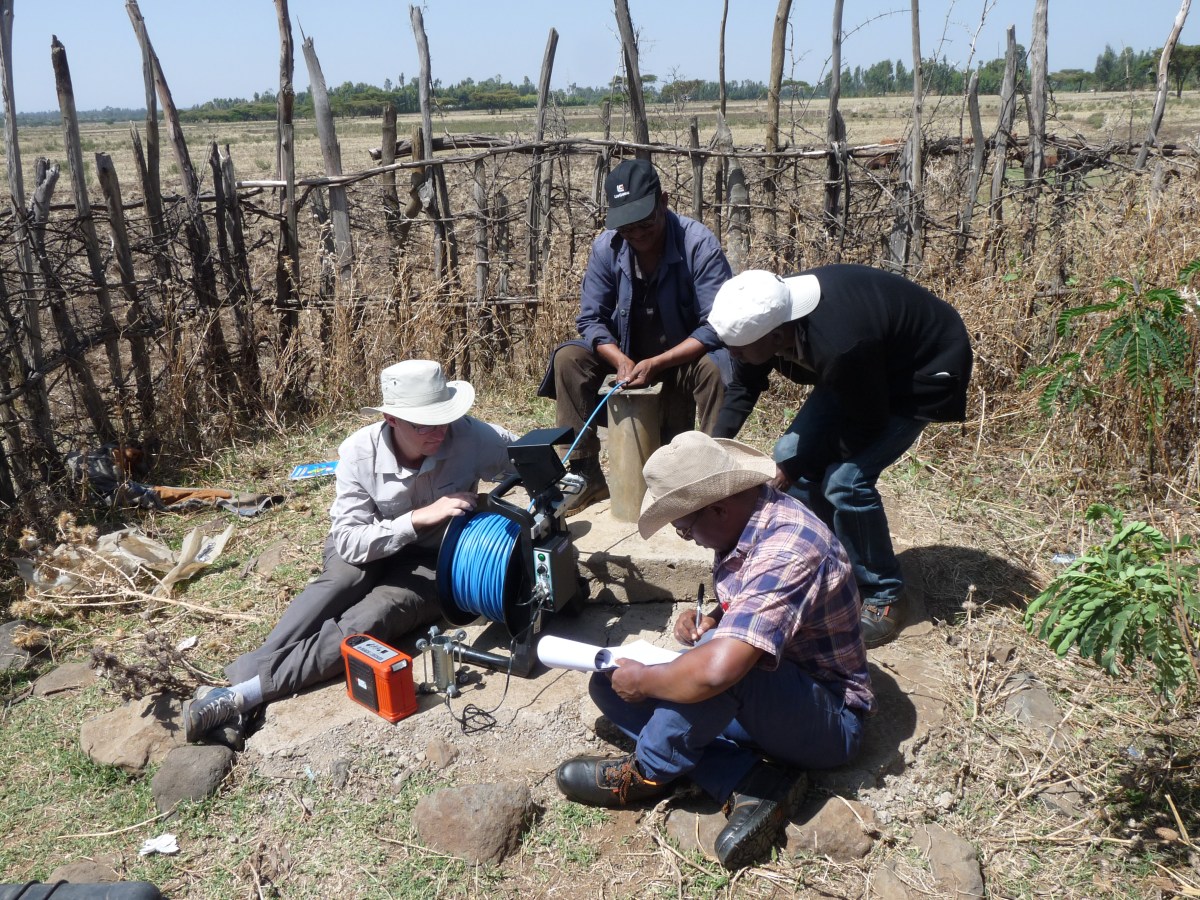
Photo: “Hidden Crisis team members using a CCTV camera to undertake downhole observations of the borehole construction of a community borehole” (Source: ‘BGS © NERC. UPGro Hidden Crisis Project.’)

Introducing Justine Olweny : a Ugandan WASH entrepreneur and resource centre founder

My name is Justine Olweny, and this is my story:

Where I came from:

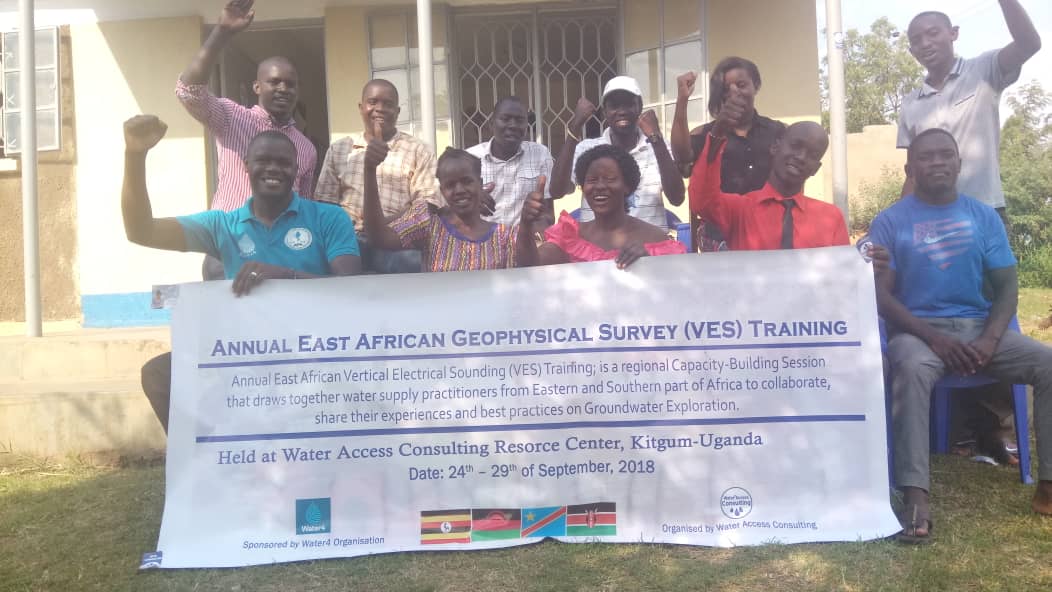
Being born to a water engineer and a teacher in a town in Northern Uganda strategically molded me for who I am today. At 12 years old I was practicing and solving problems using a Pentium II computer desktop. I undertook vocational study (Certificate – Degree) and gained a BSc. in Information Systems and Technology (Dev’t & Integration). At this time, I founded Youth Against Poverty (a community based organisation) and wrote an article on ‘Youth Successes in Northern Uganda’. As an ICT freelancer I was able to market my work and landed a couple of opportunities one of which was Geophysical Survey using Vertical Electrical Sounding with Water4.org.

Continue reading “Introducing Justine Olweny : a Ugandan WASH entrepreneur and resource centre founder”

African Water and Sanitation Academy (AWASA): The International Resource Centre (IREC) of NWSC, Kampala, Uganda ; your Hub for Africa

AfWA RELEASE

As part of the implementation of its Business Plan 2018-2022, the African Water Association (AfWA), will be structuring the coordination of all its training activities in the framework of the operationalization of the African Water and Sanitation Academy (AWASA). This will involve setting up a coordination hub headquartered at the International Resource Center (IREC) of the National Water and Sewerage Corporation (NWSC) in Kampala- Uganda, from which training shall be deployed in different Operational training centers managed by its members in the regions such as:

  • Rabat-Morocco, at ONEE’s International Institute for Electricity and Potable Water
  • Ouagadougou-Burkina Faso, at ONEA’s Training Center for Water Works; the National Office for Water and Sanitation
  • Kampala-Uganda, at International Resource Center (IREC) of National Water and Sewerage Corporation (NWSC)

Other centers are in the process of being identified.
To initiate the process of creating AWASA, AfWA Executive Board made the resolution, during the ordinary session held on July 19, 2018 in Kampala- Uganda, to set up a Working Committee led by Professor Hamanth KASAN, President of AfWA Programs Committee. This committee is expected to develop and coordinate all procedures to provide AWASA with an updated Business Plan, identify all partners including universities, centers of excellence in the water and sanitation sector in Africa and in the world, development partners/donors, African water organizations, etc. in order to ensure that AWASA Director’s recruitment process is initiated by December 2018, ensuring the start of AWASA activities by January 2019.

photo credit: NWSC/AfWA

“The borehole is not a madman” 3 reasons why Community Based Management demands a rethink

by Dr Luke Whaley, Professor Frances Cleaver and Felece Katusiime (UPGro Hidden Crisis)

In Uganda, waterpoint committees exist more in name than in reality. Many waterpoints have been ‘personalised’. That is to say, they are under the control of one or a small number of individuals. Moreover, where local management arrangements (of any sort) are effective they tend to rely heavily on the authority of the head of the village council, known as the LC1 Chairperson. Indeed, it is often the LC1 Chairperson and not a waterpoint committee who is instrumental in collecting funds, securing maintenance and resolving disputes. Where an apparently functioning committee is in place, this is usually the result of concerted efforts on the part of particular local NGOs, who cannot guarantee this level of commitment in the longer term.

At least, these are the impressions of Felece Katusiime, a social science field researcher working on the UPGro ‘Hidden Crisis’ project, concerned with the sustainability of rural groundwater supply in Ethiopia, Uganda, and Malawi. They are field insights (preceding full data analysis) from someone who has spent many months in the field undertaking research in roughly 200 rural Ugandan villages. The discussion that follows is intended as a provocation and not a promulgation of project findings. We are interested in the extent to which the points made here accord or contrast with the experiences of you, the readers, and we welcome dialogue on these matters.

So, why might it be that in Uganda waterpoint committees,as envisaged on paper, seldom exist as such on the ground?

Continue reading ““The borehole is not a madman” 3 reasons why Community Based Management demands a rethink”

In Memoriam: Hon. Maria Mutagamba

It is with great sadness that we have heard of the passing of the Honorable Maria Mutagamba, former Minister for Water & Environment, Uganda.

by Sean Furey, RWSN Secretariat

It is with great sadness that we have heard of the passing of the Honorable Maria Mutagamba on 24 June, at the age of 64. Mrs Mutagamba was an economist and politician, who according to Wikipedia:

…was born in Rakai District on 5 September 1952. She studied at St. Aloysius Senior Secondary School in Bwanda, Kalungu District for her O-Level studies (1967–1970). She then attended Mount Saint Mary’s College Namagunga in Mukono District for her A-Level education (1971–1972). She attended Makerere University from 1973 until 1976, graduating with a Bachelor of Arts in economics. She also held a Diploma in computer programming from the ICL Computer School in Nairobi, Kenya, obtained in 1980, and a certificate in executive leadership from the John F. Kennedy School of Government in Cambridge, Massachusetts, United States, obtained in 1997.[5] In 2013, she was presented with an honorary doctorates in law from the Canadian McMaster University.[6]

DSC_0177She served in various posts in the Government of Uganda, most recently as Minister for Tourism. However, she is best known to RWSN members as the State Minister for Water Resources, from 2000, and then Minister for Water and Environment between 2004 and 2012. During this period she served as President, African ministers’ council on water (AMCOW), (2004–2012).

Under her leadership, the Ministry of Water & Environment became internationally recognised as leading actor in African water management issues, with a capable civil service team and an open attitude to innovation and collaboration with international partners.  Annual processes of Joint Sector Reviews and Sector Performance reporting became the gold standard of improving coordination, reporting and accountability across the WASH and water resources sectors.

I had the pleasure of meeting her when she came to open the 6th RWSN Forum in 2011 – of which she was a great supporter – and then again at the 6th World Water Forum in Marseille. I was struck by how humble and thoughtful she was, yet also strong and with a keen intellect.  She had a particular passion for rainwater harvesting, which she saw as an opportunity that was being missed.

According to the New Vision and other news sources, she had been suffering poor health for some time and died of liver cancer.  Uganda has sadly lost a great water champion.

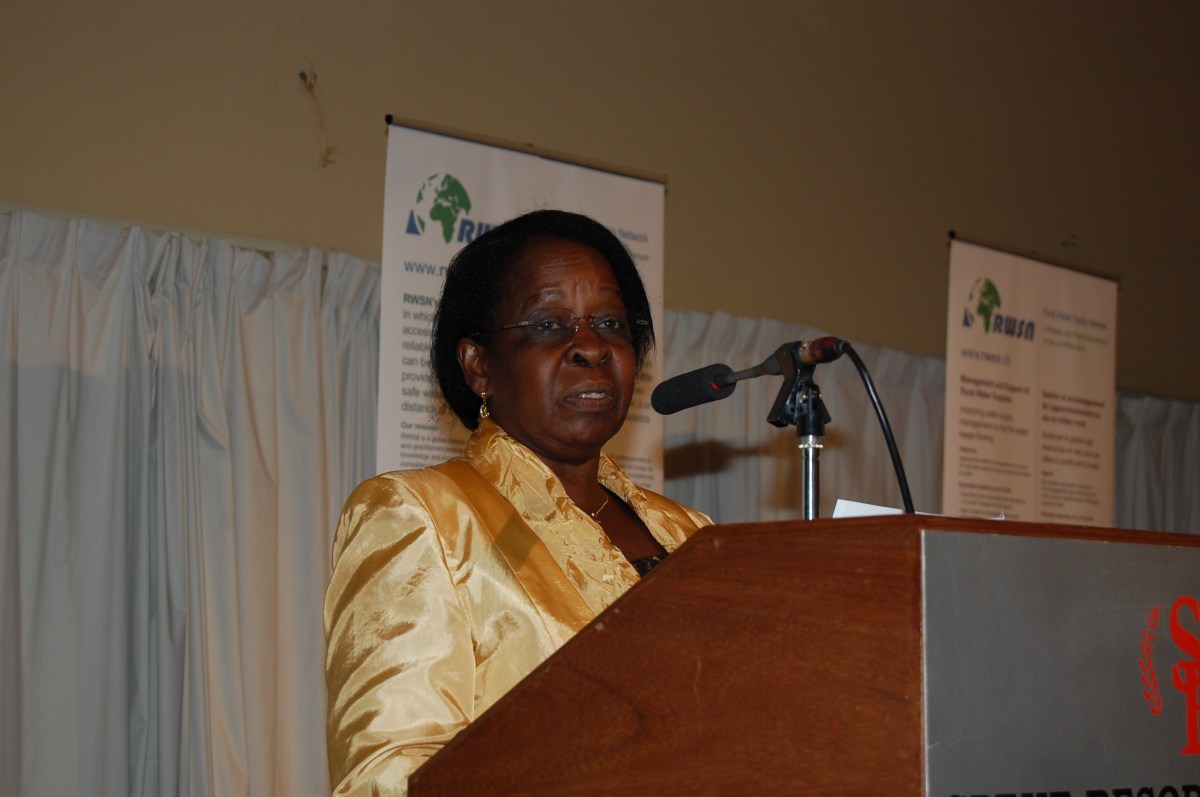
Photos: Hon. Maria Mutagamba opening the 6th RWSN Forum, Kampala, 2011


3 ways countries can improve water supplies in small towns

by Fadel Ndaw, World Bank Global Water Practice – reblogged from http://blogs.worldbank.org/water/3-ways-countries-can-improve-water-supplies-small-towns

water-small-town-bolivia

A public faucet that serves 1,000 families in el Alto, Bolivia. Photo credit: Stephan Bachenheimer / World Bank

Small towns* typically have not been well served by national or regional water utilities. Decentralization has become increasingly widely adopted, but even if local governments at the small town level have the power to operate a water utility, they often lack the capital and skills to do so. In response, some local governments and public institutions concentrate improvements on upgrading public utilities’ operations or strengthening community based management. In other cases, they choose to bring in the private sector knowledge of how to get clean water and sanitation services to more people more efficiently, affordably or sustainably. There is no one solution to addressing often very complex water and sanitation challenges.

Continue reading “3 ways countries can improve water supplies in small towns”

Kampala WASH Symposium — Improve International

By Susan Davis, Executive Director, Improve International Last month, I went to one day of the Kampala WASH Symposium. The theme was “From Projects to Services: WASH Sustainability through Whole System Approaches.” I wish I could have attended more, especially the open houses and field trips, but had had other commitments. This was the sixth […]

via Kampala WASH Symposium — Improve International

Make Bottled Water Available and Affordable

Guest Blog by Francis Mujuni, WASH Specialist@MCID

Francis Mujuni
Francis Mujuni, MCID, Uganda

Uganda with a population of 37 million people an annual population growth rate of 3.2% makes it one of the fastest growing countries in Africa (UBOS 2014)[1]. With such rate of growth compounded by high levels of poverty the country is unable to provide its people the required social amenities to live healthy and productive lives. With a per capita annual income of less than US$600, Uganda is still one of the world’s poorest countries where a quarter of its population lives on less than $1.25 a day[2].  Poor sanitation and lack of safe water costs Uganda an equivalent of $177 million a year. Total health expenditure as a percentage of GDP was in 2013 was about 9.8% with $21 million spent on healthcare due to poor sanitation and $147 lost due to premature death[3].

Continue reading “Make Bottled Water Available and Affordable”

Learning in the rural water supply sector – a complexity perspective

by Felix Knipschild, reblogged from IRC

How can I conceptualise and model learning in the rural water supply system in Uganda?

This is the challenge I’ll be working on for the next 5 months at IRC. I’m a student at Delft University of Technology, following the master Systems Engineering, Policy Analysis and Management. At my faculty, we learn to look at the intersections between technical systems and social systems and design for complex systems.

Continue reading “Learning in the rural water supply sector – a complexity perspective”