
Tag: Uganda
Next Post

Last week, we had our first Triple-S research seminar, discussing the first findings from the assessments of service provision around point sources in Ghana and Uganda. Although I had seen a sneak preview of some of the data, the consolidated results were shocking. After seeing them, I was tempted to declare community-based management (particularly of point sources) to be dead.
View original post 828 more words
Sustainability of solar water pumping in Uganda
Latest news from WASHTech project in Uganda: http://www.rural-water-supply.net/en/projekts/details/56

This video highlights steps of using the Technology Applicability Framework (TAF) to assess the potential solar powered water pumping for domestic supply in Kanungu district of south western Uganda
Allocation of funds for district level WASH programmes: What is the ideal formula?

By Lydia Mirembe and Deirdre Casella in Lira, Uganda –
What started off as a commonplace lecture-like meeting in the Lira District Council Hall, ended up in a spirited discussion about a variety of issues around the delivery of water services in a decentralisation framework. Conditional grants for water and sanitation; mobile phones for water; as well as Hand Pump Mechanics Associations (HPMAs) were the key issues under consideration.
View original post 626 more words
Monitoring, learning and adaptation – important lessons from Uganda for development partners
By Harold Lockwood –
Yesterday I read an excellent report on how the water sector in Uganda has managed to build a truly national monitoring system. The report is written by the Rural Water Supply Network – RWSN – and so naturally focuses on the rural sector as it looks back at the detailed steps in the development of a framework which has allowed the sector in Uganda to be able to learn about its own performance and take steps to improve how it functions. It really ‘tells the story’ of what it takes to build such a monitoring system and gives insight into one of the most comprehensive monitoring systems that I know of in sub-Saharan Africa.
View original post 617 more words
Realities of water well drilling in Africa: e-discussion highlights so far
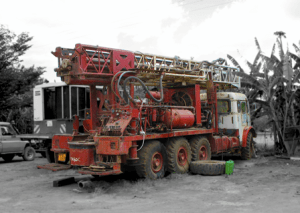
RWSN is currently hosting a 3 week discussion on ‘Cost Effective Boreholes’ as part of our Sustainable Groundwater Development Theme. Here are some highlights so far:
It is very interesting to read the inputs so far from Kenya, Zambia, Sudan, Nigeria, Ethiopia and Uganda.
From the discussions so far, it seems that the Kenya and Ethiopia have established regulatory frameworks for water well drilling (thanks Chrispine and Tesfaye). In the Kenyan case, government regulation, which is limited by capacity constraints is augmented by the monitoring of activities by the drillers association. It will be interesting to hear more on this from Chrispine and others in Kenya. In contrast Zambia (thanks Daniel) lacks any regulation with respect to groundwater resources. There is thus no registration of boreholes in the country whatsoever and even drilling records must not be collected. Although a water resources management act was passed in Zambia 2011 it still awaits launch and implementation. Perhaps there are also others with ideas for Zambia. In Sudan, we hear from Harm Bouta about a very fragmented drilling sector with no strict regulations in place, but that there are other initiatives taking place in Sudan from which we could learn more.
Continue reading “Realities of water well drilling in Africa: e-discussion highlights so far”
 Rural Water Supply Network - blog