Cuando los sistemas de agua potable se rompen …

Esta entrada fue realizada por PRACTICA Foundation como miembro de la organización RWSN.

La importancia del manejo de activos en los sistemas de agua potable en el contexto del desarrollo

Debemos de preguntarnos si la cobertura de agua potable en el mundo satisface el Objetivo de Desarrollo Sostenible (ODS) 6: “Agua limpia y saneamiento para todos”. Sería increíble poder contestar con un confiado “si” y tomando en cuenta todos los esfuerzos institucionales y el incremento en el numero de sistemas de agua en el mundo deberíamos estar celebrando nuestro progreso con respecto a este ODS.

Sin embargo, la respuesta no es tan sencilla. Cuando un sistema de agua potable es construido, también se requiere un esfuerzo continuo para mantener el agua fluyendo. Por ejemplo, el ultimo reporte (2014) de Nepal muestra que solo el 50% de los sistemas de agua en aquel país se encuentran funcionando actualmente. Esto implica que la gran mayoría de las comunidades rurales todavía no cuentan con acceso al agua o padecen severas restricciones. Ejemplos de estas restricciones son el solamente recibir agua por determinados periodos de tiempo, o que la calidad del agua sea tan baja que no pueda ser destinada al consumo humano.

Los problemas mas comunes en los sistemas de agua potable

Los desafíos a los que se enfrentan los gerentes de sistemas de agua potable son multifacéticos.

Uno de ellos es la gran atención que se le pone solamente a la fase constructiva. Una vez que el sistema esta construido se tiende a olvidar el esfuerzo continuo para operar y darle mantenimiento al sistema.  En el largo plazo, resulta mejor tener un plan solido en el cual se consideren todos los costos. Sin embargo, en la mayoría de los casos la estrategia recae en una visión de corto plazo, en la que los problemas se solucionarán solo cuando ocurran.

‘Cuando el sistema de agua falla…, entonces uno va y busca dinero para repararlo o cambiar la pieza’

Otro problema común es el sobredimensionamiento de los sistemas. Este problema se debe a la falta de información proveniente desde la perspectiva de los usuarios y a la falta de un balance entre las entradas y las salidas hablando en términos monetarios. Esto ocasiona que los diseños no correspondan con la situación real de las localidades. Resultando en sistemas que son mas costosos y complejos de operar. 

‘Algunos sistemas están entonces diseñados para fallar desde el momento en el que comienza su construcción’

Además, en el sistema no se cuenta con la planeación requerida para llevar acabo las actividades de mantenimiento, con miras a poder prevenir las refacciones que se van a necesitar.

‘Con altos niveles de falla y bajo nivel de servicio, es claro que los sistemas de agua potable en las comunidades rurales carecen de información. Esto es un síntoma inequívoco de solamente enfocarse en construir, sin preocuparse por finalizar un sistema que pueda ser funcional mucho tiempo. Dicho esto, surge una necesidad en el sector rural de profesionalizar la construcción de infraestructura siguiendo la metodología de manejo de activos (Boulenouar, 2014)’.

Los esfuerzos conjuntos de la alianza WASH

Desde 2019, la Alianza WASH Internacional ha estado trabajando en Nepal en la implementación de un proyecto piloto. En el cual los productos consisten en el desarrollo de una metodología y conceptualización de herramientas digitales para el manejo de activos en pequeños y medianos sistemas de agua. Este proyecto representa una oportunidad única para mejorar la sostenibilidad a largo plazo de los sistemas. La metodología incluye considerar a todos los actores involucrados, sus necesidades y sus capacidades en la conceptualización de las herramientas.

Desarrollo de las herramientas digitales en el contexto del desarrollo

El manejo de activos relacionados con la infraestructura no es un concepto nuevo, surgió en 1980 en Europa. Comúnmente se aplica a todo tipo de infraestructura pública como son puentes, autopistas, vías ferroviarias, etc. Existiendo una gran variedad de firmas especializadas que ofrecen sus servicios en la capacitación sobre este tema. A la par de una gran variedad de software que se encarga del manejo de activos en tiempo real.

Sin embargo, la gran mayoría de las herramientas se han desarrollado sin considerar las necesidades rurales. Esto resulta en programas muy completos, pero muy complicados de utilizar. Se convierten en obsoletos, pues los usuarios tienden a abandonar su uso.

En nuestro siguiente blog abordaremos los principales componentes de un plan de manejo de activos, el proceso de implementación y el rol que juega en la mejora de las finanzas de un sistema de agua potable.

Este documento fue realizado por Practica Foundation como miembro de la Alianza WASH, parte del consorcio WASH SDG. La información fue escrita por Aldo Zamarroni Peralta, con apoyo de los colegas de la Alianza WASH Internacional. Las fotografías han sido provistas por el Centro Integrado de Desarrollo Urbano (CIUD) ubicado en Nepal. Para más información por favor contactar: office@practica.org: y https://www.practica.org

Referencia: Boulenouar, J. (2014). Infrastructure asset management: a key building block for sustaining rural water services. 
When water systems break down…

This is a guest blog by RWSN Member Organisation PRACTICA Foundation.

Why Asset Management is important to solve water systems’ problems in the development context.

Does world-wide water infrastructure coverage fulfil the Sustainable Development Goal (SDG) 6: “Ensure access to water and sanitation to all”? It would be great to answer this question with a confident ‘yes’ and considering the institutional efforts made and the increase in the number of water systems, we should be celebrating our progress towards this SDG. However, it is not that simple. When a water system is built, ongoing efforts are required to keep water flowing. For example, the latest reports (2014) from Nepal show that only 50% of the water systems in country are functioning well. This implies that most people in rural areas still do not have access to this vital liquid or face serious constraints. For example, receiving water only for a limited number of hours per day and/or water of a poor quality.

Most common water systems’ problems

Challenges related to the functioning of water systems are multi-faceted. One mayor issue is the strong focus on infrastructure construction. Once water systems have been built it is easy to forget about the continuous efforts required for operation and maintenance. In the long run, it is essential to have a solid planning on (future) costs needed to keep the system working. However, often the strategy is leaning toward short-term thinking and solving challenges when they appear.

 ‘When the water system breaks down…, one seeks funds to repair it.’

Another common practice is to over-size water systems while designing them. During the design phase there is often no reliable information from the consumers’ perspective and the balance between income and expenditure is neglected. This hinders accurate planning and leads to designs that are a ‘mismatch’ with the actual situation. Often, systems are bigger than necessary, which results in increased operational complexity and higher costs than smaller systems would require.

‘Some systems are thus designed to fail from the very beginning’.

Furthermore, there is not enough money set aside by the local communities to timely maintain or repair the systems. The knowledge on why and how systems break down and when certain parts need to be replaced before they leak, erode, or wear out, is often also lacking.

‘With high levels of non-functionality and low levels of service, it is clear that rural water assets are not being adequately managed. It is also a symptom of the current focus on first-time access, which needs to shift to a focus on long term service delivery. There is a need for actors within the rural water sector to follow other infrastructure-heavy and professionalized industries, and start adopting asset management practices’ (Boulenouar, 2014).

The WASH Alliance joined efforts

Since 2019, the WASH Alliance International has been working on the development of Asset Management Tools to improve the management and maintenance of rural and peri-urban water systems. Nepal has been selected for the pilot project. The outputs consist of a comprehensive methodology and digital tools for asset management of small/medium-sized rural water systems. This project provides a unique opportunity to improve the long-term sustainability of water service provision. In the development of the resources, the whole spectrum of users, their needs and capacities are being considered.

Tailor-made software development for the development context

Improving asset management of infrastructure is not a new concept, it has been discussed since the 1980s in Europe and the interest for this approach is still growing. It is commonly applied to all kinds of public infrastructure (bridges, railways, roads, sewer systems). Several specialized firms offer their services on this topic and a range of trainings are available nowadays. Also, commercial software is readily available on the market.

However, the majority has been developed from a Western perspective. This has resulted in very complete, but also very complex software packages. They are too challenging to be used by local Water User Committees and service providers in rural or (peri) urban settings in developing countries. Next to the high skill set required to work with these packages, their excessive costs make them completely out of reach for local water user committees or service providers.

In our next blog, the components of an AM plan, the implementation process and its role in improving the financial management of water systems will be addressed.

This document was developed by Practica Foundation as a member of the WASH Alliance International, partner of the WASH SDG Consortium. The blog’s lead author is Aldo Zamarroni Peralta, supported by a number of colleagues from WASH Alliance International. For more information please contact: office@practica.org

Reference: Boulenouar, J. (2014). Infrastructure asset management: a key building block for sustaining rural water services. Photo credit: CIUD, Nepal


NEW! Rural Water 2021 + RWSN Blue Pages / Pages Bleues

We are delighted that announce the launch today of “Rural Water 2021” and the “RWSN Blue Pages / Pages Bleues”, which you can download now from the RWSN website: https://www.rural-water-supply.net/en/resources/details/944

Continue reading “NEW! Rural Water 2021 + RWSN Blue Pages / Pages Bleues”

La planification, l’acquisition de marché et la gestion des forages: un référentiel de l’UNICEF est maintenant publier en français !

La planification, l’acquisition de marché et la gestion des forages: un référentiel de l’UNICEF 

est maintenant publier en français !

Cet outil guide le personnel de l’UNICEF chargé des programmes et des ressources tout au long du cycle de vie d’un projet. Il suit une séquence logique sur les pratiques d’achat de l’UNICEF et formule des recommandations sur les processus (appel d’offres ou demande de proposition de services), les critères d’évaluation, les clauses contractuelles, les devis génériques, les termes de référence et les approches contractuelles visant à des services techniques pour déterminer l’emplacement et la construction de forages et la supervision de travaux de construction (français et Anglais).

Borehole Drilling – Planning, Contracting & Management: A UNICEF Toolkit is now also available in French!

This toolkit guides UNICEF programme and supply staff through the life of a project. It follows a logical sequence on UNICEF procurement practices and provides recommendations on processes, evaluation criteria, contract provisions, generic bill of quantities, terms of reference and contractual approaches to seek technical services for siting of boreholes, borehole construction and supervision of construction works (English – French).

My experience of the RWSN Mentoring Programme

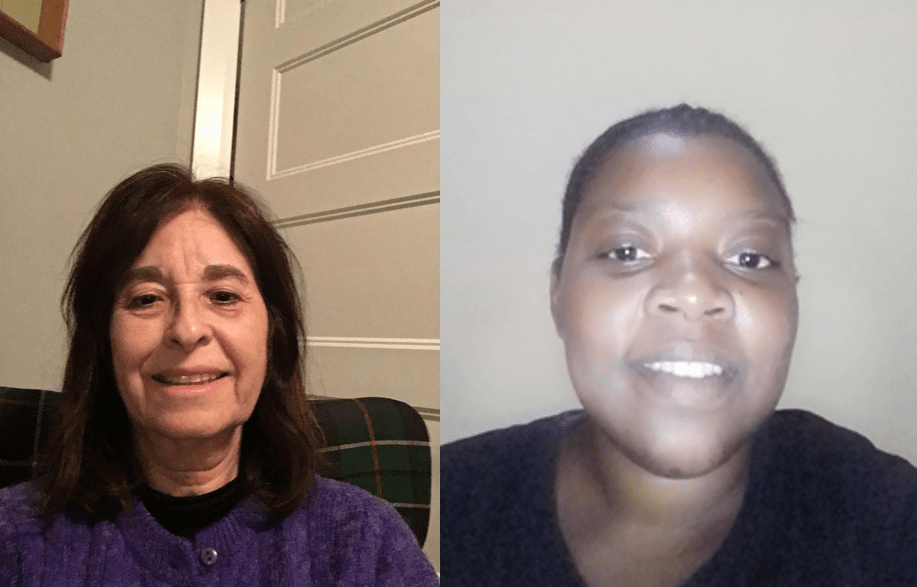
This is a guest blog by Amanda Mugwambi, a young professional from Zimbabwe enrolled as a mentee in the 2020 RWSN Mentoring Programme.

I’m Amanda Mugwambi from Zimbabwe. I have been working in the water, sanitation and hygiene (WASH) sector for over 5 years in addition to four years prior of environmental management. I am currently working as a Public Health Promoter for an international NGO. I have had the opportunity to work in both urban and rural projects. It has been fulfilling to see community transformation through donor funding complimenting stakeholder efforts and community engagement.

I heard about the Rural Water Supply Network (RWSN) mentoring programme through my country’s WASH National Coordination Unit. I was interested in the opportunity to gain knowledge and skills to advance my career and to hear about experiences in other countries. I must admit, I had a bit of trouble in the application process where I had to outline my expectations from being part of the programme. I just didn’t seem to be able to mainstream my thoughts. I wanted to know more about everything! When I finally managed to submit my application, I was anxious to find out who my mentor would be. I hoped they would be able to provide the right balance of academic and professional development.  I was matched with Susana Sandoz, a WASH specialist, currently a consultant with UNICEF. RWSN really did an excellent job pairing us! Not only is Susana a seasoned expert but her experience with UNICEF which funds some of the projects I have been working on gave me an extra understanding.

We began the mentorship process with Susana helping me gather my thoughts by streamlining topics that we would like to discuss over the duration of the programme. We communicated via email, whatsapp and skype. We had our first session in April 2020 via skype. To be honest, it was so easy talking to her. I didn’t have to worry about saying the wrong thing. We met online once a week on skype, then we’d decide on the topic for the following week. Susana would send me literature to review so that I could note down any questions for our next meeting. My favorite part of our sessions was when Susana would tell about her experiences in the different countries she had worked in, some of them were very applicable to Zimbabwe. It was relatable and gave me an insight on how to find solutions to the challenges I faced.

I have a keen interest in School WASH. I particularly liked the sessions on hygiene promotion, menstrual hygiene management, handwashing, child protection, emergency management, disaster risk reduction especially considering the Covid-19 pandemic. I have learnt the importance of using emotional triggers to reinforce positive behavior change such as effective handwashing. And I have also learnt more about community engagement to ensure the success of water and sanitation projects. It is crucial to trigger community members early for them to realize the importance of zero open defecation and the safe water chain to improve their health and hygiene. Below is the list of all the topics we discussed:

DateSession#Topic
15 Apr1COVID 19, Handwashing
22 Apr2Sanitation and Sato Pans
29 Apr3Menstrual Hygiene Management (MHM)
6 May4Disability and Inclusion
13 May5Monitoring & Evaluation; Communication for Disasters
20 May6Latrine types: advantages and disadvantages
3 June7Sustainability
10 June8Development and Environmental Issues
15 June9Communication for development (C4D)
24 June10Social Norms changes
14 July11Emergencies in WASH
21 July12Water Quality and Water Treatment
28 July13Why is Sanitation Important and Advocating for Sanitation
5 Aug14The Burden of COVID-19
13 Aug15Advocacy
21 Aug16Gender
25 Aug17Child Protection
3 Sep18Climate Change
8 Sep19Skills for Interviews
15 Sep20Hygiene Promotion
29 Sep21Capacity Building
6 Oct22WASH in Schools and COVID-19 Reduction
13 Oct23Types of Rural Water Supply Systems
20 Oct24Pollution Analysis of Water Supply Systems
27 Oct25Pollution Analysis of Water Supply Systems
11 Nov26Urban and Rural Characteristics and Different Approaches in WASH
17 Nov27Urban and Rural Characteristics and Different Approaches in WASH
23 Nov28General Climate Change Summary
7 Dec29How to obtain an Enabling Environment
15 Dec30Income Generating Activities, General Advice for Latrine Building Questions on topics previously discussed

I appreciate the opportunity to be part of the RWSN mentorship. A special thanks to Susana, I really enjoyed the sessions, always informative and flexible. We also developed a friendship over the months which was pleasant and has improved our mental health during the pandemic. In our case we have agreed to continue checking up on each other at least once a month. I encourage young professionals to join the RWSN network as it’s a platform for continuous learning and for personal and professional development.

About the author

Amanda Mugwambi holds an MSc in Disaster Management and a BSc in Environmental Science from the University of Science and Technology (NUST) Zimbabwe. Her interests range from WASH, climate change adaptation and Disaster Management.

About the RWSN Mentoring Programme

For more information on the RWSN Mentoring Programme, see here. RWSN thanks the Swiss Development Cooperation and World Vision for their support to the mentoring programme in 2020.

Coming soon: USAID Pro-WASH webinar series on Operation & Maintenance

Join PRO-WASH for a new webinar series focused on operation and maintenance of WASH infrastructure!

This four-part series will share lessons learned from USAID partners focusing on innovative advances in approaches to operation and maintenance (O&M) of water, sanitation and hygiene (WASH) infrastructure. Speakers will discuss their program’s approaches to engineering, environmental, financial, and political-economy challenges, and aim to draw out important lessons that are more widely applicable. During this webinar series, attendees will learn more about:

Continue reading “Coming soon: USAID Pro-WASH webinar series on Operation & Maintenance”

Self-supply: why I wrote the book

by Dr Sally Sutton, SWL Consultants, on her new book “Self-supply: Filling the gaps in public water supply provision” available to buy, or free to download from Practical Action Publishing from 15 February 2021.

Moving from deserts to humid lands

After 14 years working as a hydrogeologist in the deserts of the Middle East on traditional water supplies and wellfield construction, I moved to sub-Saharan Africa, which presented a whole new challenge.

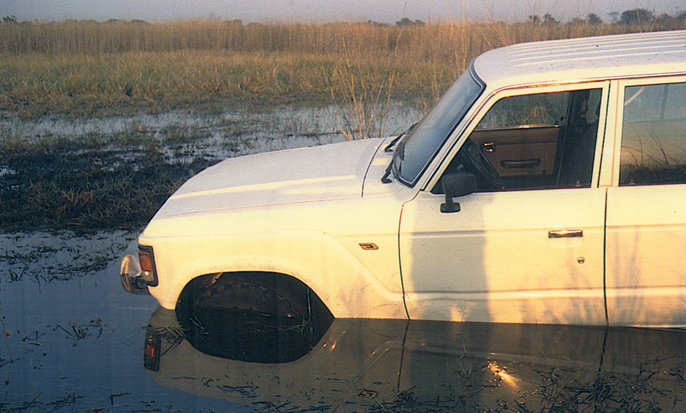
The easier availability of water was the most obvious difference – sometimes too much so (see photo)- but other important ones were the low quality of water and scattered population.

New challenges – Large areas with accessible groundwater and sparse populations – water, water everywhere but not a drop to drink.
Continue reading “Self-supply: why I wrote the book”

RWSN opportunity: part-time moderator for RWSN discussion platforms

Skat Foundation is looking for a part-time co-moderator of the RWSN online platforms from the Global South. The post will be a consultancy or paid Internship position in the RWSN Secretariat. If your application is successful you will receive a contract up to 31 July 2021 (containing about 1-2 days per week) which could be extended until the end of this year and beyond if performance is good.

Application deadline: 13:00 GMT 24 February 2021

Online Application form

Skat Foundation is looking for a part-time co-moderator of the RWSN online platforms from the Global South. The post will be a consultancy or paid Internship position in the RWSN Secretariat. If your application is successful you will receive a contract up to 31 July 2021 (containing about 1-2 days per week) which could be extended until the end of this year and beyond if performance is good.

Continue reading “RWSN opportunity: part-time moderator for RWSN discussion platforms”

Consultancy – Safe/Small Water Enterprise Consumer Knowledge Curation Phase 1

RWSN Member Organisations, Water4, Safe WaterNetwork, Water for Good and Water Mission have released an interesting consultancy opportunity.

Download the ToRs

Deadline is 19 February 2021

Please note that this is not an RWSN project so please contact Anna Rohwer at Water4 for queries and to apply