The rise of the off-grid city?

Adrian Healy reports on the findings of research undertaken in Lagos on the proliferation of domestic boreholes. This article was originally published in GeoDrilling International, and can be read here.

The conventional model of urban development focuses on centralised water service provision, where the state ensures a supply of water through storage and treatment plants and a grid of interconnected pipelines. Yet in many of our fastest growing cities, particularly in Africa and parts of Asia, this model is being turned on its head. Here, households, and business users, are increasingly turning to an ‘off-grid’ model, where they take responsibility for their own water supply. Nowhere is this more true than in the thriving megalopolis of Lagos in Nigeria, which serves as an example to practitioners around the world.

The public supply of water is estimated to reach no more than one in ten households living in Lagos State and, with a rapidly rising population, that proportion is changing every day. Despite their best efforts, the city authorities struggle to keep up with the pace of change, hampered further by an ageing infrastructure. In the absence of a reliable and convenient supply of water, it is perhaps little wonder that those who are able to secure their own water supplies do so. The result is a proliferation of domestic boreholes, as households seek to tap the accessible groundwater reserves beneath their feet. Whilst the actual number of domestic boreholes is unknown the possible numbers are staggering. Lagos State Water Corporation suggests that there may be anything up to 200,000 such boreholes in the State. Separately, a 2017 survey of 539 households living in Lagos State found that 51% reported owning their own borehole, with a further 36% reported that they shared a private borehole with other families[1].

The rise in the numbers of domestic boreholes is typically explained as a failure of the government to supply water to households. The public network often does not reach new housing developments and, where it does reach, failures of supply are commonplace. What is less often remarked on is the role played by a thriving drilling industry, fuelled by innovation and new entrants. Certainly, the development of new technologies, often imported from the oil industry or from abroad, has played a major role in driving the establishment of the borehole-drilling industry in Lagos. As costs of entry have fallen, increasing numbers of new companies have started up, offering cheap construction methods which are affordable by more and more households. Together, these factors are driving the evolution of a city that relies on off-grid water infrastructures.

This rise of the off-grid city has, in many ways, enabled the continuous expansion of Lagos as a major economic centre. For those who can afford their own borehole it has also delivered peace of mind as well as health and economic benefits, at least in the short-term. Questions though are now being asked as to the longer-term implications of this, particularly by the more professional members of the drilling and groundwater community. They point to the rise of poorly constructed boreholes as prices and drilling standards fall. They worry that this may lead to widespread contamination of the groundwater, whilst also reporting falling water tables in many areas, leading to fears of over-abstraction and the potential for saline intrusion.

Understanding whether these worries are well-founded is hampered by the lack of any system for monitoring either the quality or the amount of water being abstracted from the aquifers. State Government proposals to require owners of domestic boreholes to register these have foundered on the fear that this will be a front for the taxing of private water supplies. At the same time, our research indicates that the broader population is relaxed about the upward trend in boreholes, regarding the supply of groundwater as infinite (Figure 1). However, attitudes towards the quality of that water are more mixed, with around half concerned for the future. Evidence as to whether these beliefs are well-placed is currently lacking and requires longer-term data collection, particularly in terms of the amount of ground water available. Our research into levels of e-coli found in 40 groundwater sources demonstrates that residents’ caution about quality is well-founded (Figure 2). However, again, longer term monitoring is required if we are to better understand the risks of contamination over time.

Figure 1: Residents’ perceptions of groundwater exploitation in Lagos

lagos1

Figure 2


Conclusions

In Lagos, as in many other cities, the rise of the off-grid city is due to a mix of social, economic, political and hydrogeological factors. Attempts to overcome the water gap though public provision alone are struggling with the sheer scale of investment required and speed of change in population. The rise of private provision of water supplies has fuelled the growth of the city and, in turn, has been fuelled by a rising tide of prosperity. Yet there are real concerns that the sheer proliferation of boreholes and unregulated abstraction may be storing up problems for the future. So what are the answers? Certification and licensing approaches will certainly help, but only if there is both the will and means to enforce them. Improving knowledge and awareness through education and training, both of the wider public and amongst new contractors, will also help. In the short term it may be that we need to find new mechanisms to monitor the health of our aquifers if we are not to encounter longer-term crises. Drilling contractors can be at the forefront of this exercise, helping to ensure the resilience and durability of the off-grid city.

Acknowledgements

Dr. Adrian Healy, is a Research Fellow at Cardiff University. His research focuses on themes of urban resilience to shocks and hazards. He gratefully acknowledges the support of all his colleagues involved in the RIGSS project, particularly Prof. Moshood Tijani (University of Ibadan), Prof. Ibrahim Goni (University of Maiduguri) and the British Geological Survey. Financial support was provided by NERC-GCRF ‘Building Resilience’ grant (NE/P01545X/1). Further information on the issues of domestic borehole development in Nigeria can be found here.

Figure 2 is reproduced with thanks to Dr. Kirsty Upton and the British Geological Survey, who prepared the original version.


[1] https://www.cardiff.ac.uk/__data/assets/pdf_file/0003/1090650/Perspectives_of_households_in_Lagos.pdf
 

Regulating the private sector

This is the fourth and final post in a series of four blogs entitled “Professional Borehole Drilling: Learning from Uganda” written by Elisabeth Liddle, and a RWSN webinar in 2019 about professional borehole drilling. It draws on research in Uganda by Liddle and Fenner (2018). We welcome your thoughts in reply to this blog below.

Great gains have been made in recent years regarding access to improved water sources in rural sub-Saharan Africa. Concerns have been raised, however, over the extent to which these sources are able to provide a reliable and safe water supply in the medium to long term (for example, Foster et al., 2018; Kebede et al., 2017; Owor et al., 2017; Adank et al., 2014).

There has been considerable focus on post-construction operations and maintenance, but increasing attention is on the quality of the implementation to prevent water point failure in the future (UNICEF/Skat, 2016, Bonsor et al., 2015; Anscombe, 2011; Sloots, 2010).

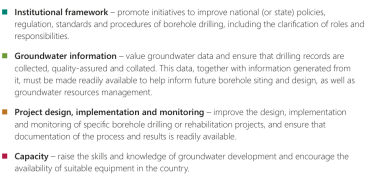
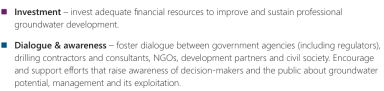
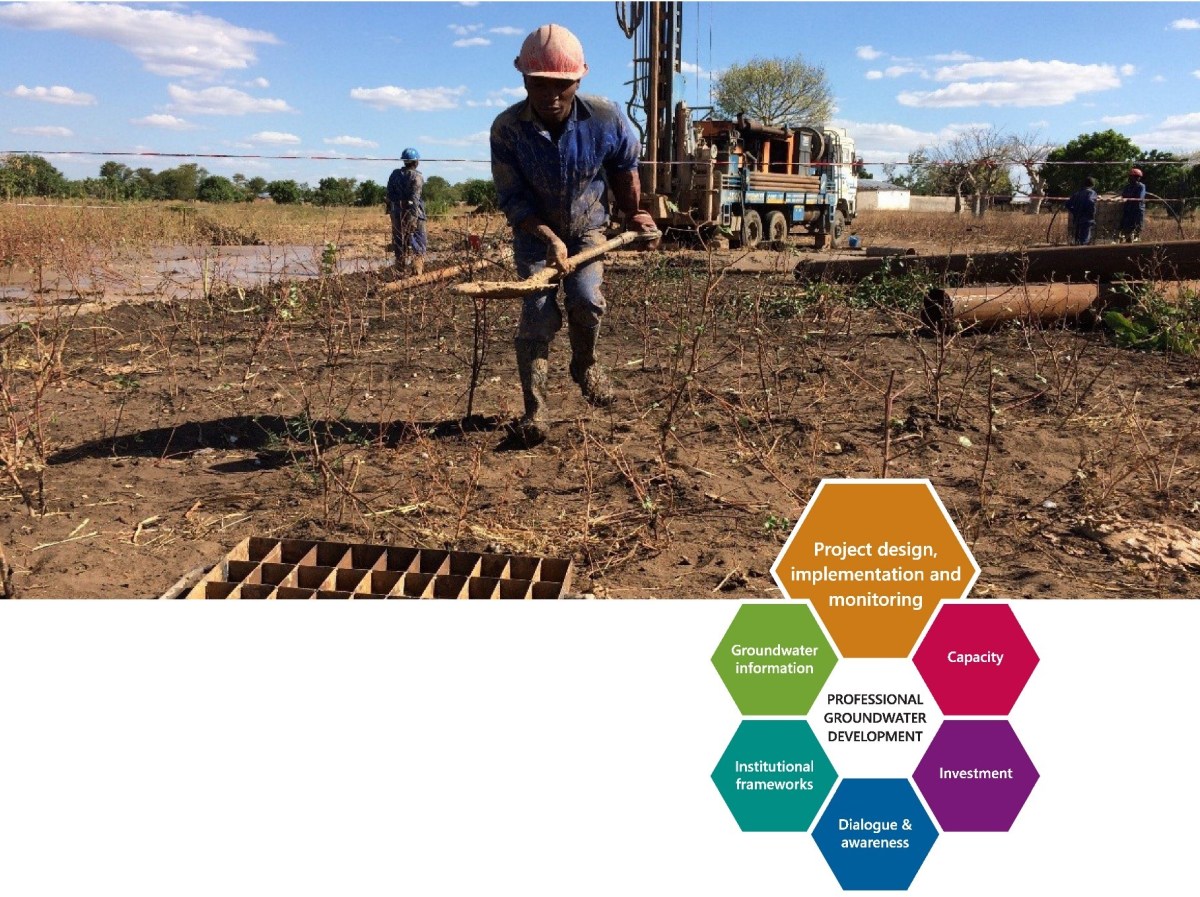
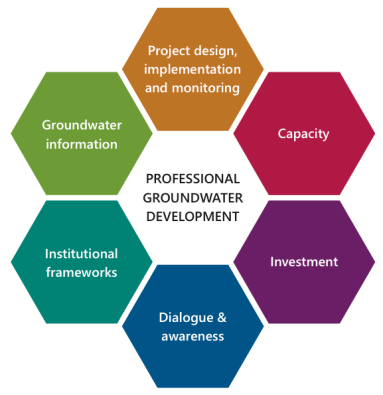
Skat Foundation and UNICEF have been key actors here, jointly advocating for an increase in drilling professionalism across sub-Saharan Africa. They recently released a guidance note on drilling professionalism (UNICEF/Skat, 2016), highlighting six key areas that need to be addressed to increase the quality of implementation work (see Figure 1).

In this blog I focus on the ‘institutional frameworks’ aspect in Figure 1, with specific attention on the ways in which Uganda has sought to improve regulation of the private sector in recent years by introducing licensing systems for both drilling contractors and consultants.

pic1pic2pic3


For the past two decades, Uganda has strongly encouraged the involvement of the private sector in the siting and drilling of rural water points (Danert et al., 2003). Having encouraged privatisation, however, the Ministry of Water and the Environment (MWE) recognised that they had a crucial role to play within this: regulation of the private sector. Regulation efforts began in 1999 with the introduction of drilling contractor licenses. To gain a license, drilling contractors must submit documentation outlining their equipment, their staff and CVs, and their work history. Premises and equipment are then assessed, with the drilling contractor’s technical and financial capacity being at the forefront throughout. Drilling contractor licenses must be renewed annually. Updated lists of licensed drilling contractors are published in national newspapers and online every July.

Recent research in Uganda (Liddle and Fenner, 2018) found that drilling contractor licenses have greatly helped the procurement process within Uganda’s implementing agencies, with the drilling contractor license list typically being the first port of call during bid evaluation.

In recent years, MWE recognised the essential need to extend this licensing system to consultants/hydrogeologists, given the proliferation of ‘briefcase consultants’ in the country (those with no formal geology or hydrogeology training). The issue of briefcase consultants is discussed in blog 1 of this series. Briefcase consultants were bidding for the siting and supervision work, yet evaluation teams within implementing agencies had no way of identifying those that were truly qualified for this work, and those whose bidding documents (e.g. work experience, degrees etc) were fake. Poor quality work then proceeded as briefcase consultants began winning contracts.

To address this problem and provide guidance for evaluation teams, the MWE started the process of issuing hydrogeologist/consultant licenses in 2016 (Tindimugaya, 2016). Consultants can apply for an individual hydrogeologist license or a groundwater firm license. For an individual to gain a license, they must submit their academic documents, CV, and an overview of past work. The individual must have hydrogeology specific qualifications (short course, diploma, or degree); geology qualifications alone are insufficient. Premises and equipment are then assessed and a practical assessment and interview are conducted. For a firm to gain a license, the director must gain an individual license. The firm then needs to submit their company registration details, a list of staff and CVs, and details of past work. By July 2018, licenses had been issued to 65 individuals and 15 firms. As with drilling contractor licenses, consultant licenses are renewed annually and updated lists of licensed consultants are published in national newspapers and online every July.

While these licensing systems have greatly helped Ugandan implementing agencies, similar licensing systems across SSA, especially for consultants, appear to be rare. According to Danert and Theis (2018), of the 14 sub-Saharan Africa countries listed in their report, only three had licensing systems in place for consultants, while ten had licensing systems in place for Drilling Contractors. It is now essential that additional sub-Saharan African governments follow Uganda’s lead, and begin the regulate the private sector, especially consultants given the essential role that siting and supervision are known to play when considering the quality of the implementation work (UNICEF/Skat, 2016; Anscombe, 2011; Danert et al., 2010).

What do you think?

So what do you think? Do you have experiences of trying to select qualified and experiences groundwater professionals? Do you think that licensing professionals is the way forward within your context? Are there any efforts to better regulate the private drilling sector in your country? You can respond below by posting in the reply below, or you can join the live webinar on the 14th of May (register here).

References

Adank, M., Kumasi, T.C., Chimbar, T.L., Atengdem, J., Agbemor, B.D., Dickinson, N., and Abbey, E. (2014). The state of handpump water services in Ghana: Findings from three districts, 37th WEDC International Conference, Hanoi, Vietnam, 2014.

Anscombe, J.R. (2011). Quality assurance of UNICEF drilling programmes for boreholes in Malawi. Lilongwe, Malawi: Ministry of Agriculture Irrigation and Water Development, Government of Malawi.

Bonsor, H.C., Oates, N., Chilton, P.J., Carter, R.C., Casey, V., MacDonald, A.M., Etti, B., Nekesa, J., Musinguzi, F., Okubal, P., Alupo, G., Calow, R., Wilson, P., Tumuntungire, M., and Bennie, M. (2015). A Hidden Crisis: Strengthening the evidence base on the current failure of rural groundwater supplies, 38th WEDC International Conference, Loughborough University, UK, 2014.

Danert, K., Armstrong, T., Adekile, D., Duffau, B., Ouedraogo, I., and Kwei, C. (2010). Code of practice for cost effective boreholes. St Gallen, Switzerland: RWSN.

Danert, K. and Theis, S. (2018). Professional management of water well drilling projects and programmes, online course 2018, report for course participants, UNICEF-Skat Foundation Collaboration 2017-2019. St Gallen, Switzerland: Skat.

Danert, K., Carter, R.C., Rwamwanja, R., Ssebalu, J., Carr, G., and Kane, D. (2003). The private sector and water and sanitation services in Uganda: Understanding the context and developing support strategies. Journal of International Development, 15, 1099-1114.

Foster, T., Willetts, J., Lane, M. Thomson, P. Katuva, J., and Hope, R. (2018). Risk factors associated with rural water supply failure: A 30-year retrospective study of handpumps on the south coast of Kenya. Science of the Total Environment,, 626, 156-164.

Kebede, S., MacDonald, A.M., Bonsor, H.C, Dessie, N., Yehualaeshet, T., Wolde, G., Wilson, P., Whaley, L., and Lark, R.M. (2017).  UPGro Hidden Crisis Research Consortium: unravelling past failures for future success in Rural Water Supply. Survey 1 Results, Country Report Ethiopia. Nottingham, UK: BGS (OR/17/024).

Liddle, E.S. and Fenner, R.A. (2018). Review of handpump-borehole implementation in Uganda. Nottingham, UK: BGS (OR/18/002).

Owor, M., MacDonald, A.M., Bonsor, H.C., Okullo, J., Katusiime, F., Alupo, G., Berochan, G., Tumusiime, C., Lapworth, D., Whaley, L., and Lark, R.M. (2017). UPGro Hidden Crisis Research Consortium. Survey 1 Country Report, Uganda. Nottingham, UK: BGS (OR/17/029).

Sloots, R. (2010). Assessment of groundwater investigations and borehole drilling capacity in Uganda. Kampala, Uganda: Ministry of Water and Environment, Government of Uganda, and UNICEF.

Tindimugaya, C. (2016). Registration of groundwater consultants in Uganda: rationale and status. RWSN Forum, 2016, Abidjan, Côte d’Ivoire.

UNICEF/Skat (2016). Professional water well drilling: A UNICEF guidance note. St Gallen, Switzerland: Skat and UNICEF.


La réglementation du secteur privé

Il s’agit du dernier d’une série de quatre blogs intitulée “Le forage professionnel de puits d’eau: Apprendre de l’Ouganda” de Elisabeth Liddle et d’un webinaire en 2019 sur le forage de puits professionnel. Cette série s’appuie sur les recherches menées en Ouganda par Liddle et Fenner (2018). Nous vous invitons à nous faire part de vos commentaires en réponse à ce blog ci-dessous.

Si l’accès à des sources d’eau améliorées a été amélioré de manière progressive dans l’ensemble de l’Afrique subsaharienne rurale, plusieurs études ont soulevé des problèmes concernant la capacité de ces sources à fournir des quantités d’eau sûres et adéquates à long terme (Foster et al., 2018 ; Kebede et al., 2017 ; Owor et al., 2017 ; Adank et al., 2014).

Le secteur se focalise sur l’exploitation et l’entretien après la construction, mais également de plus en plus sur la qualité de la mise en œuvre afin de prévenir la défaillance des points d’eau dans l’avenir. (UNICEF/Skat, 2016, Bonsor et al., 2015; Anscombe, 2011; Sloots, 2010).

La Fondation Skat et l’UNICEF sont des acteurs clés dans ce domaine, plaidant conjointement en faveur d’une professionnalisation accrue du forage en Afrique subsaharienne. Ils ont récemment publié une note d’orientation sur le professionnalisation en matière de forage (UNICEF/Skat, 2016), soulignant six domaines clés qui doivent être abordés pour améliorer la qualité du travail d’exécution (voir Figure 1).

Dans ce blog, je me concentre sur l’aspect “cadres institutionnels ” de la Figure 1, avec une attention particulière sur la manière dont l’Ouganda a cherché à améliorer la réglementation du secteur privé ces dernières années en introduisant des systèmes de permis pour les entrepreneurs et les consultants en forage.

Screen Shot 2019-04-01 at 4.58.03 PMScreen Shot 2019-04-01 at 4.57.43 PM

Fig. 1: Six domaines d’engagement pour l’exploitation professionnelle des eaux souterraines (Skat/ UNICEF, 2018)

Des recherches récentes en Ouganda (Liddle et Fenner, 2018) ont montré que les permis d’entrepreneur de forage ont grandement facilité le processus de passation de marché au sein des organismes d’exécution de travaux en Ouganda, la liste des permis d’entrepreneur de forage étant généralement le premier point de contact pendant l’évaluation des offres.

Ces dernières années, le Ministère de l’Eau et de l’Environnement a reconnu le besoin essentiel d’étendre ce système de permis aux consultants/hydrogéologues, étant donné la prolifération des “consultants à mallette” dans le pays (ceux qui n’ont aucune formation formelle en géologie ou en hydrogéologie). La question des consultants en mallettes est abordée dans le premier blog de cette série. Les consultants en mallettes soumissionnaient pour les travaux d’implantation et de supervision, mais les équipes d’évaluation au sein des organismes d’exécution n’avaient aucun moyen d’identifier ceux qui étaient réellement qualifiés pour ces travaux et ceux dont les documents d’appel d’offres (par exemple, expérience professionnelle, diplômes, etc.) étaient des faux. Le travail de qualité médiocre s’est ensuite poursuivi car les “consultants à mallette” remportaient de plus en plus de contrats.

Pour résoudre ce problème et fournir des conseils aux équipes d’évaluation, le Ministère de l’Eau et de l’Environnement a entamé le processus de délivrance de permis d’hydrogéologue/consultant en 2016 (Tindimugaya, 2016). Les consultants peuvent demander un permis individuel d’hydrogéologue ou un permis d’entreprise en lien avec les eaux souterraines. Pour qu’une personne obtienne un permis, elle doit soumettre ses documents universitaires, son CV et un aperçu de son expérience professionnelle. La personne doit posséder des qualifications spécifiques en hydrogéologie (cours de courte durée, diplôme ou licence) ; des études en géologie seulement sont insuffisantes. Les locaux et l’équipement sont ensuite évalués, et une évaluation pratique ainsi qu’un entretien sont menées. Pour qu’une entreprise obtienne un permis, le directeur doit avoir un permis individuel. L’entreprise doit ensuite fournir les détails relatifs à l’inscription de son entreprise, une liste de son personnel et de leurs CV, ainsi que les détails de ses travaux antérieurs. A compter de juillet 2018, 65 personnes et 15 entreprises avaient reçu des permis. Comme pour les permis d’entrepreneur de forage, les permis des consultants sont renouvelés chaque année et des listes de consultants autorisés mises à jour sont publiées dans les journaux nationaux et en ligne chaque année en juillet.

Si ces systèmes d’octroi de permis ont grandement aidé les organismes d’exécution ougandais, des systèmes d’octroi de permis similaires, en particulier pour les consultants, semblent être rares dans le reste de l’Afrique subsaharienne. Selon Danert et Theis (2018), sur les 14 pays d’Afrique subsaharienne énumérés dans le rapport, seulement trois avaient mis en place des systèmes de permis pour les consultants, tandis que dix avaient mis en place des systèmes de permis pour les entreprises de forage. Il est maintenant essentiel que d’autres gouvernements d’Afrique subsaharienne suivent l’exemple de l’Ouganda et commencent à réglementer le secteur privé, en particulier les consultants, étant donné le rôle essentiel qu’ils jouent dans la qualité du travail d’exécution, l’implantation et la supervision des forages (UNICEF/Skat, 2016 ; Anscombe, 2011 ; Danert et al., 2010).

Qu’en pensez-vous?

Alors, qu’en pensez-vous? Avez-vous de l’expérience dans la sélection de professionnels qualifiés et expérimentés dans le domaine de l’eau souterraine ? Pensez-vous que l’octroi de permis aux professionnels est la voie à suivre dans votre contexte ? Y a-t-il des efforts pour mieux réglementer le secteur privé du forage dans votre pays ? Vous pouvez répondre ci-dessous en postant un commentaire, ou vous pouvez participer au webinaire en direct le 14 mai (inscriptions ici)

Références

Adank, M., Kumasi, T.C., Chimbar, T.L., Atengdem, J., Agbemor, B.D., Dickinson, N., and Abbey, E. (2014). The state of handpump water services in Ghana: Findings from three districts, 37th WEDC International Conference, Hanoi, Vietnam, 2014.

Anscombe, J.R. (2011). Quality assurance of UNICEF drilling programmes for boreholes in Malawi. Lilongwe, Malawi: Ministry of Agriculture Irrigation and Water Development, Government of Malawi.

Bonsor, H.C., Oates, N., Chilton, P.J., Carter, R.C., Casey, V., MacDonald, A.M., Etti, B., Nekesa, J., Musinguzi, F., Okubal, P., Alupo, G., Calow, R., Wilson, P., Tumuntungire, M., and Bennie, M. (2015). A Hidden Crisis: Strengthening the evidence base on the current failure of rural groundwater supplies, 38th WEDC International Conference, Loughborough University, UK, 2014.

Danert, K., Armstrong, T., Adekile, D., Duffau, B., Ouedraogo, I., and Kwei, C. (2010). Code of practice for cost effective boreholes. St Gallen, Switzerland: RWSN.

Danert, K. and Theis, S. (2018). Professional management of water well drilling projects and programmes, online course 2018, report for course participants, UNICEF-Skat Foundation Collaboration 2017-2019. St Gallen, Switzerland: Skat.

Danert, K., Carter, R.C., Rwamwanja, R., Ssebalu, J., Carr, G., and Kane, D. (2003). The private sector and water and sanitation services in Uganda: Understanding the context and developing support strategies. Journal of International Development, 15, 1099-1114.

Foster, T., Willetts, J., Lane, M. Thomson, P. Katuva, J., and Hope, R. (2018). Risk factors associated with rural water supply failure: A 30-year retrospective study of handpumps on the south coast of Kenya. Science of the Total Environment,, 626, 156-164.

Kebede, S., MacDonald, A.M., Bonsor, H.C, Dessie, N., Yehualaeshet, T., Wolde, G., Wilson, P., Whaley, L., and Lark, R.M. (2017).  UPGro Hidden Crisis Research Consortium: unravelling past failures for future success in Rural Water Supply. Survey 1 Results, Country Report Ethiopia. Nottingham, UK: BGS (OR/17/024).

Liddle, E.S. and Fenner, R.A. (2018). Review of handpump-borehole implementation in Uganda. Nottingham, UK: BGS (OR/18/002).

Owor, M., MacDonald, A.M., Bonsor, H.C., Okullo, J., Katusiime, F., Alupo, G., Berochan, G., Tumusiime, C., Lapworth, D., Whaley, L., and Lark, R.M. (2017). UPGro Hidden Crisis Research Consortium. Survey 1 Country Report, Uganda. Nottingham, UK: BGS (OR/17/029).

Sloots, R. (2010). Assessment of groundwater investigations and borehole drilling capacity in Uganda. Kampala, Uganda: Ministry of Water and Environment, Government of Uganda, and UNICEF.

Tindimugaya, C. (2016). Registration of groundwater consultants in Uganda: rationale and status. RWSN Forum, 2016, Abidjan, Côte d’Ivoire.

UNICEF/Skat (2016). Professional water well drilling: A UNICEF guidance note. St Gallen, Switzerland: Skat and UNICEF.

Remerciements

Ce travail fait partie du projet Hidden Crisis du programme de recherche UPGro – cofinancé par le NERC, le DFID et l’ESRC.

Le travail de terrain entrepris pour ce rapport fait partie de la recherche doctorale des auteurs à l’Université de Cambridge, sous la supervision du Professeur Richard Fenner. Ce travail sur le terrain a été financé par le Ryoichi Sasakawa Young Leaders Fellowship Fund et UPGro : Hidden Crisis.

Merci à ceux d’entre vous de l’Université de Makerere et de WaterAid Ouganda qui m’ont apporté un soutien logistique, y compris sur le terrain, pendant que je menais les entretiens pour ce rapport (en particulier le Dr Michael Owor, Felece Katusiime et Joseph Okullo de l’Université Makerere et Gloria Berochan de WaterAid Uganda). Merci également à tous les répondants d’avoir été enthousiastes et disposés à participer à cette recherche.

Photo: E.S. Liddle

Attracting the best: Why some experienced consultants and drilling contractors are no longer willing to work for district local government

This is the third in a series of four blogs entitled Professional Borehole Drilling: Learning from Uganda written by Elisabeth Liddle, and a RWSN webinar in 2019 about professional borehole drilling. It draws on research in Uganda by Liddle and Fenner (2018). We welcome your thoughts in reply to this blog below.

Several recent reports have raised concerns over the quality of the boreholes that are being sited and constructed in rural sub-Saharan Africa (UNICEF/Skat, 2016, Bonsor et al., 2015; Anscombe, 2011; Sloots, 2010). If high-quality boreholes are to be sited and constructed, skilled experienced personnel are needed to conduct this work. Recent research in Uganda, highlights that a number of the most experienced consultants and drilling contractors in Uganda (those who have been in business for fifteen – twenty years) are no longer willing to bid for district local government contracts (Liddle and Fenner, 2018). This is concerning, given that district local government projects accounted for 68% of new deep boreholes drilled in the financial year 2016/17 (MWE, 2017).

In this blog I outline why these consultants and drilling contractors are no longer willing to work for districts.

1. Low prices


A number of the consultants and drilling contractors interviewed are simply dissatisfied with the prices that district local governments are willing to pay compared to that of non-governmental organisations (NGOs). The consultants interviewed, for example, stated that districts are typically willing to pay UGX 1 million – UGX 2 million (US $276 – $552[1]) for siting and supervision, while NGOs are typically willing to pay UGX 2.5 million – UGX 3.5 million (US $691 – $967) for the same work. The price districts are willing to pay is reportedly not realistic, and as a result, these consultants would have to take shortcuts in their work. The same issues were reported among the drillers who are no longer willing to work for the district local governments. These consultants and drillers are not willing to undertake sub-standard water points for communities, take shortcuts in their work, nor tarnish the reputation of their companies.

2. Misuse of ‘lump sum, no-water-no-pay’ payment terms


As explained in blog “Turnkey contracts for borehole siting and drilling”, drilling under a turnkey contract was found to be common during this research: 26 of the implementing agencies interviewed in Uganda (n = 29), for example, were procuring the private sector for the implementation work, 19 of whom were using turnkey contracts for the siting and drilling work and paying the driller via lump sum, no-water-no-pay payment terms. Typically, under these combined ‘lump sum, no-water-no-pay’ payment terms, if a borehole is unsuccessful (is dry or low-yielding), the driller is not paid. If the borehole is successful, the driller should be paid the full lump sum price, regardless of the costs incurred on-site. A number of districts, however, are deviating from lump sum, no-water-no-pay payment term norms. Instead of paying the full lump sum as they should do, they are only paying for the actual work done and materials used (known as BoQ payment or admeasurement payment in Uganda). While this may be specified in the driller’s contract, it is concerning given that the whole premise behind lump sum no-water-no-pay payment terms is that, while drillers will lose money on unsuccessful boreholes, they will be able to recover these costs from the full lump sums they are paid for the successful boreholes. Without full lump sum payment, drillers are unable to their losses..

3. Bribes during the bidding process


Demands for bribes are reportedly common when bidding for district local government contracts. When a bribe is demanded, consultants and drillers struggle to account for this cost: if they account for this in their quote, their quote will be too high, thus, they will not win the contract. If, however, they do not account for the price of the bribe in their quote, the consultant or driller will then need to recover this cost at some stage, usually through taking shortcuts on-site. If consultants and drillers do not want to take shortcuts in their work they will not bid.

4. Late payment


Receiving the full payment from districts for completed works can be challenging, with several drilling contractors reporting that in some cases, they had to wait over a year to receive their full payment. This makes business difficult; it is much easier to only work for NGOs who are known for paying on time.

The following quotes help to exemplify the above issues:

“But I tell you, for the last few years I have not bided for a district job because the bidding process is just so silly. You know, they will already know who is going to win the contract before they even advertise…And the terms and conditions in the contract are very unfavourable to the driller… So I have not drilled for the district for the last five years as there is no guarantee that they will pay us, this is not a viable business model for us…They only pay on time 50% of the time. Even when the borehole is successful, they will say, oh we don’t have any money, we’ll have to pay in next quarter. Sometimes this has gone on for a whole year. It was with a district that it took 14 months for me to be paid once… The guarantee of receiving payment is frustrating” (Drilling Contractor).

“I strongly believe bidding is just a procedure for most projects. In most cases the districts are giving contracts after they [the bidder] has paid them for the contract. So, say it is a contract for 100 million, they will want 20 million during bidding. This problem is with district, not NGOs, not the ministry… So I have stopped drilling for districts, it was too expensive” (Drilling Contractor).

“I don’t like working for the district. To be honest they are simply corrupt. It is very hard to get a contract from them, you’ve often got to bribe to simply get the contract. They’ll always ask for extra money. It is disturbing. If you don’t agree to pay them, they will find a way of explaining why you did not get the contract” (Consultant).

Districts are now beginning to notice this issue as well, as explained by one district water officer below:

“So many of them [drillers] are so business orientated that even during the time of bidding they under quote so they can win the contract…now because of that they have made serious drillers pull out of district work as they cannot win government contracts. Most of the serious drillers are now dealing with NGOs because they know the procurement process is much more transparent and they will be able to get the money that they need to do a good job. But for local government, they cannot. So we have lost some really good drillers because of this, because they cannot compete and most times most local government want to select the lowest bidder… So we have a big challenge here because we don’t want government to lose money by selecting the more expensive driller but this means the really high quality ones have left district work” (District Water Office).

These quotes highlight the long-term consequences for district local governments who are known for engaging in practices such as paying low prices, offering unfavourable payment terms, soliciting bribes, and making late payments. Finding solutions to these problems is essential to ensure that experienced consultants and drilling contractors are willing to support district work going forward.

What do you think?

So what do you think? Do you have experiences of unrealistically low prices (or the opposite), unfavourable payment terms, bribery in the procurement process or late payments. Or can you share any particularly promising practices with us? You can respond below by posting in the reply below, or you can join the live webinar on the 14th of May (register here).

References

Anscombe, J.R. (2011). Quality assurance of UNICEF drilling programmes for boreholes in Malawi. Lilongwe, Malawi: Ministry of Agriculture Irrigation and Water Development, Government of Malawi, Available from http://www.rural-water-supply.net/en/resources/details/509

Bonsor, H.C., Oates, N., Chilton, P.J., Carter, R.C., Casey, V., MacDonald, A.M., Etti, B., Nekesa, J., Musinguzi, F., Okubal, P., Alupo, G., Calow, R., Wilson, P., Tumuntungire, M., and Bennie, M. (2015). A Hidden Crisis: Strengthening the evidence base on the current failure of rural groundwater supplies, 38th WEDC International Conference, Loughborough University, UK, 2014, Available from https://wedc-knowledge.lboro.ac.uk/resources/conference/38/Bonsor-2181.pdf

Liddle, E.S. and Fenner, R.A. (2018). Review of handpump-borehole implementation in Uganda. Nottingham, UK: BGS (OR/18/002). https://nora.nerc.ac.uk/id/eprint/520591/

MWE (2017) Sector Performance Report 2017, Ministry of Water and Environment, Government of Uganda, Available from https://www.mwe.go.ug/sites/default/files/library/SPR%202017%20Final.pdf

Sloots, R. (2010). Assessment of groundwater investigations and borehole drilling capacity in Uganda. Kampala, Uganda: Ministry of Water and Environment, Government of Uganda, and UNICEF, Available from http://www.rural-water-supply.net/en/resources/details/133

UNICEF/Skat (2016). Professional water well drilling: A UNICEF guidance note. St Gallen, Switzerland: Skat and UNICEF, Available from http://www.rural-water-supply.net/en/resources/details/775

[1] May 2017 exchange rate.

Photos

photo #1: “Bidding process poster on display in a District Procurement Office” (Source: Elisabeth Liddle).

Acknowledgements

This work is part of the Hidden Crisis project within the UPGro research programme – co-funded by NERC, DFID, and ESRC.

The fieldwork undertaken for this report is part of the authors PhD research at the University of Cambridge, under the supervision of Professor Richard Fenner. This fieldwork was funded by the Ryoichi Sasakawa Young Leaders Fellowship Fund and UPGro: Hidden Crisis.

Thank you to those of you from Makerere University and WaterAid Uganda who provided logistical and field support while I was conducting the interviews for this report (especially Dr Michael Owor, Felece Katusiime, and Joseph Okullo from Makerere University and Gloria Berochan from WaterAid Uganda). Thank you also to all of the respondents for being eager and willing to participate in this research.

Comprendre l’invisible: les efforts de l’Ouganda pour améliorer l’accès aux données détaillées sur les eaux souterraines

Il s’agit du second d’une série de quatre blogs intitulée ‘Le forage professionnel de puits d’eau: Apprendre de l’Ouganda” de Elisabeth Liddle et d’un webinaire en 2019 sur le forage de puits professionnel. Cette série s’appuie sur les recherches menées en Ouganda par Liddle et Fenner (2018). Nous vous invitons à nous faire part de vos commentaires en réponse à ce blog ci-dessous. [Note : Le blog original a été révisé le 3 avril 2019 pour corriger une représentation inexacte de la situation].

Si l’accès à des sources d’eau améliorées a augmenté de manière progressive dans l’ensemble de l’Afrique subsaharienne rurale, plusieurs études ont soulevé des problèmes concernant la capacité de ces sources à fournir des quantités d’eau sûres et adéquates à long terme (Foster et al., 2018 ; Kebede et al., 2017 ; Owor et al., 2017 ; Adank et al., 2014). La conception et l’emplacement des forages sont essentiels à ce que le point d’eau continue à fournir des quantités d’eau sûres et adéquates. L’accès à des informations détaillées et précises sur les eaux souterraines peut grandement faciliter le choix du site et la conception des forages (UNICEF/Skat, 2016 ; Carter et al., 2014).

La Fondation Skat et l’UNICEF ont été les principaux défenseurs d’un accès plus répandu à des données détaillées sur les eaux souterraines, y compris la récente note d’orientation qui souligne que “l’information sur les eaux souterraines” est essentielle à l’amélioration de la qualité de la mise en œuvre des forages dans les pays à revenus faible et intermédiaire (voir Figure 1 ; UNICEF/Skat, 2016). Dans ce blog, je donne un aperçu de la manière dont l’Ouganda a cherché à améliorer l’accès aux données sur les eaux souterraines ces dernières années.

Screen Shot 2019-04-01 at 4.58.03 PMScreen Shot 2019-04-01 at 4.57.43 PM

Fig. 1: Six domaines d’engagement pour l’exploitation professionnelle des eaux souterraines (Skat/ UNICEF, 2018)

La cartographie des ressources en eaux souterraines en Ouganda

Des mesures importantes ont été prises ces dernières années pour améliorer l’accès aux données détaillées sur les eaux souterraines en Ouganda. La plupart de ces activités ont débuté en 2000 lorsque la Direction de la gestion des ressources en eau du Ministère de l’eau et de l’environnement a lancé un projet de cartographie des eaux souterraines à l’échelle nationale. À l’aide de données tirées des rapports d’achèvement des forages que les entrepreneurs de forage doivent soumettre chaque trimestre, la Direction de la gestion des ressources en eau a élaboré une série de cartes pour chaque district. Il s’agit notamment des cartes suivantes :

  1. Carte de localisation des sources d’eau, avec carte géologique à l’appui.
  2. Carte des technologies recommandées par source d’eau (la recommandation de la technologie se base sur la profondeur de l’impact de l’aquifère principal et les données sur le rendement).
  3. Carte des conditions hydrogéologiques – elle comprend 4 sous-cartes : Profondeur présumée du premier impact avec l’eau[1],  la profondeur présumée de l’impact avec l’aquifère principal[2], l’épaisseur présumée des morts-terrains[3], etla profondeur statique présumée du niveau d’eau[4].
  4. Carte de la qualité des eaux souterraines : celle-ci met en évidence les zones où la qualité de l’eau pourrait poser problème.
  5. Potentiel des eaux souterraines – Carte du taux de réussite du forage : combine le taux de réussite prévu du rendement [5] et les conditions prévues de la qualité de l’eau.

Tindimugaya (2004) donne plus de détails sur ces cartes, ainsi que les façons dont elles peuvent faciliter le processus de mise en œuvre. Un exemple de cartes pour le district de Kibaale est disponible sur le site Web du Ministère de l’Eau et de l’Environnement.

Ce travail de cartographie est en cours, cependant, en mai 2017, la Direction de la gestion des ressources en eau avait cartographié 85% des districts de l’Ouganda. L’ampleur de ces cartes et le niveau de détail qu’elles contiennent sont remarquables. Ces cartes ont rendu service aux collectivités locales de district, aux organisations non gouvernementales et  autres responsables de l’implantation et de la construction des points d’eau.

Des défis persistents

Bien que l’Ouganda ait fait des progrès remarquables au cours des dernières années grâce à ses efforts de cartographie des eaux souterraines, plusieurs défis persistent (Liddle et Fenner, 2018), liés pour la plupart à l’exactitude des données. Lors d’entretiens avec les personnes interrogées en Ouganda dans le cadre de nos recherches, on nous a signalé que dans certains cas (mais pas tous), des données inexactes ont été fournies. Lorsqu’on examine les raisons pour lesquelles des données inexactes sont parfois fournies aux autorités, deux poins clés ont été relevés :

  1. Souvent, il n’y a pas de consultant qualifié sur place à temps plein pour la supervision du forage. Bien qu’il incombe à l’entrepreneur de forage de faire consigner le journal de forage par un membre du personnel, un superviseur indépendant devrait également tenir un journal et vérifier l’exactitude du journal du foreur avant de le soumettre à la Direction de la gestion des ressources en eau. Cependant, sans supervision à temps plein, cela n’est pas possible. De plus, même avec une supervision à temps plein, si le superviseur n’est pas un hydrogéologue, il est peu probable qu’il tiendra des registres précis et détaillés.
  2. Les conditions de paiement forfaitaires “pas d’eau, pas de paiement”, selon lesquelles les foreurs ougandais sont souvent payés (voir le blog “Contrats clés en main pour l’implantation et le forage des puits d’eau“). Ces modalités de paiement exigent des foreurs qu’ils prouvent qu’ils aient foré avec succès un point d’eau pour être payés; par conséquent, certains foreurs auraient exagéré le rendement d’un forage donné afin d’être payés. Les données faussées ainsi obtenues sont préoccupantes, car non seulement ces forages auront du mal à fournir des quantités adéquates d’eau après construction, mais les données liées à leur haut rendement sont ensuite saisies dans la base de données des journaux de forage et utilisées pour produire les cartes hydrogéologiques. Il est essentiel d’améliorer la qualité de la supervision des forages et de veiller à ce que les données ne soient pas faussées de cette façon si l’on veut que les cartes de la Direction de la gestion des ressources en eau soient plus précises à l’avenir.

Dans l’ensemble, l’Ouganda a fait des progrès remarquables au cours des deux dernières décennies en augmentant le niveau d’information sur les eaux souterraines disponible dans le pays. Il y a très peu d’exemples sur le continent africain comparables à ce que l’Ouganda a accompli ! Comme indiqué plus haut, les cartes qui en résultent représentent un grand avantage pour les autorités locales de district, les organisations non gouvernementales et les autres responsables de l’implantation et de la construction des points d’eau.

Il est essentiel pour l’Ouganda d’améliorer la précision des rapports d’achèvement des forages. En outre, d’autres pays pourront prendre conscience de ces défis lorsqu’ils entreprennent leurs propres exercices de cartographie et veiller à ce que les mesures nécessaires soient en place pour prévenir ces problèmes dans leur contexte.

Qu’en pensez-vous?

 Alors, qu’en pensez-vous? Avez-vous de l’expérience en matière de collecte ou gestion de données sur les eaux souterraines? Cela devrait-il être entrepris dans votre pays? Vous pouvez répondre ci-dessous en postant un commentaire, ou vous pouvez participer au webinaire en direct le 14 mai (inscriptions ici)

[1] Profondeur présumée du premier impact avec l’eau : la profondeur à laquelle un foreur est susceptible de rencontrer des eaux souterraines pour la première fois. Dans la plupart des cas, le foreur devra poursuivre le forage au-delà de ce point pour que le trou de forage puisse fournir suffisamment d’eau aux utilisateurs.

[2] Profondeur présumée de l’impact avec l’aquifère principal : la profondeur à laquelle un foreur est susceptible de trouver l’aquifère principal qui sera en mesure de fournir des quantités suffisantes d’eau aux utilisateuCarte de la qualité des eaux souterraines : celle-ci met en évidence les zones où la qualité de l’eau pourrait poser problème.

[3] Les morts-terrains désignent les matériaux non consolidés qui recouvrent le substratum rocheux. La carte de l’épaisseur prévue des morts-terrains met en évidence la profondeur prévue des matériaux non consolidé dans l’ensemble de l’Ouganda.

[4] Profondeur statique présumée du niveau d’eau = la profondeur d’eau souterraine attendue sans perturbation de pompage.

[5]   Le ” taux de réussite du rendement ” fait référence à un forage capable de supporter un débit de pompage de 500 litres/heure. Si un forage peut maintenir ce taux de pompage, il est considéré comme une réussite en ce qui concerne le rendement.

Références

Adank, M., Kumasi, T.C., Chimbar, T.L., Atengdem, J., Agbemor, B.D., Dickinson, N., and Abbey, E. (2014). The state of handpump water services in Ghana: Findings from three districts, 37th WEDC International Conference, Hanoi, Vietnam, 2014, Available from https://wedc-knowledge.lboro.ac.uk/resources/conference/37/Adank-1976.pdf

Carter, R., Chilton, J., Danert, K. & Olschewski, A. (2014) Siting of Drilled Water Wells – A Guide for Project Managers. RWSN Publication 2014-11 , RWSN , St Gallen, Switzerland, Available from http://www.rural-water-supply.net/en/resources/details/187

Foster, T., Willetts, J., Lane, M. Thomson, P. Katuva, J., and Hope, R. (2018). Risk factors associated with rural water supply failure: A 30-year retrospective study of handpumps on the south coast of Kenya. Science of the Total Environment,, 626, 156-164, Available from https://www.sciencedirect.com/science/article/pii/S0048969717337324

Kebede, S., MacDonald, A.M., Bonsor, H.C, Dessie, N., Yehualaeshet, T., Wolde, G., Wilson, P., Whaley, L., and Lark, R.M. (2017). UPGro Hidden Crisis Research Consortium: unravelling past failures for future success in Rural Water Supply. Survey 1 Results, Country Report Ethiopia. Nottingham, UK: BGS (OR/17/024), Available from https://nora.nerc.ac.uk/id/eprint/516998/

Liddle, E.S. and Fenner, R.A. (2018). Review of handpump-borehole implementation in Uganda. Nottingham, UK: BGS (OR/18/002), Available from https://nora.nerc.ac.uk/id/eprint/520591/

Owor, M., MacDonald, A.M., Bonsor, H.C., Okullo, J., Katusiime, F., Alupo, G., Berochan, G., Tumusiime, C., Lapworth, D., Whaley, L., and Lark, R.M. (2017). UPGro Hidden Crisis Research Consortium. Survey 1 Country Report, Uganda. Nottingham, UK: BGS (OR/17/029), Available from https://nora.nerc.ac.uk/id/eprint/518403/

Tindimugaya, C. (2004). Groundwater mapping and its implications for rural water supply coverage in Uganda. 30th WEDC International Conference, Vientiane, Lao PDR, 2004. Available from https://wedc-knowledge.lboro.ac.uk/resources/conference/30/Tindimugaya.pdf

UNICEF/Skat (2016). Professional water well drilling: A UNICEF guidance note. St Gallen, Switzerland: Skat and UNICEF. Available from http://www.rural-water-supply.net/en/resources/details/775

Remerciements

Ce travail fait partie du projet Hidden Crisis du programme de recherche UPGro – cofinancé par le NERC, le DFID et l’ESRC.

Le travail de terrain entrepris pour ce rapport fait partie de la recherche doctorale des auteurs à l’Université de Cambridge, sous la supervision du Professeur Richard Fenner. Ce travail sur le terrain a été financé par le Ryoichi Sasakawa Young Leaders Fellowship Fund et UPGro : Hidden Crisis.

Merci à ceux d’entre vous de l’Université de Makerere et de WaterAid Ouganda qui m’ont apporté un soutien logistique, y compris sur le terrain, pendant que je menais les entretiens pour ce rapport (en particulier le Dr Michael Owor, Felece Katusiime et Joseph Okullo de l’Université Makerere et Gloria Berochan de WaterAid Uganda). Merci également à tous les répondants d’avoir été enthousiastes et disposés à participer à cette recherche.

Photo: “Carte des technologies recommandées par source d’eau souterraine dans la division Eau du bureau du district de Kayunga” (Source: Elisabeth Liddle).


An Empowering Drop in the Bucket – A women’s journey on International Women’s Day

Author: Sara Ahrari, Programme Manager at Simavi. 

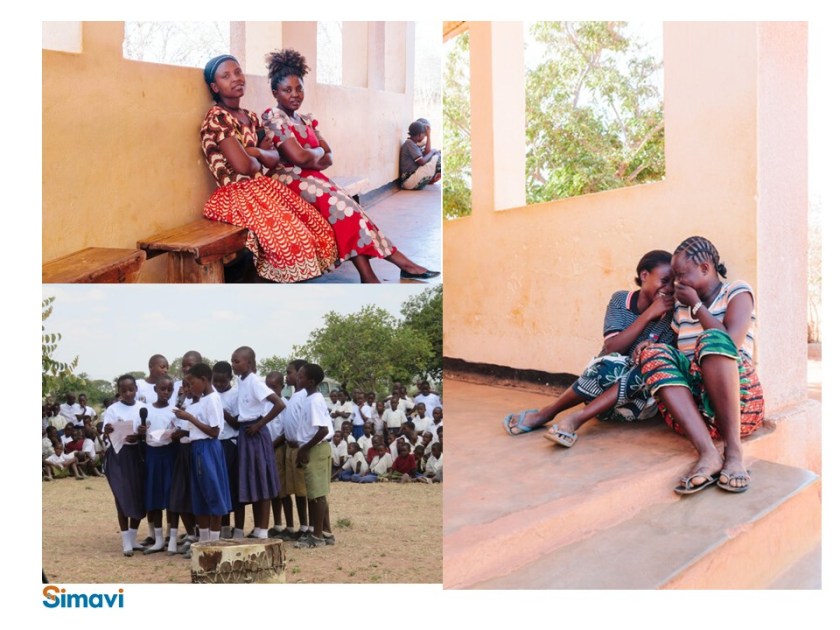
March marks two significant internationally celebrated days for those of us working in the sector. On 8th March we celebrate International Women’s Day #IWD and on 21st March we cherish the World Water Day #WWD. So, it would be good to reflect once again on how exactly WASH is critical to the health and empowerment of women and girls throughout their life.

Let us imagine that you are a girl born to a economically challenged family in a village in the so called developing world where you and your family do not have access to safe water and sanitation.

If you are lucky enough to survive the first 5 years of your life and not die from diarrhoea or other water-borne diseases, the chances are very high that you are already walking a few hours per day to fetch water for your family and you are taking care of your younger siblings.

Then when the time comes for you to go to school, if your family does not have to prioritise your brothers’ education to yours, and if there is a school to attend, you may actually enrol at one. The chances are still very high that you have to walk a good half an hour to fetch water before going to school and answer the call of nature in the open since your school does not have any (functional) toilet. You probably get harassed and experience gender based violence during these visits.Slide6.JPG

Then sometimes when you are between 9 to 12 years old, one day you feel a lot of pain in your lower tummy and suddenly feel that you have wet yourselves. Embarrassed to death, when you finally can find a private corner, you notice the blood in your underwear and think you are going to die. Terrified you tell your older sister or friend and if you can overcome the shame, maybe you tell even your mother, only to learn that although you will not die, you will be going through this pain and embarrassment every month for what seems to be the rest of your life. You will be given a cloth or two, to manage your period. Of course, finding water to wash them and a private place to properly dry them would still be a challenge. You miss school either because you have a lot of pain, which you don’t know how to manage, or you or your family don’t want to risk getting embarrassed because of the blood on your clothes, or simply because there is no toilet or water at school where you can change your cloth or pads! Even in some countries, you might also end up staying in a shed during your period since you will be considered unclean!

Getting your period, is also considered start of your womanhood, and your family might start thinking that it is about time to marry you off, either to reduce the costs or to avoid that you start misbehaving or simply because that’s how it works. Of course you would not get any education about your reproductive system, nor for instance how to avoid unwanted pregnancies. If you are not married off, you will be told to avoid the boys!

By the time that you are 15 years old, the chances are very high that you are pregnant. If you are married and pregnant, you need the permission and money from your husband or his family to go for your check-ups. Mind you, you probably need to bring your own water in a bucket to the health centre, which you have to walk quite a distance to get to. And mind you, when you are pregnant, you need to use the washroom more often, but of course there is no toilet in public places or even health centres. By the way, your family might think that these visits don’t worth the trouble and you are better off with a traditional birth attendant, who usually does not have any hygienic place to do the check-ups nor have water to wash her hands with, even when you are delivering your baby!

Untitled.png

And, if you are not married and pregnant, you can forget about going to the health center since the staff will not even talk to you. You probably end up with a traditional birth attendant who wouldn’t mind performing illegal abortion, and again have not washed her hands, when she puts them inside you or uses other terrifying unclean objects to perform an abortion. As you can guess, the chances that you actually survive this one, is very low.

Anyway, throughout your reproductive age, you probably would be pregnant pretty much every year. Of course you would not be able to get the rest or support you need during this time and have to still do most of the unpaid work around the house, without anyone recognising or appreciating it.

You may at some point in life also start doing some paid work to support your family. However, whenever someone at household gets sick or you have your period, you probably have to miss going to work and thereby your income. Talking about income, you are the one who would prioritise investing it in sanitation, whereas for your husband it comes as his 8th or 9th priority, but unfortunately it is often not you who decides what happens with your income, so still no toilet for your family.

When you lose your husband or your father, you probably will not inherit anything from them and all the assets would go to male member of your family. Often if you don’t have sons, or even when you do have them, this means that you need to rely on their mercy for food and shelter.

All these situations can get worse if you are living with any type of disability, or HIV/AIDS, or in places where there is too much or too little water, or if you are from a minority or displaced group.

Yet, generation after generation you have been the source of inspiration and driver of change within your family, community and throughout the world and your resilience and agency has brought the mankind where we are today.

Slide9.JPG

And of course, while WASH programmes alone cannot tackle underlying causes of the barriers women and girls face through their life cycle, by fulfilling women and girls basic needs for access to water and sanitation, they can be the first step in the right direction. On the other hand, WASH programmes when designed and implemented in a gender responsive and transformative way can provide the opportunity to move beyond this and also address women and girls’ strategic needs, such as participation in decision-making processes within their family and communities and thereby contributing to their physical, political, socio-cultural and economic empowerment.

The article is inspired by a panel discussion with Sara Ahrari convened by WaterAid Canada, UNICEF and RESULTS Canada during International Development Week 2019 in Ottawa.


The Top 10 RWSN Blog Posts in 2018

The RWSN Blog provided us again with some exciting posts in 2018. From sustainable water resources and community management, to solar-powered water pumping, to (manual) borehole drilling, and to rural water services – the range of topics offers diverse and insightful perspectives on rural water supply issues.

Here are some of the most popular blogs in 2018:

  1. Sustainable water resources management in Sri Lanka: present situation and way forward
  2. Three common myths about solar-powered water pumping
  3. “The borehole is not a madman” 3 reasons why Community Based Management demands a rethink
  4. Manually Drilled Wells: Providing water in Nigeria’s Megacity of Lagos and beyond
  5. Borehole drilling supervision in Malawi: why it is essential, not optional
  6. For rural Tanzanians, water has a social value too
  7. Tracing a path to sustainable rural water services in the Democratic Republic of the Congo
  8. Still barking up the wrong tree? Community management: more problem than solution
  9. Sharing experiences of data flows in water and sanitation – some reflections from AGUASAN Workshop 2018
  10. Achieving Professional and Sustainable Drilling in Madagascar? Yes, we can!

Find more blog posts

Find the newest blog posts here: RWSN Blog

Write your own Blog posts on rural water supply

Feel free to send your text and one or more pictures (if possible) in an e-mail with the subject “RWSN Blog Post” to ruralwater@skat.ch


The Politics of Water 3: Area Mechanics in Malawi

by Naomi Oates, re-posted from University of Sheffield

Competing narratives surround the role of ‘area mechanics’ in Malawi

In November 2017 I started my ‘politics of water’ blog as an outlet to share experiences and findings from my research in rural Malawi on water governance and service sustainability.

The first instalment describes my initial impressions of Balaka District while the second explores the relationship between extension workers and rural communities.

This might have left you wondering – what about everyone else?


Area Mechanics receive hands-on training in water point repairs (Author’s own)

Water services in Malawi are decentralised, at least in theory.  This means two things. Firstly, district councils, together with district water offices, are mandated to develop and monitor water infrastructure in rural areas.

Secondly, communities are expected to maintain and repair their water points with minimal external assistance. For more serious problems, local ‘area mechanics’ are their first port of call, followed by the district water office.

In reality, district water offices are severely under resourced, there are currently few area mechanics, and the effectiveness of community-based management varies considerably. However, where they are present, area mechanics are thought to play an important role in keeping water points functioning.

Area Mechanics: volunteers or entrepreneurs?

So what is an area mechanic? This sounds like a simple question, but the answers are complex and contradictory.

The area mechanics Thoko interviewed in Balaka for her MSc research tended to consider themselves, foremost, as volunteers working for the greater good of the community. After all, they were selected from the local community and have strong social ties with the people they serve. An area mechanic may be a relative, a neighbour or a fellow churchgoer, even the village headman himself. Trustworthiness was emphasised by communities as an important criteria.


This training manual describes area mechanics as ‘artisans in advanced hand pump repair operating on a payment basis’ (GoM 2015)

The depiction of area mechanics as volunteers has been echoed in my own conversations with extension staff and NGO workers, but in combination with another term – entrepreneur. According to national policy, area mechanics are meant to operate as independent businesspersons. They are given training and a few basic tools, after which they are expected to make a small profit to sustain their operations. They are also encouraged to sign written contracts with communities to clarify payment for services.

This model is clearly aimed at economic viability and is meant to incentivise area mechanics by providing them with an income. Arguably, the model has failed to gain traction locally because it ignores the social context in which area mechanics operate.

A third view is that area mechanics are integral to formal water governance arrangements – in other words part of, or plugging a gap in, the government’s extension system. This may not be stated explicitly, but is implicit in the use of government issued ID cards.

To give another example, area mechanics are sometimes (but not always) introduced to communities by a government representative in order to establish their legitimacy. Several of the area mechanics Thoko spoke to wanted their role to be formalised to enable them to negotiate fees with communities, or conversely in the hope of receiving material and financial support from government.

The ambiguity of water mechanics

Despite appearances, none of these narratives is mutually exclusive, and they may be employed at different times depending on the context. As one extension worker explained to me:

“Area mechanics are entrepreneurs by design and should make communities aware of that. They are supposed to have a signed agreement. The area mechanic needs to be paid, a little.”


Area mechanics often prefer working as a team – two heads being better than one! (Author’s own)

He then went on to clarify:

“It is not payment as such but a token of appreciation. It is up to them if they want to work for free. However they shouldn’t deny assistance to a Water Point Committee just because they don’t have money.”

The ambiguity surrounding area mechanics can be confusing and could be viewed as a failure of policy (or its implementation). But, in my view, that conclusion would be overly simplistic and misses the point.

The co-existence of these different narratives, or interpretations of policy, leaves room for negotiation and pragmatism. These are arguably important ingredients for success, especially when adapting policies to local realities. In short, the role of area mechanics in Malawi’s water governance system is not yet set in stone.

In addition to my PhD fieldwork this blog draws on previous work by the authors under the UPGro Hidden Crisis project. Check out our report on the political economy of rural water supplies in Malawi.

Governments asked to accelerate access to water and sanitation security for Africa

by Isaiah Esipisu at the 7th Africa Water Week, Gabon

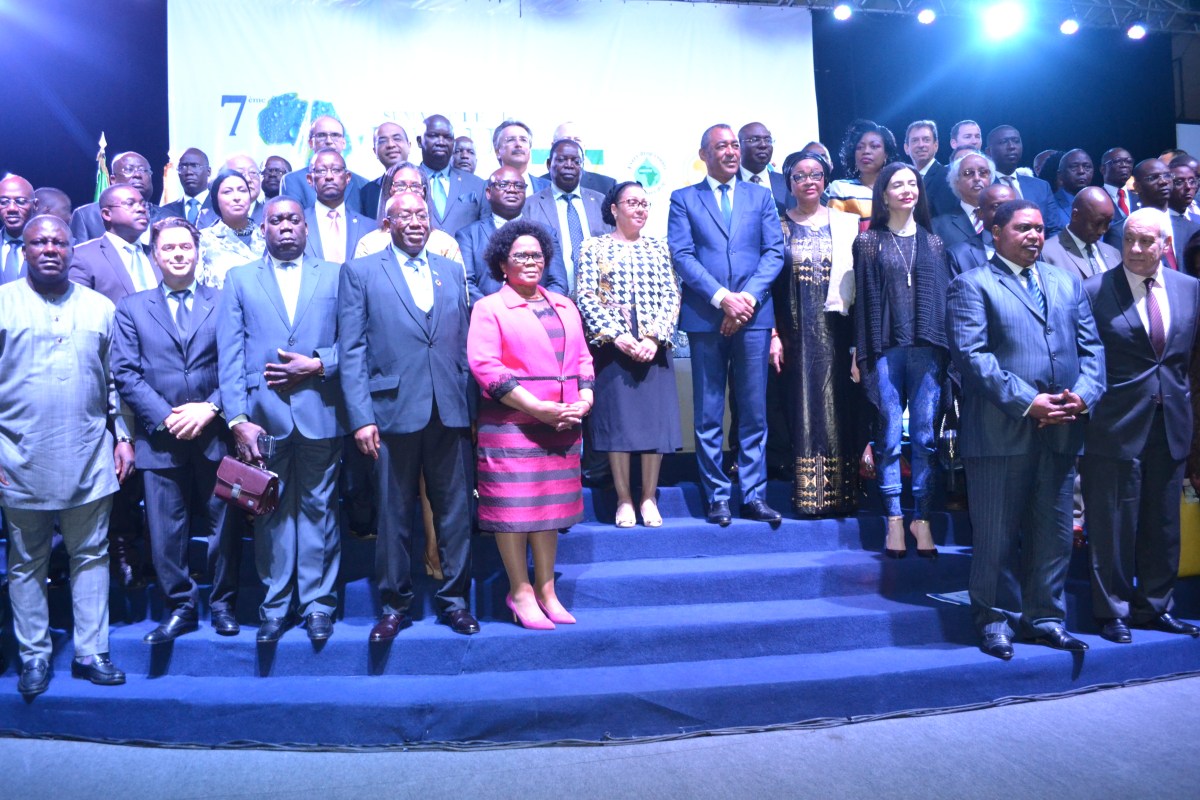
Water experts, policy makers, government representatives, UN agencies, donors and nongovernmental organisations kicked off the celebration of the seventh edition of the Africa Water Week in Libreville city of Gabon on 29th October 2018, calling on African governments to reflect on achievements made so far towards availing clean water and sanitation services to all.

Continue reading “Governments asked to accelerate access to water and sanitation security for Africa”

For rural Tanzanians, water has a social value too

by Lena Farré, recent Post-Graduate from University of Basel, Switzerland, summarises the findings of her Masters degree thesis

This exploratory case study carried out in the Kilombero Valley in southwestern Tanzania shows the mechanisms and challenges communities of a rural village face while seeking water access and maintaining their water pumps. The Tanzanian Government and non-governmental organizations follow a Demand Responsive Approach (DRA). According to the water source providers, communities should demand, own, and maintain their water sources as well as contribute to implementing costs in cash or labour. This participatory approach has been criticised to shift the states responsibility to provide water service towards the community level. To design better policies for interventions that will ensure a sustainable and equitable water provision, it is necessary to understand how communities themselves perceive and deal with this implemented community management system. Here, three key findings are presented, which must be taken stronger into consideration when formulating recommendations for practitioners, since they have been found in other case studies as well.

1.      Women bear the most time and physical strength consuming tasks

While men mostly get the leading position within a water source committee, the role of the secretary or treasurer is mainly given to women. Women are responsible for the house-to-house monthly fee collection from the families using the water sources. Most social conflicts between the committees and the water source users are linked to the monetary contribution. This results in women being directly exposed to these conflicts and therefore less willing to participate actively in the committees.

2.      Mutual mistrust and low transparency

The vulnerable livelihood of the community makes water source users and committee member mistrust each other concerning the payment or safe guarding of the maintenance fees. The need for a sudden financial resource, was mentioned as a reason why water source users doubted that committee members put the entire collected amount of cash onto a bank account. Furthermore, the ability of the committees to control and record the payments of the water source users are restricted due to different reasons: A lack of administrative and accounting skills and remoteness of widely dispersed settlements challenges communication flows. The organization of meetings between water source committees and water users is therefore also difficult. This low transparency fuels mutual mistrust.

3.       Social mechanisms to equalize water access exists

Sanctions such as imposed fines or denied access are assumed to push users to pay their monthly fees. However, they were rarely applied. The committee members often grant exemptions after evaluating the socio-economic situations of the water users. Conflicts between the committees and the users occurred if a household is assumed to be able to pay but refuses it. Private water sources within the community caused conflicts as well. Households who purchased a private one feel under pressure to share it with their neighbours. The system of sanctioning community members for not contributing the payment fees or getting a private water source correspond to market rules. However, water is perceived as a free good by many people. Hence, denying water access to a fellow member of the community transgresses cultural norms and behaviour. Sharing water and preventing someone from getting a private water source, are social mechanisms to equalize water access on the village level.

Behaviour based on the social value of water need to be acknowledged

If a sustainable water source management shall be achieved – community mechanisms have to be understood and acknowledged. Sharing water, conflict avoidance and other behaviour which equalizes access amongst the community members can be seen as obstacles towards the community management of water sources within a Demand Responsive Approach. However, it is suggested to evaluate these social structures positively, allowing the poorest of the community to access water. The government’s responsibility to provide water access and to accomplish the Human Right to Water for its citizens should nevertheless not be denied.

The study showed that the potential of collectively managing water sources based on a barely existing consumer culture must be questioned. Additionally, it is recommended to focus more on the understanding of the social values that water has within a rural community. How they look like in more detail within a rural, Tanzanian community is presented in the study.

CM_in_Tanzania

Download the Thesis report from the RWSN website

Have you recent done research on rural water supply and would like it featured through RWSN? Contact the Secretariat for details.