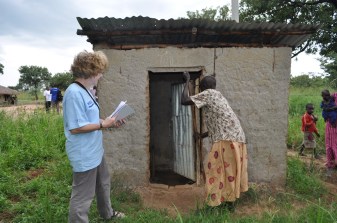
The importance of dealing with the social pressures on girls and woman around menstrual hygiene
Category: Leave No-one Behind
reflections on Everyone, Forever and lifecycle costing in Honduras
Anyone who works in the water sector cannot have missed the various consultations and debates on the post-2015 goals for water and sanitation, with the official one taking place here, but also good online discussions, such as the one on The Broker online. At the same time, technical proposals have been developed by working groups on water, sanitation and hygiene, as nicely presented here by my colleague Catarina Fonseca. The consensus in both the technical proposals and the discussions around them is the vision of universal coverage. The difference lies in the time frame: can it be achieved in our life time? Or is that just wishful thinking? Over the past year, this blog has paid lots of attention to the “Forever” side of “Everyone, Forever”, as Water For People have so compellingly called it. For the coming period expect more posts here on the…
View original post 1,071 more words
Water is a social problem, not just about health
Chris Mugasha
February 15, 2013
Water scarcity in some parts of Uganda has led to increased domestic violence in homes.
One of the worst affected is Bushenyi district in the southwestern region.
Wills Bashasha- the Bushenyi district chairperson says that the water shortage in the district had led to many women being beaten by their husbands, while others are allegedly raped as they travel far off places to collect water from shallow wells.
He now wants households with iron-roofed houses to construct water harvesting tanks as a measure to reduce on causes of domestic violence in homes.
Bashasha notes that it’s a shame to find people carrying jerry cans of water collected from far off wetlands and swamps despite the fact that such water could have been tapped during the downpour before flowing off to the wetlands.
He explains that the issue of lack of water in some homes has…
View original post 115 more words
Have your voice heard, water in the post-2015 development agenda
Please have your say!
Apples and oranges: a comparative assessment in WASH
A few weeks ago, an interesting email discussion was held on “water point mapping” D-Group of the Rural Water Supply Network (RWSN). Part of the discussion focused on how much it costs to map or monitor all water systems in a country. Various figures were floating around in the discussion. But when looking at these in more detail, it was like comparing apples to oranges. Some of the costs mentioned had included the staff time of (local) government, others hadn’t, as they considered this to be a fixed cost; some referred only to a simple mapping of water points, others had done a more comprehensive collection of all kinds of data of the water points; some of the data were expressed in dollars per water point, others in local currency per person. So, no immediate sense could be made of the numbers. A former colleague once said: “an apple is…
View original post 1,100 more words
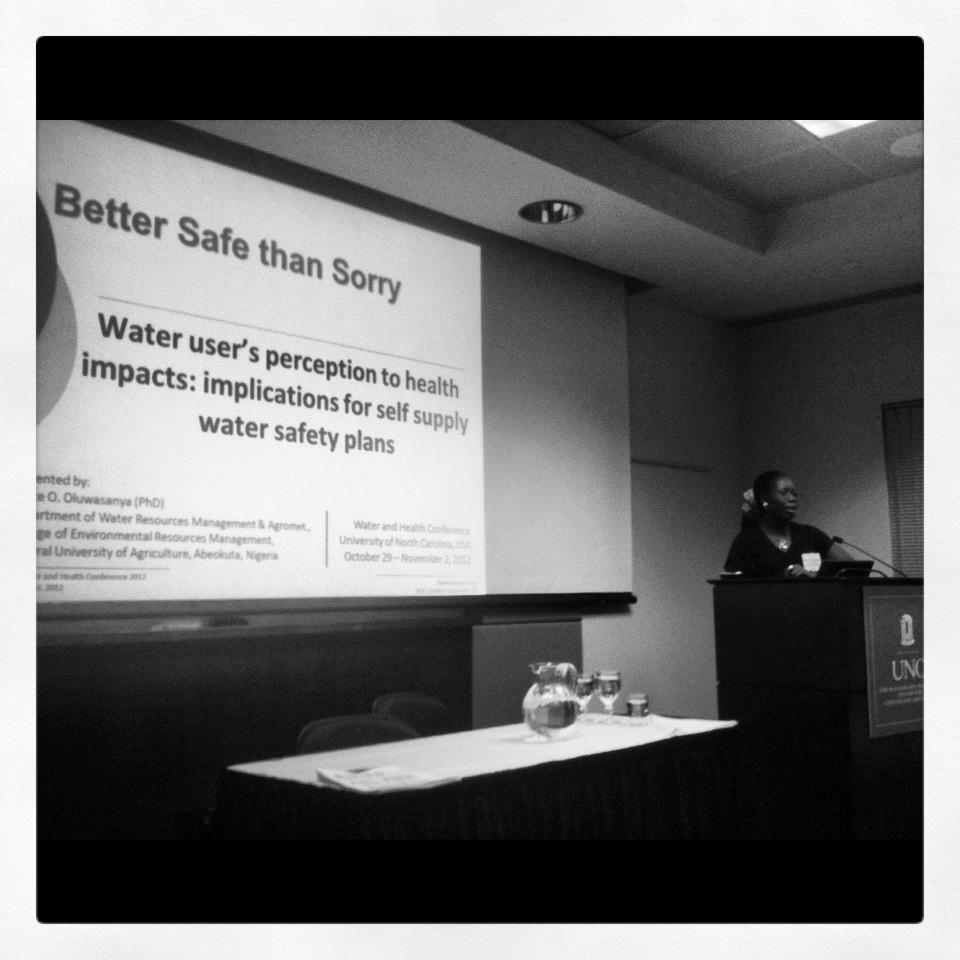
Sustainable water services take ‘Water & Health’ Conference by storm

I was lucky enough to attend this year’s Water & Health Conference at the University of North Carolina. I was even luckier to make it as the skirts of Hurricane Sandy swept up the Atlantic coast before crashing into the American North East.
It was a great opportunity to meet, face-to-face, many RWSN members who have been communicating with online and meet a whole bunch of new people. It was really inspiring to hear their stories and find out more about their organisations and research. Here are just some of my highlights from the event:
Continue reading “Sustainable water services take ‘Water & Health’ Conference by storm”
Experimenting with water service delivery
By Patrick Moriarty
Coming up with a convincing elevator pitch for our Sustainable Services at Scale (Triple-S) project has long been a challenge. Which, given the complexities of the rural water sector itself, is possibly not that surprising. Whether defining ourselves (at least in part) as a complexity informed water services development lab will help, remains to be seen – but for us it is progress!
View original post 1,239 more words
Why physical unique identifiers on water points will improve sustainable services
This blog is by Susan Davis, executive director of Improve International, an organization focused on promoting and facilitating independent evaluations of WASH programs to help the sector improve. She has more than 13 years of experience in international development and has evaluated WASH and other programs in 16 developing countries. Her first career (8 years in environmental consulting) involved projects like combining databases across the 10 US Environmental Protection Agency Regional offices, which is where her respect for unique identifiers was born.
What is a unique identifier?
You probably don’t think of it, but you use unique identifiers every day. In the US, your social security number is your unique identifier for the government (which is why if someone has it they can steal your identity). Your bank account number helps the bank track all information associated with you.
What is a physical unique identifier?
Well, your house has one – in the form of an address. Your car has one – the vehicle identification number. The license plate might count but it is too easily removed. My dog has an identification chip embedded between her shoulder blades because her license tag could easily come off with her collar. A physical unique identifier needs to be permanent – long lasting in tough conditions, and not easily removed.
Continue reading “Why physical unique identifiers on water points will improve sustainable services”
FLOWing data
By Patrick Moriarty –
I mentioned some cool new outputs from IRC’s Ghana programme in my previous post. These factsheets present a rich picture of water services and their governance based on a total survey in our three Triple-S focus districts in Ghana.
The fact sheets aren’t cool due to their content – which is actually rather depressing. What is cool is the technology used for the data collection, the way in which the indicators we used were developed, and the impact that the factsheets are having.
View original post 462 more words
What does it take to sustain sustainability?
As argued several times in this blog, post-construction support is one of the keys to sustainability of rural water supplies. One element of post-construction support is monitoring of aspects such as service levels and the performance of service providers, through which the support providers can better target their assistance. The last few years have seen a boom in efforts to set up information and monitoring systems of rural water supplies in many countries. Some were in first instance a one-off mapping exercise of all water points in a country; others were developed with the aim of regular updating for ongoing monitoring purposes. Particularly, cellphone technology has been instrumental in speeding up this process, as it is used in systems like FLOW (Field Level Operations Watch). A key question that comes back in the discussions on the topic (see for example the excellent discussion on the Rural Water Supply Network’s
View original post 923 more words