Opportunity to publish: handpumps in drinking water services

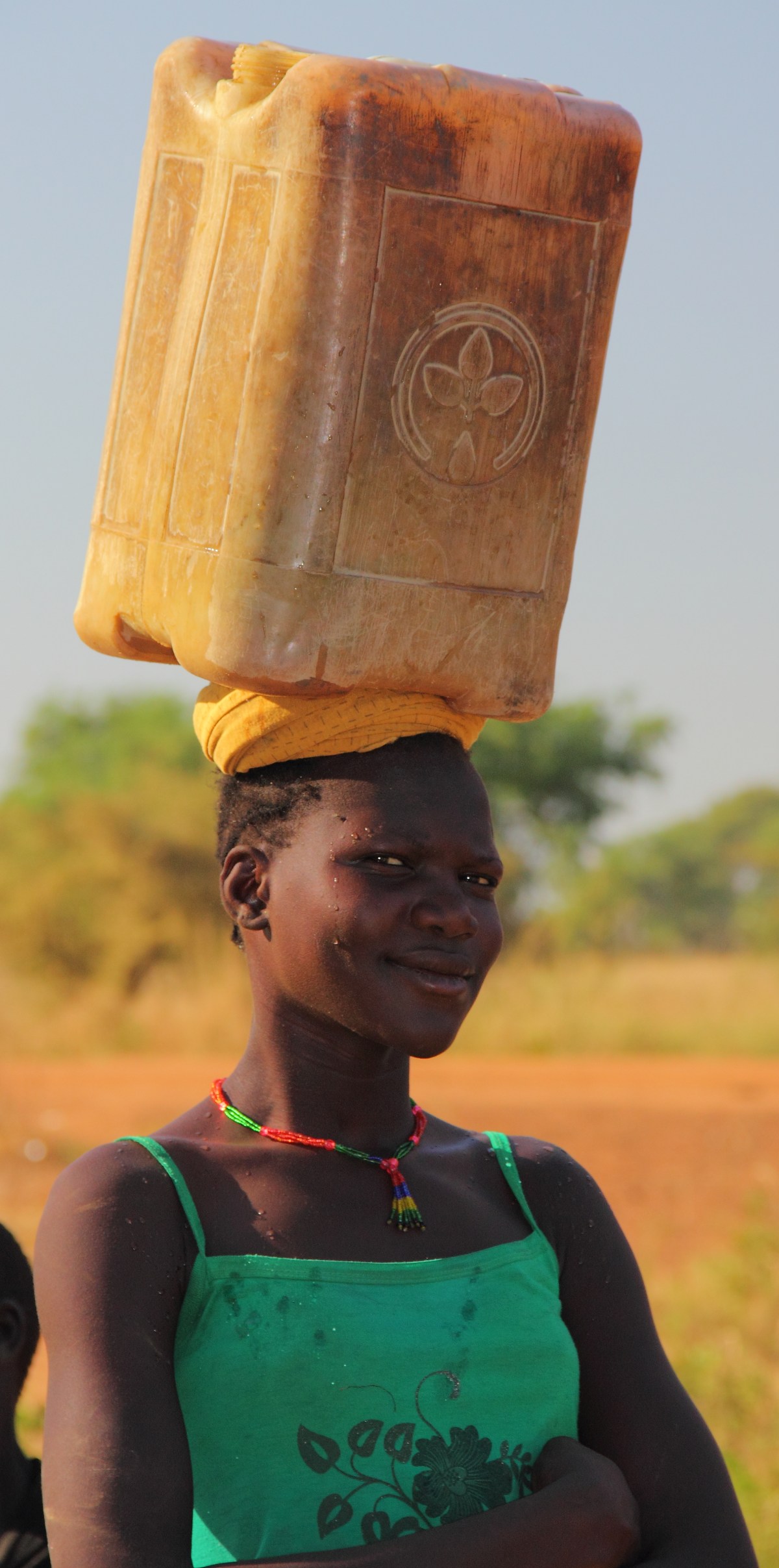
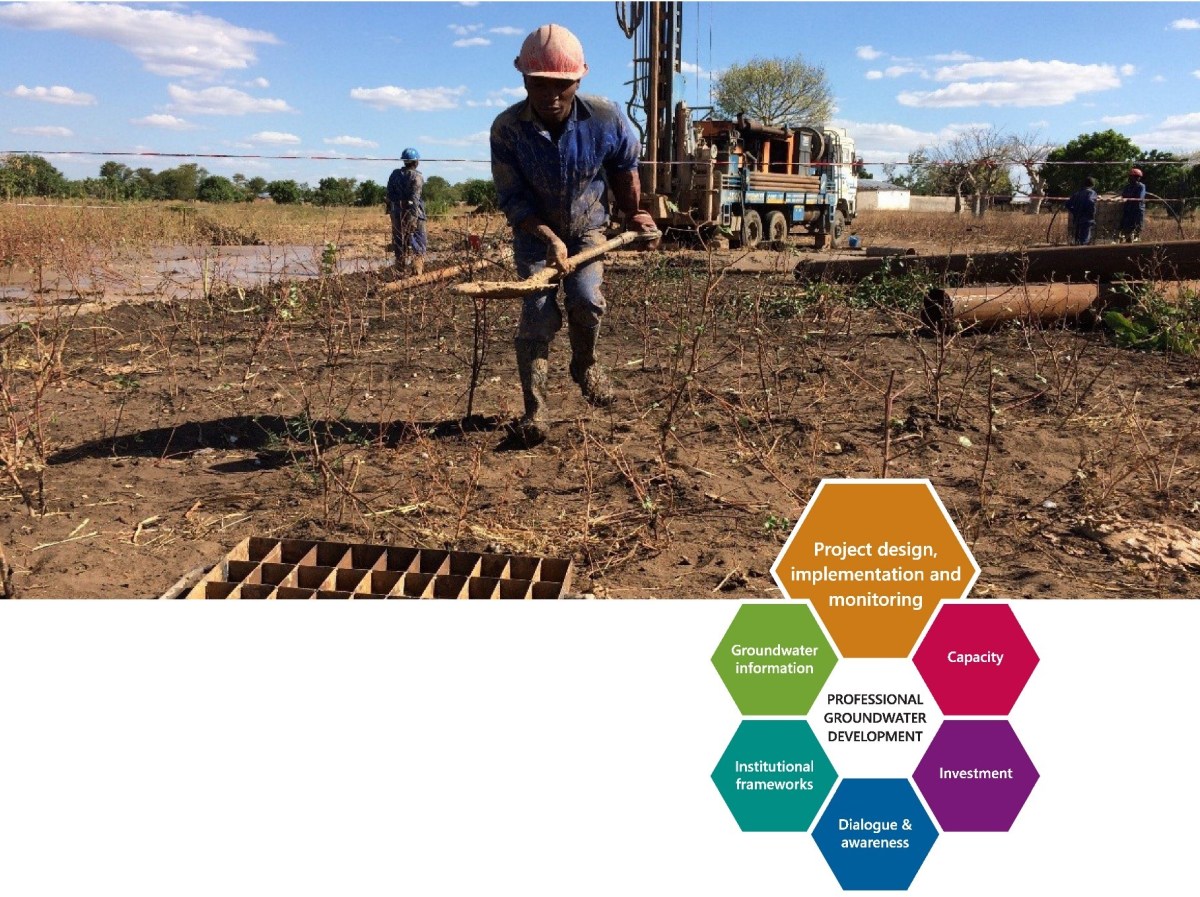
(photo: (C) Skat Consulting Ltd.)

Dear Colleagues,

It has recently been suggested that an up-to-date review of the issues around handpumps in drinking water services be undertaken.  This would be in the form of a book, which supersedes the documents published in the 1980s including Arlosoroff’s “Community water supply: the handpump option” and IRC’s Technical Papers 10 and 25. 

The new book would not be a direct update, since those documents were published in the UN Water Decade at a time of large-scale laboratory- and field-testing of handpumps and other initiatives which have not been matched in intensity since that time.  However there has been much experience and reflection as well as some research and evaluation in the intervening years which now needs to be brought together in one place. 

I envisage a book which places handpump services in the wider context of the SDGs, the human right to water, self-supply, community-based maintenance, financing considerations, emerging management models, and transitions from handpumped point water sources to (for example) solar pumped networked services.  The book would bring together in roughly equal measures natural sciences and engineering on one hand, with issues around management and financing, social aspects and institutional arrangements on the other. 

The book would be primarily addressed to organisations and individuals involved in planning, financing, implementing and supporting rural water programming – a readership which needs a broad but reasonably detailed overview of the subject.  The messages for policy-makers and higher-level decision-makers will need to be distilled from the book, in shorter form.  Likewise the book would not attempt to be a detailed technical document; indeed it is likely that only two chapters out of the 12 which will be included would focus on handpump technology per se.

Given the wide range of aspects to be covered, I envisage the need for a good deal of co-authorship and peer review.  A publisher has already shown keen interest, and I would be optimistic that funds could be raised to enable open access to the final publication. 

This message – the first on the matter – therefore invites your response to three questions: (1) do you think such a publication would be a useful contribution to current attempts to bring safe and sustainable drinking water services to all? (2) Would you like to be kept informed as to progress in the drafting of the book? (3) Would you be interested in participating as a co-author or peer-reviewer (if so, please send me a short statement outlining your area of interest and expertise). 

Finally, I am well aware that there are some strong opinions and loud voices in the community of those interested in handpumps; it will be part of my lead-author/editor role to try to present evidence-based and balanced analysis while minimising opinionated and biased views.  I am especially keen to find contributors and reviewers who are well-experienced in implementing handpump programmes but who are not vocal in the online discussion groups. 

I look forward to hearing from you by writing to my personal email address (below) with your initial answers to the questions above, and of course any other views you may have on the matter.

Assuming the idea meets with some approval from those of you who read the correspondence on this discussion group, I will put together a draft list of contents and start to identify potential co-authors and reviewers.  So please watch this space for further news!

Best wishes,

Richard Carter
richard ^at^ richard-carter.org
[www.richard-carter.org]

Just how much do countries rely on groundwater point sources for their drinking water?

Preliminary analysis of census and national survey data from the 2019 Joint Monitoring Programme, by Dr Kerstin Danert

An important issue for those of us that think a lot about groundwater is the extent that various countries rely on it for their drinking water.

The data presented in the table below has been prepared from the 2019 data published by the Joint Monitoring Programme (JMP) of the World Health Organisation (WHO) and UNICEF (see https://washdata.org/data). Each country has an associated Country File (an excel spreadsheet) with collated data on Water, Sanitation and Hygiene use. This data is gathered from national censuses as well as household surveys such as the Demographic and Health Surveys (DHS) and Multiple Indicator Cluster Surveys (MICS) and many others. The country files given excel spreadsheets on the JMP website (not to mention the underlying surveys) contain a wealth of data!

The table below shows the percentage of the population that rely on groundwater point sources as their main source of drinking water for every country and territory for the most recent year for which census or survey data is available. The data is presented for urban, rural and total populations.  Groundwater point sources include protected and unprotected wells and springs, as well as tube wells and boreholes.  Countries may have slightly different nomenclature for the above terms, but these are harmonised in the country tables produced by the JMP.

It is important to note that the data only includes point sources.  Water that is bought from vendors, sold in bottles/sachets or transmitted in pipes may also originate from groundwater, but this information is not generally collated by the censuses or surveys and thus cannot be reflected.  Consequently, the actual dependency of a particular on groundwater for drinking may be considerably higher. In addition, national governments may also make calculations based on the infrastructure available and assumed number of users per source. Due to the different methods of data collection and calculation, these estimates may differ from that collected by the household survey or census.

Please note that the analysis below has not been peer-reviewed, and so if you are intending to use the data, please do check in the respective JMP country file.  You can access Country Files on: https://washdata.org/data. Click on map to select country, download “Country file” and open the “Water Data” tab. In case you spot any mistakes in the table below, please respond in the comments in the blog below or contact the author directly, via rwsn@skat.ch.

Table 1 Groundwater point source as main drinking water source (% of the population classified as urban, rural and total)

Urban Rural Total
Country Census/ Survey Year Ground-water point source as main drinking water source (% of the urban pop.) Census/ Survey Year Ground-water point source as main drinking water source (% of the rural pop.) Census/ Survey Year Ground-water point source as main drinking water source (% of the total pop.)
Afghanistan 2017 57.3% 2017 71.5% 2017 68.1%
Albania 2012 6.4% 2012 14.7% 2012 10.2%
Algeria 2013 6.6% 2013 19.6% 2013 11.3%
American Samoa 2010 0.5%
Andorra 2005 6.6%
Angola 2016 17.7% 2016 43.0% 2016 26.8%
Anguilla 2009 0.7% 2009 0.7%
Antigua and Barbuda 2011 0.4%
Argentina 2013 9.1% 2010 37.7% 2010 15.0%
Armenia 2016 0.1% 2016 2.6% 2016 1.1%
Aruba 2010 1.3%
Australia 2013 0.1% 2013 1.1% 2013 0.5%
Azerbaijan 2017 0.1% 2017 12.1% 2017 5.4%
Bahamas 2010 2.9%
Bahrain 1995 1.4%
Bangladesh 2016 66.4% 2016 94.7% 2016 84.9%
Barbados 2010 0.1% 2012 0.1%
Belarus 2012 2.7% 2012 32.9% 2012 11.1%
Belize 2016 0.3% 2016 4.1% 2016 2.5%
Benin 2014 39.4% 2014 56.8% 2014 48.9%
Bhutan 2017 0.3% 2017 0.6% 2017 0.5%
Bolivia (Plurinational State of) 2017 5.0% 2017 42.2% 2017 16.5%
Bosnia and Herzegovina 2012 3.6% 2012 11.4% 2012 8.9%
Botswana 2017 0.1% 2017 14.9% 2017 5.3%
Brazil 2017 0.4% 2017 8.4% 2017 1.6%
British Virgin Islands 2010 1.9%
Brunei Darussalam 2011 0.1% 2011 0.1% 2011 0.1%
Bulgaria 2001 0.4% 2001 2.7% 2001 1.1%
Burkina Faso 2017 17.1% 2017 85.6% 2017 72.9%
Burundi 2017 8.6% 2017 68.1% 2017 61.5%
Cabo Verde 2007 0.1% 2012 15.1% 2012 5.1%
Cambodia 2016 13.5% 2016 47.2% 2016 40.2%
Cameroon 2014 35.5% 2014 74.1% 2017 50.0%
Canada 2011 0.1% 2011 0.7% 2011 0.3%
Caribbean Netherlands 2001 27.3%
Cayman Islands 2010 4.9% 0.0% 2010 4.9%
Central African Republic 2010 49.1% 2010 92.1% 2010 75.4%
Chad 2015 48.0% 2015 82.4% 2015 74.6%
Chile 2017 0.6% 2017 4.0% 2017 2.4%
China 2013 7.4% 2013 43.1% 2016 22.4%
Colombia 2018 0.4% 2018 13.7% 2018 3.3%
Comoros 2012 5.1% 2012 21.3% 2012 16.2%
Congo 2015 24.9% 2015 65.7% 2015 38.3%
Cook Islands 2011 0.0%
Costa Rica 2018 0.0% 2018 0.5% 2018 0.2%
Côte d’Ivoire 2017 33.9% 2017 71.0% 2017 49.5%
Croatia 2003 3.3% 2003 18.0% 2003 20.0%
Cuba 2011 13.5% 2014 41.9% 2011 18.2%
Curaçao 2011 0.9%
Czechia 2003 1.5% 2003 7.1%
Democratic People’s Republic of Korea 2017 17.1% 2017 58.1% 2017 33.1%
Democratic Republic of the Congo 2014 33.0% 2014 79.4% 2014 63.5%
Djibouti 2017 0.6% 2017 55.5% 2017 10.9%
Dominica 2001 0.6% 2001 6.3% 2009 0.3%
Dominican Republic 2016 0.1% 2016 2.3% 2016 0.7%
Ecuador 2017 1.1% 2017 17.1% 2017 6.1%
Egypt 2017 0.4% 2017 2.1% 2017 1.4%
El Salvador 2017 3.0% 2017 12.3% 2017 6.6%
Equatorial Guinea 2011 44.7% 2011 51.9% 2011 48.4%
Eritrea 2010 3.4% 2010 36.0% 2010 24.6%
Estonia 2010 1.7% 2010 18.8% 2010 6.7%
Eswatini 2014 3.7% 2014 31.5% 2014 24.0%
Ethiopia 2017 5.1% 2017 62.3% 2017 52.0%
Falkland Islands (Malvinas) 2016 43.7%
Fiji 2014 1.1% 2014 13.6% 2014 7.2%
Finland 1999 1.0% 2005 5.0% 2005 1.0%
French Guiana 1999 5.0% 1999 6.0% 2015 13.5%
Gabon 2013 3.3% 2013 37.8% 2013 8.2%
Gambia 2013 14.4% 2013 60.0% 2013 32.6%
Georgia 2017 4.9% 2017 46.9% 2017 22.2%
Germany 2007 0.8% 2007 0.8% 2007 0.0%
Ghana 2017 11.3% 2017 56.7% 2017 36.0%
Greece 2001 0.2% 2001 3.8%
Grenada 1999 4.0% 1999 18.0%
Guadeloupe 2006 0.8% 2006 0.3% 2006 0.8%
Guam 2010 0.1%
Guatemala 2015 5.0% 2015 19.6% 2015 13.4%
Guinea 2016 32.8% 2016 75.3% 2016 59.0%
Guinea-Bissau 2014 41.0% 2014 78.0% 2014 61.7%
Guyana 2014 1.3% 2014 5.5% 2014 4.4%
Haiti 2017 8.1% 2017 56.5% 2017 37.5%
Honduras 2017 2.0% 2017 4.2% 2017 3.0%
Hungary 1990 5.0% 1990 28.9%
India 2016 23.8% 2016 63.7% 2016 50.5%
Indonesia 2018 35.2% 2018 66.9% 2018 49.6%
Iran (Islamic Republic of) 2015 1.8% 2015 4.6% 2015 0.8%
Iraq 2018 0.5% 2018 4.6% 2018 1.8%
Ireland 2006 0.0% 2006 0.5%
Italy 2001 3.9%
Jamaica 2014 0.0% 2014 1.2% 2014 0.6%
Jordan 2016 0.3% 2016 0.7% 2016 0.4%
Kazakhstan 2015 3.2% 2015 21.0% 2015 11.5%
Kenya 2017 21.2% 2017 54.1% 2017 46.2%
Kiribati 2014 0.0% 2014 0.0% 2014 0.0%
Kyrgyzstan 2014 1.1% 2014 11.3% 2014 8.1%
Lao People’s Democratic Republic 2017 9.0% 2017 46.0% 2017 34.7%
Latvia 2003 2.4% 2003 12.5%
Lebanon 2016 10.9%
Lesotho 2015 5.5% 2015 27.8% 2015 21.4%
Liberia 2016 58.7% 2016 74.7% 2016 65.3%
Libya 1995 35.8% 1995 26.9% 2014 19.1%
Madagascar 2016 24.5% 2016 61.6% 2016 57.6%
Malawi 2017 16.3% 2017 86.0% 2017 73.8%
Malaysia 2003 0.8% 2003 6.7%
Maldives 2014 0.1% 2014 0.2% 2017 0.5%
Mali 2018 19.5% 2018 72.3% 2018 56.2%
Marshall Islands 2017 0.2% 2017 2.5% 2017 0.6%
Martinique 1999 0.5% 2015 0.4%
Mauritania 2015 6.5% 2015 49.4% 2015 29.1%
Mayotte 0.0% 2013 2.5%
Mexico 2017 0.8% 2017 9.5% 2017 2.8%
Micronesia (Federated States of) 2010 3.6% 2010 10.7% 2010 9.1%
Mongolia 2016 12.8% 2016 52.7% 2016 25.8%
Montenegro 2013 5.1% 2013 29.2% 2013 14.1%
Montserrat 1998 2.0% 1998 100.0% 2001 0.1%
Morocco 2012 1.0% 2012 27.2% 2012 10.2%
Mozambique 2015 21.4% 2015 62.5% 2015 49.6%
Myanmar 2016 34.3% 2016 74.8% 2016 64.0%
Namibia 2016 0.6% 2016 23.4% 2016 11.8%
Nauru 2011 1.6% 2011 0.0% 2011 1.6%
Nepal 2016 41.8% 2016 46.8% 2016 44.4%
New Caledonia 2014 3.1%
Nicaragua 2014 4.4% 2014 59.9% 2016 21.4%
Niger 2017 33.9% 2017 71.0% 2017 49.5%
Nigeria 2018 45.3% 2018 73.1% 2018 60.0%
Niue 1999 20.0% 2010 0.0%
North Macedonia 2011 1.5% 2011 15.1% 2011 7.7%
Northern Mariana Islands 2000 1.3% 0.0% 2010 1.1%
Oman 2014 5.1% 2014 10.0% 2014 6.4%
Pakistan 2016 30.4% 2016 44.0% 2016 39.1%
Panama 2015 0.7% 2015 14.6% 2017 0.0%
Papua New Guinea 2017 2.8% 2017 7.5% 2017 7.1%
Paraguay 2017 2.1% 2017 9.2% 2017 4.8%
Peru 2017 1.5% 2017 11.1% 2017 3.8%
Philippines 2017 8.4% 2017 37.6% 2017 23.9%
Portugal 2001 0.1% 2001 0.7%
Puerto Rico 1995 1.8%
Republic of Korea 2015 1.0%
Republic of Moldova 2012 16.9% 2012 65.1% 2012 47.1%
Réunion 2015 0.2%
Romania 1994 11.3% 1994 81.0%
Russian Federation 2009 3.4% 2009 19.5% 2009 8.6%
Rwanda 2017 17.2% 2017 58.4% 2017 50.4%
Saint Kitts and Nevis 1999 27.0% 1999 27.0% 2007 0.3%
Saint Lucia 2012 0.5% 2012 2.0% 2012 1.6%
Saint Vincent and the Grenadines 1999 20.0% 2012 0.1%
Samoa 2016 2.6% 2016 5.6% 2016 5.0%
Sao Tome and Principe 2010 4.5% 2010 11.7% 2010 6.9%
Saudi Arabia 2017 0.2%
Senegal 2017 7.2% 2017 35.0% 2017 22.5%
Serbia 2014 2.4% 2014 11.7% 2014 6.2%
Sierra Leone 2017 54.7% 2017 68.9% 2017 62.6%
Sint Maarten (Dutch part) 2011 7.4%
Slovakia 2003 2.3% 2003 2.3% 2011 13.1%
Solomon Islands 2015 8.6% 2016 27.6% 2015 17.5%
Somalia 2017 9.5% 2017 60.5% 2017 34.1%
South Africa 2017 0.5% 2017 10.1% 2017 3.8%
South Sudan 2017 66.5% 2017 80.1% 2017 77.3%
Spain 2003 0.6% 2003 0.3%
Sri Lanka 2016 17.3% 2016 51.0% 2016 45.3%
Sudan 2014 2.2% 2014 13.2% 2014 9.8%
Suriname 2017 3.1% 2017 5.4% 2017 3.8%
Syrian Arab Republic 2018 4.2% 2018 11.6% 2018 8.4%
Tajikistan 2017 5.2% 2017 18.7% 2017 15.4%
Thailand 2016 1.8% 2016 6.2% 2016 4.2%
Timor-Leste 2016 20.0% 2016 33.6% 2016 29.9%
Togo 2017 36.6% 2017 61.2% 2017 51.8%
Tonga 1999 28.0% 1999 24.0% 1996 1.7%
Trinidad and Tobago 2011 0.9% 2011 1.0% 2011 0.9%
Tunisia 2015 0.5% 2015 10.8% 2015 3.7%
Turkey 2013 5.0% 2013 40.0% 2013 13.0%
Turkmenistan 2016 4.4% 2016 34.3% 2016 22.6%
Turks and Caicos Islands 1999 22.0% 1999 40.0% 2012 1.7%
Tuvalu 2007 1.7% 2007 0.5% 2007 1.1%
Uganda 2017 35.8% 2017 79.6% 2017 71.9%
Ukraine 2018 11.5% 2018 61.2% 2018 27.8%
United Arab Emirates 2003 0.2% 2018 0.1%
United Republic of Tanzania 2017 19.4% 2017 50.5% 2017 41.2%
United States of America 2015 3.0% 2015 45.2% 2015 11.1%
Uruguay 2017 0.0% 2017 3.1% 2017 0.2%
Uzbekistan 2015 6.9% 2015 22.7% 2015 14.2%
Vanuatu 2016 1.6% 2016 4.8% 2016 4.0%
Venezuela (Bolivarian Republic of) 2011 4.3% 2011 25.6% 2011 6.8%
Viet Nam 2016 19.5% 2016 57.2% 2016 45.2%
West Bank and Gaza Strip 2017 1.2% 2017 3.2% 2017 1.5%
Yemen 2013 2.3% 2013 43.1% 2013 31.6%
Zambia 2015 26.7% 2015 76.8% 2015 55.8%
Zimbabwe 2017 11.1% 2017 77.5% 2017 57.0%

Photo:  Groundwater provides over 80% of the rural population with its main source of drinking water in South Sudan. Photo taken in 2014 in Northern Bahr el Ghazal by Kerstin Danert.


Integrity risks in professional borehole drilling: preventing corruption paves the way to sustainable infrastructure

This is a guest RWSN blog by Justine Haag and Marian Ryan of the Water Integrity Network. 

Integrity risks can be high in professional borehole drilling projects, particularly the risk of corruption, but too often such risks are brushed over or not even acknowledged. Some of these risks have been discussed in previous blog posts. This blog discusses in more detail some of the reasons underlying the importance of addressing corruption in professional borehole drilling.

Corruption contributes to poor delivery of groundwater development projects and is a factor of the failure of  15–30% of newly built wells within one year of construction (UNICEF/Skat 2016).

The good news is that by acknowledging and addressing integrity risks from the earliest project stages, WASH managers in both government and NGOs can take steps to prevent these risks and ensure sustainable infrastructure.

Let’s be real: corruption adds up

Across the world, a great deal of money goes into the drilling of boreholes, At the local level, while it might appear at first glance that the money lost to corruption on small borehole drilling projects in rural or remote locations is limited, even insignificant, the impacts are certainly not. Corruption results not only in wasted money, but, all too often, in sub-standard delivery of projects. This, in turn, results in downstream social, economic and environmental impacts.

From a purely financial perspective, corruption in groundwater development projects may result in inflated costs which undermine the financial sustainability of the project. Equally, corruption in decision-making processes may result in technical choices that ignore community needs, disregarding the local socio-cultural or economic context.

It may also mean that already-limited funds are not used where they are most needed. In many cases corruption means those with power and influence can pay to get improved services, while the most vulnerable are left behind.

When local users don’t see the promised results or services from their duty bearers, mistrust may grow. This can complicate other interventions in the water and sanitation sectors. Poor service delivery may also mean that communities resort to informal systems which may offer lesser guarantees in terms of quality and safety.

Corruption in borehole drilling projects also undermines health and security. Private operators who benefit from favoritism may not be subject to regulations and oversight, resulting in poor-functioning and ultimately decaying, unsustainable infrastructure and water systems.

Ultimately, corruption can threaten food, water, and energy security, greatly impacting the poorest residents.

All project phases are vulnerable to corruption

Corruption can take place at a number of points in the project lifecycle.

The tendering process is well known for posing a high risk of corruption: project owners may demand or receive bribes for awarding bids. They may exclude bids for spurious reasons in order to favour particular bidders. Bidders may organize as cartels, manipulate prices, or block smaller bidders through intimidation. A previous blog post examined how these practices serve to deter experienced professional consultants and drilling contractors from the bidding process, threatening the quality and sustainability of project infrastructure.

But corruption risks exist throughout the project life-cycle:

  • Regulatory environment: Corruption can weaken the rules of the tendering process, and weaken sanctions for misconduct. Corruption in licensing can also improperly restrict who can drill and where. Corruption can also result in biases in who water is allocated to.
  • Planning: Corruption at the planning level may result in services being provided to certain groups and not to others.
  • Financial management: Corruption here can take the shape of falsified accounts in local budgets, or funds which are embezzled or allocated to “ghost” drilling sites or the villages of family or friends.
  • Project design: Corruption in project design can take the form of design specifications being rigged to favor certain companies, such as those with higher-capacity rigs.
  • Construction: Corruption in the construction phase can result in poor-quality work and/or the use of poor quality materials, the bribing of officials to ignore it, and fraudulent invoicing and documentation.
  • Post-construction: the post-construction operation and maintenance phase is critical in the delivery of sustainable and effective services. Corruption in the operation and maintenance of groundwater systems can, for example, include nepotism in the appointment of staff, and the appointment of poorly qualified consultants and contractors. Lack of community input into the well’s operation can allow such corruption to flourish.

Promoting integrity benefits the community – and all stakeholders

It is possible to prevent these dangers from taking hold by building barriers to corruption throughout the project life cycle and by promoting integrity and planning ahead to close gaps where corruption can arise.

Promoting integrity from the start adds value by fostering transparency, accountability, and participation among the project’s stakeholders. Just as corruption has a wide impact, promoting integrity and anti-corruption can support each stakeholder’s efforts across the value chain. When we anticipate and avoid corruption risks, we reduce the likelihood of failure of wells and water points, decaying infrastructure, and disrupted water services.

Where can I start?

Project owners and WASH managers in government institutions or NGOs can take advantage of existing tools to promote integrity and prevent corruption to help ensure successful, professional borehole drilling projects which result in sustainable infrastructure and benefit local communities.

RWSN’s Code of Practice for Cost Effective Boreholes emphasizes the role of greater professionalism in ensuring that projects achieve optimum value for money invested over the long term. The UNICEF Guidance Note on Professional Water Well Drilling is a valuable resource for following professional standards in borehole drilling, including costing, procurement and contracting, siting of wells, and supervision of water well drilling.

Key first steps:

  • Establish procedures for key risk areas like procurement and accounting, and make sure procedures are followed by providing training and support to all stakeholders (such as authorities, bidders, regulators, project monitors, utility accounting staff).
  • Clarify budgets and responsibilities, and ensure this information is easily available to the public.
  • Set up monitoring processes, for tendering, construction, and O&M. Social monitoring, including local users or stakeholders, can be particularly helpful and ensure more independence in the process.
  • Ensure institutional responsibility for long-term operations or properly functioning infrastructure over the entire lifecycle.
  • Consult water users and water-user associations in decision-making.


More tools:

Integrity pact : The Integrity Pacts help to ensure that contracting parties in a water project abstain from offering, accepting, or demanding bribes; monitor adherence to the contract and compliance with procurement legislation; and enable the placement of sanctions on any parties breaching the pact.

Integrity, Quality, and Compliance for Project Managers : This set of simple project management tools and templates helps improve project management and address common integrity issues from planning through operations, specifically in water-related programmes.

About the authors

Justine Haag coordinates WIN’s West Africa Programme and is in charge of the Capacity Development portfolio, ensuring the mainstreaming of water integrity tools and methodologies in the water sector at global, national, and local levels. She has over 10 years of international experience with water practitioners, working mainly on WASH and IWRM initiatives carried out with multilateral and bilateral aid organizations. She is keen to support participatory processes with a broad range of actors, following her conviction that institutional stakeholders and end users have common values and can reach consensus.

Marian Ryan is a freelance writer and editor specialized in health, international development, and water integrity. She collaborates regularly with the Water Integrity Network to write about and promote integrity Tools.

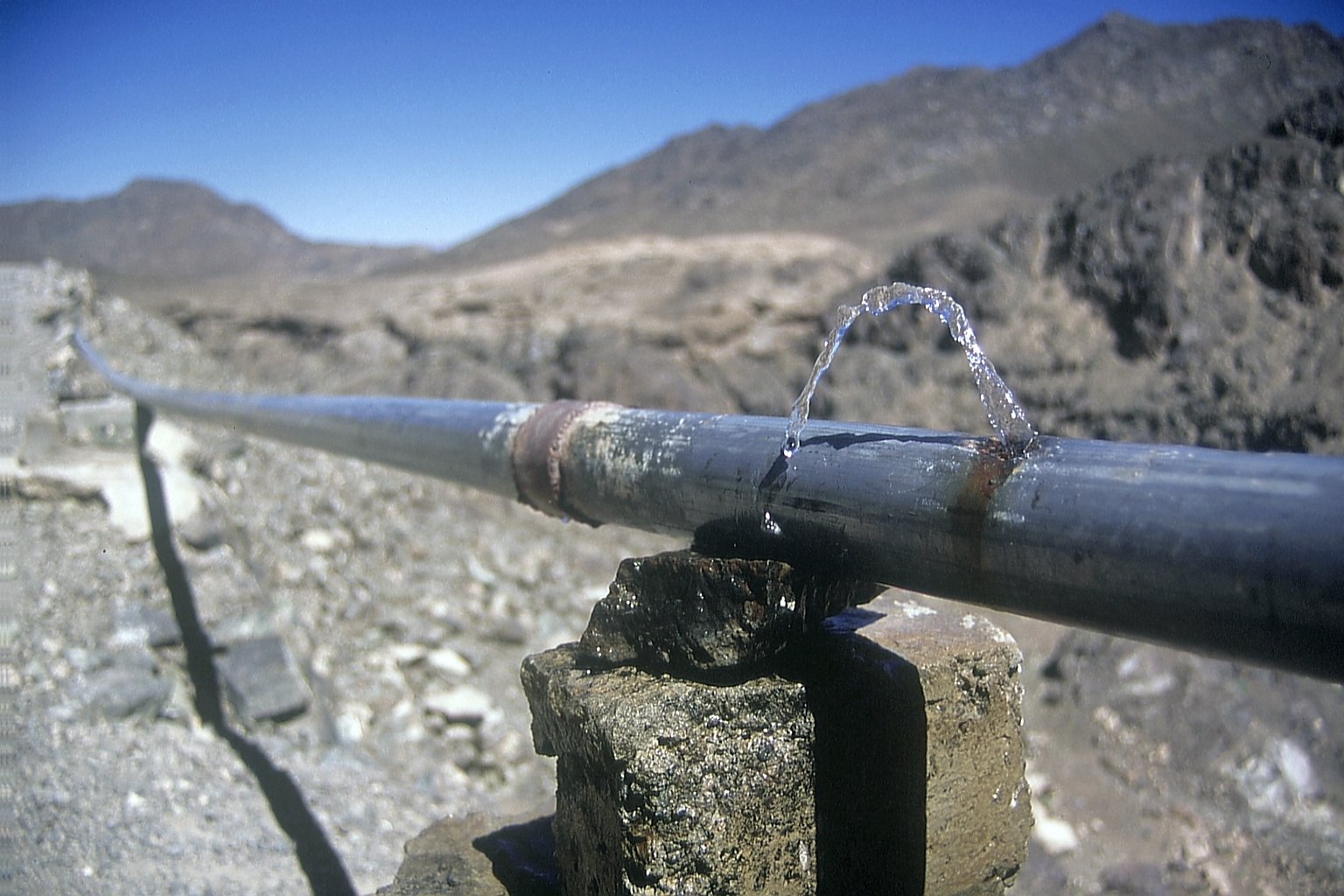
Photo credit: Joost Butenop, WIN photo competition 2009. Uncontrolled diversion of water from surrounding villages, Western Pakistan.Joost_Butenop

The rise of the off-grid city?

Adrian Healy reports on the findings of research undertaken in Lagos on the proliferation of domestic boreholes. This article was originally published in GeoDrilling International, and can be read here.

The conventional model of urban development focuses on centralised water service provision, where the state ensures a supply of water through storage and treatment plants and a grid of interconnected pipelines. Yet in many of our fastest growing cities, particularly in Africa and parts of Asia, this model is being turned on its head. Here, households, and business users, are increasingly turning to an ‘off-grid’ model, where they take responsibility for their own water supply. Nowhere is this more true than in the thriving megalopolis of Lagos in Nigeria, which serves as an example to practitioners around the world.

The public supply of water is estimated to reach no more than one in ten households living in Lagos State and, with a rapidly rising population, that proportion is changing every day. Despite their best efforts, the city authorities struggle to keep up with the pace of change, hampered further by an ageing infrastructure. In the absence of a reliable and convenient supply of water, it is perhaps little wonder that those who are able to secure their own water supplies do so. The result is a proliferation of domestic boreholes, as households seek to tap the accessible groundwater reserves beneath their feet. Whilst the actual number of domestic boreholes is unknown the possible numbers are staggering. Lagos State Water Corporation suggests that there may be anything up to 200,000 such boreholes in the State. Separately, a 2017 survey of 539 households living in Lagos State found that 51% reported owning their own borehole, with a further 36% reported that they shared a private borehole with other families[1].

The rise in the numbers of domestic boreholes is typically explained as a failure of the government to supply water to households. The public network often does not reach new housing developments and, where it does reach, failures of supply are commonplace. What is less often remarked on is the role played by a thriving drilling industry, fuelled by innovation and new entrants. Certainly, the development of new technologies, often imported from the oil industry or from abroad, has played a major role in driving the establishment of the borehole-drilling industry in Lagos. As costs of entry have fallen, increasing numbers of new companies have started up, offering cheap construction methods which are affordable by more and more households. Together, these factors are driving the evolution of a city that relies on off-grid water infrastructures.

This rise of the off-grid city has, in many ways, enabled the continuous expansion of Lagos as a major economic centre. For those who can afford their own borehole it has also delivered peace of mind as well as health and economic benefits, at least in the short-term. Questions though are now being asked as to the longer-term implications of this, particularly by the more professional members of the drilling and groundwater community. They point to the rise of poorly constructed boreholes as prices and drilling standards fall. They worry that this may lead to widespread contamination of the groundwater, whilst also reporting falling water tables in many areas, leading to fears of over-abstraction and the potential for saline intrusion.

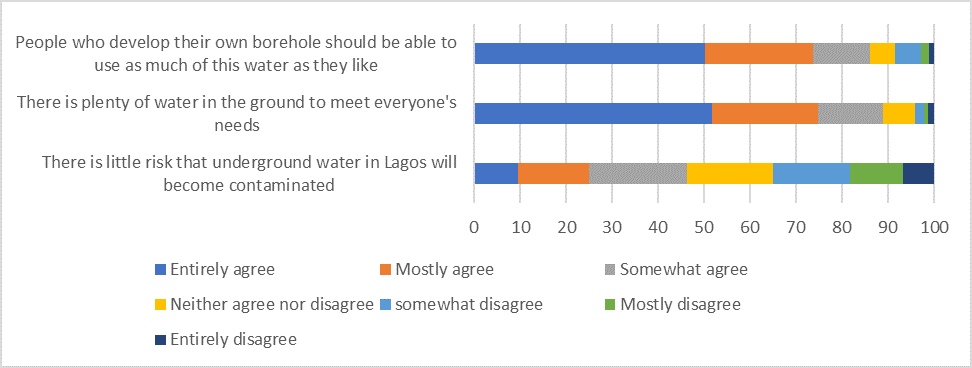
Understanding whether these worries are well-founded is hampered by the lack of any system for monitoring either the quality or the amount of water being abstracted from the aquifers. State Government proposals to require owners of domestic boreholes to register these have foundered on the fear that this will be a front for the taxing of private water supplies. At the same time, our research indicates that the broader population is relaxed about the upward trend in boreholes, regarding the supply of groundwater as infinite (Figure 1). However, attitudes towards the quality of that water are more mixed, with around half concerned for the future. Evidence as to whether these beliefs are well-placed is currently lacking and requires longer-term data collection, particularly in terms of the amount of ground water available. Our research into levels of e-coli found in 40 groundwater sources demonstrates that residents’ caution about quality is well-founded (Figure 2). However, again, longer term monitoring is required if we are to better understand the risks of contamination over time.

Figure 1: Residents’ perceptions of groundwater exploitation in Lagos

lagos1

Figure 2


Conclusions

In Lagos, as in many other cities, the rise of the off-grid city is due to a mix of social, economic, political and hydrogeological factors. Attempts to overcome the water gap though public provision alone are struggling with the sheer scale of investment required and speed of change in population. The rise of private provision of water supplies has fuelled the growth of the city and, in turn, has been fuelled by a rising tide of prosperity. Yet there are real concerns that the sheer proliferation of boreholes and unregulated abstraction may be storing up problems for the future. So what are the answers? Certification and licensing approaches will certainly help, but only if there is both the will and means to enforce them. Improving knowledge and awareness through education and training, both of the wider public and amongst new contractors, will also help. In the short term it may be that we need to find new mechanisms to monitor the health of our aquifers if we are not to encounter longer-term crises. Drilling contractors can be at the forefront of this exercise, helping to ensure the resilience and durability of the off-grid city.

Acknowledgements

Dr. Adrian Healy, is a Research Fellow at Cardiff University. His research focuses on themes of urban resilience to shocks and hazards. He gratefully acknowledges the support of all his colleagues involved in the RIGSS project, particularly Prof. Moshood Tijani (University of Ibadan), Prof. Ibrahim Goni (University of Maiduguri) and the British Geological Survey. Financial support was provided by NERC-GCRF ‘Building Resilience’ grant (NE/P01545X/1). Further information on the issues of domestic borehole development in Nigeria can be found here.

Figure 2 is reproduced with thanks to Dr. Kirsty Upton and the British Geological Survey, who prepared the original version.


[1] https://www.cardiff.ac.uk/__data/assets/pdf_file/0003/1090650/Perspectives_of_households_in_Lagos.pdf


An opportunity to reflect on manual drilling – UNESCO Seminar in Madrid, 2019

It was 21 years ago that I was first confronted with manual drilling.  I had just started my PhD research at Cranfield University.  The idea was to develop a human operated rig that could break through harder (laterite) formation, test it in an African country, and have it adopted by the private sector… in three years.  Back then I could never have imagined that in 2019 (and in my mid-40’s), that I would join ten others for a seminar hosted in Madrid, Spain on the role of manual drilling to reach universal water access.

Looking back, the goals of the project were unrealistic, but we did not know that at the time, and research provides space for considerable learning. Oh, and by the way, digital cameras were very new on the market in 1998.  My colleague had one, which produced recognisable, but quite grainy images.

The UK Department for International Development (DFID) Knowledge and Research (KAR) funded research project, “Low Cost Drilling” took me to Uganda, and three years of field work in collaboration with the (now) Ministry of Water and Environment and district local governments in Mukono and Mpigi. Following initial trials in a field in the UK, UNICEF and the government enabled use of the rig to provide drinking water supplies within their joint drinking water programme (called WES).

We proved that the new technology (which we called the Pounder Rig) could work, but embedding it in Uganda proved to be beyond us within the three-year period. In the meantime, I had gone from standing in a hotel lobby to make calls to landlines and leaving messages for people who were not there, to having my first mobile phone. My photographs remained analogue; a digital camera being well out of financial reach at the time.

The PhD research process taught me so much, but let me try to stay close to the topic of manual drilling. The subject of innovation diffusion was opened up, and I came to learn that the successful adoption of any technology is brought about by much more than technical aspects (my PhD thesis provides insights into this in case you wish to be one of the very few people to read it).

Over the subsequent years, I was extremely fortunate to have the chance to keep on returning to the subject of manual drilling. The collaboration with UNICEF to follow-up their efforts to support manual drilling professionalization in several countries was a welcome opportunity, leading to not only the 2015 manual drilling compendium, but also more in-depth documentation of the status quo in Nigeria and Chad. In short, we documented that by 2015 manual drilling technologies had provided drinking water sources in at least 36 countries.

Manual Drilling

There are quite a few organisations introducing manual drilling technology, including private enterprises developing new markets; local non-governmental organisations (NGOs) with overseas funding; governments relying on foreign/local expertise as well as foreign companies and NGOs (including several faith-based organisations).

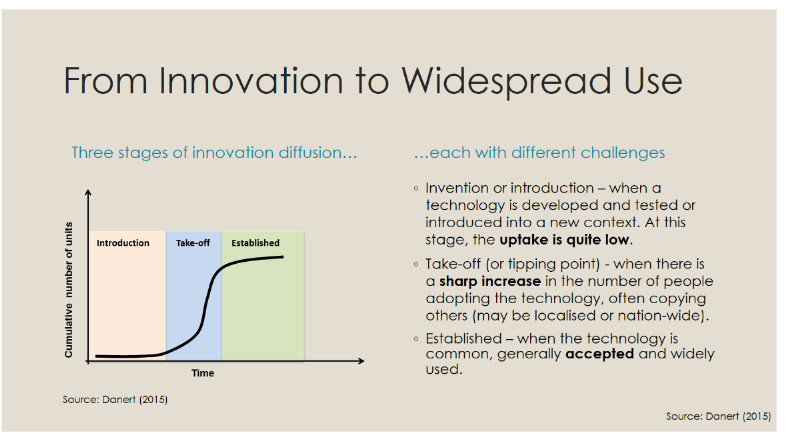
However, as I started to learn while in Uganda some 20 years ago, the diffusion of innovation has different phases.  Broadly speaking, there is the introduction phase, the uptake phase (also known as the valley of death, given that many technologies are not taken up), and the established phase. Mobile phones combined with digital cameras (aka SMART phones), that can enable you to make calls and take high resolution photographs are in the established phase.

Innovation Uptake (003)

Dr Pedro Martinez-Santos, the new UNESCO Chair in “Appropriate Technologies for Human Development” at the Universidad Complutense de Madrid chose the role of manual drilling technologies towards universal water access as the topic for the first seminar of the chair in April 2019.  I was privileged to be among the eleven people who attended the event. I thus had the opportunity to listen to, and learn from professionals talking of specific experiences in Nigeria, Senegal, the Demographic of Congo, Zambia and Guinea Bissau as well as more widely. It was also a chance to present my own experiences and reflections, and engage in open and fee dialogue.

Returning, after two decades, to an academic environment and reflecting on a topic that has engaged me ever since, is something that may only happen once in a lifetime! There is much that I could say about manual drilling, and even more to learn about, but I close this blog with three short messages:

  • Manual drilling is fully established in some countries and less so in others. Globally, a suite of technologies, when used in the right locations and with professional construction methods, can provide drinking water of good quality. Manual drilling undoubtedly has a significant role to play in reaching the Sustainable Development Goal Targets for Drinking Water, especially in remote areas, but also in rapidly growing urban centres where piped supplies are failing to provide reliable services.
  • Manual drilling is not just about technology but also: the businesses that invest; the drillers (male and female) that need be able to work professionally; the data that can be collected; and the question of whether some people are left behind while others tap the water from their back yards. And there is the regulation (alongside other innovations) needed ensure that the sources are, and remain safe to drink, tapping sustainable groundwater resources.
  • I close by urging not only governments, but also development partners to consider manual drilling, and manual drillers in policies, legislation, investments and capacity strengthening efforts rather than leaving it on the margins. As we experienced in Madrid in April, engage in real dialogue and listening with the different actors involved. The rewards may even be beyond your expectations!

You can download all the presentations from the Madrid seminar from here.

RWSN has collated information on manual drilling technologies and associated wider issues here.

Regulating the private sector

This is the fourth and final post in a series of four blogs entitled “Professional Borehole Drilling: Learning from Uganda” written by Elisabeth Liddle, and a RWSN webinar in 2019 about professional borehole drilling. It draws on research in Uganda by Liddle and Fenner (2018). We welcome your thoughts in reply to this blog below.

Great gains have been made in recent years regarding access to improved water sources in rural sub-Saharan Africa. Concerns have been raised, however, over the extent to which these sources are able to provide a reliable and safe water supply in the medium to long term (for example, Foster et al., 2018; Kebede et al., 2017; Owor et al., 2017; Adank et al., 2014).

There has been considerable focus on post-construction operations and maintenance, but increasing attention is on the quality of the implementation to prevent water point failure in the future (UNICEF/Skat, 2016, Bonsor et al., 2015; Anscombe, 2011; Sloots, 2010).

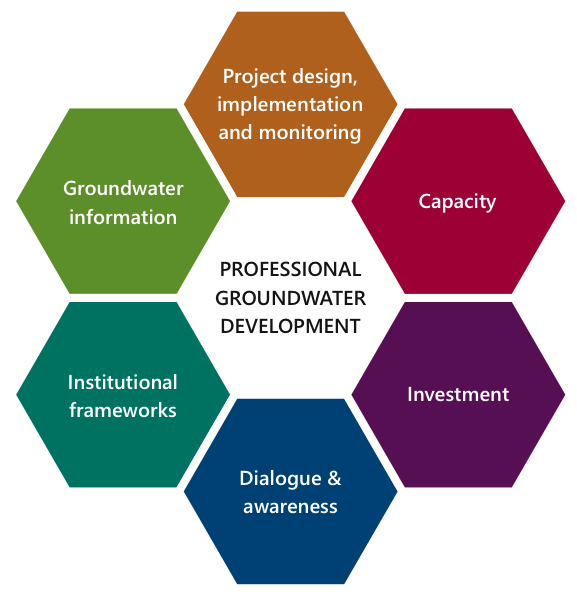
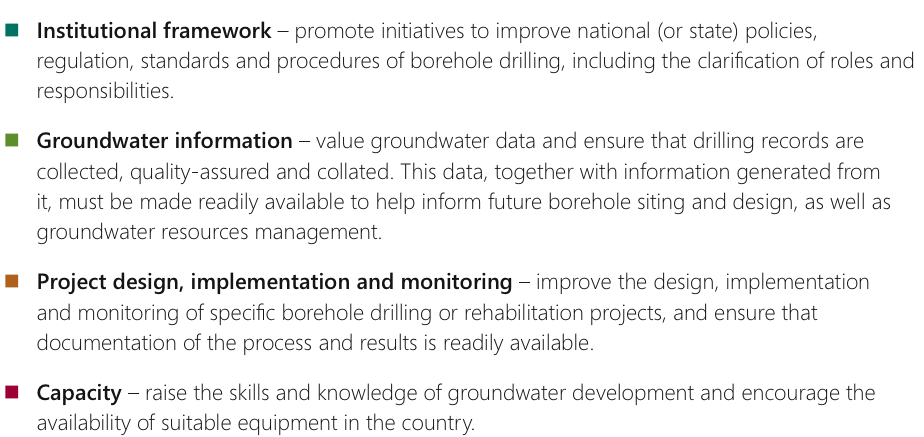
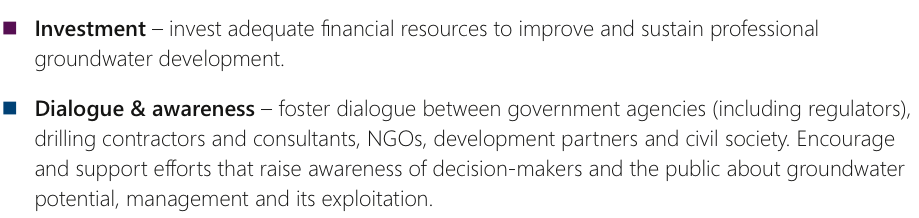
Skat Foundation and UNICEF have been key actors here, jointly advocating for an increase in drilling professionalism across sub-Saharan Africa. They recently released a guidance note on drilling professionalism (UNICEF/Skat, 2016), highlighting six key areas that need to be addressed to increase the quality of implementation work (see Figure 1).

In this blog I focus on the ‘institutional frameworks’ aspect in Figure 1, with specific attention on the ways in which Uganda has sought to improve regulation of the private sector in recent years by introducing licensing systems for both drilling contractors and consultants.

pic1pic2pic3


For the past two decades, Uganda has strongly encouraged the involvement of the private sector in the siting and drilling of rural water points (Danert et al., 2003). Having encouraged privatisation, however, the Ministry of Water and the Environment (MWE) recognised that they had a crucial role to play within this: regulation of the private sector. Regulation efforts began in 1999 with the introduction of drilling contractor licenses. To gain a license, drilling contractors must submit documentation outlining their equipment, their staff and CVs, and their work history. Premises and equipment are then assessed, with the drilling contractor’s technical and financial capacity being at the forefront throughout. Drilling contractor licenses must be renewed annually. Updated lists of licensed drilling contractors are published in national newspapers and online every July.

Recent research in Uganda (Liddle and Fenner, 2018) found that drilling contractor licenses have greatly helped the procurement process within Uganda’s implementing agencies, with the drilling contractor license list typically being the first port of call during bid evaluation.

In recent years, MWE recognised the essential need to extend this licensing system to consultants/hydrogeologists, given the proliferation of ‘briefcase consultants’ in the country (those with no formal geology or hydrogeology training). The issue of briefcase consultants is discussed in blog 1 of this series. Briefcase consultants were bidding for the siting and supervision work, yet evaluation teams within implementing agencies had no way of identifying those that were truly qualified for this work, and those whose bidding documents (e.g. work experience, degrees etc) were fake. Poor quality work then proceeded as briefcase consultants began winning contracts.

To address this problem and provide guidance for evaluation teams, the MWE started the process of issuing hydrogeologist/consultant licenses in 2016 (Tindimugaya, 2016). Consultants can apply for an individual hydrogeologist license or a groundwater firm license. For an individual to gain a license, they must submit their academic documents, CV, and an overview of past work. The individual must have hydrogeology specific qualifications (short course, diploma, or degree); geology qualifications alone are insufficient. Premises and equipment are then assessed and a practical assessment and interview are conducted. For a firm to gain a license, the director must gain an individual license. The firm then needs to submit their company registration details, a list of staff and CVs, and details of past work. By July 2018, licenses had been issued to 65 individuals and 15 firms. As with drilling contractor licenses, consultant licenses are renewed annually and updated lists of licensed consultants are published in national newspapers and online every July.

While these licensing systems have greatly helped Ugandan implementing agencies, similar licensing systems across SSA, especially for consultants, appear to be rare. According to Danert and Theis (2018), of the 14 sub-Saharan Africa countries listed in their report, only three had licensing systems in place for consultants, while ten had licensing systems in place for Drilling Contractors. It is now essential that additional sub-Saharan African governments follow Uganda’s lead, and begin the regulate the private sector, especially consultants given the essential role that siting and supervision are known to play when considering the quality of the implementation work (UNICEF/Skat, 2016; Anscombe, 2011; Danert et al., 2010).

What do you think?

So what do you think? Do you have experiences of trying to select qualified and experiences groundwater professionals? Do you think that licensing professionals is the way forward within your context? Are there any efforts to better regulate the private drilling sector in your country? You can respond below by posting in the reply below, or you can join the live webinar on the 14th of May (register here).

References

Adank, M., Kumasi, T.C., Chimbar, T.L., Atengdem, J., Agbemor, B.D., Dickinson, N., and Abbey, E. (2014). The state of handpump water services in Ghana: Findings from three districts, 37th WEDC International Conference, Hanoi, Vietnam, 2014.

Anscombe, J.R. (2011). Quality assurance of UNICEF drilling programmes for boreholes in Malawi. Lilongwe, Malawi: Ministry of Agriculture Irrigation and Water Development, Government of Malawi.

Bonsor, H.C., Oates, N., Chilton, P.J., Carter, R.C., Casey, V., MacDonald, A.M., Etti, B., Nekesa, J., Musinguzi, F., Okubal, P., Alupo, G., Calow, R., Wilson, P., Tumuntungire, M., and Bennie, M. (2015). A Hidden Crisis: Strengthening the evidence base on the current failure of rural groundwater supplies, 38th WEDC International Conference, Loughborough University, UK, 2014.

Danert, K., Armstrong, T., Adekile, D., Duffau, B., Ouedraogo, I., and Kwei, C. (2010). Code of practice for cost effective boreholes. St Gallen, Switzerland: RWSN.

Danert, K. and Theis, S. (2018). Professional management of water well drilling projects and programmes, online course 2018, report for course participants, UNICEF-Skat Foundation Collaboration 2017-2019. St Gallen, Switzerland: Skat.

Danert, K., Carter, R.C., Rwamwanja, R., Ssebalu, J., Carr, G., and Kane, D. (2003). The private sector and water and sanitation services in Uganda: Understanding the context and developing support strategies. Journal of International Development, 15, 1099-1114.

Foster, T., Willetts, J., Lane, M. Thomson, P. Katuva, J., and Hope, R. (2018). Risk factors associated with rural water supply failure: A 30-year retrospective study of handpumps on the south coast of Kenya. Science of the Total Environment,, 626, 156-164.

Kebede, S., MacDonald, A.M., Bonsor, H.C, Dessie, N., Yehualaeshet, T., Wolde, G., Wilson, P., Whaley, L., and Lark, R.M. (2017).  UPGro Hidden Crisis Research Consortium: unravelling past failures for future success in Rural Water Supply. Survey 1 Results, Country Report Ethiopia. Nottingham, UK: BGS (OR/17/024).

Liddle, E.S. and Fenner, R.A. (2018). Review of handpump-borehole implementation in Uganda. Nottingham, UK: BGS (OR/18/002).

Owor, M., MacDonald, A.M., Bonsor, H.C., Okullo, J., Katusiime, F., Alupo, G., Berochan, G., Tumusiime, C., Lapworth, D., Whaley, L., and Lark, R.M. (2017). UPGro Hidden Crisis Research Consortium. Survey 1 Country Report, Uganda. Nottingham, UK: BGS (OR/17/029).

Sloots, R. (2010). Assessment of groundwater investigations and borehole drilling capacity in Uganda. Kampala, Uganda: Ministry of Water and Environment, Government of Uganda, and UNICEF.

Tindimugaya, C. (2016). Registration of groundwater consultants in Uganda: rationale and status. RWSN Forum, 2016, Abidjan, Côte d’Ivoire.

UNICEF/Skat (2016). Professional water well drilling: A UNICEF guidance note. St Gallen, Switzerland: Skat and UNICEF.


La réglementation du secteur privé

Il s’agit du dernier d’une série de quatre blogs intitulée “Le forage professionnel de puits d’eau: Apprendre de l’Ouganda” de Elisabeth Liddle et d’un webinaire en 2019 sur le forage de puits professionnel. Cette série s’appuie sur les recherches menées en Ouganda par Liddle et Fenner (2018). Nous vous invitons à nous faire part de vos commentaires en réponse à ce blog ci-dessous.

Si l’accès à des sources d’eau améliorées a été amélioré de manière progressive dans l’ensemble de l’Afrique subsaharienne rurale, plusieurs études ont soulevé des problèmes concernant la capacité de ces sources à fournir des quantités d’eau sûres et adéquates à long terme (Foster et al., 2018 ; Kebede et al., 2017 ; Owor et al., 2017 ; Adank et al., 2014).

Le secteur se focalise sur l’exploitation et l’entretien après la construction, mais également de plus en plus sur la qualité de la mise en œuvre afin de prévenir la défaillance des points d’eau dans l’avenir. (UNICEF/Skat, 2016, Bonsor et al., 2015; Anscombe, 2011; Sloots, 2010).

La Fondation Skat et l’UNICEF sont des acteurs clés dans ce domaine, plaidant conjointement en faveur d’une professionnalisation accrue du forage en Afrique subsaharienne. Ils ont récemment publié une note d’orientation sur le professionnalisation en matière de forage (UNICEF/Skat, 2016), soulignant six domaines clés qui doivent être abordés pour améliorer la qualité du travail d’exécution (voir Figure 1).

Dans ce blog, je me concentre sur l’aspect “cadres institutionnels ” de la Figure 1, avec une attention particulière sur la manière dont l’Ouganda a cherché à améliorer la réglementation du secteur privé ces dernières années en introduisant des systèmes de permis pour les entrepreneurs et les consultants en forage.


Screen Shot 2019-04-01 at 4.58.03 PMScreen Shot 2019-04-01 at 4.57.43 PM

Fig. 1: Six domaines d’engagement pour l’exploitation professionnelle des eaux souterraines (Skat/ UNICEF, 2018)

Des recherches récentes en Ouganda (Liddle et Fenner, 2018) ont montré que les permis d’entrepreneur de forage ont grandement facilité le processus de passation de marché au sein des organismes d’exécution de travaux en Ouganda, la liste des permis d’entrepreneur de forage étant généralement le premier point de contact pendant l’évaluation des offres.

Ces dernières années, le Ministère de l’Eau et de l’Environnement a reconnu le besoin essentiel d’étendre ce système de permis aux consultants/hydrogéologues, étant donné la prolifération des “consultants à mallette” dans le pays (ceux qui n’ont aucune formation formelle en géologie ou en hydrogéologie). La question des consultants en mallettes est abordée dans le premier blog de cette série. Les consultants en mallettes soumissionnaient pour les travaux d’implantation et de supervision, mais les équipes d’évaluation au sein des organismes d’exécution n’avaient aucun moyen d’identifier ceux qui étaient réellement qualifiés pour ces travaux et ceux dont les documents d’appel d’offres (par exemple, expérience professionnelle, diplômes, etc.) étaient des faux. Le travail de qualité médiocre s’est ensuite poursuivi car les “consultants à mallette” remportaient de plus en plus de contrats.

Pour résoudre ce problème et fournir des conseils aux équipes d’évaluation, le Ministère de l’Eau et de l’Environnement a entamé le processus de délivrance de permis d’hydrogéologue/consultant en 2016 (Tindimugaya, 2016). Les consultants peuvent demander un permis individuel d’hydrogéologue ou un permis d’entreprise en lien avec les eaux souterraines. Pour qu’une personne obtienne un permis, elle doit soumettre ses documents universitaires, son CV et un aperçu de son expérience professionnelle. La personne doit posséder des qualifications spécifiques en hydrogéologie (cours de courte durée, diplôme ou licence) ; des études en géologie seulement sont insuffisantes. Les locaux et l’équipement sont ensuite évalués, et une évaluation pratique ainsi qu’un entretien sont menées. Pour qu’une entreprise obtienne un permis, le directeur doit avoir un permis individuel. L’entreprise doit ensuite fournir les détails relatifs à l’inscription de son entreprise, une liste de son personnel et de leurs CV, ainsi que les détails de ses travaux antérieurs. A compter de juillet 2018, 65 personnes et 15 entreprises avaient reçu des permis. Comme pour les permis d’entrepreneur de forage, les permis des consultants sont renouvelés chaque année et des listes de consultants autorisés mises à jour sont publiées dans les journaux nationaux et en ligne chaque année en juillet.

Si ces systèmes d’octroi de permis ont grandement aidé les organismes d’exécution ougandais, des systèmes d’octroi de permis similaires, en particulier pour les consultants, semblent être rares dans le reste de l’Afrique subsaharienne. Selon Danert et Theis (2018), sur les 14 pays d’Afrique subsaharienne énumérés dans le rapport, seulement trois avaient mis en place des systèmes de permis pour les consultants, tandis que dix avaient mis en place des systèmes de permis pour les entreprises de forage. Il est maintenant essentiel que d’autres gouvernements d’Afrique subsaharienne suivent l’exemple de l’Ouganda et commencent à réglementer le secteur privé, en particulier les consultants, étant donné le rôle essentiel qu’ils jouent dans la qualité du travail d’exécution, l’implantation et la supervision des forages (UNICEF/Skat, 2016 ; Anscombe, 2011 ; Danert et al., 2010).

Qu’en pensez-vous?

Alors, qu’en pensez-vous? Avez-vous de l’expérience dans la sélection de professionnels qualifiés et expérimentés dans le domaine de l’eau souterraine ? Pensez-vous que l’octroi de permis aux professionnels est la voie à suivre dans votre contexte ? Y a-t-il des efforts pour mieux réglementer le secteur privé du forage dans votre pays ? Vous pouvez répondre ci-dessous en postant un commentaire, ou vous pouvez participer au webinaire en direct le 14 mai (inscriptions ici)

Références

Adank, M., Kumasi, T.C., Chimbar, T.L., Atengdem, J., Agbemor, B.D., Dickinson, N., and Abbey, E. (2014). The state of handpump water services in Ghana: Findings from three districts, 37th WEDC International Conference, Hanoi, Vietnam, 2014.

Anscombe, J.R. (2011). Quality assurance of UNICEF drilling programmes for boreholes in Malawi. Lilongwe, Malawi: Ministry of Agriculture Irrigation and Water Development, Government of Malawi.

Bonsor, H.C., Oates, N., Chilton, P.J., Carter, R.C., Casey, V., MacDonald, A.M., Etti, B., Nekesa, J., Musinguzi, F., Okubal, P., Alupo, G., Calow, R., Wilson, P., Tumuntungire, M., and Bennie, M. (2015). A Hidden Crisis: Strengthening the evidence base on the current failure of rural groundwater supplies, 38th WEDC International Conference, Loughborough University, UK, 2014.

Danert, K., Armstrong, T., Adekile, D., Duffau, B., Ouedraogo, I., and Kwei, C. (2010). Code of practice for cost effective boreholes. St Gallen, Switzerland: RWSN.

Danert, K. and Theis, S. (2018). Professional management of water well drilling projects and programmes, online course 2018, report for course participants, UNICEF-Skat Foundation Collaboration 2017-2019. St Gallen, Switzerland: Skat.

Danert, K., Carter, R.C., Rwamwanja, R., Ssebalu, J., Carr, G., and Kane, D. (2003). The private sector and water and sanitation services in Uganda: Understanding the context and developing support strategies. Journal of International Development, 15, 1099-1114.

Foster, T., Willetts, J., Lane, M. Thomson, P. Katuva, J., and Hope, R. (2018). Risk factors associated with rural water supply failure: A 30-year retrospective study of handpumps on the south coast of Kenya. Science of the Total Environment,, 626, 156-164.

Kebede, S., MacDonald, A.M., Bonsor, H.C, Dessie, N., Yehualaeshet, T., Wolde, G., Wilson, P., Whaley, L., and Lark, R.M. (2017).  UPGro Hidden Crisis Research Consortium: unravelling past failures for future success in Rural Water Supply. Survey 1 Results, Country Report Ethiopia. Nottingham, UK: BGS (OR/17/024).

Liddle, E.S. and Fenner, R.A. (2018). Review of handpump-borehole implementation in Uganda. Nottingham, UK: BGS (OR/18/002).

Owor, M., MacDonald, A.M., Bonsor, H.C., Okullo, J., Katusiime, F., Alupo, G., Berochan, G., Tumusiime, C., Lapworth, D., Whaley, L., and Lark, R.M. (2017). UPGro Hidden Crisis Research Consortium. Survey 1 Country Report, Uganda. Nottingham, UK: BGS (OR/17/029).

Sloots, R. (2010). Assessment of groundwater investigations and borehole drilling capacity in Uganda. Kampala, Uganda: Ministry of Water and Environment, Government of Uganda, and UNICEF.

Tindimugaya, C. (2016). Registration of groundwater consultants in Uganda: rationale and status. RWSN Forum, 2016, Abidjan, Côte d’Ivoire.

UNICEF/Skat (2016). Professional water well drilling: A UNICEF guidance note. St Gallen, Switzerland: Skat and UNICEF.

Remerciements

Ce travail fait partie du projet Hidden Crisis du programme de recherche UPGro – cofinancé par le NERC, le DFID et l’ESRC.

Le travail de terrain entrepris pour ce rapport fait partie de la recherche doctorale des auteurs à l’Université de Cambridge, sous la supervision du Professeur Richard Fenner. Ce travail sur le terrain a été financé par le Ryoichi Sasakawa Young Leaders Fellowship Fund et UPGro : Hidden Crisis.

Merci à ceux d’entre vous de l’Université de Makerere et de WaterAid Ouganda qui m’ont apporté un soutien logistique, y compris sur le terrain, pendant que je menais les entretiens pour ce rapport (en particulier le Dr Michael Owor, Felece Katusiime et Joseph Okullo de l’Université Makerere et Gloria Berochan de WaterAid Uganda). Merci également à tous les répondants d’avoir été enthousiastes et disposés à participer à cette recherche.

Photo: E.S. Liddle

Attracting the best: Why some experienced consultants and drilling contractors are no longer willing to work for district local government

This is the third in a series of four blogs entitled Professional Borehole Drilling: Learning from Uganda written by Elisabeth Liddle, and a RWSN webinar in 2019 about professional borehole drilling. It draws on research in Uganda by Liddle and Fenner (2018). We welcome your thoughts in reply to this blog below.

Several recent reports have raised concerns over the quality of the boreholes that are being sited and constructed in rural sub-Saharan Africa (UNICEF/Skat, 2016, Bonsor et al., 2015; Anscombe, 2011; Sloots, 2010). If high-quality boreholes are to be sited and constructed, skilled experienced personnel are needed to conduct this work. Recent research in Uganda, highlights that a number of the most experienced consultants and drilling contractors in Uganda (those who have been in business for fifteen – twenty years) are no longer willing to bid for district local government contracts (Liddle and Fenner, 2018). This is concerning, given that district local government projects accounted for 68% of new deep boreholes drilled in the financial year 2016/17 (MWE, 2017).

In this blog I outline why these consultants and drilling contractors are no longer willing to work for districts.

1. Low prices


A number of the consultants and drilling contractors interviewed are simply dissatisfied with the prices that district local governments are willing to pay compared to that of non-governmental organisations (NGOs). The consultants interviewed, for example, stated that districts are typically willing to pay UGX 1 million – UGX 2 million (US $276 – $552[1]) for siting and supervision, while NGOs are typically willing to pay UGX 2.5 million – UGX 3.5 million (US $691 – $967) for the same work. The price districts are willing to pay is reportedly not realistic, and as a result, these consultants would have to take shortcuts in their work. The same issues were reported among the drillers who are no longer willing to work for the district local governments. These consultants and drillers are not willing to undertake sub-standard water points for communities, take shortcuts in their work, nor tarnish the reputation of their companies.

2. Misuse of ‘lump sum, no-water-no-pay’ payment terms


As explained in blog “Turnkey contracts for borehole siting and drilling”, drilling under a turnkey contract was found to be common during this research: 26 of the implementing agencies interviewed in Uganda (n = 29), for example, were procuring the private sector for the implementation work, 19 of whom were using turnkey contracts for the siting and drilling work and paying the driller via lump sum, no-water-no-pay payment terms. Typically, under these combined ‘lump sum, no-water-no-pay’ payment terms, if a borehole is unsuccessful (is dry or low-yielding), the driller is not paid. If the borehole is successful, the driller should be paid the full lump sum price, regardless of the costs incurred on-site. A number of districts, however, are deviating from lump sum, no-water-no-pay payment term norms. Instead of paying the full lump sum as they should do, they are only paying for the actual work done and materials used (known as BoQ payment or admeasurement payment in Uganda). While this may be specified in the driller’s contract, it is concerning given that the whole premise behind lump sum no-water-no-pay payment terms is that, while drillers will lose money on unsuccessful boreholes, they will be able to recover these costs from the full lump sums they are paid for the successful boreholes. Without full lump sum payment, drillers are unable to their losses..

3. Bribes during the bidding process


Demands for bribes are reportedly common when bidding for district local government contracts. When a bribe is demanded, consultants and drillers struggle to account for this cost: if they account for this in their quote, their quote will be too high, thus, they will not win the contract. If, however, they do not account for the price of the bribe in their quote, the consultant or driller will then need to recover this cost at some stage, usually through taking shortcuts on-site. If consultants and drillers do not want to take shortcuts in their work they will not bid.

4. Late payment


Receiving the full payment from districts for completed works can be challenging, with several drilling contractors reporting that in some cases, they had to wait over a year to receive their full payment. This makes business difficult; it is much easier to only work for NGOs who are known for paying on time.

The following quotes help to exemplify the above issues:

“But I tell you, for the last few years I have not bided for a district job because the bidding process is just so silly. You know, they will already know who is going to win the contract before they even advertise…And the terms and conditions in the contract are very unfavourable to the driller… So I have not drilled for the district for the last five years as there is no guarantee that they will pay us, this is not a viable business model for us…They only pay on time 50% of the time. Even when the borehole is successful, they will say, oh we don’t have any money, we’ll have to pay in next quarter. Sometimes this has gone on for a whole year. It was with a district that it took 14 months for me to be paid once… The guarantee of receiving payment is frustrating” (Drilling Contractor).

“I strongly believe bidding is just a procedure for most projects. In most cases the districts are giving contracts after they [the bidder] has paid them for the contract. So, say it is a contract for 100 million, they will want 20 million during bidding. This problem is with district, not NGOs, not the ministry… So I have stopped drilling for districts, it was too expensive” (Drilling Contractor).

“I don’t like working for the district. To be honest they are simply corrupt. It is very hard to get a contract from them, you’ve often got to bribe to simply get the contract. They’ll always ask for extra money. It is disturbing. If you don’t agree to pay them, they will find a way of explaining why you did not get the contract” (Consultant).

Districts are now beginning to notice this issue as well, as explained by one district water officer below:

“So many of them [drillers] are so business orientated that even during the time of bidding they under quote so they can win the contract…now because of that they have made serious drillers pull out of district work as they cannot win government contracts. Most of the serious drillers are now dealing with NGOs because they know the procurement process is much more transparent and they will be able to get the money that they need to do a good job. But for local government, they cannot. So we have lost some really good drillers because of this, because they cannot compete and most times most local government want to select the lowest bidder… So we have a big challenge here because we don’t want government to lose money by selecting the more expensive driller but this means the really high quality ones have left district work” (District Water Office).

These quotes highlight the long-term consequences for district local governments who are known for engaging in practices such as paying low prices, offering unfavourable payment terms, soliciting bribes, and making late payments. Finding solutions to these problems is essential to ensure that experienced consultants and drilling contractors are willing to support district work going forward.

What do you think?

So what do you think? Do you have experiences of unrealistically low prices (or the opposite), unfavourable payment terms, bribery in the procurement process or late payments. Or can you share any particularly promising practices with us? You can respond below by posting in the reply below, or you can join the live webinar on the 14th of May (register here).

References

Anscombe, J.R. (2011). Quality assurance of UNICEF drilling programmes for boreholes in Malawi. Lilongwe, Malawi: Ministry of Agriculture Irrigation and Water Development, Government of Malawi, Available from http://www.rural-water-supply.net/en/resources/details/509

Bonsor, H.C., Oates, N., Chilton, P.J., Carter, R.C., Casey, V., MacDonald, A.M., Etti, B., Nekesa, J., Musinguzi, F., Okubal, P., Alupo, G., Calow, R., Wilson, P., Tumuntungire, M., and Bennie, M. (2015). A Hidden Crisis: Strengthening the evidence base on the current failure of rural groundwater supplies, 38th WEDC International Conference, Loughborough University, UK, 2014, Available from https://wedc-knowledge.lboro.ac.uk/resources/conference/38/Bonsor-2181.pdf

Liddle, E.S. and Fenner, R.A. (2018). Review of handpump-borehole implementation in Uganda. Nottingham, UK: BGS (OR/18/002). https://nora.nerc.ac.uk/id/eprint/520591/

MWE (2017) Sector Performance Report 2017, Ministry of Water and Environment, Government of Uganda, Available from https://www.mwe.go.ug/sites/default/files/library/SPR%202017%20Final.pdf

Sloots, R. (2010). Assessment of groundwater investigations and borehole drilling capacity in Uganda. Kampala, Uganda: Ministry of Water and Environment, Government of Uganda, and UNICEF, Available from http://www.rural-water-supply.net/en/resources/details/133

UNICEF/Skat (2016). Professional water well drilling: A UNICEF guidance note. St Gallen, Switzerland: Skat and UNICEF, Available from http://www.rural-water-supply.net/en/resources/details/775

[1] May 2017 exchange rate.

Photos

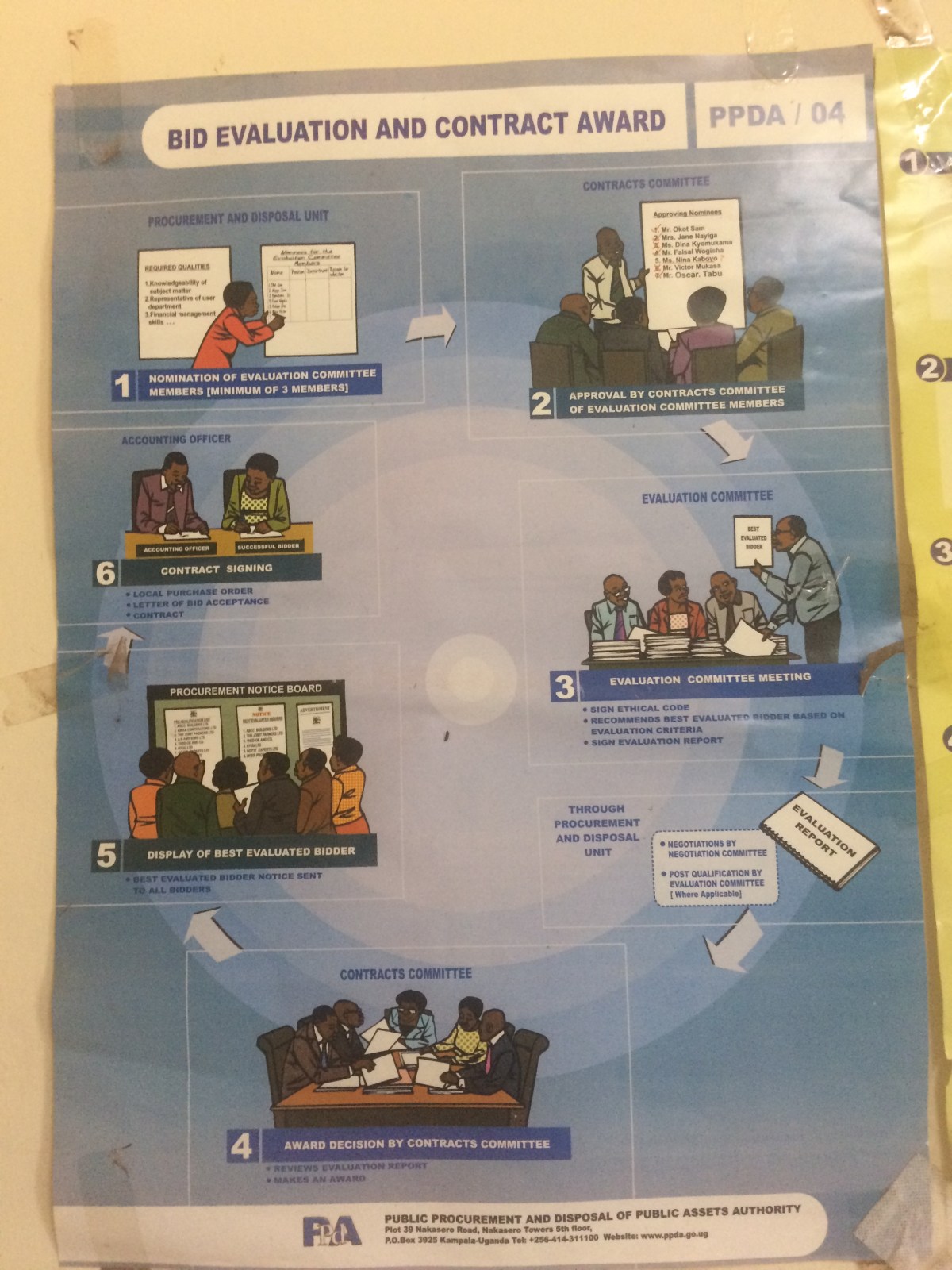
photo #1: “Bidding process poster on display in a District Procurement Office” (Source: Elisabeth Liddle).

Acknowledgements

This work is part of the Hidden Crisis project within the UPGro research programme – co-funded by NERC, DFID, and ESRC.

The fieldwork undertaken for this report is part of the authors PhD research at the University of Cambridge, under the supervision of Professor Richard Fenner. This fieldwork was funded by the Ryoichi Sasakawa Young Leaders Fellowship Fund and UPGro: Hidden Crisis.

Thank you to those of you from Makerere University and WaterAid Uganda who provided logistical and field support while I was conducting the interviews for this report (especially Dr Michael Owor, Felece Katusiime, and Joseph Okullo from Makerere University and Gloria Berochan from WaterAid Uganda). Thank you also to all of the respondents for being eager and willing to participate in this research.

Comment attirer les meilleurs, ou pourquoi certains consultants et entrepreneurs de forage expérimentés ne sont plus disposés à travailler pour le gouvernement local du district

Il s’agit du troisième d’une série de quatre blogs intitulée ‘Le forage professionnel de puits d’eau: Apprendre de l’Ouganda” de Elisabeth Liddle et d’un webinaire en 2019 sur le forage de puits professionnel. Cette série s’appuie sur les recherches menées en Ouganda par Liddle et Fenner (2018). Nous vous invitons à nous faire part de vos commentaires en réponse à ce blog ci-dessous.

Plusieurs rapports récents ont remis en question la qualité des forages en cours de construction en Afrique subsaharienne rurale (UNICEF/Skat, 2016, Bonsor et al., 2015; Anscombe, 2011; Sloots, 2010). Pour implanter et construire des forages de haute qualité être, un personnel qualifié et expérimenté doit être en mesure d’effectuer ces travaux. Des recherches récentes en Ouganda montrent qu’un certain nombre de consultants et d’entrepreneurs en forage parmi les plus expérimentés en Ouganda (ceux qui sont en activité depuis quinze à vingt ans) ne sont plus disposés à être engagés pour des contrats de collectivités locales de district (Liddle and Fenner, 2018). Ceci est préoccupant, étant donné que les projets des collectivités locales de district représentent 68% des nouveaux forages profonds forés au cours de l’année fiscale 2016/17 (MWE, 2017).

Dans ce blog, j’explique pourquoi ces consultants et entrepreneurs en forage ne sont plus disposés à travailler pour les districts.

1. Les prix sont trop bas

Un certain nombre de consultants et d’entrepreneurs de forage interrogés ne sont tout simplement pas satisfaits des prix que les collectivités locales de district sont prêtes à payer par rapport aux organisations non gouvernementales (ONG). Les consultants interrogés, par exemple, ont déclaré que les districts sont généralement disposés à payer de 1 à 2 million d’UGX (276 $US – 552 $US [1]) pour l’implantation et la supervision, tandis que les ONG sont généralement disposées à payer de 2,5 à 3,5 millions d’UGX (691 $US – 967 $US) pour le même travail. Le prix que les districts sont prêts à payer n’est apparemment pas réaliste et, en conséquent, ces consultants ne seraient pas en mesure de réaliser un travail de qualité. Les mêmes problèmes ont été signalés chez les foreurs qui ne sont plus disposés à travailler pour les autorités locales du district. Ces consultants et foreurs ne sont pas prêts à réaliser des points d’eau inférieurs aux normes pour les communautés du fait de ces bas prix, à prendre des raccourcis dans leur travail, ou à ternir la réputation de leurs entreprises.

2. Usage abusif des modalités de paiement forfaitaire “pas d’eau, pas de paiement”

Comme l’explique le blog “Contrats clés en main pour l’implantation et le forage de puits d’eau“, l’utilisation de contrats clés en main est fréquente en Ouganda: sur les 29 organisations interviewées au cours de cette recherche, 26 organisations travaillaient avec le secteur privé dans le cadre de contrat de forages, et 19 rémunéraient les foreurs pour l’implantation et le forage à travers des paiements forfaitaires “pas d’eau, pas de paiement”. Il est typique selon ces modalités de paiement que le foreur ne soit pas payé, si un forage échoue (si il est à sec ou à faible rendement). Si le forage est réussi, le foreur doit recevoir le prix forfaitaire total, quels que soient les coûts engagés sur place. Un certain nombre de districts, cependant, s’écartent des normes de paiement forfaitaire “pas d’eau, pas de paiement”. Au lieu de payer la totalité de la somme forfaitaire comme ils devraient le faire, ils ne paient que pour le travail réellement effectué et les matériaux utilisés (connu sous le nom de paiement au devis (BoQ) ou paiement ‘admeasurement’ en Ouganda). Bien que cela puisse être spécifié dans le contrat de forage, cela reste inquiétant, étant donné la prémisse sur laquelle les modalités de paiement forfaitaire “pas d’eau, pas de paiement” est basée: même si les foreurs perdent de l’argent sur les forages infructueux, ils devraient être en mesure de récupérer ces coûts à travers les sommes forfaitaires qui leur sont versées pour les forages réussis. Sans un paiement forfaitaire intégral, les foreurs sont incapables de recouvrir leurs pertes.

3. Les pots-de-vin pendant le processus d’appel d’offres

Les demandes de pots-de-vin seraient fréquentes lors des appels d’offres pour des contrats de collectivités locales de district. Lorsqu’un pot-de-vin est exigé, les consultants et les foreurs ont du mal à rendre compte de ce coût : s’ils en tiennent compte dans leur devis, leur devis sera trop élevé et ils ne gagneront donc pas le contrat. Si, toutefois, ils ne tiennent pas compte du prix du pot-de-vin dans leur devis, le consultant ou le foreur devra alors récupérer ce coût à un moment donné, généralement en effectuant un travail de mauvaise qualité sur place. Si les consultants et les foreurs ne veulent pas travailler dans ces conditions, ils ne soumissionneront pas.

4. Les retards de paiement

Recevoir un paiement intégral de la part des districts pour les travaux achevés peut être difficile: plusieurs entrepreneurs de forage signalent que dans certains cas, ils ont dû attendre plus d’un an pour recevoir leur paiement intégral. Cela rend les affaires difficiles. Il est beaucoup plus facile de ne travailler que pour des ONG qui ont la réputation de payer à temps.

Les citations suivantes aident à illustrer les problèmes ci-dessus:

«Mais je vous le dis, ces dernières années, je n’ai pas soumissionné pour un contrat avec le district, car le processus de candidature est tellement ridicule. Vous savez, ils savent déjà qui va remporter le contrat avant même de l’annoncer … Et les termes et conditions du contrat sont très défavorables au foreur … Je n’ai donc pas foré pour le district depuis cinq ans, rien ne garantit qu’ils nous paieront, ce n’est pas un modèle commercial viable pour nous… Ils paient seulement à temps dans 50% des cas. Même si le forage a réussi, ils diront: Nous n’avons pas d’argent, nous devrons payer le prochain trimestre. Parfois, cela dure depuis un an. Avec un district, il a fallu 14 mois pour que je sois payé une fois… La garantie de recevoir un paiement est frustrante» (Entrepreneur de forage).

«Je crois fermement que la passation de marché est seulement une procédure pour la plupart des projets. Dans la plupart des cas, les districts signent des contrats après que le soumissionnaire leur ait donné de l’argent pour celui-ci. Alors, disons que c’est un contrat de 100 millions, ils voudront 20 millions lors du processus d’appel d’offres. Ce problème concerne les districts, pas les ONG, ni le ministère … J’ai donc arrêté de forer pour les districts, c’était trop cher» (Entrepreneur de forage)

«Je n’aime pas travailler pour le district. Pour être honnête, ils sont tout simplement corrompus. Il est très difficile d’obtenir un contrat de leur part, vous devez souvent payer pour obtenir le contrat. Ils demanderont toujours de l’argent en plus. C’est dérangeant. Si vous n’acceptez pas de les payer, ils trouveront un moyen d’expliquer pourquoi vous n’avez pas obtenu le contrat » (Consultant)

Les districts commencent maintenant à remarquer ce problème également, comme l’explique l’un des responsables de l’eau du district ci-dessous:

«Un si grand nombre d’entre eux [les foreurs] ont une mentalité tellement axée sur le “business” que pendant la période de la passation de marché, ils montent une offre qui défie toute concurrence avec des prix trop bas afin de pouvoir remporter le contrat. La plupart des foreurs sérieux travaillent maintenant seulement avec les ONG car ils savent que le processus de passation de marché est beaucoup plus transparent et qu’ils pourront obtenir l’argent dont ils ont besoin pour faire du bon travail. Mais avec le gouvernement local, ils ne peuvent pas. Nous avons donc perdu de très bons foreurs à cause de cela, parce qu’ils ne peuvent pas défier cette concurrence, et que la plupart des gouvernements locaux veulent choisir le soumissionnaire aux prix les plus bas… Nous avons donc un gros défi à relever car nous ne voulons pas que le gouvernement perde de l’argent en sélectionnant les foreurs les plus chers mais cela signifie que les foreurs qui font du travail de très haute qualité ne travaillent plus avec le district » (Responsable de l’eau pour le district)

Ces citations mettent en évidence les conséquences à long terme pour les administrations locales de district connues pour des pratiques telles que payer des prix trop bas, proposer des conditions de paiement défavorables, solliciter des pots-de-vin et effectuer des paiements en retard. Il est essentiel de trouver des solutions à ces problèmes pour que des consultants expérimentés et des entrepreneurs en forage soient prêts à soutenir les travaux des districts.

Qu’en pensez-vous?

Alors, qu’en pensez-vous? Avez-vous des expériences de prix bas irréalistes (ou l’inverse), de conditions de paiement défavorables, de corruption dans le processus de passation de marché ou de retards de paiement? Ou pouvez-vous partager des pratiques particulièrement prometteuses avec nous? Vous pouvez répondre ci-dessous en postant un commentaire, ou vous pouvez participer au webinaire en direct le 14 mai (inscriptions ici)

Références

Anscombe, J.R. (2011). Quality assurance of UNICEF drilling programmes for boreholes in Malawi. Lilongwe, Malawi: Ministry of Agriculture Irrigation and Water Development, Government of Malawi, Available from http://www.rural-water-supply.net/en/resources/details/509

Bonsor, H.C., Oates, N., Chilton, P.J., Carter, R.C., Casey, V., MacDonald, A.M., Etti, B., Nekesa, J., Musinguzi, F., Okubal, P., Alupo, G., Calow, R., Wilson, P., Tumuntungire, M., and Bennie, M. (2015). A Hidden Crisis: Strengthening the evidence base on the current failure of rural groundwater supplies, 38th WEDC International Conference, Loughborough University, UK, 2014, Available from https://wedc-knowledge.lboro.ac.uk/resources/conference/38/Bonsor-2181.pdf

Liddle, E.S. and Fenner, R.A. (2018). Review of handpump-borehole implementation in Uganda. Nottingham, UK: BGS (OR/18/002). https://nora.nerc.ac.uk/id/eprint/520591/

MWE (2017) Sector Performance Report 2017, Ministry of Water and Environment, Government of Uganda, Available from https://www.mwe.go.ug/sites/default/files/library/SPR%202017%20Final.pdf

Sloots, R. (2010). Assessment of groundwater investigations and borehole drilling capacity in Uganda. Kampala, Uganda: Ministry of Water and Environment, Government of Uganda, and UNICEF, Available from http://www.rural-water-supply.net/en/resources/details/133

UNICEF/Skat (2016). Professional water well drilling: A UNICEF guidance note. St Gallen, Switzerland: Skat and UNICEF, Available from http://www.rural-water-supply.net/en/resources/details/775

[1] taux de change de Mai 2017

Remerciements

Ce travail fait partie du projet Hidden Crisis du programme de recherche UPGro – cofinancé par le NERC, le DFID et l’ESRC.

Le travail de terrain entrepris pour ce rapport fait partie de la recherche doctorale des auteurs à l’Université de Cambridge, sous la supervision du Professeur Richard Fenner. Ce travail sur le terrain a été financé par le Ryoichi Sasakawa Young Leaders Fellowship Fund et UPGro : Hidden Crisis.

Merci à ceux d’entre vous de l’Université de Makerere et de WaterAid Ouganda qui m’ont apporté un soutien logistique, y compris sur le terrain, pendant que je menais les entretiens pour ce rapport (en particulier le Dr Michael Owor, Felece Katusiime et Joseph Okullo de l’Université Makerere et Gloria Berochan de WaterAid Uganda). Merci également à tous les répondants d’avoir été enthousiastes et disposés à participer à cette recherche.

Photos

photo: ” Affiche d’évaluation des offres et d’attribution du contrat exposée dans un bureau de passation de marché de district ” (Source: Elisabeth Liddle)


Understanding the invisible: Uganda’s efforts to increase access to detailed groundwater data

This is the second in a series of four blogs entitled Professional Borehole Drilling: Learning from Uganda written by Elisabeth Liddle, and a RWSN webinar in 2019 about professional borehole drilling. It draws on research in Uganda by Liddle and Fenner (2018). We welcome your thoughts in reply to this blog below. [Note: The original blog was revised on 03 April 2019 to correct an inaccurate representation of the situation].

While access to improved water sources has steadily increased across rural sub-Saharan Africa, several studies have raised concerns over the extent to which these sources are able to provide safe and adequate quantities of water over the long term (Foster et al., 2018; Kebede et al., 2017; Owor et al., 2017; Adank et al., 2014). Borehole design and siting are essential to ensure that the subsequent water point will continue to provide safe and adequate quantities of water. Access to detailed and accurate groundwater information can greatly aid siting and borehole design (UNICEF/Skat, 2016; Carter et al., 2014).

Skat Foundation and UNICEF have been key advocates for increasing access to detailed groundwater data including the recent guidance note which pointed out that ‘groundwater information’ is essential when seeking to improve the quality of borehole implementation in low- and middle-income countries (see Figure 1; UNICEF/Skat, 2016). In this blog I provide some insights into the ways in which Uganda has sought to increase access to groundwater data is recent years.

pic1

pic2

pic3

Fig. 1: Six areas of engagement for increasing drilling professionalism (Skat/UNICEF, 2016).

Groundwater resource mapping in Uganda

Significant steps have been taken in recent years to increase access to detailed groundwater data in Uganda. Much of this began in 2000 when the Directorate of Water Resources and Management (DWRM) within the Ministry of Water and the Environment (MWE) began a nationwide groundwater mapping project. Using data sourced from the borehole completion reports that drilling contractors are required to submit every quarter, DWRM has developed are series of maps for each district. These include:

  1. Water source location map, underlain by a geology map.
  2. Recommended water source technology map (technology recommendation is based on main water strike depth and yield information).
  3. Hydrogeological condition map – includes 4 sub-maps:
    • inferred first water strike depth[1],
    • inferred main water strike depth[2],
    • inferred thickness of overburden[3], and
    • inferred static water level depth[4].
  4. Groundwater quality map: highlights areas where water quality is expected to be problematic.
  5. Groundwater potential – Drilling success rate map: combines expected yield success rate[5] coupled with expected water quality conditions.

Tindimugaya (2004) explains these maps in greater detail, along with the ways in which such maps can help the implementation process. An example of these maps for Kibaale district is available on the MWE’s website.

This mapping work is ongoing, however, by May 2017 DWRM had mapped 85% of Uganda’s districts. The magnitude of these maps and the level of detail they capture is remarkable. These maps have become a great asset for district local governments, non-governmental organisations, and others responsible for water point siting and construction.

Ongoing challenges

While Uganda has made remarkable progress in recent years with their groundwater mapping efforts, there have been several challenges along the way (Liddle and Fenner, 2018), mostly related to data accuracy. When interviewing those in Uganda for this research, there were reports that in some (but not all) cases, inaccurate data is submitted. When looking at why inaccurate data is sometimes submitted, two key issues were noted:

  1. There often isn’t a qualified consultant on site full-time for drilling supervision. While it is the drilling contractor’s responsibility to have a member of staff recording the drilling log, an independent supervisor should also keep a log and check the driller’s log for accuracy before this is submitted to DWRM. Without full-time supervision, however, this cannot happen. Furthermore, even with full-time supervision, if the supervisor is not a hydrogeologist, it is unlikely that they will be keeping accurate and detailed logs.
  2. The lump sum no-water-no-pay payment terms via which Ugandan drillers are often paid (see blog “Turnkey contracts for borehole siting and drilling”). When these contract terms are used, to be paid, drillers need to prove that they have drilled a successful borehole; as a result, there were reports of drillers exaggerating a given borehole’s yield in order to be paid. Skewing data in this way is concerning, as not only will these boreholes struggle to provide adequate quantities of water post-construction, but this high-yield data is then entered into the drilling log database and used to produce the hydrogeological maps. Increasing the quality of drilling supervision and ensuring data is not skewed in this way is essential if the accuracy of DWRM’s maps is to increase going forward.

Overall, Uganda has made remarkable progress over the past two decades in increasing the level of groundwater information available in-country. There are very few examples in the African continent comparable to what Uganda has achieved! As noted above, the resultant maps have become a great asset for district local governments, non-governmental organisations, and others responsible for water point siting and construction.

Increasing the accuracy of borehole completion reports is an essential next steps for Uganda. Furthermore, other countries should be aware of these challenges as they embark on their own mapping exercises and ensure necessary measures are in place to prevent these problems in their own contexts.

What do you think?

So what do you think? Do you have experiences of collecting and collating groundwater data, or using groundwater maps? Is this something that should be started in your country? You can respond below by posting in the reply below, or you can join the live webinar on the 14th of May (register here).

[1]‘Expected first water strike depth’ = the depth at which a driller is likely to first encounter groundwater. In most cases the driller will need to continue drilling past this point if the borehole is to be able to provide sufficient quantities of water for users.

[2] ‘Expected main water strike depth’ = the depth at which a driller is likely to find the main aquifer that will be able to provide sufficient quantities of water for users.

[3] Overburden refers to the unconsolidated material that overlays the bedrock. The ‘expected overburden thickness’ map highlights the expected depth of this unconsolidated material across Uganda.

[4] ‘Expected static water level’ = the expected groundwater depth without any pumping disturbance.

[5] ‘Yield success’ refers to a borehole being able to sustain a pumping rate of 500 litres/hour. If a borehole can sustain this pumping rate, it is considered successful in regards to yield.

References

Adank, M., Kumasi, T.C., Chimbar, T.L., Atengdem, J., Agbemor, B.D., Dickinson, N., and Abbey, E. (2014). The state of handpump water services in Ghana: Findings from three districts, 37th WEDC International Conference, Hanoi, Vietnam, 2014, Available from https://wedc-knowledge.lboro.ac.uk/resources/conference/37/Adank-1976.pdf

Carter, R., Chilton, J., Danert, K. & Olschewski, A. (2014) Siting of Drilled Water Wells – A Guide for Project Managers. RWSN Publication 2014-11 , RWSN , St Gallen, Switzerland, Available from http://www.rural-water-supply.net/en/resources/details/187

Foster, T., Willetts, J., Lane, M. Thomson, P. Katuva, J., and Hope, R. (2018). Risk factors associated with rural water supply failure: A 30-year retrospective study of handpumps on the south coast of Kenya. Science of the Total Environment,, 626, 156-164, Available from https://www.sciencedirect.com/science/article/pii/S0048969717337324

Kebede, S., MacDonald, A.M., Bonsor, H.C, Dessie, N., Yehualaeshet, T., Wolde, G., Wilson, P., Whaley, L., and Lark, R.M. (2017). UPGro Hidden Crisis Research Consortium: unravelling past failures for future success in Rural Water Supply. Survey 1 Results, Country Report Ethiopia. Nottingham, UK: BGS (OR/17/024), Available from https://nora.nerc.ac.uk/id/eprint/516998/

Liddle, E.S. and Fenner, R.A. (2018). Review of handpump-borehole implementation in Uganda. Nottingham, UK: BGS (OR/18/002), Available from https://nora.nerc.ac.uk/id/eprint/520591/

Owor, M., MacDonald, A.M., Bonsor, H.C., Okullo, J., Katusiime, F., Alupo, G., Berochan, G., Tumusiime, C., Lapworth, D., Whaley, L., and Lark, R.M. (2017). UPGro Hidden Crisis Research Consortium. Survey 1 Country Report, Uganda. Nottingham, UK: BGS (OR/17/029), Available from https://nora.nerc.ac.uk/id/eprint/518403/

Tindimugaya, C. (2004). Groundwater mapping and its implications for rural water supply coverage in Uganda. 30th WEDC International Conference, Vientiane, Lao PDR, 2004. Available from https://wedc-knowledge.lboro.ac.uk/resources/conference/30/Tindimugaya.pdf

UNICEF/Skat (2016). Professional water well drilling: A UNICEF guidance note. St Gallen, Switzerland: Skat and UNICEF. Available from http://www.rural-water-supply.net/en/resources/details/775

Acknowledgements

This work is part of the Hidden Crisis project within the UPGro research programme – co-funded by NERC, DFID, and ESRC.

The fieldwork undertaken for this report is part of the authors PhD research at the University of Cambridge, under the supervision of Professor Richard Fenner. This fieldwork was funded by the Ryoichi Sasakawa Young Leaders Fellowship Fund and UPGro: Hidden Crisis.

Thank you to those of you from Makerere University and WaterAid Uganda who provided logistical and field support while I was conducting the interviews for this report (especially Dr Michael Owor, Felece Katusiime, and Joseph Okullo from Makerere University and Gloria Berochan from WaterAid Uganda). Thank you also to all of the respondents for being eager and willing to participate in this research.

Photo: “Groundwater Supply Technology Options map on display in the Kayunga District Water Office” (Source: Elisabeth Liddle).