Reposted from IRC International Water and Sanitation Centre: see the original post here. The article is written by Digbijoy Dey and reviewed by Ruchika Shiva. Photo: IRC.
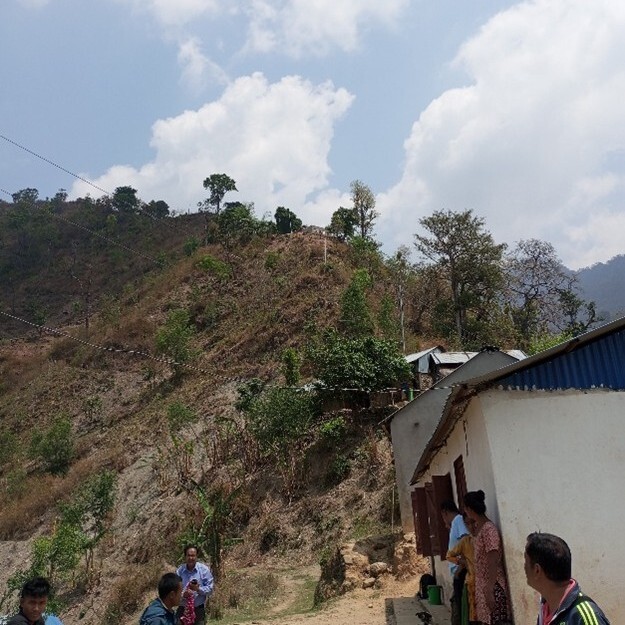
Rural water supply services are evolving quickly because of technology, climate stress, financing models, and governance changes. And these changes differ from country to country and within countries. However, the changes have some common characteristics as well, at least in lower middle-income countries. During our recent visits to Nepal, we have tried to understand the dynamics of rural water supply in this country. Here rural water supply essentially includes small urban and rural municipalities.
Common trends in rural water supply
Recent research and publications have documented the changing models of rural water supply, including Shiva and Saha (2025), Odhiambo et al. (2025), USAID (2023), and SFF (2020). An AI-assisted trend analysis based on these works highlights several shifts. Globally, rural water supply is moving from handpumps to piped schemes, as exemplified by India’s Jal Jeevan Mission and Ethiopia’s HoA-GW4R Project. Management is becoming more professionalised through private operators, public–private partnerships, and utility-style agencies, replacing traditional community-based volunteer committees. At the same time, digitalisation is transforming service delivery with Internet of Things (IoT) sensors, prepaid meters, and mobile payment systems that improve monitoring, detect leaks, and enhance cost recovery.
Other major trends include the integration of climate resilience and source diversification, such as combining groundwater, rainwater harvesting, and surface water treatment with climate-proofed infrastructure and energy-efficient pumping. Solar-powered and hybrid renewable energy systems are replacing diesel pumps, while water safety planning, real-time quality monitoring, and low-cost treatment are gaining ground. Financial sustainability is being strengthened through volumetric tariffs, prepayment, and blended finance, while regionalisation is clustering small schemes under federated utilities. Equity and inclusion are also central, with greater focus on women, marginalised groups, and people with disabilities. Finally, rural water networks are increasingly designed for multiple uses, linking drinking water to irrigation, sanitation, and livelihoods.
Why Nepal is different
Nepal has a population of about 30 million, 23 million of them live in rural areas, mostly in mountainous and remote regions. As per JMP 2024, 77.2% of the population is accessing basic drinking water services, only 16.5% of the population access safely managed drinking water (the remaining 6.3% have limited or unimproved services). With an aspiration to deliver reliable services, Nepal is trying to change its water service delivery ecosystem. If we look closely, we will see that the trends in Nepal are similar to those mentioned above. The difference is, while most countries are adopting more professionalised private or utility-managed services, Nepal is embracing a more formal version of community-managed services to address the rural water need. Historically, water supply in rural areas of Nepal has been managed voluntarily by the community. At present, the Water Users’ and Sanitation Committees (WUSCs) are being formalised into legal entities under sector laws.
There is a multibillion-dollar finance gap slowing progress towards universal drinking water services. Focusing on how governments are investing to address this gap, a new open access research article examines the different elements that contribute to this gap, and argues that the funds needed for operations & maintenance (O&M) of services should be considered differently from the funds needed for infrastructure. With the functionality and sustainability issues the sector faces, these differences are worth paying attention to.
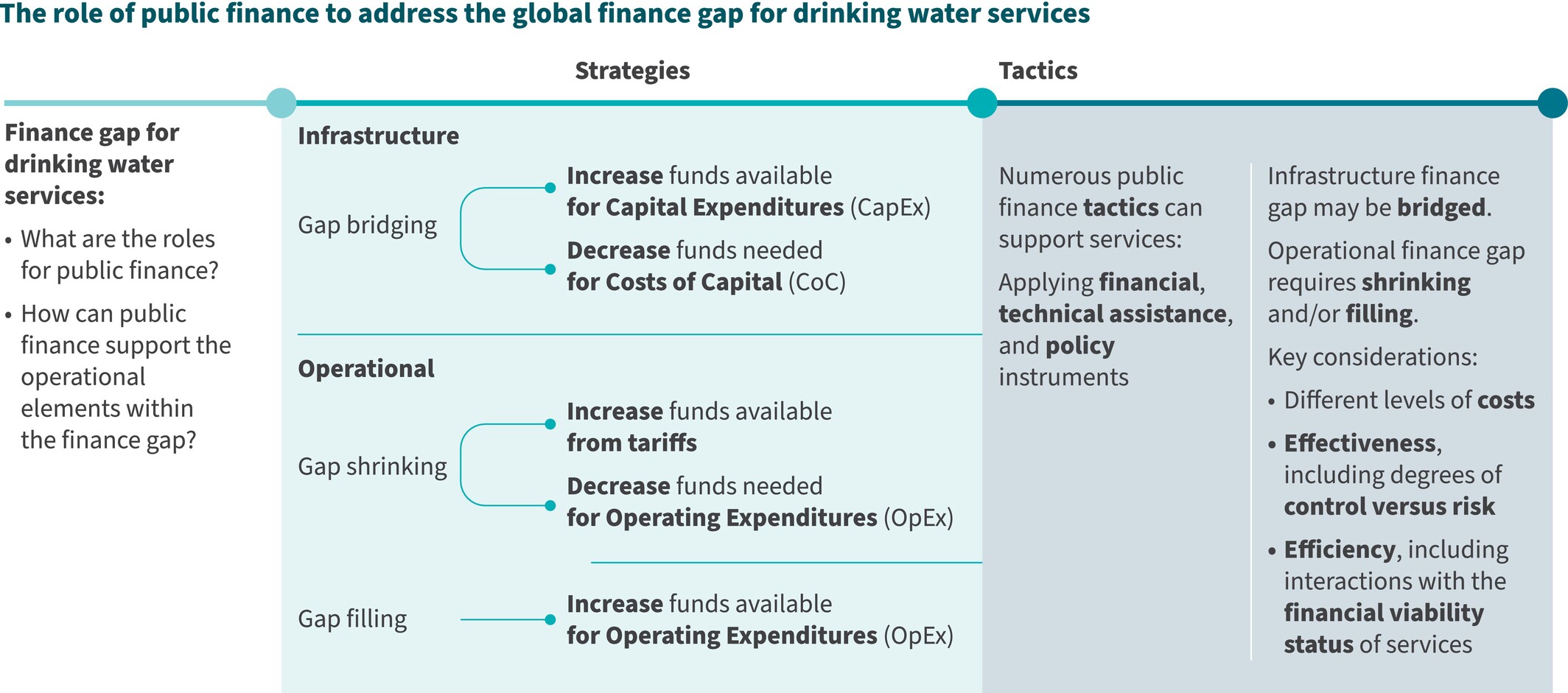
This research suggests a framework of five strategies for bridging, shrinking, and filling the finance gap for drinking water services, based on how the funds available from tariffs, taxes, and transfers compare to the life-cycle costs of services.
A framework for bridging, shrinking, and filling the finance gap for drinking water services (Nilsson, 2025)
Do we need a new framework?
Maybe, yes! Approaches for targeting gaps in infrastructure finance have been well studied, with many frameworks already available to guide actions and suggest new funding sources and mechanisms. However, the parts of the finance gap related to operational needs has been less analysed, even though there is an increasingneed foroperationalfinance.
The water sector continues to struggle with the financial sustainability of drinking water services. Most repayable finance sources are not suitable for operational costs, and so it falls to governments and service providers to see how to balance ongoing costs and revenues. This framework shows that, after construction, there are fairly limited options: increase tariffs, cut costs, and/or set up subsidies.
How can the operational finance gap be addressed, to keep water services flowing?
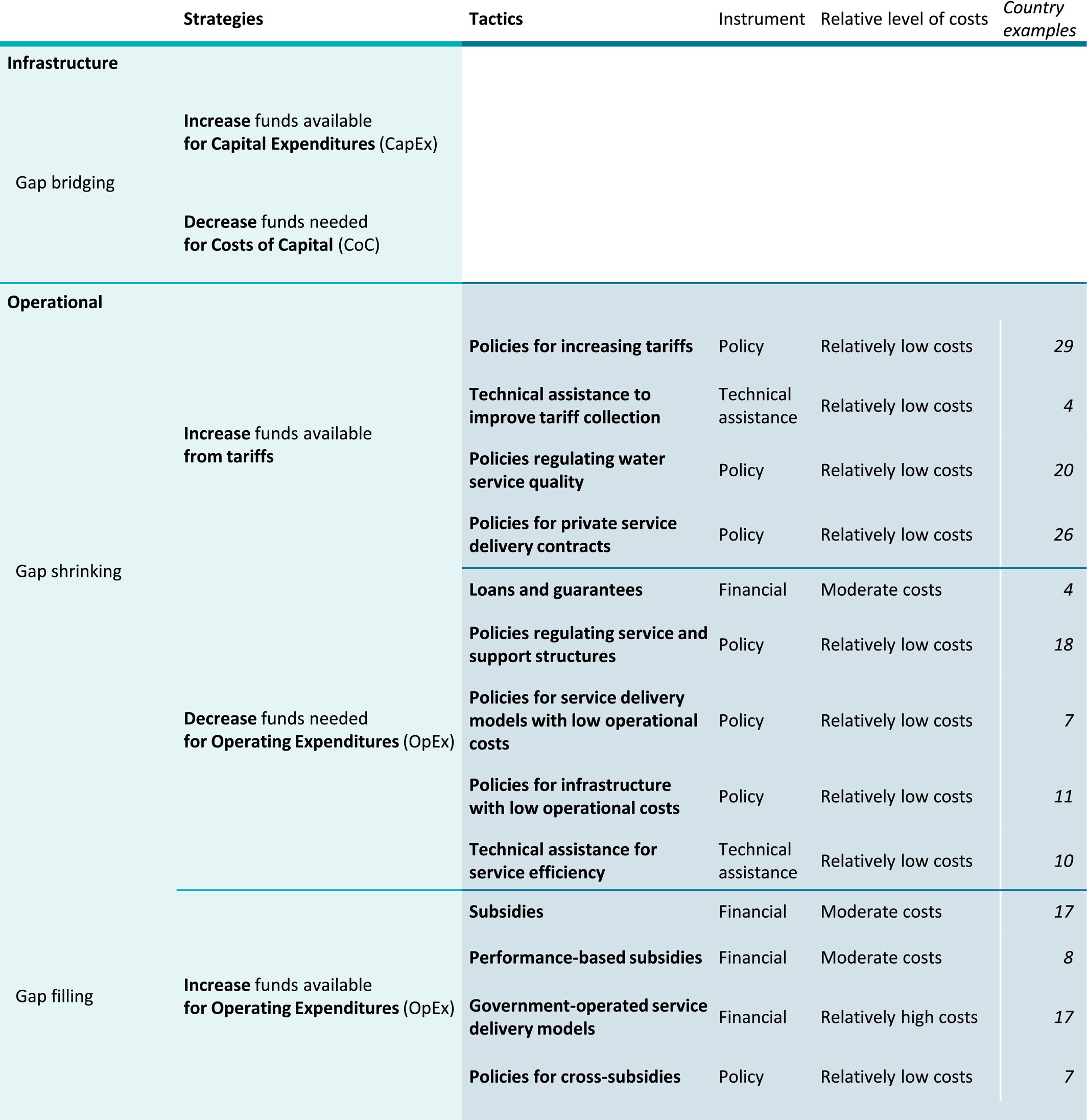
This research studied 213 examples of government investments for drinking water services, from 68 countries, to see how public finance is being used to address the operational finance gap. It found 13 tactics being used by governments from around the world, using financial, technical assistance, and/or policies, to:
increase funds available from tariffs, and/or
decrease funds needed for operations & maintenance, and/or
increase funds available for operations & maintenance through subsidies.
These tactics, and their investment requirements, are presented here:
Public finance tactics to support operations of drinking water services (Nilsson, 2025)
Which tactics are being applied in your areas, by governments, or by other sector actors? Which are not?
Are the tactics being used achieving what is needed, supporting services for more people, and services which are more financially sustainable?
Are there other tactics being used that are not captured here?
About the author: Kristina Nilsson is a governance and development professional with over a decade of experience working on water and sanitation service delivery in Africa and Asia. She is currently a PhD student at the University of Oxford, researching public finance support for rural drinking water services.
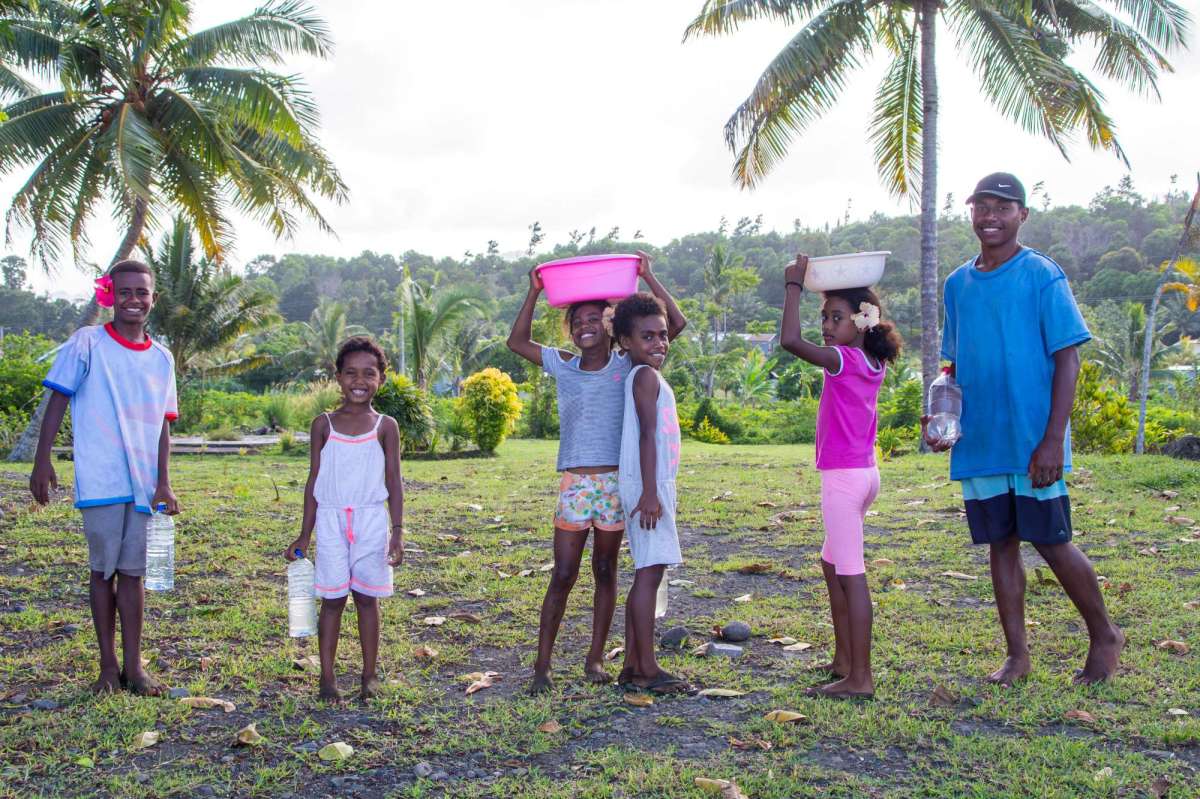
Access to safe and healthy drinking water is a fundamental human right. Yet for many island and rural coastal communities worldwide, this right remains fragile or unattainable. Fiji, an archipelago of more than 300 islands, vividly illustrates this challenge. Despite its tropical climate and abundant rainfall, freshwater resources in Fiji are increasingly under pressure. Over-abstraction, particularly in water-intensive tourism sectors, combined with the accelerating impacts of climate change, threatens the sustainability of water systems. Fiji’s experience reflects a universal struggle for water security in island nations and rural coastal regions.
Island environments are naturally constrained when it comes to freshwater. Unlike continental landmasses, islands have limited rivers, streams, and shallow aquifers. In Fiji, water is sourced from rivers, streams, natural springs, rainwater harvesting systems, and underground aquifers. These sources are highly sensitive to variations in rainfall, land-use changes, and contamination. Once compromised, alternatives are often scarce, making water security a central concern for both rural villages and small island nations.
“Sustaining access to safe and healthy drinking water is not just about scarcity, it is about how water is managed, shared, and protected.”
Over-Abstraction and Tourism Pressures
Over-abstraction has become a critical issue in Fiji. Population growth, urban expansion, and changing lifestyles have steadily increased water demand across the islands. Coastal zones and smaller islands are particularly vulnerable, where shallow freshwater lenses can be quickly depleted. Once over-extracted, these lenses may collapse or become contaminated with saltwater, leaving water unsuitable for consumption.
Tourism, a major pillar of Fiji’s economy, further intensifies pressure on freshwater resources. Hotels, resorts, and other facilities consume large volumes of water for swimming pools, gardens, laundry, and guest services. In many cases, tourist water use exceeds that of local residents. When regulation and conservation measures are weak, tourism can compete directly with community water needs, a challenge common to island destinations worldwide.
Climate Change and Extreme Weather
Climate change magnifies existing water challenges. Rising temperatures increase evaporation, reducing water availability in rivers, reservoirs, and storage tanks. Altered rainfall patterns have caused longer dry periods and more frequent droughts, disproportionately affecting rural and outer-island communities that rely on rainwater harvesting. During extended dry seasons, households often face water rationing or must rely on untreated sources.
Extreme weather events, including cyclones and floods, further threaten water systems. Floodwaters can damage infrastructure, carry debris and pathogens into freshwater sources, and overwhelm natural filtration processes. Sea-level rise also poses a long-term risk for coastal groundwater, as saltwater intrusion contaminates shallow freshwater lenses. Recovery, if possible, may take decades, underscoring the lasting impact of climate change on water security.
Health and Social Implications
Unsafe or unreliable water has serious health consequences. Limited access to clean water increases vulnerability to waterborne diseases, including diarrhea, typhoid, cholera, and skin infections. Children, the elderly, and immunocompromised individuals are particularly at risk. In rural areas with limited infrastructure, households often rely on untreated sources, further increasing health risks and placing additional strain on local healthcare systems.
Inequality in water access compounds the problem. Urban populations generally benefit from centralized treatment and distribution systems, while rural and outer-island communities rely on small, self-managed infrastructure such as rainwater tanks and natural springs. These systems are often outdated, poorly maintained, and highly susceptible to contamination.
Toward Sustainable Solutions
Fiji’s challenges reflect broader patterns among islands and rural coastal regions: limited freshwater resources, competing demands, climate change impacts, and unequal access to infrastructure. Addressing these issues requires integrated, multi-faceted solutions:
Investment in climate-resilient infrastructure to protect storage systems, pipelines, and natural water sources.
Community engagement and local management to ensure maintenance and equitable access.
Promotion of responsible water use across all sectors, particularly tourism.
By implementing these strategies, Fiji can move toward sustainable water management that balances economic development, environmental protection, and public health.
Sustaining access to safe drinking water is more than a development goal, it is a matter of survival, health, and dignity. Over-abstraction, tourism pressures, climate change, and social inequality threaten the long-term resilience of water systems. Protecting freshwater resources, investing in resilient infrastructure, and promoting equitable water management are critical steps not only for Fiji but for island and coastal communities worldwide.
“Ensuring safe drinking water for present and future generations is not only a matter of development, but a commitment to the survival and dignity of island communities everywhere.”
Save our Fiji is dedicated to addressing these pressing water challenges in Fiji and beyond. They work directly with local communities to improve water infrastructure, promote sustainable water management practices, and build resilience to climate-related impacts. By combining research, community engagement, and practical interventions, they aim to ensure that every island and coastal community has reliable access to safe, clean, and sustainable drinking water for generations to come. Save our Fiji joined the RWSN member organisations in April 2024.
Professionalism. Standards. Systems. These themes are repeated throughout Rural Water Supply Network’s (RWSN) spring and fall 2025 webinar series.
Given the large percentage of boreholes with early failure – within one to two years – improvements in standards and professionalism in borehole drilling are necessary. Drilling association leaders spoke passionately about the need for borehole drillers to professionalize to improve the quality of boreholes, increase accountability, stop illegal drilling and enhance community buy-in, which occurs when standards are enforced and certified materials are used.
George k’Ouma, from the Small Scale Drillers Association of Kenya, said it best: Professionalism isn’t optional.
A tidbit: Small borehole drillers have an advantage over large operations because they have knowledge of the local geology and seasonal changes, which enables better planning and materials selection.
Another area in need of increased professionalism is water management. Professor Kwabena Nyarko, from Kwame Nkrumah University of Science and Technology, Kumasi (KNUST), conducted a study comparing public sector, private sector and community water management in Ghana. Model type was less important than having professional standards and following best practices, including metering, tariffs that covered maintenance costs, efficient collection of tariffs, audits and reporting, digital recordkeeping and training, as well as financial support.
Jose Kobashikawa, head of the Enforcement Directorate for Sunass, the regulatory body for drinking water and sanitation services in Peru, echoed these concepts in his presentation. SUNASS uses a benchmarking tool to evaluate rural providers. Metrics include formality and management (are they registered, do they have a water use license), financial sustainability (do they collect tariffs, what percent of customers are defaulters), and quality of services (is water chlorinated and daily hours of water supply). High performing providers are awarded certificates recognizing their good practices in public management and workshops are held in each region to disseminate best practices.
Focusing on systems is another thread that runs through the varied webinar topics. Systems thinking means designing a scheme for the long-term provision of water. Boreholes must be properly sited. Appropriate materials, such as high quality stainless steel (304/316), need to be selected in order to prevent corrosion, as RWSN’s Stop the Rot initiative details. Handpumps often corrode within months or years instead of lasting a decade. Ayebale Ared, Technical and Social Expert at Welthungerhilfe, shared Uganda’s systemic solution: in 2016 the country banned the use of galvanized iron (GI) risers and rods in all new and rehabilitated handpumps – the first sub-Saharan country to do so. Uganda also requires a water quality analysis be done before materials are selected.
In addition, data collection and use must be embedded in all stages and aspects of water projects.. Dr. Callist Tindimugaya, Commissioner for Water Resources Planning and Regulation in Uganda, collects data from drillers which he then turns into groundwater maps the drillers can then use.
Systems thinking also means including the needs of the entire population in the design, especially women, who bear the burden of hauling and carrying water. Women – who are killed by crocodiles while washing clothes in rivers, whose skin is irritated by harsh detergents, who find leaning over low wash basins harder as they age, who need to wash bloody clothes and bedsheets separately from the family’s regular laundry when they menstruate. Laundry is barely mentioned in WASH circles but RWSN devoted an entire webinar to the topic. One speaker questioned how the WASH sector would be different if the metric for success was the amount of time women spend collecting water.
Understanding the local culture is critical; psychologists, behaviorists and sociologists can help provide insights. Technical solutions which aren’t accepted by the community will only lead to failure.
The lack of funds to cover maintenance work on wells is well known. Systems thinking means anticipating root causes of funding issues in a community and pre-emptively building a system that attempts to solve those issues. Tariffs are too low to cover maintenance? Then the project needs to determine how sufficient funds will be raised, whether through higher water fees (that may be less affordable to low-income families) or from external sources. The water committee is inefficient at collecting funds? Then training and capacity building need to be part of the project design from the beginning.
Looking at the bigger picture helps creative ideas flourish: Household rainwater harvesting, replenishing water aquifers through tube recharging, deep bed farming that breaks up the hard pan so water can return to the aquifer, sand dams that filter water and incorporating water management and regreening in the design and construction of roads so crops can grow next to roads. During the laundry webinar, three organizations presented their laundry solutions – devices that save women time, eliminate much of the manual labor, use less water and even offer income-generating opportunities.
The webinars are at times frustrating because we clearly know what needs to be done – yet professionalism, systems thinking and best practices are not always prevalent. More often, though, the webinars are full of insightful information and inspiring stores from experts. The knowledgeable participants, who ask focused, detailed questions, enhance the experience. I look forward to the spring 2026 webinars which are currently being planned.
Rebecca Laes-Kushner is a consultant to NGOs and companies with a social mission, with a particular focus on development issues such as WASH, climate change, supporting SMEs, health care and nutrition. Laes-Kushner Consulting (https://laeskushner.net/) provides research and writing, data analysis, M&E and training services. Rebecca has a Master’s in Public Administration (USA) and a Certificate of Advanced Studies in Development and Cooperation from ETH NADEL in Switzerland.
by Tapio S. Katko, Jarmo J. Hukka, Petri S. Juuti, Riikka P. Juuti and Eric J. Nealer.
Illustrations: Pertti O. Väyrynen. Publisher: IWA Publishing, London.
Is bottled water better for you than tap water? Is the pollution created by wastewater treatment plants a major issue? Is privatisation the best solution for more efficient water use? These are just a few of the myths busted in Dispelling Myths About Water Services.
In any society, water and wastewater systems are of fundamental importance to the development of communities and the well-being of both people and the ecosystem. Unfortunately, this fact has been reinforced by the COVID-19 pandemic, by all manner of natural disasters, and by recent armed conflicts around the world. In such situations, clean water and sanitation are among the first things that need to be organised.
In this book, internationally renowned experts examine 21 common misconceptions regarding water supply and wastewater services, dispelling the myths by drawing on their global insights and avoiding technical jargon, while simultaneously raising questions of concern relating to water services.
Access to clean water and safe sanitation is essential for life. Without it, our time on this planet becomes dangerously short. People do not necessarily think about the challenges relating to water services, but the message is clear: to build sustainable water services, proper rules, accountable and responsive leadership, and well-informed stakeholders are vital, alongside resilient organisations and robust physical systems.
Originally published in Finnish, this English edition has been completely rewritten and includes examples and references from countries across the world. Original illustrations bring the content to life.
Whether you’re a water professional, policy maker, or environmental enthusiast, Dispelling Myths About Water Services helps sort the fact from the fiction regarding our most vital resource: water.
The book is freely available as an e-version: DOI: https://doi.org/10.2166/9781789064162 and a printed copy can be bought as well from the website for 20% off seasonal offer for the printed version by the code “DMAWS25”, Valid until 21st Dec 2025.
Rural water supply systems in low-income settings, particularly in last-mile communities, face chronic sustainability challenges. Financing predictable operation and maintenance (OPEX) remains a persistent gap, with one in four water points in sub-Saharan Africa being non-functional at any given time. While community-based management has been the dominant model for post-construction maintenance, it is increasingly recognized as insufficient, relying on underfunded household tariffs, volunteer committees, and limited technical support. Emerging solutions like results-based financing and professionalized maintenance contracts have shown promise with some securing government financing. This paper proposes district-level maintenance endowment funds, a mechanism where invested capital generates predictable income, as another option for financing rural water maintenance. These funds would support targeted subsidies, results-based contracting, and accountable, locally governed service delivery aligned with decentralization frameworks. This proposed model is agnostic to the specific management model, whether community-based, professionalized, or hybrid. The focus is on creating a predictable, long-term financing mechanism, particularly for so‑called ‘last-mile’ rural communities: small, dispersed villages, often with fewer than 1,000 people, that are typically excluded from piped water systems due to high per-capita service costs.
Two key arguments frame this proposal: (1) while endowment funds may be initially capitalized by international donors or organizations, over time they reduce dependency on short-term donor cycles by creating a predictable, locally managed revenue stream, and (2) Piloting endowments at the district government level strikes the right balance between being close enough to last-mile communities, accountable to them, and large enough to achieve economies of scale that will ensure financial viability for service provider payments.
THE PROBLEM: Persistent Non-Functionality and Unrealistic Expectations
Across sub-Saharan Africa, one in four rural water systems are non-functional at any given time. These failures are not anomalies, but they reflect a systemic global challenge: the absence of a reliable model for rural water service delivery beyond construction. For decades, community-based management (CBM) has been the dominant approach. It assumes that because communities value water, they will voluntarily manage infrastructure. But the viability of CBM is increasingly being questioned. Tariffs based on affordability rarely cover full maintenance costs, especially in small, dispersed communities, with variable incomes, that are often not prioritized for piped systems. Trained committee members often leave, and access to spare parts or technical support is limited. Volunteer fatigue, lack of retraining, and systemic underinvestment compound the problem.
The expectation that people living in the poorest rural villages must fully fund and manage the long-term maintenance of their own water systems does not align with how water systems are managed anywhere else in the world. In high-income countries, water infrastructure is maintained by trained professionals and supported by stable funding streams, often not limited to water user fees, but supplemented by public financing mechanisms such as property taxes and municipal budgets. The same should hold true, if not more so, in low-resource rural settings. A more realistic, equitable approach is therefore urgently needed.
TRIED AND TESTED SOLUTIONS: Results-Based Financing (RBF) – When Performance Meets Poverty
New RBF models are emerging. Uptime, as an example, is a partnership supporting professionalized rural water service providers that pays providers based on verified uptime. This shifts incentives from reactive repairs to preventive maintenance. Between 2020 and 2022, Uptime supported services for 1.5 million people in seven countries. Governments in countries such as Kenya, Bangladesh, and Zambia are now beginning to adopt performance-based financing approaches like this into their own public financing systems. This has been inspired in part by the evidence generated through philanthropic pilots. Yet, a central limitation remains: these models have demonstrated viability primarily in communities large enough or more “well-off” to generate economies of scale. This makes them financially attractive to service providers, but systematically excludes smaller, remote last-mile communities that are seen as less “bankable”. This is not a critique of performance-based models like Uptime, they are delivering results and proving their value. But it does highlight the need to pilot complementary result-based financing mechanisms that can address the unique realities of last-mile communities. Expecting the world’s poorest to fully finance their own essential services is neither equitable nor realistic. What’s needed is smart, targeted financing, including well-placed subsidies, that reflects the diversity of community capacity and directs public investment where it’s needed most. This is especially critical for last‑mile communities, i.e. remote, low‑density villages where user fees alone can never sustainably cover operating expenses.
This frame of thought, of differential and context-specific financing solutions, borrows from Dorward et al.: “Hanging In, Stepping Up, and Stepping Out.” Most rural households are “Hanging In,” unable to pay without full subsidy. Others can co-finance with support (“Stepping Up”), or engage with market models (“Stepping Out”). This model enables differentiated financing that aligns with real-world capacity. Targeted subsidies are not about dependence; they free up cash for productive use while ensuring reliable services. Importantly, we differentiate between water as a service that must be reliably provided for health and dignity, and water as a productive resource used to generate income. The proposed endowment-backed financing model speaks to the former, guaranteeing essential domestic supply. Other financing tools may be more appropriate for supporting productive uses of water in agriculture or enterprise.
RBF models have proven we know how to make maintenance work. The challenge now is to pilot solutions, such as endowment funds, that can sustainably support these communities where market-based approaches do not reach, thereby ensuring universal access to all.
THE PROPOSAL: District-Level Maintenance Endowment Funds
To close the financing gap, we propose district-managed endowment funds dedicated to rural water maintenance. These funds would invest capital to generate steady income for maintenance costs, insulating service delivery from budget shocks and donor cycles. They would:
Provide predictable financing by requiring implementing agencies to allocate a fixed amount, e.g. 10-20% of infrastructure costs, into the fund.
Enable targeted subsidies using the Hanging In/Stepping Out framework.
Support results-based contracting for professional maintenance providers.
Align with decentralization by placing fund management at the district level, while national governments serve as regulators.
This model borrows from urban utility principles where professional service delivery is underpinned by predictable financing and adapts them to rural realities. It does not assume full cost-recovery from users, nor does it treat water as a commodity for profit. Instead, it creates a stable platform for targeted subsidies and professional maintenance services in communities where user fees alone are structurally insufficient.
Blog by Jeff Tan, Aga Khan University – Institute for the Study of Muslim Civilisations (AKU-ISMC). Featured photo: Hunza Valley, Gilgit-Baltistan, Pakistan, Jeff Tan
The limitations of community-based management (CBM), and the conditions for its success, were identified as early as 1990 in a World Bank discussion paper. From very early on, it was recognised that communities needed ongoing external support from donors, NGOs and governments. However, management training, capacity building, technical input, financial assistance, and supportive policy and legislation necessary to create an “enabling environment” for successful community management rarely materialised. This raises a number of questions: Why has this external support not been forthcoming? Why has community management continued to be promoted despite the absence of support and lack of sustainability? Why has there been ‘a reluctance amongst academics and practitioners to challenge the CBM model’?
To answer these questions requires some appreciation of the wider discourse on development and in particular the anti-state rhetoric of neoliberalism that has sought to downsize, decentralise and ultimately bypass government. This has had the effect of fragmenting and hollowing out the state while at the same time prioritising markets and the private sector. Given that there is no profit to be made from delivering water services to low-income households that cannot afford to pay cost-covering tariffs, it is not surprising that previous state failure was replaced by market failure, with the private sector failing to step in to deliver water services.
One obvious solution would have been to address the sources of state failure, specifically underfunding, fragmentation and the loss of technical capacity. Instead of rebuilding state capacities, the distrust of, and ideological aversion to, the state has shifted the responsibility of water services from governments to local communities, built around the narrative of community participation, empowerment and self-help, with communities expected to take responsibility of their circumstances. It is hardly surprising then that community management is seen to enable ‘government officials and donors alike to abdicate responsibility for ensuring long-term sustainable water services’.
The recent turn against community management, not least by the World Bank, shows the persistence of CBM problems. But the Bank’s promotion of “professionalization” of water services as an alternative reflects a failure to examine the underlying tensions and problems in the CBM model and the wider delivery of rural water services, and reinforces an anti-state bias and blind faith in private sector participation. There are three structural tensions in the CBM model that have been noted in the literature and that need to be more cogently articulated.
The first tension is between access to water and cost recovery (a cornerstone to the sustainability of CBM), with low tariffs (to ensure access to water) unable to cover operating costs, let alone major repairs and capital refurbishment. Compounding this is the inability of households to pay already very low tariffs, with irregular, if any, tariff payments or collections.
The second tension is the long-term needs of water services and the short-term horizons of donors and NGOs. Only the state has a sufficiently long-term horizon to provide the indefinite support needed to sustain community management and ensure ongoing water services. But this added burden on the state for this comes at a time when the state in lower middle income countries (LMICs) is severely constrained financially and technically, having had fiscal discipline imposed on it and broken up and hollowed out in the name of decentralisation and localisation. If governments do not have the capacity to provide the so-called “enabling environment” to support community management, as has been the case since 1990, then a model that requires continued external support that is not forthcoming cannot be sustainable, “islands of success” notwithstanding.
Finally, and perhaps most significantly, the funding model for CBM is short-term, project driven (rather than programmatic or cross-sectoral) and fragmented, where the needs of water services are indefinite, with the choice being between reaching a greater number of underserved communities in the short term or serving fewer communities but with longer term support and greater sustainability. Longer-term support is especially needed because communities cannot even finance major repairs let alone capital refurbishment needed at the end of the lifespan of water infrastructure (typically 15-20 years) and to expand services to cater for population growth.
These structural features of CBM can be illustrated in the constraints faced by an otherwise successful delivery of clean drinking water through piped water networks to 459 settlements serving around 48,000 households and over 400,000 people under the Water and Sanitation Extension Programme (WASEP) in Gilgit-Baltistan, northern Pakistan. The challenges of sustaining and scaling up this textbook implementation of community management are reported in the results of a two-and-a-half-year British Academy-funded research involving a large-scale household survey of over 3,000 households, interviews with water management committees and a review of financial records, focus group discussions, an engineering audit and water quality tests.
Unlike qualitative and selective case studies, the combination of quantitative and qualitative analysis here presents important insights into the resilience but also limits of communities in sustaining water services, particularly given weak state capacities and the lack of external support. It also highlights the importance of “hardware” (engineering and water infrastructure) in sustaining water delivery, and best practices in the implementation and delivery of water services that can transcend some of the limitations of the CBM model.
The views and opinions expressed in this blog post are those of the author. They do not necessarily reflect the views of the Rural Water Supply Network (RWSN) or its Executive Committee.
Jeff Tan is a Professor of Political Economy at AKU-ISMC and was Principal Investigator on a British Academy grant on the sustainability and scalability of community water management in Northern Pakistan.
Trends come and go quickly in the WASH sector. When a new concept shows early signs of success, it is often promoted as the next big solution, packaged by development partners, donors, and foundations. These actors, in turn, push governments to adopt the latest approach, frequently triggering wide-reaching reforms with mixed results.
We have seen this cycle play out repeatedly: private sector participation, on-site sanitation, blended finance, carbon credits, and the list goes on. In rural water service delivery, the pattern is even clearer. Municipalities and local governments were once seen as the appropriate service providers. In the 1990s, the spotlight shifted to Community-Based Management (CBM). When the limitations of unsupported CBM systems became apparent, public rural utilities were pushed as a more “professional” solution. Today, Safe Water Enterprises (private companies heavily supported by international donors) are the rising stars.
These shifts are often driven more by the perceived failure of one model than by strong, scalable evidence of success from another. Governments are influenced to adopt new service delivery models, often initiating complex reform processes. Yet, the sector lacks solid evidence to prove that such reforms lead to better performance or more sustainable services.
A recent example comes from Ghana, where a now-concluded USAID-funded study sought to investigate this issue. The research compared three rural water service delivery models for piped schemes, aiming to identify what actually drives performance. This was especially relevant in a context where the Government of Ghana is increasingly backing service provision through the Community Water and Sanitation Agency, acting as a new rural public utility, while development partners strongly advocate for Safe Water Enterprises. Meanwhile, support for the still-widespread CBM model has all but disappeared.
Surprisingly, the study found small performance differences among the models. Performance outcomes were more closely linked to socio-economic context and the service provider practices than to the model itself. Although the findings are specific to Ghana, they raise a broader question: are we focusing on the wrong thing? Perhaps it is not about the model at all, but rather about how it is implemented and whether critical elements like professionalism, regulation, and accountability are in place.
This idea was reinforced in a recent webinar we hosted in April this year, where case studies from across the globe showcased how different models can succeed when implemented well and supported by an enabling environment.
Cambodia: Fully private rural providers invest in, operate, and maintain water systems, under government regulation and licensing.
Peru: CBM remains the dominant model in rural areas, but the sector is actively working to professionalize and regulate service provision.
Morocco: Public utilities manage rural service delivery as an extension of their urban mandates.
Senegal: A global best practice in public-private partnerships for rural water service delivery.
These examples show that success is not determined by the management model itself, but by the conditions in which it operates. Instead of chasing the next big trend, we should be focusing our energy and resources on strengthening the elements that matter most, regardless of the model. These include cost-reflective tariffs, regulatory oversight, accountability mechanisms, participation, professionalized staffing, and robust monitoring systems.
Let’s stop asking, “What is the right model?” and start asking, “What makes the model work?”
The views and opinions expressed in this blog post are those of the author. They do not necessarily reflect the views of the Rural Water Supply Network (RWSN) or its Executive Committee.
Fake Qualifications, Real Consequences: The Brenda Sulungai Case
Despite major gains in infrastructure and technology investments, Kenya’s water utilities continue to underperform often not due to a lack of funding or innovation, but because of the human capital crisis festering within. I have witnessed strategic plans, technological upgrades, and donor-funded initiatives collapse under the weight of a talent base that was never prepared or licensed.
This blog analyses the technical, legal and operational risks posed by weak certification systems, forgery, and unqualified staffing across Kenya’s water sector. It also proposes a plan for professionalising the sector, building institutional resilience, and restoring public’s vital trust.
The Pervasive Scale of Credential Fraud
“Every academic certificate in Kenya is now questionable. Forgery is happening across all sectors including those critical to life like water and health. We cannot ignore this anymore.” –Twalib Mbarak, CEO, Ethics and Anti-Corruption Commission (EACC)
This stark statement captures the magnitude of Kenya’s credential fraud crisis as a structural failure that compromises public service integrity at scale as demonstrated in Box 1.
Box 1: Sector-Wide Credential Fraud Uncovered in National Audit
“This is systemic. There are falsified documents even at PhD level, dissertations are downloaded from the internet.” – Dr. David Oginde, Chairperson, EACC
Consequently, this is not simply a matter of individual misconduct it points to a systemic failure in verification systems, risk management, and institutional accountability.
The Grave Consequences: Incompetence Endangering Lives and Undermining Progress
The human capital crisis in Kenya’s water sector driven by systemic weaknesses in credential verification, licensing, and staff training is not only an administrative oversight but threatens public health and utility performance.
Sustainable transformation requires human capital to be treated as a core infrastructure asset.
Systemic Vulnerabilities and Their Underlying Causes
I. Governance Deficit: Institutional Decay Through Political Capture
Kenya’s water sector suffers from a foundational governance breakdown; WASREB, the national water regulator notes a few WSPs have structured HR policies, indicating systemic weakness. Other gaps include: Outdated job descriptions, Irregular or absent performance reviews and Non-existent competency frameworks.
“Staff appointments in WSPs are frequently driven by tenure, local allegiances, or political alignment rather than technical merit. This erosion of meritocracy is neither incidental nor benign; it is indicative of deliberate political capture.”— Charles Chitechi, President, Water Sector Workers Association of Kenya (WASWAK)
Even WSP BODs that are governance bulwarks, are compromised. Opaque recruitment, undertrained members, and entrenched conflicts of interest have rendered them susceptible to patronage.
This politicisation has real operational costs, including poor service delivery, stagnant capacity, and a rise in credential forgery.
II. Regulatory Void: Absence of Mandatory Professional Licensing
Despite being designated as Kenya’s 16 critical infrastructure sectors, the water sector lacks a national mandatory licensing framework. Unlike medicine or engineering, no statutory barrier prevents an unqualified person from operating a treatment plant. Training institutions exist, including KEWI, NITA, and TVETs, but certification is inconsistent, and unenforced. Most alarming is the absence of a centralised professional registry, allowing forgeries to pass undetected unless exposed by whistleblowers.
Kenya’s current policy approach enables fraud by omission. The lack of a licensing regime is not a gap; it is a deliberate vulnerability.
III. Investment Blind Spot: Human Capital as the Missing Infrastructure
According to WASREB, Kenya’s WSPs spend less than 1% of OPEX on staff training, compared to the 5%-7% benchmark in high-performing WSPs globally. This chronic underinvestment in people creates a compounding deficit: Stagnant skills lead to operational bottlenecks, Low morale drives attrition and disengagement and Poor efficiency increases non-revenue water (NRW).
“You cannot digitize your way out of poor staffing. At some point, someone has to operate the system.”
These figures make the business case clear. Training is not a cost; it is a strategic investment with measurable returns.
IV. Project Design Fallacy: Infrastructure Without Operators
Despite significant investments in tools such as GIS mapping, NRW audit software, and digital billing systems, Kenya’s utilities remain trapped in underperformance.
From experience, the primary reason infrastructure projects fail is they’re often designed for a workforce that does not yet exist. Few pause to ask: Who will operate, manage, and sustain these systems?
This leads to predictable implementation failures. Development partners often assume that technology adoption is a standalone solution, overlooking the critical human capability gap.
Table 1 Showing Summary of Systemic Failures and Strategic Fixes
Root Problem
Underlying Cause
Strategic Fix
Politicized HR and opaque recruitment
Governance failure
Independent oversight and merit-based systems
Weak mandatory licensing
Regulatory neglect
National framework aligned with global standards
Minimal training investment
Financial and strategic myopia
Mandated 5% OPEX for staff development
Failed technology implementations
Ignored human capacity gap
Capacity-first planning and project sequencing
Towards Resilience: Five Strategic Levers to Professionalize Kenya’s Water Sector
Kenya’s water sector is confronting a systemic talent crisis, addressing these challenges requires a structural response anchored in global best practices, informed by local constraints, and focused on long-term institutional resilience. This plan outlines 4 interlocking strategic levers designed to professionalize the sector and establish talent as a core infrastructure asset.
Lever
Core Insight
Priority Actions
Strategic Shift
Expected Outcome
Proactive Credential Verification
Shift from post-hire audits to real-time identity checks
Kenya’s water systems are only as effective as the people who plan, operate, and maintain them. As the World Bank warns, weak water institutions can turn climate risks into crises undermining resilience across health, agriculture, and energy systems.
The Brenda Nelly Sulungai case shows credential fraud is not just a governance lapse it’s a national risk multiplier. Amid climate stress and population growth, human error becomes infrastructure failure.
Reform must begin and end with people. Priority actions include:
Verifying identities and qualifications through real-time credential checks
Mandating professional licensing to close technical regulatory gaps
Investing in structured, ongoing training
Aligning performance systems with merit-based progression
Fostering a culture of accountability, technical rigor, and service
These steps reflect a central truth: talent is infrastructure.
Former President Mwai Kibaki, UNESCO’s Special Envoy for Water in Africa, put it clearly: “We need to commit ourselves to turning actions into real reforms… and together we can make Africa water secure and peaceful.”
The Rural Water Supply Network (RWSN) is a network of individuals and organisations that are committed to improving water services for the rural poor everywhere in the world. Being a Theme Leader of RWSN is a commitment to sharing knowledge and good practices, and to share the RWSN vision of “a world in which all rural people have access to sustainable and reliable water supplies which can be effectively managed to provide sufficient, affordable and safe water within a reasonable distance of the home.”
The Sustainable Services Theme is one of 6 Themes in the Rural Water Supply Network. Sustainable Services means that water users have reliable and affordable access to enough water of sufficiently high quality to meet their daily needs. There are many ways that such access can be achieved, from household self-supply to large-scale water utilities.
The sustainability of rural water services is a constant and critical challenge, requiring skilled individuals with adequate resources and support to ensure the consistent availability of safe water in households. Although community management is prevalent, it has limitations, prompting the development of new management models that prioritise professionalisation. This shift is occurring amidst escalating challenges such as climate change, pollution, shrinking aid budgets, corruption, rising income inequality, violence, and political instability.
Thematic Priorities
Systematic institutional strengthening: sharing lessons learned on strengthening local and national systems, and practical approaches and overcoming tensions between working with the grain of existing social and institutional structures that are likely to be more sustainable, but less inclusive to some marginalised groups.
Professionalisation: Documenting and sharing management models, professional development and management practices, and their enabling systems at local and national levels.
Regulation: engaging with regulators and sharing experiences and identifying good practices in rural and small town regulation on how to balance tensions and trade-offs between competing economic, social, political and environmental priorities.
Financing of life-cycle costs and exploring ways to increasing financial sources and financial viability of rural water services across different contexts.
Resilient services: sharing emerging practices and solutions for increasing the resilience of rural water service providers – with a specific focus on climate resilience, which has be identified by RWSN members as one of their main challenges.
Interested?
We are particularly interested in applicants with operational experience of rural water services.
Download the full description and apply by 23 February:
Send your CV along with a 1-page cover letter to the RWSN Executive Steering Committee to introduce yourself and your organisation, and state why you’re interested in the Theme Leader position by 23 February 2024. Applications and enquiries should be sent to the RWSN Secretariat (info@rural-water-supply.net).




 Rural Water Supply Network - blog