Ugandan drillers receive training at the Water Resources Institute

Being back in Uganda again after an absence of five years gives me immense joy. This country of warmth, friendliness and humour, where one can literally have an engaging conversation with anyone, whether askari (guard), taxi driver, fruit and vegetable seller, driller or civil servant. Thus, my few days here have been filled with shared laughter and kaboozi (Luganda for conversation or gossip, but the word conveys so much more).

My visit to Kampala has coincided with the first day of a three-day training entitled “Practical Skills in Drilling” by Uganda’s Water Resources Institute. The training is for 25 drillers and assistant drillers, and comprises a classroom day, followed by two days in the field. As we sit waiting for the training to commence, I ask the participants (all men so far) why there are no women drillers. We talk about the man’s world of drilling (stamina needed), and the women’s world of fetching water (stamina needed). The discussion is engaging and together we reflect on the role of women and men in society and the home. For my side I feel proud to be one of the few women involved in drilling and talk about the two manual companies that I have heard about in Zambia which are run by women. On the spot, I really wish that there were many more of us….

The training commences. The course is a collaboration between the Ministry of Water and Environment (MWE) Water Resources Institute (WRI) and the Uganda Drilling Contractors Association (UDCA). The Chair of the Association, Dr Flavio Pasqualato from Draco (U) Ltd., gives a his opening words of encouragement, followed by the Managing Director, Anthony Luutu of Aquatech Ltd. I am invited to say a few words, and express my delight at seeing training of drillers that I wish was happening on a regular basis in ALL countries on the African continent and beyond.

Training 1

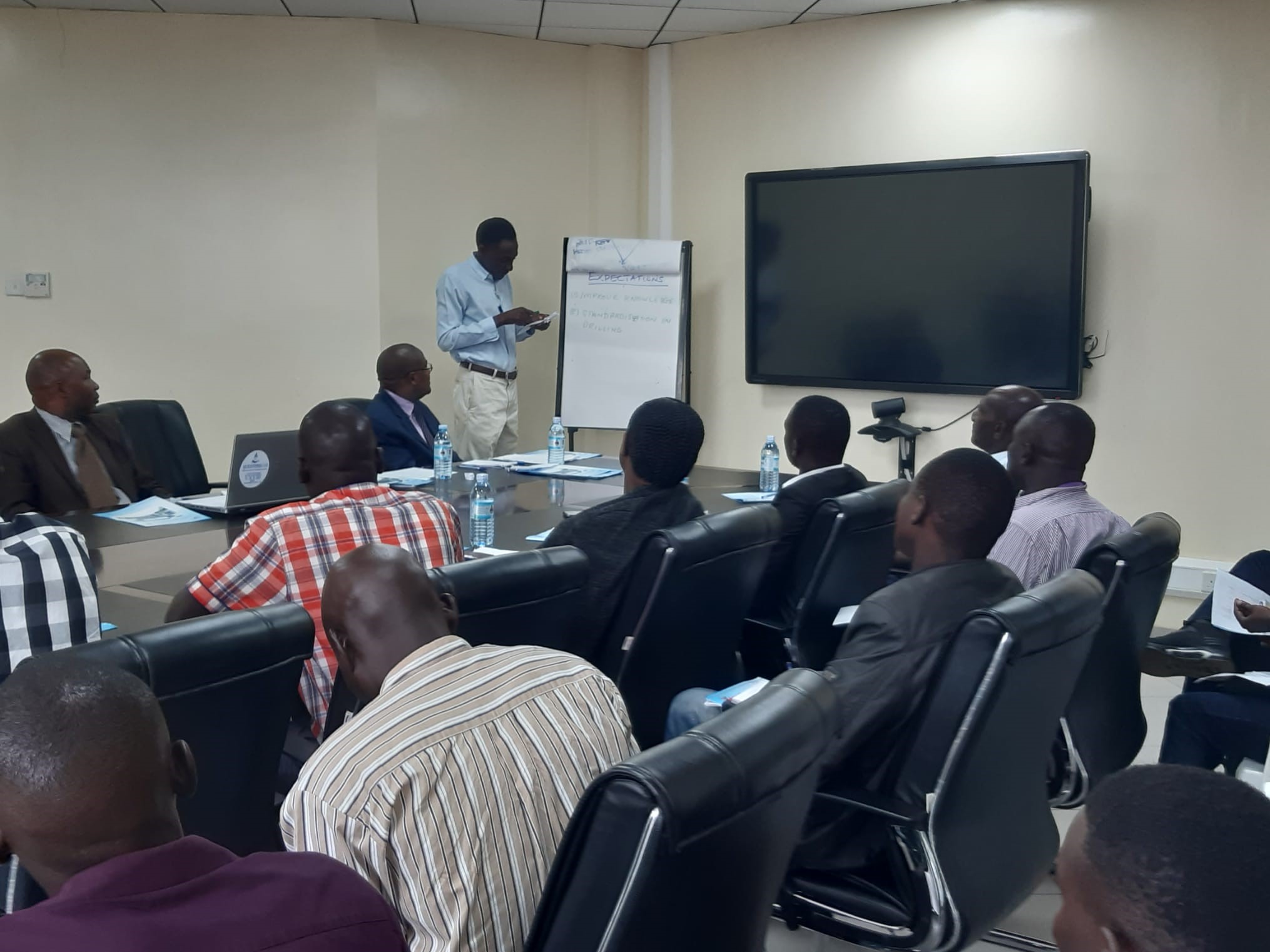
Gracious Sembali systematically collects the expectations of the participants

Dr Callist Tindimugaya (MWE) officially opens the training, pointing out that when people are learning informally from each other, that the message will change over time. I think of the game of Chinese whispers and vow to include it as an icebreaker at the start of my next drilling training course make his point. Callist also adds that “Nobody has all the knowledge; you can learn from each other”, something that is key in adult education.

Training 2

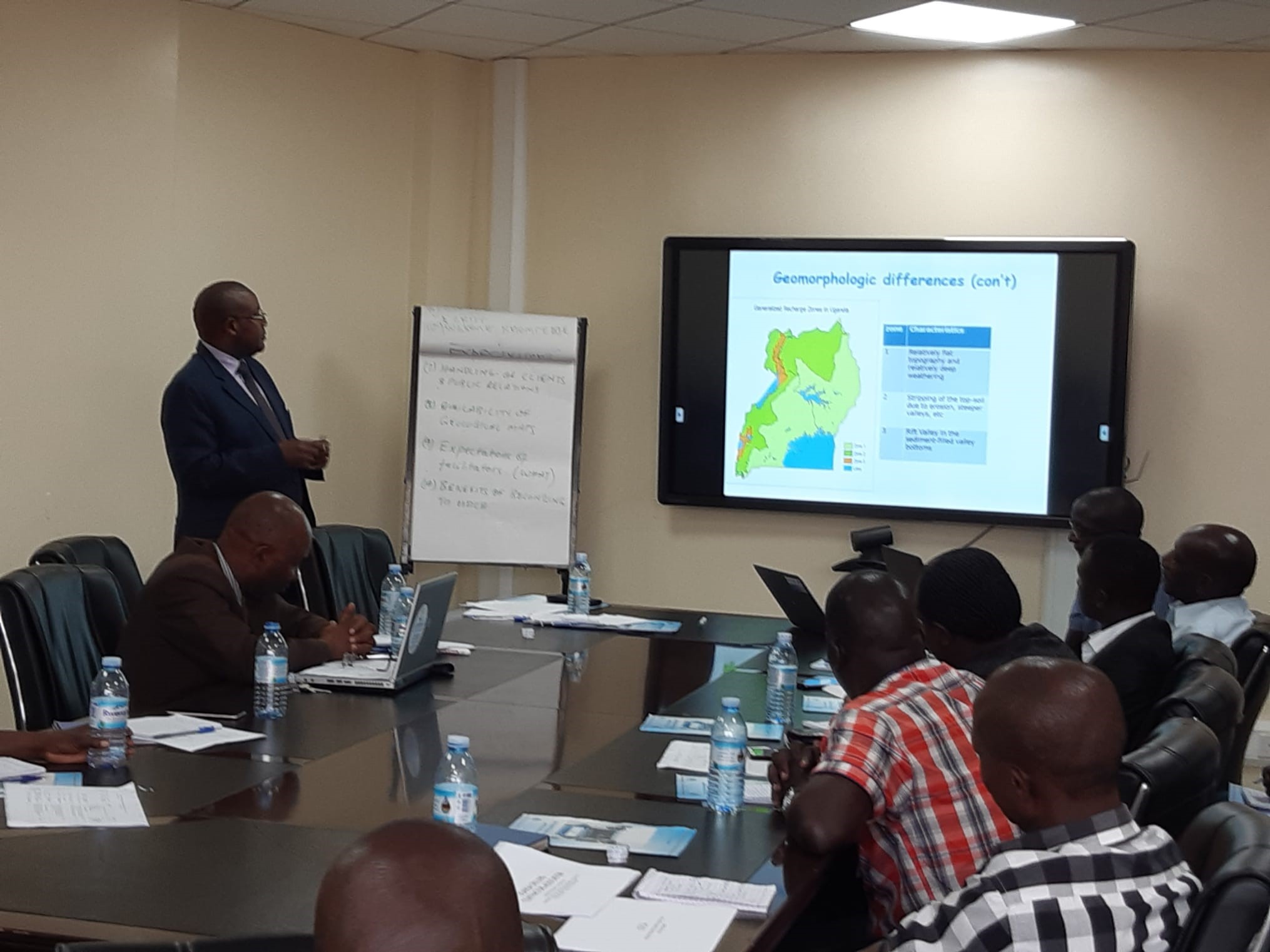
Dr Callist Tindimugaya explains the hydrogeology of Uganda to participants

Trying to raise drilling professionalism is a significant undertaking, and I am struck by the pragmatic messages that Callist conveys to all of us. “If you and your colleagues are doing a good job, you will raise the respect for drillers in Uganda…..we want drillers to be seen as serious and doing good quality work”.

It is clear that the training that the institute has been undertaking has had an effect on training methods. Gracious Sembali from Hippo Technical Services systematically collects the expectations of the participants, and writes them up on a flip chart, carefully grouping them:

  1. Improve knowledge and skills (e.g. when to stop drilling, mud drilling techniques, formation collapse, drilling in sediments)
  2. Standardisation in drilling
  3. Knowledge of different formations
  4. Certification as a driller by UCDA
  5. Knowledge-sharing including experiences
  6. Hydrological aspects and siting
  7. Handling of clients and public relations
  8. Availability of geological maps
  9. Expectations of facilitators
  10. Benefits of UCDA membership and recognition

As I listen, I am struck by the number of issues that are beyond the training course itself, something I have also observed in the course I have run, or managed. The specific skills sought and wider concerns are intertwined.

Alas, I am only able to attend the first presentation, an overview of Uganda’s geology and hydrogeology. I learn a lot, and observe the participants taking notes, and later asking questions. There is so much to be learnt, and the eagerness of these drillers and assistant drillers is apparent. I am delighted at what I see, encouraged, and then start thinking about the number of drillers on the African continent, and that this is needed for all. I try not to get disheartened. There are national training institutes undertaking short courses like these, or longer courses in Nigeria and Ethiopia. In some countries, people are more than aware of the need, and the demand, but are looking left and right for funding, without success. I am glad to have run similar courses, but am so aware that to date these have been ad hoc.

So my closing words? A huge thank you to the Ministry of Water and Environment’s Water Resources Institute and the Uganda Drilling Contractors Association (UCDA) for what you are doing. It is inspirational.

Now, how can training in drilling professionalism be institutionalised elsewhere?

Photo credits: Dr Kerstin Danert.

Corrosion de la pompe à main et qualité des matériaux : Un défi pour le Burkina Faso et le reste du monde

Au Burkina Faso, le nombre élevé de forages équipés d’une pompe à motricité humaine (PMH) qui dysfonctionnent ou qui nécessitent de grosses réparations quelques années seulement après leur construction est alarmant. Les audits techniques effectués en 2013 et 2014 au Burkina Faso sur des forages équipés de PMH ont révélé des situations préoccupantes en termes de qualité de l’eau, de matériel inadapté aux profondeurs des puits et de pompes non-conformes. Dans plus d’un tiers des cas, les forages équipés de PMH dysfonctionnent ou deviennent même totalement inutilisables en moins de quelques années. Entre 0.6 milliards de FCFA (0.9 million d’€) et 2.9 milliards de FCFA (4,5 millions d’€) d’investissements annuels seraient ainsi perdus du fait de l’installation de PMH de qualité médiocre et de diverses malfaçons lors des travaux de construction. Chaque année, plus de 130 000 personnes bénéficient d’un service d’approvisionnement en eau dont la pérennité n’est de ce fait pas assurée au-delà des premières années.

La corrosion des PMH est un phénomène connu depuis plus de 30 ans ; elle demeure pourtant un problème majeur au Burkina Faso car les gouvernements successifs et les agences d’aide au développement ont continué d’installer des pompes fabriquées à partir de matériaux inadaptés. Ces pratiques ont généré des coûts d’entretien élevés, de multiples pannes et le rejet de nombreux points d’eau par les communautés car l’eau y était de mauvaise qualité. La corrosion des PMH est un problème mondial majeur, dont le secteur EAH ne s’est jusqu’à présent toujours pas saisi à sa juste mesure, et qui risque d’empêcher la réalisation de l’Objectif du Développement Durable n°6 au Burkina Faso comme dans d’autres pays. Sur les forums de discussion en ligne du Réseau pour l’Approvisionnement Rural en Eau (RWSN), les experts internationaux font notamment remonter comme principales préoccupations à ce sujet : des matériaux et des pièces composantes de qualité inadaptée, un manque de contrôle qualité, des prix anormalement bas, et des pratiques d’achat et de commande problématiques.

Une enquête sur la qualité des composants des pompes manuelles au Burkina Faso a été lancé début 2017. Des échantillons de la conduite principale montante et de la tige de la pompe ont été achetés auprès de fournisseurs à Ouagadougou, et d’autres échantillons provenaient de pompes en service ou abandonnées. Tous les échantillons ont été testés pour leur composition chimique. En 2019 des tests de composition chimique ont été réalisés sur l’ensemble de ces échantillons. L’analyse des résultats de ces tests révèle que : cinq des six colonnes d’exhaure et deux des quatre tringles ne sont pas conformes aux normes internationales de composition de l’acier inoxydable du grade indiqué. La faible teneur en nickel de ces échantillons signifie notamment que les pièces analysées ont en réalité une résistance à la corrosion moindre que celle qu’elles devraient avoir si elles étaient effectivement du grade indiqué.

Les 13 pièces composantes qui ont été testées dans le cadre de cette étude forment un trop petit échantillon pour s’avérer statistiquement représentatives de la situation du Burkina Faso dans son ensemble.  Cet échantillon corrobore toutefois les inquiétudes du Gouvernement et des foreurs. Il y a quelque chose qui ne va pas avec certains composants disponibles sur le marché, malgré le fait qu’ils soient vendus comme étant de l’acier inoxydable. L’ampleur du problème reste inconnue à ce stade au Burkina Faso ou dans d’autres pays. Comme le montre ce rapport publié par la Fondation Skat, le constat est celui d’un échec du « marché » à fournir systématiquement des matériaux de haute qualité. Afin de rectifier cette situation, il est nécessaire de trouver des solutions à la fois au sein des pays d’importation, comme le Burkina Faso, et au niveau international.

Cette étude rapide a révélé pour le Burkina Faso et au-delà une série d’enjeux interconnectés:

  1. Il est nécessaire de poursuivre les recherches sur l’utilisation des pièces composantes en acier inoxydable afin d’éviter la corrosion des pièces de PMH immergées dans des eaux souterraines agressives.
  2. La norme indienne pour les modèles India Mark II et III comprend quelques erreurs, et aucune option n’est proposée pour les cas d’eaux souterraines agressives. Les normes internationales (notamment celles publiées par SKAT/ Le Réseau pour l’Approvisionnmenet Rural en Eau-RWSN) portant sur les matériaux des pièces de PMH adaptés aux eaux souterraines agressives pourraient être améliorées.
  3. De nombreuses entreprises en Inde vendent des PMH et des pièces de modèles India Mark II et III. Les prix de vente pratiqués par certaines de ces entreprises sont si bas qu’il semble impossible que la qualité de ces pompes et pièces soit conforme aux normes internationales.
  4. Il n’existe aucun organisme international chargé de contrôler systématiquement la qualité des matériaux de PMH, et le rôle et l’activité du Bureau de Normalisation International à ce sujet ne sont pas clairs ni évidents.
  5. Lorsque les PMH sont achetées dans le pays où elles doivent être installées, la longue chaîne d’approvisionnement (souvent anonyme de surcroît du fait de la multiplicité des intermédiaires) fait qu’il n’existe pas ou peu de lien entre les fabricants (situés majoritairement en Inde) et les installateurs des PMH en question. De plus, l’absence de compilation systématique des problèmes rencontrés préalablement signifie que les agences, les entreprises et les ménages s’engagent dans l’installation de PMH sans saisir l’ampleur de ces soucis de qualité et ne s’en rendent compte que trop tard.
  6. De nombreuses PMH utilisées en Afrique sont importées d’Inde (et visiblement du Nigéria également), donc les efforts menés pour résoudre cet enjeu de garantie de qualité doivent absolument inclure l’Inde ainsi que plusieurs pays africains.
  7. L’intérêt des financeurs pour l’équipement des PMH est probablement actuellement au plus bas depuis 30 ans, il s’avère donc très difficile de mobiliser à grande échelle pour développer un processus de certification internationale ou financer davantage de recherches à ce sujet. Une telle initiative nécessiterait d’une part des investissements supplémentaires et d’autre part des engagements de long terme de la part des principales agences et des gouvernements qui financent et mettent en œuvre des programmes d’installation et d’entretien de PMH.

Nous espérons que cette courte étude attirera l’attention des gouvernements, des organismes de recherche et des agences internationales d’aide au développement et les incitera à travailler sur la résolution des problèmes pressants que sont la corrosion et la mauvaise qualité des pièces composantes des PMH. Si rien n’est fait la communauté mondiale de l’approvisionnement en eau, par négligence ou désintérêt, prive de fait les populations rurales du Burkina Faso et d’ailleurs des bénéfices d’un approvisionnement en eau élémentaire et fiable.

L’étude complète peut être téléchargée ici : Qualité et corrosion des pièces composantes des Pompes à Motricité Humaine au Burkina Faso et au-delà (anglais et français)

Crédit photo: Colonnes montantes corrodées photographiées au Burkina Faso dans le cadre de l’audit d’équipements d’approvisionnement en eau in situ. (Kerstin Danert)


Handpump corrosion and material quality: A challenge for Burkina Faso and globally

In Burkina Faso, concerns have been raised regarding the high number of handpump boreholes that have failed, or need to be rehabilitated within a relatively short time of their initial construction. Physical audits of handpump boreholes in 2013 and 2014 raise concerns over water quality, inappropriate handpump for deep water and non-conformant pumps. In more than one third of cases, the handpump boreholes will function poorly, or cease to function completely within a few years. It is estimated that investments of between FCFA 0.6 billion (€0.9 million) and FCFA 2.9 billion (€4.5 million) per year are lost due to the installation of poor quality handpumps and other aspects of the construction. In one year, over 130,000 people were provided a water supply service that is likely to break down within a few years.

Despite knowledge of handpump corrosion for over 30 years, it remains a problem in Burkina Faso, as governments and aid agencies have continued to install pumps manufactured with unsuitable materials, leading to high maintenance costs, pump failure and rejection of water sources due to poor water quality. Handpump corrosion is a major global problem which the WASH sector has so far, systemically failed to address, and which will impede the realisation of Sustainable Development Goal 6. Concerns cited by experts from a range of countries on the Rural Water Supply Network (RWSN) online discussion platforms include the following: inadequate quality of materials and components, lack of quality control, unrealistic (low) prices and problematic purchasing practices.

A renewed call to investigate the quality of handpump components in Burkina Faso was raised in early 2017. Samples of the rising main and pump rod were purchased from suppliers in Ouagadougou, and additional samples were from pumps in use or abandoned. All samples were tested for their chemical composition. Analysis showed that of the samples, five of six riser pipes, and two of four pump rods did not conform to international standards for the composition of stainless steel of the specified grade. In particular, the low nickel content means that the components have less corrosion resistance than they would if they were of the specified grade.

The small sample size of 13 components tested in this study is not a statistically representative of the situation in Burkina Faso as a whole but it verifies concerns raised by the Government and drillers themselves. Something is not right with some components available on the market, despite the fact that they are being sold as stainless steel. What we do not know is the extent of the problem, in Burkina Faso, or other countries. What is being witnessed, as documented in the new study published by Skat Foundation, is a failure of “the market” to guarantee high quality materials. Addressing this failure requires solutions from within importing countries, such as Burkina Faso, but also internationally.

This short study has shed light on a number of interconnected issues for Burkina Faso and beyond including:

  1. There is no international body systematically controlling handpump material quality.
  2. The need for further research on the use of stainless steel components to prevent the corrosion in aggressive groundwater is needed.
  3. Many of the handpumps used in Africa are imported from India (and apparently Nigeria too). There is often no connection between manufacture (primarily in India) and installation of the pump (in African countries). Agencies, companies or households installing handpumps are not aware of the extent, and scale of quality problems until it is too late.
  4. Donor interest in handpump hardware is arguably at its lowest in 30 years, and so galvanising interest to develop an international certification process or fund research is extremely difficult. Such an initiative would require not only investment, but also long-term commitment from the large agencies and governments that fund and implement programmes installing handpumps and their maintenance.

It is hoped that this short study will trigger interest by governments, and by research organisations, and international development agencies to explore ways to solve the problems of corrosion and poor quality handpump components. If this is not done, by inadvertent neglect, the global water supply community is arguably preventing rural populations in Burkina Faso and beyond from the benefits of a reliable, basic drinking water supply.

The full study is available for download here: Concerns about corrosion and the quality of handpump components in Burkina Faso and beyond (English and French).

Photo credit: Corroded rising mains being photographed as part of a physical audit of water facilitiesin Burkina Faso (Kerstin Danert).


Opportunité de publication: les pompes à motricité humaines pour les services d’eau potable

(photo: (C) Skat Consulting Ltd.)

Chers collègues,

Il a récemment été suggéré d’entreprendre une revue des questions relatives aux pompes à motricité humaine (PMH) dans les services d’eau potable.  Il s’agirait d’un livre qui remplacerait les documents publiés dans les années 1980, notamment le document “Community water supply : the handpump option” d’Arlosoroff et les Technical Papers 10 et 25 de l’IRC. 

Le nouveau livre ne serait pas une mise à jour directe, puisque ces documents ont été publiés dans le cadre de la Décennie des Nations Unies pour l’eau : une époque pendant laquelle l’intensité des efforts pour tester les PMH en laboratoire et sur le terrain à grande échelle, ainsi que la mise en œuvre d’autres initiatives, n’ont pas été égalées depuis.  Cependant, il y a eu beaucoup d’expérience et de réflexions, ainsi que des recherches et des évaluations depuis cette époque, qui devraient maintenant être rassemblées dans une publication. 

J’envisage un livre qui place les services de PMH dans le contexte plus large des ODD, le droit de l’homme à l’eau, l’auto-approvisionnement, l’entretien communautaire, les considérations financières, les nouveaux modèles de gestion et les transitions des points d’eau avec PMH aux services en réseau (par exemple) avec pompage solaire.  Cet ouvrage permettrait de rassembler à part égale les sciences naturelles et l’ingénierie, d’une part, et les questions de gestion et de financement, les aspects sociaux et les arrangements institutionnels, de l’autre. 

Ce livre s’adresserait principalement aux organisations et aux individus impliqués dans la planification, le financement, la mise en œuvre et le soutien de la programmation de l’eau en milieu rural – un public qui a besoin d’un aperçu général mais raisonnablement détaillé du sujet.  Les messages destinés aux décideurs politiques et aux décideurs de haut niveau devront être extraits du livre, sous une forme plus courte.  De même, le livre ne se veut pas un document technique détaillé ; en effet, il est probable que seuls deux chapitres sur les 12 qui seront inclus se concentreront sur les technologies des pompes à motricité humaine.

Étant donné le large éventail d’aspects à couvrir, j’envisage la nécessité d’un grand nombre de co-auteurs et d’évaluateurs (peer-reviewers).  Un éditeur a déjà manifesté un vif intérêt, et je serais optimiste quant à la possibilité de lever des fonds pour permettre le libre accès à la publication finale. 

Ce message – le premier sur le sujet – vous invite donc à répondre à trois questions : (1) Pensez-vous qu’une telle publication serait une contribution utile aux tentatives actuelles visant à fournir à tous des services d’eau potable sûrs et durables ? (2) Souhaitez-vous être tenu informé de l’avancement de la rédaction du livre ? (3) Seriez-vous intéressé(e) à participer à titre de co-auteur ou d’évaluateurs(si oui, veuillez m’envoyer une brève déclaration décrivant votre domaine d’intérêt et d’expertise).  Veuillez noter que le livre sera publié en anglais, et que les co-auteurs ou évaluateurs doivent avoir un bon niveau pour pouvoir rédiger dans cette langue.

Enfin, je suis bien conscient qu’il y a des opinions et des voix fortes dans la communauté des personnes intéressées par les pompes à motricité humaine ; cela fera partie de mon rôle d’auteur/éditeur principal d’essayer de présenter une analyse équilibrée et basée sur des données tout en minimisant les opinions et préjugés.  J’aimerais particulièrement trouver des contributeurs et des évaluateurs qui ont de l’expérience dans la mise en œuvre de programmes de PMH, mais qui ne se font pas entendre dans les groupes de discussion en ligne. 

N’hésitez pas à me contacter en écrivant à mon adresse courriel personnelle (ci-dessous) avec vos réponses initiales aux questions ci-dessus et, bien sûr, avec vos autres opinions sur la question.

En supposant que l’idée recueille l’approbation de ceux d’entre vous qui ont lu cette correspondance, j’établirai une liste provisoire du contenu et commencerai à identifier les coauteurs et les évaluateurs potentiels.  Surveillez donc cet espace pour d’autres nouvelles !

Cordialement,

Richard Carter
richard ^at^ richard-carter.org
[www.richard-carter.org]

Opportunity to publish: handpumps in drinking water services

(photo: (C) Skat Consulting Ltd.)

Dear Colleagues,

It has recently been suggested that an up-to-date review of the issues around handpumps in drinking water services be undertaken.  This would be in the form of a book, which supersedes the documents published in the 1980s including Arlosoroff’s “Community water supply: the handpump option” and IRC’s Technical Papers 10 and 25. 

The new book would not be a direct update, since those documents were published in the UN Water Decade at a time of large-scale laboratory- and field-testing of handpumps and other initiatives which have not been matched in intensity since that time.  However there has been much experience and reflection as well as some research and evaluation in the intervening years which now needs to be brought together in one place. 

I envisage a book which places handpump services in the wider context of the SDGs, the human right to water, self-supply, community-based maintenance, financing considerations, emerging management models, and transitions from handpumped point water sources to (for example) solar pumped networked services.  The book would bring together in roughly equal measures natural sciences and engineering on one hand, with issues around management and financing, social aspects and institutional arrangements on the other. 

The book would be primarily addressed to organisations and individuals involved in planning, financing, implementing and supporting rural water programming – a readership which needs a broad but reasonably detailed overview of the subject.  The messages for policy-makers and higher-level decision-makers will need to be distilled from the book, in shorter form.  Likewise the book would not attempt to be a detailed technical document; indeed it is likely that only two chapters out of the 12 which will be included would focus on handpump technology per se.

Given the wide range of aspects to be covered, I envisage the need for a good deal of co-authorship and peer review.  A publisher has already shown keen interest, and I would be optimistic that funds could be raised to enable open access to the final publication. 

This message – the first on the matter – therefore invites your response to three questions: (1) do you think such a publication would be a useful contribution to current attempts to bring safe and sustainable drinking water services to all? (2) Would you like to be kept informed as to progress in the drafting of the book? (3) Would you be interested in participating as a co-author or peer-reviewer (if so, please send me a short statement outlining your area of interest and expertise). 

Finally, I am well aware that there are some strong opinions and loud voices in the community of those interested in handpumps; it will be part of my lead-author/editor role to try to present evidence-based and balanced analysis while minimising opinionated and biased views.  I am especially keen to find contributors and reviewers who are well-experienced in implementing handpump programmes but who are not vocal in the online discussion groups. 

I look forward to hearing from you by writing to my personal email address (below) with your initial answers to the questions above, and of course any other views you may have on the matter.

Assuming the idea meets with some approval from those of you who read the correspondence on this discussion group, I will put together a draft list of contents and start to identify potential co-authors and reviewers.  So please watch this space for further news!

Best wishes,

Richard Carter
richard ^at^ richard-carter.org
[www.richard-carter.org]

My experience at the World Water Week Conference: Water for Society Including all

This is a guest blog by Benson Kandeh, winner of the RWSN@WWW competition for young professionals.. For more information on RWSN’s activities for Young professionals, see here.

My name is Benson Kandeh and I am a young water professional from Sierra Leone. I work on providing water supply for rural communities in my country through the EMAS technologies and by training technicians to enable self-supply by and for communities. You can find out more about my organisation here and my work here.

This year, I won a competition for young professionals organized by RWSN to attend World Water Week in Stockholm. Getting to Stockholm from Sierra Leone was a challenge: I had to apply for a visa to Sweden in Nigeria, where I had to stay over two weeks waiting for the outcome of the visa process. My visa was initially denied by the Swedish authorities and later approved thanks to an appeal from the RWSN Secretariat. I got the news that my visa has been appealed on Monday 19th August, and two days later, on Wednesday I was on a plane to Abuja to collect my visa and fly out to Stockholm the next day. It has been a whirlwind and quite an adventure for me!

This year’s World Water Week conference was held from August 25-30, 2019 and organized by the Stockholm International Water Institute (SIWI) with over 3,300 people from 130 countries – including Sierra Leone. The 6-day programme consisted 270 sessions with the Theme: Water for society – including all”. Two of the highlights of the event were the Stockholm Water Prize ceremony, and the Stockholm Junior Water Prize competition honouring outstanding young people between the age of 15 and 20 who have made an innovation in the water sector. 23 countries were represented this year in the Stockholm Junior Water Prize competition but only Nigeria and South Africa represented Africa as a whole. I was fortunate to meet with the Stockholm Water Prize winner, Dr Jackie King during the conference.

JackieKing

Meeting Dr Jackie King, winner of the 2019 Stockholm Water Prize

The conference gathered many experts, practitioners, decision-makers, business innovators and young professionals from a range of sectors and countries. It featured many interesting sessions, of which I was fortunate to attend the following, and learn and interact with many water professionals:

  1. Shared and Public Toilets: Equitable access everywhere
  2. Joined-Up thinking: Sanitation in the Broader context of slum improvement
  3. From success to scale: improving rain fed agriculture in Africa
  4. Entrepreneurship driving water impact for all (3/3)
  5. Water and Sanitation solutions for the people left behind
  6. Remote WASH: Quality and Lasting services for rural communities
  7. Entrepreneurial model for rural, domestic water for all
  8. Sanitation for Society, including for all (1/3)
  9. Safely Managed Drinking Water Services for Rural People, where I served as a panelist

Here are some of my highlights of World Water Week:

Shared and Public Toilets: Equitable access everywhere

This session was very important especially for organizations and individuals that have interests in rural communities for water and sanitation. The presenter was able to clearly outline the shared sanitation model as it is important when considering household access as well as access outside the home. Toilet/latrine access is a challenge in the African region especially in institutions (schools, religious buildings, medical or other institutions). However, with this model, it can reduce the disparity greatly as it considers students, workers and anyone who lives outside their home.

According to the presenter, the quality of these services is often poor, because of limited monitoring standards, and the funding needed for such work is inadequate. The presenter made it very clear that shared sanitation is not just a service needed at one’s home but people need to access safely managed sanitation facilities, while they are away from home, whether at school, work, a market, or anywhere else they might go.

A pitching competition for 9 young water professionals

Thanks to the Water Youth Network for organizing an interesting and educative short pitching competition among nine young people, who work in the water sector.  In fact, the group work was so amazing after the problems were presented to participants with the aim to discuss and offer solutions on how to make sure that water supply projects use an entrepreneurial approach to overcome inclusion challenge. We also talked about the difference between water accessibility and use.

Presentation4

My pitch at the Water Youth Network event

Key projects highlighted during the discussion were mini-grid piped water schemes in Bangladesh, scalable water services in Uganda and a Football for Water project in Kenya (Aqua for All), all reaching rural, poor, underserved households. During the various young water professionals’ presentations, I was able to learn about the impacts colleagues are making in their various countries to improve access to water and sanitation.

Safely Managed Drinking Water Services for Rural People – the Last Mile

This was one of the most important sessions for me during World Water Week in Skockholm. I served as a panelist, representing the rural communities among other personalities from the WASH sector with the topic: “Safely Managed Drinking Water Services for Rural People”.

Benson4.png

Speaking as a panelist with Clarissa Brocklehurst (Water Institute at UNC) and Peter Harvey (UNICEF)

I shared my experience using the EMAS technologies in the Sierra Leone context. The EMAS technology is a self-supply concept that entails local public or private initiatives by individuals, households or community groups to improve their own WASH supplies, without waiting for help from governments or non-government organizations. Self-supply is more about self-sustained initiative, rather than donor subsidies or external support. It empowers individuals and communities to gradually improve their WASH supplies at their own pace with regard to technical and financial capacities. Once the basic services are available, families make their own decisions on how to improve those services based on affordability and technical capacities at local level.

The most interesting part about this session was the mixed backgrounds of the presenters (knowledge, skills, cultures, etc.). All were centered on the water crisis and solutions with an emphasis on sustainability, affordability and accessibility for everyone everywhere.

Finally, the different presentations were able to examine the various technologies and hand-pump types that are utilized in various countries and provided evidences for technology options that can yield much for ease of maintenance, accessibility and sustainability.

Conclusion

Participating in World Water Week has been a great opportunity for me to present my work, make contacts, and contribute my perspective as a young professional from Sierra Leone. I am looking forward to staying in touch with some of the people I met during World Water Week, and hopefully this will help me on my mission to provide safe water in rural communities in my country.

Since coming home I have created my own group for young water professionals in Sierra Leone. I am trying to connect with other young professionals in Sierra Leone, to see how we can come together and contribute to the water sector. Any young professional interested in water in Sierra Leone is welcome to join here. I believe we can do a lot!

2019-08-25 09.23.30 Benson and Kenneth

Meeting with RWSN Young Professional Kenneth Alfaro Alvarado from Costa Rica

Rural water supply is changing. Be part of it.

The Rural Water Supply International Directory that is available to download from today aims to track the organizations and businesses fostering this change.

by Philip T. Deal, University of Oklahoma, USA

The Sustainable Development Goals are pushing the water and sanitation community to reach higher than ever before. After decades of fighting for the human right to water, universal coverage is the next, challenging summit to climb. “Access to an improved source” has been upgraded to “safely managed drinking water” – a standard that requires continuous service, good water quality, increasing coverage, and affordability. Considering that rural infrastructure often lags behind when compared with urban environments, accomplishing this standard can sometimes feel more like a cliff than a mountain. For these reasons, rural water supply requires new ideas – experimentation – innovation.

The 2019 RWSN directory of rural water supply services

The The 2019 RWSN directory of rural water supply services, tariffs, management models and lifecycle costs that is available to download (and in French) from today aims to track the organizations and businesses fostering this change. These entities are the catalysts to novel service delivery and management models. Some offer minor changes to technology or accountability mechanisms that increase functionality. Some create new financing opportunities that were not previously accessible. Some create a complex management system to maintain water systems over large geographical areas. Some could potentially fail. All are valuable.

The cases described in the Directory are meant to foster growth, learning, and inspiration. The successes, challenges, and failures depicted by one organization could spark a solution for another across the continent. Financing and life cycle cost discussions could become more transparent, uniform, and clear across borders. Networking opportunities and connections become easier – there may even be a neighboring WASH partner nearby that fits your needs!

This new Directory is intended to be an annual compilation. Current cases can be updated with new developments and research. Other innovations and businesses can be added. If a future reader thinks some other information should be included, there’s potential for expansion. We are open to your input.

Questions to Consider

When reviewing the cases within this directory, I would encourage any reader to think on the following questions:

  • What are some common management traits that you observe? What is similar or different when compared to traditional water and sanitation models?
  • What are the most striking innovations that can be observed?
  • What role does each case hold in their water and sanitation ecosystem? What are their responsibilities, and for what are they dependent upon others?
  • Which cases seem more conducive to scaling up?
  • What life cycle costs do various organizations consider their responsibility? What costs should realistically be expected to be covered by tariffs?
  • How would an organization react if international or support funding were reduced or lost? What would be the ramifications to the customers or beneficiaries?
  • What monitoring schemes seem to be effective in maintaining quality water services?
  • What information or data would you be interested in evaluating for these programs?

Bio – Philip T. Deal

At the end of 2015, I began my doctoral research on service delivery models at the University of Oklahoma. My first significant reference was, “Supporting Rural Water Supply”, by Lockwood and Smits (2011), which has often guided my thought process. Understanding how various management models can improve, disrupt, or maintain the status quo for water service has become a focus of my efforts. I want to know if each case is really sustainable, if there is measurable impact, and if equity is truly equal when applying these models.

Since I began, I have had the opportunity to investigate these types of questions in partnership with Water4 and Access Development in Ghana. You may notice this case was not yet included in the directory. This is because I have wanted to give excellent, data supported answers before I do. The team involved has been working diligently to measure and evaluate the level of service provided, the associated life cycle costs, and the effectiveness or their company. Keep an eye out in the next year for these results in multiple studies.

I would encourage all who would like to be a part of the directory in the future to do similar investigations. Challenge your assumptions and dig into the details. Determine what is working and what should be changed. Put resources into evaluating your organization. Then, be honest about it. It is not an easy or glorious task, but it keeps us accountable.

If you do not know where to start – RWSN is a great place to begin. Connect with experts, practitioners, and researchers that can provide excellent guidance. Sean Furey reached out for help on the Directory project in the fall of 2018 through a Dgroup discussion. Since agreeing to participate, I have had the opportunity to grow my knowledge base and network.  We hope this directory will offer the same opportunity to innovative and budding organizations across the world.

Arsenic detected in rainwater harvesting tanks in Bolivia

This is a guest blog by Riley Mulhern, a PhD student at the University of North Carolina. If you are interested in issues related to water quality monitoring, you can join our online community here.  

In areas of water scarcity around the globe, made worse by climate change and pollution of groundwater, rainwater harvesting remains an important source of water supply for rural communities.

This is especially true in the Bolivian altiplano, where drought and mining work together to create pockets of severe water stress in what is generally considered a water-rich country. I lived among these communities high in the Andes for two years working with an organization called the Centro de Ecología y Pueblos Andinos (Center for Ecology and Andean Peoples, or CEPA). I assisted CEPA with a small-scale rainwater harvesting project for rural communities with high needs.

Over the course of the project, CEPA monitored the quality of harvested rainwater through consecutive wet and dry seasons. Surprisingly, we detected arsenic in every tank we monitored, 18 in total, whereas no microbial contamination was found.

This finding alerted CEPA to the risk of rainwater contamination in the region. Further testing identified roof dust that flushes into the tanks from the roof catchment as the principle source of arsenic in the rainwater. No arsenic was detected in raw rainwater before it interacted with the roof or tank. The source of the arsenic in the dust, whether naturally elevated in the altiplano soil or mobilized due to mining activity and released into the environment, is unknown, but widespread mining contamination in the area is likely a contributor.

Given these findings, the implementation of rainwater harvesting as an alternative drinking water supply by nonprofit groups and charitable organizations without adequate monitoring and evaluation of water quality is a potential concern. Since rainwater is presumed to be arsenic-free, rainwater harvesting has been promoted as an alternative drinking water source in other areas affected by arsenic contamination of groundwater as well, such as Mexico, parts of Central America, and Bangladesh. It is not safe to assume rainwater will be entirely arsenic-free, however. The levels found in collection tanks in Bolivia were double the WHO health guideline of 10 parts per billion.

As a result, arsenic and other metals should be included as standard monitoring parameters in rainwater projects. Groups implementing rainwater harvesting projects should seek additional partners with the tools and knowledge to perform thorough water quality testing.

This can be accomplished either through basic field tests, which provide semi-quantitative information for initial screening, or through laboratory analysis. Research done at North Carolina State University found that the standard field method—where inorganic arsenic in a water sample is reduced to arsine gas, which then reacts with a mercuric bromide strip to turn color—tends to underestimate the actual arsenic concentration as verified by ICP-MS (a sophisticated method that detects counts of atoms in a sample at specific molecular weights, allowing for a precise quantitative measurement). However, these low-cost and easily transportable kits still offer an accessible and simple screening tool for the presence of arsenic. The ITS Econoquick, for example, provides 300 tests with a 0.3 ppb detection limit for less than $200. For more precise measurements and longer term use, the Palintest Arsenator includes a standardized digital reading of the colorimetric output for $1,200. Both kits were field tested by CEPA and were easy to use for untrained operators.

In addition to greater testing, practitioners should also consider the required first flush volume for their project. First flush systems are essential for any rainwater harvesting scenario to mitigate both microbial and chemical risks. This is especially true when used as a drinking water source. One rule of thumb is that first flush systems should be able to capture at least 4 liters of water for every 10 square meters of roof. The tanks monitored in Bolivia did not meet this standard. Thus, the risk of arsenic contamination of rainwater and simple controls for system design and monitoring should also be communicated widely through knowledge platforms such as RWSN and the RAIN Foundation.

The results of this monitoring study were compiled by CEPA and a Belgian organization, the Comité Académico Técnico de Asesoramiento a Problemas Ambientales (CATAPA). The full results have been published and are accessible through the journal Science of the Total Environment. This work has also been featured previously by EngineeringforChange.org.

About the author

Riley Mulhern is a PhD student at the University of North Carolina Chapel Hill Gillings School of Global Public Health. He worked previously as a technical water quality adviser for a Bolivian environmental justice nonprofit addressing issues of mining contamination in rural indigenous communities in Oruro, Bolivia. He is from Denver, Colorado and received his B.S. in physics and geology from Wheaton College in Wheaton, IL and M.S. in Environmental Engineering from the University of Colorado Boulder. He has worked previously on water projects in Nicaragua and Haiti.

Photo: Rainwater tank monitored for the study being installed. Photo credit: Maggie Mulhern.


And the winner is… or the tale of how difficult it is for a young professional from Sierra Leone to attend World Water Week

We were very happy to announce Benson Kandeh’s nomination as the winner of the RWSN@WWW competition last month. However, we unfortunately received the news that Benson will be unable to attend the SIWI World Water Week conference, as he was denied a visa to travel to Sweden. This is a huge disappointment to him and to us.

We thought we should take this opportunity to highlight the hurdles that Benson, and other young professionals like him, have to overcome to attempt to attend a conference in Europe or North America. As development professionals, we should aim to cater and build capacity in-country in the water sector, and especially for young professionals. Conferences, workshops and training courses are crucial for building professionalism. Benson’s story highlights how difficult it is for a young professional from a fragile country, such as Sierra Leone, to attend the most important annual global conference in the water sector in development.

The issue is not only to do with the fact that he was not granted a visa – the difficulties for him to obtain this visa in the first place were prohibitively expensive and time consuming. The only place for Sierra Leone nationals to apply for a visa to Sweden are Nigeria and Morocco – and they have to apply in person. Benson had to travel more than 2,000 kilometres from Freetown to Lagos, and put his life on hold while waiting for a decision on his visa in a foreign country for almost two weeks. Admiringly, Benson managed to make the most of his trip by working on improving an unprotected well in the community where he was staying in Lagos.

The problem is not limited to the water sector: African academics and development professionals face arbitrary decision-making by immigration authorities. In the UK, the Royal African Society has compiled a number of disturbing findings about the barriers faced by African professionals. However, as development professionals, we have an obligation to ensure that we are building capacity in developing countries. This is why we are proud to have organised the RWSN Forum in low- and middle-incomes countries since its first handpump technology workshop in Kenya in 1992 and most recently in Côte d’Ivoire in 2016.

In the face of increasingly toxic political discourse on immigration, it is incumbent on all of us not to turn a blind eye, but communicate the benefits of international and intercultural exchange and cooperation and put pressure on over-zealous immigration authorities. In parallel, international development events should be organised where they are most needed and most accessible, to allow more water professionals like Benson to participate in international development conferences.

UPDATE! (from the RWSN Secretariat): We lodged an appeal against the decision to deny Benson his visa with the Swedish migration authorities. The Swedish embassy in Abuja overturned the ruling based on our appeal on 16th August, and this decision was upheld by the Swedish court. Benson should therefore be able to get his visa and attend World Water Week – so watch this space for updates from our winner!

Cost effective ways to leave no-one behind in rural water and sanitation – Summary on the RWSN E-discussion

The e-discussion on the topic of “Cost effective ways to leave no-one behind in rural water and sanitation” has come to an end and we are very grateful for the 40+ participants who actively took part. A summary of the e-discussion can be found here. Additionaly, we as moderators want to share our own summary of the discussion in this short blog.

Authors: Julia Boulenouar, Louisa Gosling, Guy Hutton, Sandra Fürst, Meleesa Naughton.

As duty bearers for the realisation of human rights to safe drinking water, States have the responsibility to ensure that no-one is left behind. And the SDG framework clearly sets out the need for all stakeholders to work together on the challenge. This e-discussion was an opportunity for diverse members of the Rural Water Supply Network to share lessons and views on how this can be done.

Reminding ourselves of the challenge at stake: since the SDG WASH targets 6.1 and 6.2 were adopted in 2015, the sector has been thinking hard about how to finance the ambitious goal of providing access to safely managed WASH services for everyone, everywhere and forever. This ambition is even more challenging in rural areas, where coverage levels are lower and the unserved include remote communities which are harder to reach and often poorer.

In order to develop a credible financial strategy to achieve this ambition and leverage resources, governments and sector stakeholders need to determine the real costs involved (not only to provide first time access for a few, but sustainable services for all) and the sources of funding that are available and can be mobilised. It needs credible data on those aspects as well as on the population served and unserved, including the most vulnerable groups.

What we already know about the cost of providing WASH services: the costs of providing services rely on many factors and the WASH Cost initiative led by IRC has helped to identify 6 categories beyond capital expenditure to include among others, operation and maintenance, capital maintenance expenditure and direct support. We know that some of these cost categories are largely unknown and as a result, not planned, not budgeted and not financed. This is the case for capital maintenance expenditure and for direct support costs (generally referring to costs for local government to support service providers).

In terms of actual costs, a World Bank study of 2016 showed that $114 billion per year would be needed globally to cover capital costs and roughly the same for operation and maintenance.

What we know less about is the real cost of providing services to all, especially for those left behind (including those marginalised and those discriminated against) and this is because limited data are available. We also recognise that beyond the 6 generic cost categories, many costs are unknown and neglected and these include:

  • the non-financial time costs of WASH access,
  • the cost of taking time to properly understand demand, recognising gender differences and diverse perspectives,
  • the cost of strengthening skills and stakeholder capacity to fulfil their mandate, particularly service authorities and service providers,
  • the cost of corruption,
  • the time and cost of including people with disabilities and others who are socially excluded in services.

These can be seen as cost drivers rather than additional categories, but should be thought through, every time services are planned for.

Who is currently financing this goal and who should do more? Leaving no one behind is the responsibility of national governments. They need to mobilise funding through a combination of sources, including government (taxes), development partners (transfers) and users (tariffs). This is usually known as the “3Ts”. In some contexts, the private sector may have a role to play in investing in water services. However, results from countries that conducted to identify and track WASH financing with the UN-Water tool TrackFin, show that the main contributors for the sector are by far the users who are paying for their own services through capital investment (Self-supply) and through water tariffs (operation and maintenance). In that context, should we consider revising the “3Ts” to “3Ts and S” to acknowledge the importance of Self-supply in the mix of services? And should we also add a 4th T for time to recognise the extent of unpaid labour, especially that of women, on which rural water supply depends? And should we recognise the time used to travel to a place of open defecation or also the waiting time for shared sanitation?

In any case, given the magnitude of the challenge, governments should mobilise additional funding for the WASH sector and coordinate efforts at all levels to ensure cost-effectiveness and efficiency, particularly in resource-constrained environments. Developing WASH plans at sub-national level could be a good way to strengthening governance and coordination, and maximise cost-effectiveness.

4

What about serving those that cannot afford to pay? Those currently left behind include communities located in rural and remote areas who are often the poorest and currently rely on Self-supply. For those who cannot afford to pay and to address the issue of leaving no-one behind, various areas can be investigated:

  • Defining and measuring users’ affordability
  • Considering low-cost technology options such as Self-supply but only if accompanied by long-term support from local and national government (including through regulation)
  • Making sure the solutions are acceptable and accessible for all – taking into account gender, disability, and cultural preferences

This e-discussion has been useful at clarifying knowns and unknowns related to costing and financing services. Even though the issue of affordability has been touched on, many questions remain unanswered.

We think this discussion should continue and here are a few questions, which we still have in mind, but you might have many more:

  • Who are populations left behind in different contexts (including the marginalised and discriminated against) and how can we define and identify them?
  • What are the ongoing costs of reaching everyone (including the aspects listed above)?
  • If users are those paying the majority of WASH supply costs, how do we deal with those who cannot afford to pay?
  • What mechanisms can be introduced to set tariffs appropriately, whilst also covering the costs of long-term service provision?
  • What are the examples of supported Self-supply that have been successful?
  • What are the specific roles of local government in ensuring no-one is left behind?

Continue the discussion with us and post your answers below or sent your contribution to the RWSN e-discussion group.

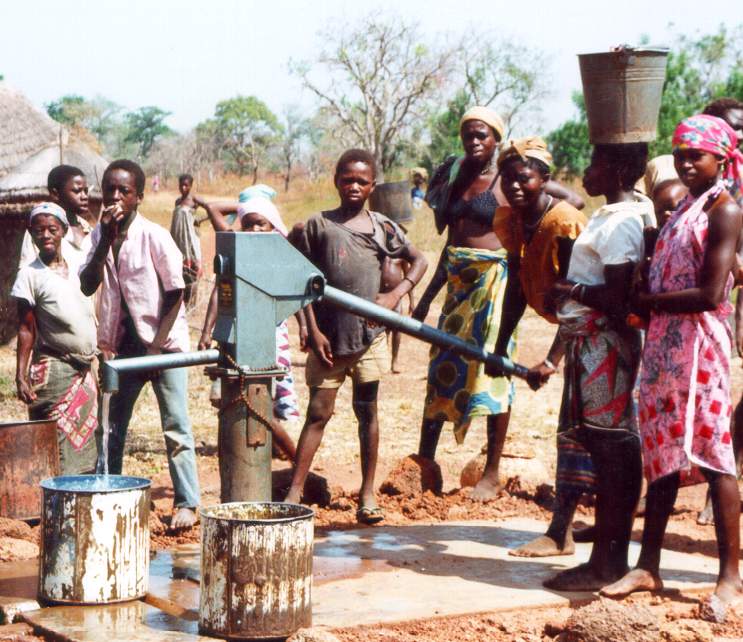
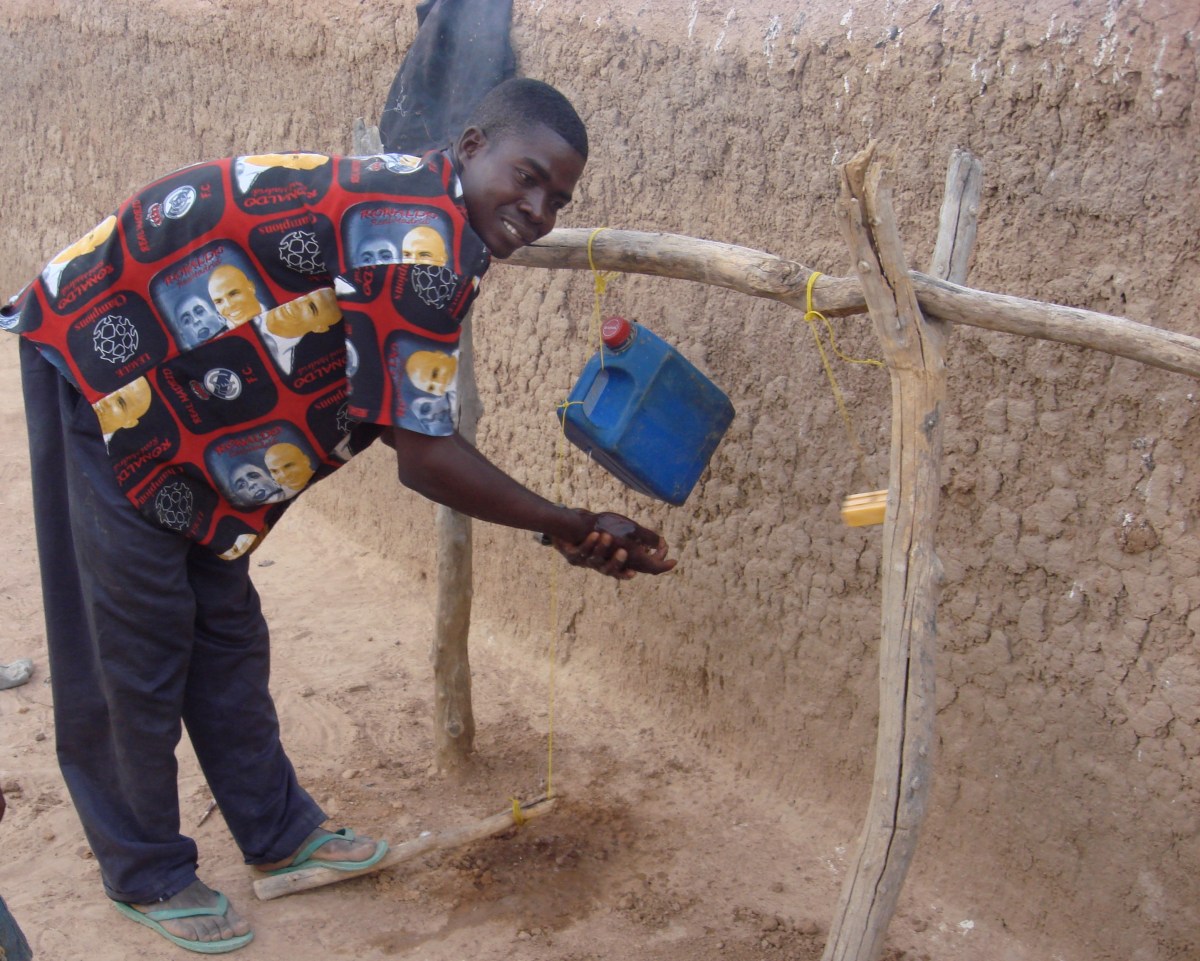
Photo credits (top to bottom): Dominic Chavez/World Bank; Alan Piazza / World Bank; Arne Hoel / World Bank; Gerardo Pesantez / World Bank