Let’s start 2016 with a bang: a call for expressions of interest (EOIs) for ‘Catalyst Grants’ which are commissioned under the REACH programme.
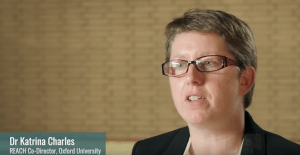
Dr Katrina Charles explains the REACH Catalyst Grant process (click picture to see YouTube video)
These Catalyst Grants of between £10,000 and £50,000 each are designed to explore novel approaches to water security and poverty research and policy that complement the core research conducted by the REACH programme. These grants will promote the co-production of effective tools and technologies relevant for and adopted by policy makers, practitioners, civil society organisations and enterprise.
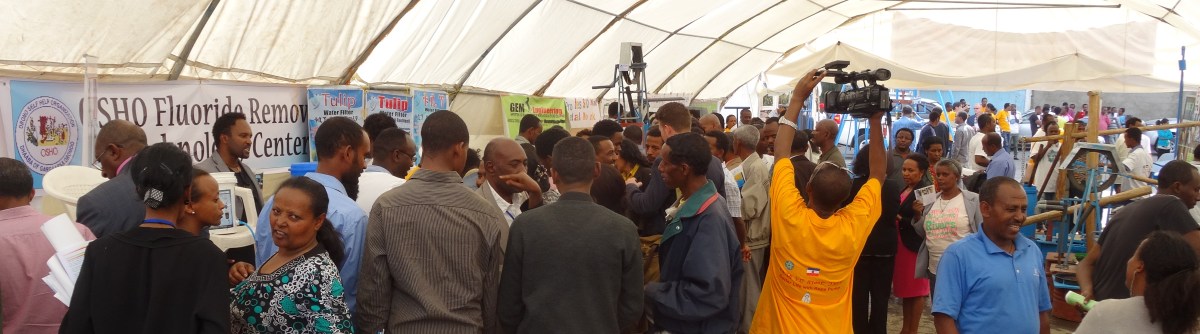
As part of the celebration of the World Water Day 2015 the rural water sector in Ethiopia organized a 3-day event on Self-supply (19th – 21st March) including a trade fair for producers of Self-supply technology and a 2-day seminar with inputs from international and national speakers. The fair hosted more than 20 local suppliers and producers which allowed potential clients to check technologies in detail, to speak to suppliers and compare products for e.g. water lifting, drilling, water treatment.
Suppliers were invited to to market themselves by giving a 3-minutes pitch to the public. A panel of experts gave feedback so that the brave pitchers could improve on their promotion in the future.
In the international seminar on 20th March, experiences from other countries on accelerating Self-supply were shared as well as the information on steps taken so far to roll out Self-supply in Ethiopia including linkages to small scale agriculture and the multiple use concept.
WHO presented results from various studies on water quality analysis of samples from improved and unimproved sources.It became obvious that the concept of improved/unimproved sources is not good for indicator of safe water supply. This perception was so far one of the key challenges addressed to accept Self-supply.
In the future WHO recommends enforcing its concept of Water Safety Plans and clearly promoted household water treatment for any water used for drinking water in rural areas. The Ethiopian water sector will develop ideas on how to establish and follow up water safety plans in Ethiopia which fit to the Self-supply context.
To attract more people similar fairs are planned for other towns in Ethiopia in the near future.
All slides of the international seminar on Self–supply (20th March) and some photos of the fair will be uploaded on the RWSN website.
activities as part of World Water Day 2015 events, 19-20 March 2015, Addis Ababa
Sustainable development of water requires fresh thinking and new innovation. Ethiopia is pioneering new approaches in water, sanitation and hygiene (WasH) that draw upon the resources of local people, communities and entrepreneurs to further improve water security, food security and wealth. ‘My Water, My Business’ is a series of linked events organised as part of the 2015 World Water Day celebrations to bring attention to these household-level efforts. The events will connect sector policy-makers, development partners, professionals and engaged local governments and communities. The overall message is that to complement the efforts of utilities, woredas and other traditional service providers, households can do a lot themselves to improve their water and sanitation facilities and related hygiene practices. You can improve your own water supply, sanitation and hygiene.
by Dr Annette Johnson and Anja Bretzler, Swiss Federal Institute of Aquatic Science and Technology (Eawag) – www.wrq.eawag.ch
Researchers at Eawag have been involved in finding technological solutions for arsenic-contaminated drinking water over the last decades. When we also started looking at fluoride contamination in drinking water we soon came to realise how enormous the problem was and how that challenges to long-term mitigation were the same irrespective of contaminant. Continue reading “Out today: Addressing arsenic and fluoride in drinking water – Geogenic Contamination Handbook”
“Fluor is an element abundant in nature. In the right quantities, it is essential for the development of teeth and bones. However, under specific conditions, the concentration of fluoride (F) in ground and surface water can exceed safety levels and becomes toxic for human health. This may lead to skeletal and/or dental fluorosis, two chronic biogeochemical diseases that occur in various countries around the world.
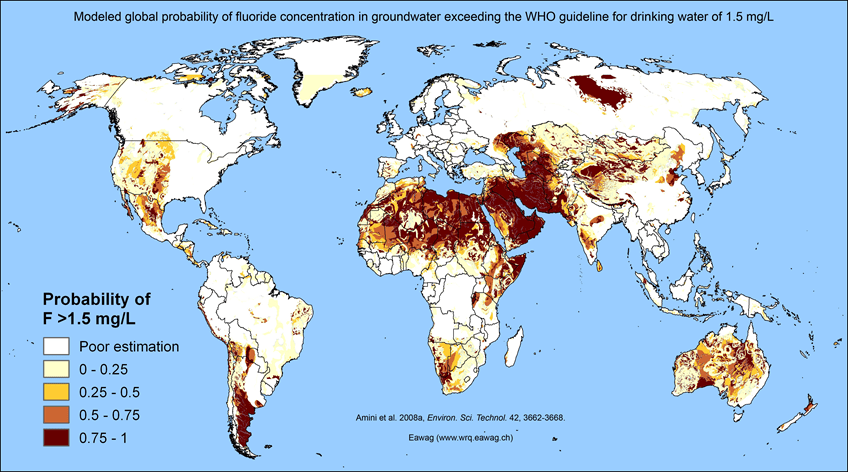
According to UNESCO, more than 200 million people worldwide rely on drinking water with fluoride levels exceeding the present World Health Organization (WHO) norm of 1.5 mg/l. The Ethiopian Central Rift Valley (ECRV) is one of the most affected areas with an estimated 8 million people potentially at risk of fluorosis. Due to its geology and climate, it suffers from some of world’s highest concentrations of fluoride, mainly in deep wells in the semi-arid parts.
Dr Redda Tekle Haimanot and Seifu Kebede (Addis Ababa University) have studied the fluoride problem in the ECRV region for several years. In this webinar, they will discuss the magnitude of the problem, the risk factors and socio-economic consequences. The speakers will also discuss preventive measures that hold promise, and why they are relevant to other parts of the world suffering from high fluoride levels.
Date: May 02, 2014 Time: (To be confirmed) How to participate:
1) Go to https://metameta.adobeconnect.com/fluoride/ 2) Choose ‘Enter as Guest’
3) Enter a screen name
4) That’s it! You can now listen to the speakers, see their slides, ask them questions and share comments/questions”
ABSTRACT This study compared the occurrence of skeletal fluorosis in chronic consumers of locally brewed alcoholic beverages and their matched controls in the Ethiopian Rift Valley. The study revealed that chronic alcohol consumers developed severe forms of crippling skeletal fluorosis quite early in life. The controls were either symptom-free or exhibited mild forms of the fluorosis. The study showed that crippling skeletal fluorosis was directly associated with the large volumes of the locally brewed beer and honey-mead consumption on a daily basis. Chemical analysis of the alcoholic beverages showed that high concentration of fluoride which was much higher than the fluoride in the water was used for the brewing process. From this study one would conclude that in communities residing in high fluoride areas, there should be awareness creation campaigns to point out the relationship of excessive consumption of locally brewed alcoholic drinks and skeletal fluorosis. Regulations should also be put in place to require producers of local alcoholic beverages to use low fluoride water for brewing.
After this year’s ‘Water & Health’ conference at UNC, I visited some organisations along the East Coast of the US. On Wednesday 23rd October, I visited the headquarters of charity: waterin New York. The largely open-plan office was quietly buzzing with activity.
charity: water was founded in 2006 by a young night club promoter, Scott Harrison, who decided to put his considerable influencing and networking skills to a new, more productive (as he saw it) purpose. His idea has been to tap into a different demographic than is usual for charitable donations – those below the age of 40, who have grown cynical of what charities actually achieve. To do this they use social media and celebrity endorsement (charity: water is currently the featured charity of Depeche Mode’s latest tour). Their hook is a 100% model where all money donated goes directly to projects, implemented by established NGO partners such as Water For People, Water For Good (ICDI), Splash and World Vision. The completed projects are shown on the website, as part of proving that work has been done.
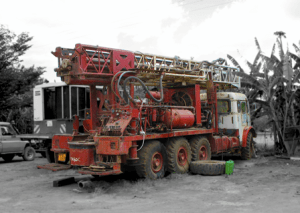
RWSN is currently hosting a 3 week discussion on ‘Cost Effective Boreholes’ as part of our Sustainable Groundwater Development Theme. Here are some highlights so far:
It is very interesting to read the inputs so far from Kenya, Zambia, Sudan, Nigeria, Ethiopia and Uganda.
From the discussions so far, it seems that the Kenya and Ethiopia have established regulatory frameworks for water well drilling (thanks Chrispine and Tesfaye). In the Kenyan case, government regulation, which is limited by capacity constraints is augmented by the monitoring of activities by the drillers association. It will be interesting to hear more on this from Chrispine and others in Kenya. In contrast Zambia (thanks Daniel) lacks any regulation with respect to groundwater resources. There is thus no registration of boreholes in the country whatsoever and even drilling records must not be collected. Although a water resources management act was passed in Zambia 2011 it still awaits launch and implementation. Perhaps there are also others with ideas for Zambia. In Sudan, we hear from Harm Bouta about a very fragmented drilling sector with no strict regulations in place, but that there are other initiatives taking place in Sudan from which we could learn more. Continue reading “Realities of water well drilling in Africa: e-discussion highlights so far”



 Rural Water Supply Network - blog