Weaving threads of knowledge and trust across the world – Part 1 (Global Actors)

by Sean Furey, Director – RWSN Secretariat @ Skat Foundation

Rural Water, Sanitation and Hygiene (WASH) is such a local, personal, issue that does global-level exchange make sense?

At first glance, rural areas and communities worldwide seem too diverse for networking and knowledge exchange to be useful or meaningful. What does WASH for isolated hamlets in the Nepalese Himalayas have in common with a fishing village on the Peruvian coast or a small town in northern Nigeria? Quite a lot, it turns out.

Last year, we were privileged to be approached by the Water Section at the Inter-American Development Bank (IDB), to support them with an exciting programme called Sustainable and Innovative Rural Water, Sanitation and Hygiene (SIRWASH), funded by the Water Section of the Swiss Agency for Development & Cooperation (SDC). They asked us to help strengthen the sharing on rural WASH topics within the Latin America and Caribbean (LAC) region and to encourage South-South exchange between LAC, Africa and Asia. Thanks to our strategic partnership with SuSanA we felt well placed to do this, and a great opportunity for both networks to grow our membership in the LAC region and serve our members there better.

Multilateral Development Banks – amazing allies

When it comes to shear financial clout and convening power, Multi-lateral Development Banks (MDBs) are hard to beat, but even they have had mixed success with rural WASH – but there have been successes and they have recognised that they can learn from each other so that they can provide their client governments with the technical assistance and financial options to deliver sustained improvements. So, last year the relevant focal points from the African (AfDB), Asian (ADB) and Inter-American (IDB) met and agreed on a Call to Action with three priorities:

  • Information-based decision-making and rural WASH investments and service monitoring.
  • Institutional strengthening & coordination.
  • Rural sanitation.

From this, we organised a webinar mini-series drawing on their recommendations for case studies on each topic from each region.

Finding the common threads and bringing them together to make them stronger

This year, we took more steps to build an understanding and appreciation of the solutions that have the potential to transcend the variability of local contexts and be adapted. With growing interest, our colleagues at the World Bank also joined the small group and together we organised a special SIRWASH breakfast meeting and an open session on “Coordinating Rural Water Investments to Promote Security and Stability” with REAL-Water :

The SIRWASH breakfast meeting that followed was in the spirit of collaboration among countries in the global south, using knowledge sharing as a catalyst for innovative and sustainable solutions. It was attended by more than 40 representatives from countries (Haiti, Brazil, Peru, Chile, Nigeria and Uganda), multilateral banks, multilateral and bilateral agencies (SDC, AECID, SIDA, WHO, OAS, UNICEF), NGOs and philanthropists (including, One Drop, Water For People, Avina, Aguatuya, mWater, Global Water Center), as well as networks, partnerships and research (RWSN, SuSanA, WASH Agenda for Change, WASH Funders Group, SIWI, Uptime, the Aquaya Institute). 

Reflections on the SIRWASH Breakfast meeting (source: IDB)

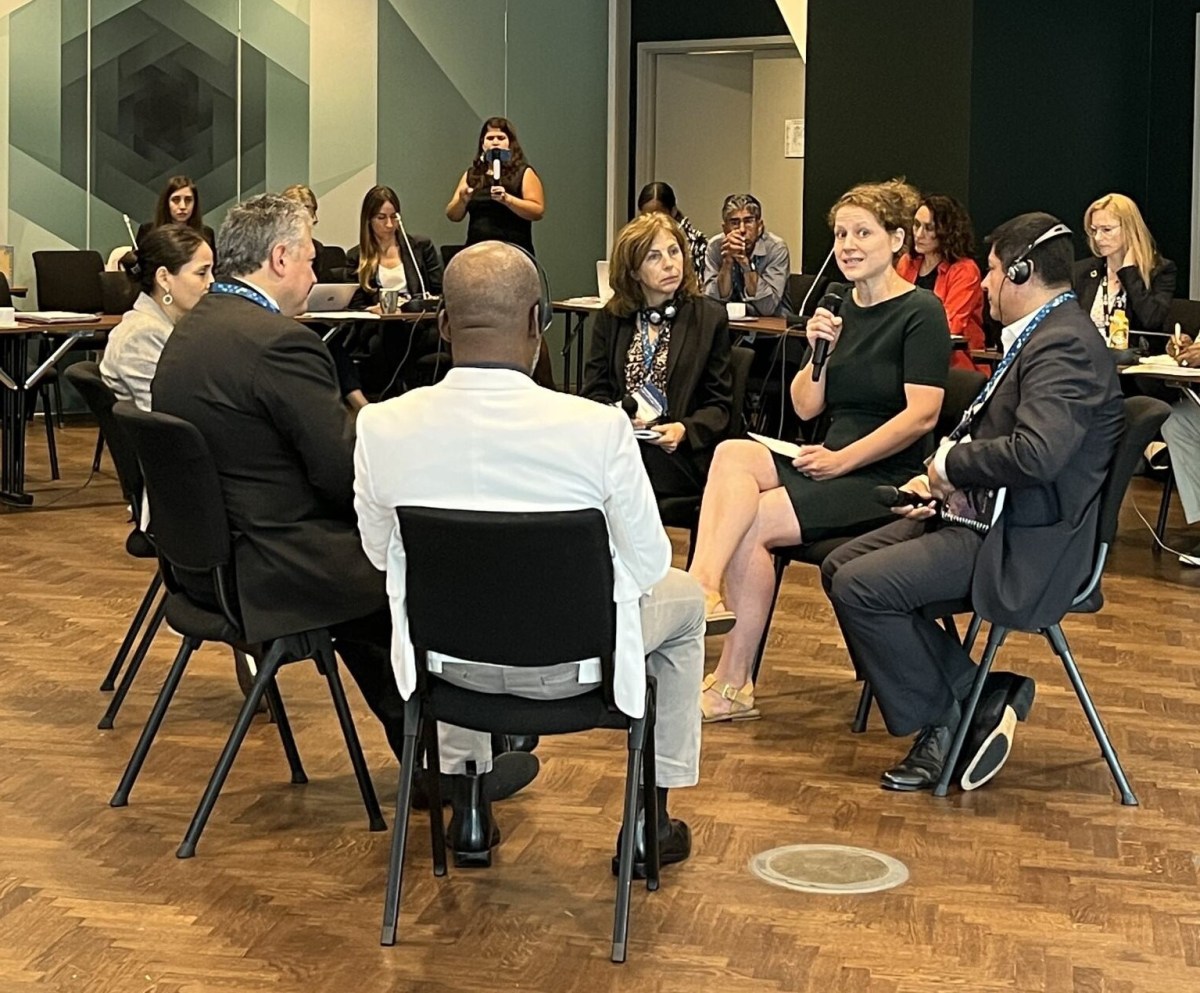
Using the “Fishbowl” method, participants exchanged their perspectives in an open and dynamic way on how strategic partnerships can increase impact in the sector. Discussions focused on two key questions: 

1. How can technological innovations in rural WASH information systems be supported to be truly effective in decision making and incentivize scaling up? 

2. What are practical solutions to improve the design and implementation of national rural WASH programs so that their benefits are sustained over the long term? 

One of the central themes was innovation through sector information systems, a crucial tool for planning and managing water and sanitation services in rural areas. Three countries shared their experiences on how they have adapted and improved these systems:

The importance of institutionalizing information at the national level and ensuring that communities participate in the validation and appropriation of data and decisions was emphasized.

In addition to information systems, the event underscored the need to integrate both technological and social innovations to improve rural services. Social innovations and behavioural change are essential for communities to take ownership of the systems and actively participate in their management and maintenance. Participants agreed that long-term sustainability is about finding the sweet spot between community-ownership/responsibility and external support.

The second critical issue addressed was the sustainability of rural water and sanitation services. Participants stressed that the successful implementation of these services cannot depend solely on initial investments in infrastructure. Innovative mechanisms need to be developed to ensure their financing and continued operation. The examples of Brazil and Nigeria were instructive, both countries demonstrating how the combination of effective governance and innovative financial models can ensure the operational sustainability of services:

  • Brazil presented its comprehensive implementation of their National Rural Sanitation Program (PNSR).
  • Nigeria highlighted the ways a results-based SURWASH programme is strengthening institutional capacity.
  • The Uptime Consortium shared their experiences and successes with Results-based Contracting on rural water service delivery across many contexts.

The discussion emphasized the need for functionality and quality indicators for rural services, linking reliable information to financial incentives for operators. This strategy can enhance the long-term sustainability of these systems. The working group concluded that collaboration is essential to ensure countries have reliable information for decision-making, aimed at improving the quality of rural services.r decision-making aimed at enhancing the quality of services in rural areas.

In the final discussion, consensus was reached on the need to create and maintain an enabling ecosystem for the development and sustainability of rural services. The great opportunity for development partners to join efforts and seek synergies, contributing technical and financial resources to this ecosystem in the countries was highlighted.

The event concluded with a clear call to action: all actors – governments, development banks, cooperation agencies, NGOs, networks and the private sector – must remain committed to financing and strengthening rural water and sanitation services. The MDBs will continue to work together on a concrete action plan to exchange and replicate successful and innovative experiences to ensure universal and quality WASH services in the countries.

Knowledge exchange is not just talk and powerpoint presentations, it is about building connections and trust between individuals and organisations, finding those common interests and encouraging co-creation of new insights and more sustainable solutions.

The symbolic activity organized by One Drop, where participants bonded to represent their intention to work together towards a common goal, was a powerful reminder of the importance of lasting partnerships. This symbolic gesture is just the beginning; it is essential to continue to scale up efforts so that the most vulnerable communities can access quality water and sanitation services in a sustainable and equitable manner.

Top-Down meets Bottom-Up

After this event, our partner Aguatuya convened an online meeting of Latin American WASH networks to encourage bottom-up exchange to complement our high-level approach. But we will follow that thread in the next post…


Many thanks to the large number of people involved, but in particular to Sergio Campos, Manuela Velasquez-Rodriguez and Cristina Mecerreyes at IDB; Diane Arjoon at AfDB, Vivek Raman and Tanya Huizer at ADB, Awa Diagne and Sarah Nedolast at the World Bank, Janine Kuriger at SDC, and to the wonderful RWSN/SuSanA team: Dr Aline Saraiva, Batima Tleulinova, Susanna Germanier, Lourdes Valenzuela, Paresh Chhajed, Chaiwe Sanderse and all the speakers and panellists for the webinars and sessions.

Nurturing Professional Growth in the WASH Sector

by Lisa Mitchell, Senior Director of Learning Services, Global Water Center, re-blogged from the Global Water Center

Mentoring plays an important role in the Global Water Center’s (GWC) strategy to offer ongoing support to our clients. We know that training is just the first step in learning new knowledge and skills. To consolidate new competencies, ongoing support is necessary. Mentors are well placed to provide this support.

This year, GWC trialed a new strategy to support the graduates of our solar powered water systems (SPWS) training: we paired with the Rural Water Supply Network’s (RWSN) Mentoring Program, to offer SPWS alumni mentoring support. We also supported RWSN’s general mentoring stream, so they could extend it to a broader pool of WASH professionals.

As part of these activities, I had the privilege of becoming a mentor to three mentees, from very different corners of the world: India, Côte d’Ivoire, and Switzerland. I believe I learned more from my mentees than they likely learned from me!

I met with the mentees once or twice per month over the last six months. During our exchange, I reviewed my mentees resume, journal submissions, and even a PhD application. We discussed behaviour change and educational theories and considered innovative approaches to their work. From them I learned about a range of topics from measuring the transfer of agrochemicals into groundwater to involving communities in groundwater recharge initiatives. I also discovered new WASH organizations and initiatives.

The beauty of these relationships is that they evolved according to the mentees’ needs. No two meetings were the same, and each meeting brought out new learning and ideas. I also formed a strong relationship with three people I would not have met otherwise, and I’m confident we will continue to support one another in our professional journeys moving forward.

In the coming months we will share the evaluation from the SPWS stream of the mentoring program. For now, I believe that the mentees from this stream of the program gained at least as much as I did from the program.

Interested in becoming a mentor or mentee yourself? Considering signing up for RWSN’s mentoring program. Details of next year’s program will be released in early 2024.

“Financial Innovations for Rural Water Supply in Low-Resource Settings” Innovation 4: Performance-based Funding

This blog post is part of a series that summarizes the REAL-Water report, “Financial Innovations for Rural Water Supply in Low-Resource Settings,” which was developed by The Aquaya Institute and REAL-Water consortium members with support from the United States Agency for International Development (USAID). The report specifically focuses on identifying innovative financing mechanisms to tackle the significant challenge of providing safe and sustainable water supply in low-resource rural communities. These communities are characterized by smaller populations, dispersed settlements, and economic disadvantages, which create obstacles for cost recovery and hinder the realization of economies of scale.

Financial innovations have emerged as viable solutions to improve access to water supply services in low-resource settings. The REAL-Water report identifies seven financing or funding concepts that have the potential to address water supply challenges in rural communities:

  1. Village Savings for Water
  2. Digital Financial Services
  3.  Water Quality Assurance Funds
  4. Performance-Based Funding
  5. Development Impact Bonds
  6. Standardized Life-Cycle Costing
  7. Blending Public/Private Finance

Understanding Performance-based Funding

Many water supply development projects fail due to well-meaning but poorly-executed investments (McNicholl et al. 2019). Repayable water supply investments often risk losses, due to the pervasive challenges of serving low- and middle-income rural settings. Development aid recipients, including governments and water service providers, may face challenges such as limited capacity, oversight, victims of corrupt schemes, or weak governance. These factors can affect the incentives to achieve optimal outcomes. From the funder’s perspective, poor outcomes reinforce high-risk perceptions and may steer resources away from water supply investments. The potential beneficiaries, rural water consumers, suffer the consequences with little opportunity for recourse. As a way to create greater accountability, conditioning financing on verified service delivery has gained increasing attention since the mid-2000s.

How does it work?

Performance-based funding is designed to maximize accountability,  transparency, and efficiency of the service provider. Its elements generally include: (a) targets and/or ceilings of repayment, (b) an agreed per-unit payment amount for each output and/or outcome (e.g., new household water connection), and (c) independent verification of results prior to payment disbursement. 

Specific performance-based financing instruments include development impact bonds and conditional cash transfers. With conditional cash transfers, cash payments are made directly to needy households to stimulate investment in “human capital” (i.e., the knowledge, skills, and health that people invest in and accumulate throughout their lives to become productive members of society) if they meet predetermined conditions (e.g., periodic health checks or school attendance). Payments can also be structured to incentivize entire communities to achieve a public health or water access goal (Nguyen, Ljung, and Nguyen 2014).

Examples

Encouraging water-related examples have emerged on a limited scale in Asia, Africa, and Latin America, although this approach may not offer advantages under all circumstances

The World Bank established its Global Partnership on Output-based Aid in 2003, renamed in 2019 to the Global Partnership for Results-Based Approaches (World Bank 2022). As of 2022, the Global Partnership portfolio includes 58 individual projects in 30 countries, with more than 12 million verified beneficiaries as well as an array of technical assistance and knowledge activities (World Bank 2022). In Kenya, for example, the national government, World Bank, USAID Development Credit Authority, and Dutch development bank KfW’s Aid on Delivery program support the Water Services Trust Fund of Kenya (Advani 2016). It offers water service providers access to results-based finance to invest in pro-poor water infrastructure, such as urban household connections and public water kiosks. Service providers agree to meet targets for higher consumer consumptions, increased revenue, and reduced water losses.

The UK’s Foreign, Commonwealth, and Development Office (formerly called the Department for International Development) has long led performance-based funding approaches, having supported the Global Partnership since its inception while building its own results-based funding portfolio with more than $2.7 billion invested across 19 programs as of 2016 (Clist 2019). An approximately $135 million performance-based “WASH Results Programme” has been implemented in South Asia from 2013 to 2022 by Plan International, the Sustainable WASH in Fragile  Contexts consortium led by Oxfam, and the Sustainable Sanitation and Hygiene for All program led by SNV (Howard and White 2020).

The Uptime Catalyst Facility, created in 2020, piloted a results-based funding approach for post-construction rural water maintenance services. Its design built upon three metrics (reliable waterpoints, water volume, and local revenue) and eventually arrived at a “revenue matching” contract design, with supplementation of user payments and matching for a portion of locally-generated revenue. Service providers implement water services up front and are remunerated for results achieved, using a payment formula. Standardized contracts and performance metrics make the model easily scalable. Expansion to serve several million people is ongoing in African, Asia, and Latin America (McNicholl et al. 2021)

The UK government and USAID support the National Rural Water Supply and Sanitation Programme in Mozambique (Rudge 2019). It links 40% of a nearly $40 million grant to the government of Mozambique to  eight performance indicators, including the number of people in rural areas with access to new improved drinking water infrastructure and the percentage of contracts (works and services) procured at district level. The performance-based approach is being tested in 20 districts in two provinces of Mozambique (Nampula and Zambezia). Initial evaluation found key enablers: alignment with government priorities and effective transfer of responsibility and accountability for implementation by the sub-national government. Key challenges included ensuring domestic increases in financing for capital and operational expenses.

The international NGO, East Meets West (aka Thrive Networks), implemented output-based aid programs in Vietnam. With support from the Global Partnership, they carried out a rural water program in Central Vietnam and a separate activity in the Mekong Delta region (Nguyen, Ljung, and Nguyen, 2014).

Various management models were employed, involving private enterprises, provincial authorities, and East Meets West as the service provider. Supported by the Vietnamese National Target Program for Rural Water Supply and Sanitation since 2013, the program successfully achieved its target for new household water connections. It accomplished this by leveraging local investment through partial subsidies to low-income beneficiaries. Customer satisfaction surveys highlighted the benefits of introducing private water operators, including improved performance with fewer water losses and breakdowns.

While performance-based approaches may not be universally superior financing options,  they hold promise when targeted outcomes are well defined, service providers have experience and interest in achieving efficiencies, reliable data sources and monitoring systems are in place, funders allow room for innovation to service providers, and costs can be reliably priced to increase cost effectiveness for donors and enhance operating efficiencies by the implementer.

To access further information on financial innovations for rural water supply in low-resource settings, you can download the complete report HERE.

The information provided on this website is not official U.S. government information and does not represent the views or positions of the U.S. Agency for International Development or the U.S. Government.

References:

Strengthening accountability for water


This blog is based on the Accountability for Water action and research programme funded by the William and Flora Hewlett Foundation and managed by the Partnership For African Social and Governance Research (PASGR), supported by Water Witness International, KEWASNET and Shahidi Wa Maji. The full webinar summary is available here.

On 15th December 2022, a global webinar was held to discuss the critical importance of accountability for water. During the webinar, a partnership of organizations led by PASGR and Water Witness presented the findings of their Accountability for Water research program, which aimed to identify specific actions to strengthen accountability in different contexts. The programme partners involved in the research include KEWASNET, Shahidi Wa Maji, WaterAid, Water Integrity Network, End Water Poverty, IRC, and World Bank. Dr Pauline Ngimwa and Dr Muthio Nzau of PASGR introduced the webinar.

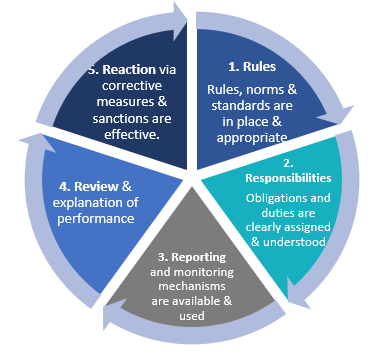
Dr Tim Brewer of Water Witness gave an overview of the research programme which started with the global review of evidence carried out in 2019-2020.  According to this review, 80% of the research papers on accountability found that interventions contributed to improved water, sanitation and hygiene (WASH) services and water resource management (WRM). Common lessons emerged with clear recommendations for action by governments, civil society, donors and others. While a key lesson is that accountability is context specific, an analytical framework based on the “5 Rs of accountability” can be used to identify specific challenges and opportunities within this framework – the ability to review, explain, and report performance against rules, responsibilities, and obligations, and to react constructively to improve performance through sanctions, incentives, or corrective measures.

The review identified a series of knowledge gaps and questions, including gender, donors, government responsiveness, measurement, and civic space. Based on this analysis, 14 Professional Research Fellows (PRF) working in the water sector in Ethiopia, Kenya, Tanzania, Zambia, Liberia, and Zimbabwe from a range of government, civil society and academic institutions investigated accountability issues in their own contexts. The full list of research topics and researchers is at the bottom of this blog.

The following key takeaways for governments, civil society organizations (CSOs), and donors were drawn from a compilation of recommendations from the research projects .Presenters included Dr Firehiwot Sintayehu (Addis Ababa University);  Eunice Kivuva (CESPAD); Chitimbwa Chifunda (WaterAid Zambia), The full list of research topics and researchers at the end of this blog demonstrates the depth and breadth of evidence underlying these recommendations .

Three key takeaways for governments      

  1. Laws, policies and accountability mechanisms are essential to support accountability. However, lack of clarity and consistency between sectors and levels, a lack of knowledge and capacity about the laws and mechanisms, and weak enforcement often undermine these. Therefore, the key recommendations are to: 
    • Harmonise, strengthen, and execute laws and policies for water resources and WASH at national and subnational levels,
    • Strengthen accountability systems and relationships:  mechanisms, standards, regulation, monitoring, stakeholder engagement and enforcement including for the private sector,
    • Build capacity on accountability, develop an accountable outlook and de-politicise accountability systems.
  2. Clear roles and responsibilities and better coordination: Accountability mechanisms are often let down by poor coordination, unclear or conflicting roles and responsibilities and widespread lack of enforcement. Key actions required are to:
    • Clarify institutional roles and responsibilities between actors for WASH and WRM – eliminate conflicts in functions,
    • Separate implementation and regulatory institutions,
    • Strengthen horizontal and vertical institutional and sector coordination across water users through enforceable accountability systems and mechanisms.
  3. Informed engagement with citizens and users: All the researchers found that effective engagement with citizens, citizen groups and water users is essential for accountability but wanting. To address this governments need to:
    • Introduce or strengthen accountability mechanisms such as public hearings and citizen oversight panels,
    • Provide Information, education, and mobilisation for communities ensure access for marginalised groups,
    • Support civil society to vertically integrate social accountability initiatives into decision making at different levels,
    • Support coordination amongst actors to increase the capacity of rural women and marginalised communities to participate in problem analyses and decision-making processes.

Three key takeaways for civil society,

  1. Activate and institutionalise effective citizen oversight mechanisms.  As well as the government actions to strengthen engagement with citizens and water users Civil society organisations need to support this, they should:
    • Advocate for more legally institutionalised avenues of citizen oversight,
    • Ensure that citizens’ monitoring and advocacy initiatives are vertically and strategically integrated in decision making at all levels,
    • Carry out budget tracking throughout the whole cycle from planning to expenditure.
  2. Build capacity, empowerment and organise communities. A very common cause of weak accountability is the low levels of knowledge and capacity of water users about their rights, the laws and responsibilities around water provision and resource management, and how they can use accountability mechanisms. Civil society organisations need to:
    • Build capacity on accountability mechanisms and support their use,
    • Strengthen grassroots user groups and associations to participate in decision making,
    • Support civil society and water users, especially women, to move up the Participation ladder from token participation to active participation,  decision making, and control.
  3. Build on what works, like budget tracking, evidence-based advocacy, litigation. There is growing knowledge about successful strategies for strengthening accountability. This research has helped to strengthen a community of practice on accountability and identify examples that others can learn from. Key lessons for civil society are to:
    • Strike a balance between constructive and critical approaches to advocacy,
    • Bring strong evidence for advocacy,
    • Raise awareness of WASH and WRM issues amongst all stakeholders including citizens, government and development partners.

Four key takeaways for donors and private sector

  1. Support governments and CSOs to strengthen accountability frameworks, monitoring and enforcement. Donors can provide financial and political support for the actions for governments and civil society mentioned above. They need to:
    • Support governments on WASH and WRM accountability actions as above,
    • Support CSO actions as above,
    • Support good governance and democratic space for citizens’ voice. Citizens’ engagement is critical to enhancing accountability,
    • Invest in women’s participation and reaching marginalised people,
    • Strengthen political will for accountability.  Donors can influence government priorities,
    • Invest seriously in sustainability.
  2. Water investments need to go beyond projects. They need to: 
    • Go beyond procedural & financial accountability. For example strengthen basins planning to ensure responsible industrial water use,
    • Support budget tracking through the cycle – budget tracking is an effective tool to improve budget performance,
    • Invest in appropriate technology to support accountable and responsive services, For example digital monitoring of services and water treatment technology to prevent pollution of water resources.
  3. Enhance due diligence. Researchers found examples of very weak accountability in economic uses of water by industrial and agricultural actors. Donors and private investors can help strengthen accountability by requiring:
    • Stronger due diligence of companies in relation to water use,
    • mandatory reporting on water,
    • promoting and enforcing the Polluter pays principle
  4. Be accountable!  Donors are major investors in the water sector but often do not fulfil their commitments. For example in Zambia the WASH sector is 80% funded by Donors but only 29% of that was tracked through the budget.
    • Accountability Mechanisms are needed to enable Governments and CSO to hold Donors accountable for their commitments. 

Discussion and next steps

During the webinar, Sareen Malik from KEWASNET, emphasised the importance of legislation to strengthen accountability mechanisms. NGOs can play an important role to advocate for this and bring stakeholders together in Joint Sector reviews as a critical mechanism for accountability, monitoring and reporting. 

Martin Atela of PASGR reflected on the role of politics in undermining accountability and suggested that political interference can be mitigated by greater clarity on roles and boundaries of ministerial responsibilities. He also emphasized the need to find ways to work with political elites so they see the value in change

Next steps involve joining the community of practice on accountability for water, to continue learning from experience and to advocate for commitments to strengthen accountability.

Research partners are organising an event at the UN Conference on Water 2023: “Where is the accountability”  on Tuesday 21st March, driving a greater emphasis on governance and accountability. This needs to be front and centre of all discussion.

The Research programme is managed by the Partnership for African Social and Governance Research (PASGR) and Water Witness International with financial support from the Hewlett Foundation.

More information about the research is on the website including findings from the global review of evidence, recorded presentations from webinars at World Water Week 2022 in Stockholm, presentations from country specific webinars, and summary briefings of all the research topics. www.accountabilityforwater.org

List of Research topics, Professional Research Fellows and host institutions

Ethiopia

  • Government Dynamics of Accountability in Ethiopia, Mulugeta Gashaw, Water Witness Ethiopia
  • Political Economy Analysis of water governance, Asnake Kefale
  • Risks and opportunities for growth in Ethiopia’s textile and apparel industries,  Esayas Samuel
  • Wastewater management in upstream catchment of ARB, Yosef Abebe, Addis Ababa University and Ministry of Water and Energy
  • Accountability of the One WASH National Programme of Ethiopia, Michael Negash, PSI
  • Towards a sustainable management of faecal sludge: the case of Addis Ababa, Tamene Hailu
  • Alwero Dam governance, Firehiwot Sentayu, Addis Ababa University

Kenya

  • Government Dynamics of Accountability in Kenya, Dr Tiberius Barasa
  • Enhancing coordination for accountability and sustainability in water resources management; a case of Kerio sub-catchment in Baringo rift valley basin. Eunice Kivuva (CESPAD)
  • Kakamega County Water and Sanitation Company, Kenya.  Mary Simiyu, Kakamega Water Service Provider
  • Rural Women and water decisions in Kwale and Kilifi Counties, Felix Brian, KWAHO
  • Strengthening accountability in solid waste management through incentives and penalties in Naivasha, Kenya, Naomi Korir, Sanivation

Tanzania

  • Government Dynamics of Accountability in Tanzania, Dr Opportuna Kweka
  • Assessment of Gender Power Relations and Accountability in Community Based Water Supply Operators in Selected Water Basins of Tanzania, Pitio Ndyeshumba, Institute of Lands
  • Regulatory and Legal Accountability for Water Pollution in Tanzania: The Case of Msimbazi River Basin in Dar es Salaam City, Mwajuma Salum, University of Dar Es Salaam
  • Opportunities and challenges of accountability claiming in Tanzania’s water sector, Dr Parestico Pastory, University of Dodoma

Zambia

  • What makes budget advocacy an effective accountability tool, Bubala Muyove, NGO WASH Forum and Chitimbwa Chifunda, WaterAid Zambia

Zimbabwe

  • Assessing the effectiveness and impact of statutory accountability mechanisms to improve water service provision and catchment management, Mable Murambiwa, Combined Harare Residents Association, Zimbabwe

Liberia

  • Accountability Challenges in The Liberia Water-Supply Sector: LWSC in Robertsport and Kakata, Timothy Kpeh, United Youth for Peace,  Liberia

About the author:  This blog is authored by Louisa Gosling, freelance specialist in accountability, rights and inclusion in WASH, previously working with WaterAid and as chair of RWSN.

Sand dam’s contribution to year-round water supply

This year we are celebrating 30 years since the Rural Water Supply Network was formally founded. From very technical beginnings as a group of (mostly male) experts – the Handpump Technology Network – we have evolved to be a diverse and vibrant network of over 13,000 people and 100 organisations working on a wide range of topics. Along the way, we have earned a reputation for impartiality, and become a global convener in the rural water sector.

RWSN would not be what it is today without the contributions and tireless efforts of many our members, organisations and people. As part of RWSN’s 30th anniversary celebration, we are running a blog series on rwsn.blog, inviting our friends and experts in the sector to share their thoughts and experiences in the rural water sector.

This is a blog post from RWSN Member Hannah Ritchie, based in the United Kingdom

In 2020, I joined forces with Sand Dams Worldwide (SDW) to help them answer the question of “how long water from sand dams is lasting throughout the year”. In this short blog post, I am happy to discuss with you our findings and the implications of this study. We’ll be discussing “why we are interested in this question”, “how we researched this question”, and “what we found out”.

Firstly though, for those of you not familiar with what a sand dam is, I would like to direct you here for a video, which explains them better than I could, and here to SDW’s website where you can find everything sand dam related you might need to know.

Why are we interested (and why you should be too)?

So, why do we care about whether sand dams are providing water year-round? There is uncertainty over whether water from sand dams is lasting all the way through the dry season, or whether people can only abstract water from sand dams at the beginning of the dry season, when they have just been replenished by the rains. Because of this conflict in results, we can’t easily conclude how effective sand dams are as a dryland and specifically dry season water source. For example, can people rely on them when other water sources are unavailable (such as when surface waters have run dry)? Or are the dams dry by the second week of the dry season? Answering this question is very important for understanding their level of use, acceptance, and financial viability, helping to inform future water management interventions and to ensure that communities are serviced with a continuous improved supply. Knowing whether there are certain dry season months when sand dams have no water being abstracted can also inform on months when water supply from other sources needs expanding. Finally, knowing which sand dams have more or less water being abstracted can aid in optimising sand dam design.

You might be thinking, “but no water abstracted doesn’t necessarily mean no water being available”, and you would be right. Because, whilst abstraction volumes may be linked to storage, many other variables, such as convenience, quality, and the use of other sources can also impact abstraction. Thus, the contribution that sand dams make to water security is not synonymous with the amount of water actually stored in the dam. Therefore, whilst this study can show us abstraction patterns from sand dams and therefore behaviours of use, it cannot confirm for certain whether there is or isn’t any water available.

How did we do it?

Now you know why we’re interested and why it matters, how did we actually go about answering the question: “how long water from sand dams is lasting throughout the year”? In 2019, 26 sand dam hand pumps in Makueni and Machakos Counties, Kenya were fitted with Waterpoint Data Transmitters (WDT) by ASDF. These devices measure the number of times and with what force a handpump is used over an hour and convert this into an estimated volume of water abstracted (Thomson et al., 2012). This data point is then transmitted by SMS. I had access to this remotely sensed data from April 2019 until October 2021. With a data point every hour for 26 sites over 31 months, I ended up with a very large data set!

Alongside this abstraction data, I also had access to interview and observation data provided by MSc student Joanna Chan, ASDF, and SDW. These variables included perceived salinity, abstraction limits, livestock use, whether the dam is said to have ever run dry, presence of rainwater harvesting tanks, actual salinity (μs/cm), area of dam wall (m2), average distance travelled from home to dam (km), and user numbers (Chan, 2019).

This data was then analysed to assess how much water people were abstracting and for how long throughout the year the water continued to be abstracted for. The variables collected from interview and observation were then analysed to provide insight into differences in abstraction between sites. For example, did sites with larger dam walls have more water being abstracted, or did salinity impact abstraction in any way?

Finally, we looked specifically at the last week in September (as a proxy for the end of the long dry season) to assess whether enough water to specifically meet drinking water needs (2 L/p/day) was still being abstracted at any sites. Due to the necessity of an improved source of water for drinking (of which a handpump is one), we wanted to know whether the handpumps could independently meet drinking water needs, in case no other water sources were available.

What did we find out? 

After analysing all of the data and wrapping my head around some statistical analysis, I like to think that we found some interesting results.

The most obvious finding was that of high variability in abstraction volume between the 26 hand pumps and seasons. We found abstraction to be significantly higher in the long dry season, indicating a high reliance and delivery of water when other sources are compromised. The diagram below shows median monthly abstraction (L/month) (red line) and average monthly rainfall (mm) (brown bars – dry season and blue bars rainy season) across all sites – indicating higher abstraction when rainfall is lower.
There was abstraction data available from 21 handpumps (81%) by the end of at least one of the analysed long dry seasons, with at least some water still being abstracted. At 59.1% of these sites, enough water to meet each user’s drinking water needs (2 L/p/day) was being abstracted in at least one of the analysed years. This indicates that such dams can meet the drinking water needs of users independently of other sources.

Using the variables which were collected in interviews and observations, we found that sites with a greater proportion of people using the water for livestock, higher salinity, and larger dam walls had significantly higher levels of abstraction. This is to be expected as higher salinity sites are often used more for livestock (Chan, 2019), which have a greater water demand than that for drinking, whilst larger dam walls can lead to a greater volume of sand build up and therefore water storage (Maddrell & Neal, 2012). 

These results highlight sand dams as a sustainable alternative to other dry season sources such as water vendors, which can be expensive and unreliable. However, lower abstraction in certain months and sites highlights that we must approach water management holistically. No one technique is necessarily the answer to dryland water security and all available water sources must be considered. Clearly, not all sand dams behave the same, with certain sand dams always likely to have higher levels of abstraction than others. However, high abstraction and sustained water availability by the end of the long dry season at many sites profess the positive contribution that sand dams can make to a community’s water supply, offering opportunities for further success in the future.

Closing remarks

I really hope you enjoyed learning about abstraction trends from sand dams as much as I enjoyed studying them (most of the time!) If you’re interested in learning more, I hope the paper will be published soon, which will be freely available for everyone to read. If you’d like to reach out, my email is hannah.ritchie@cranfield.ac.uk. Many thanks for reading.

A bit about the author

I am a PhD student at Cranfield University. I began my PhD in September 2019 in WaSH with the CDT Water WISER. With a background in geology and environmental engineering, I wanted to design my PhD project around earth sciences and development. This was how I ended up finding sand dams and partnering with SDW and Africa Sand Dam Foundation (ASDF).

Outside of work I love to run, hike (generally be outdoors as much as possible), read, and am learning French. I am very passionate about science communication and firmly believe that research results need to be translated into accessible formats for all to read and understand, hence why I have written this blog post for you (definitely shorter, more fun, and less boring than reading a 15-page paper!)

Did you enjoy this blog? Would you like to share your perspective on the rural water sector or your story as a rural water professional? We are inviting all RWSN Members to contribute to this 30th anniversary blog series. The best blogs will be selected for publication. Please see the blog guidelines here and contact us (ruralwater[at]skat.ch) for more information. You are also welcome to support RWSN’s work through our online donation facility. Thank you for your support.

Photo credits: Hannah Ritchie

References

Chan, J. (2019). Abstraction of Water from Sand Dams in Machakos and Makueni Counties (Kenya) via Handpumps.

Maddrell, S., & Neal, I. (2012). Sand Dams: a Practical Guide.

Thomson, P., Hope, R., & Foster, T. (2012). GSM-enabled remote monitoring of rural handpumps: A proof-of-concept study. Journal of Hydroinformatics, 14(4), 829–839. https://doi.org/10.2166/hydro.2012.183

RWSN at the UNC Water and Health Conference: Where Science Meets Policy

The Water and Health Conference: Where Science Meets Policy, organized by the Water Institute at the University of North Carolina (UNC), is one of the most important conferences for WaSH professionals. This year the conference has not only explored the interactions between drinking water supply, sanitation, hygiene, water resources and public health, but put also a strong emphasis on rural water supply in developing countries. Researchers, practitioners and policy-makers had the chance to present and lively debate

by Sandra Fuerst and Sean Furey (Skat Foundation)

The Water and Health Conference: Where Science Meets Policy, organized by the Water Institute at the University of North Carolina (UNC), is one of the most important conferences for WaSH professionals. This year the conference has not only explored the interactions between drinking water supply, sanitation, hygiene, water resources and public health, but put also a strong emphasis on rural water supply in developing countries. Researchers, practitioners and policy-makers had the chance to present and lively debate on following topics:

  • Measuring Progress Toward Sustainable Development Goal (SDG) Targets
  • Water Scarcity
  • Rural Water Supply
  • WaSH Equity and Inclusion
  • WaSH in Emergencies

At this year’s conference, the RWSN and its partners have convened two side events, providing water professionals an interactive space for engaging on cutting-edge topics of rural water supply. These sessions translated the “virtual RWSN DGroups into real life discussion groups” as Stef Smits (IRC), the chair of the first side event, phrased it. The participating water experts shared their experiences and developed exciting ideas with their peers for challenging rural water contexts.

Universal and Sustainable Rural Water Services: Different Perspectives, Common Goals

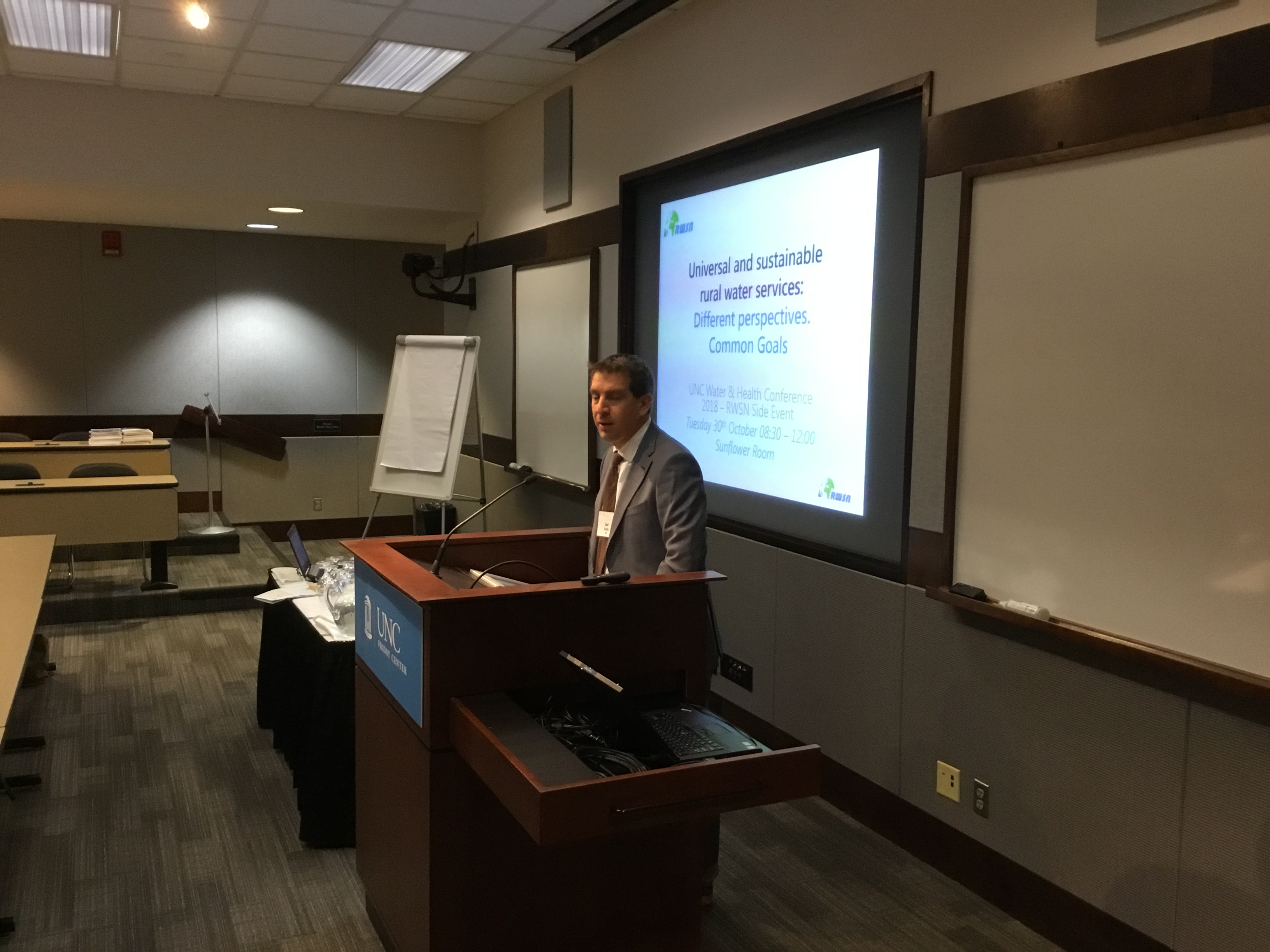
In the first side event, participants were invited to understand two major concepts to apply them later through group discussions in a case study of an WaSH implementation organisation, HYSAWA, Bangladesh, presented by their Managing Director, Md. Nural Osman.

Md. Nurul Osman (HYSAWA)

Sara Ahrari presented the NGO perspective of how organisations, like Simavi, use monitoring and data systems to promote Social Accountability and the holding duty-bearers to account when it comes to the Human Rights to Water and Sanitation. Miguel Vargas-Ramirez from the World Bank and Ellen Greggio from WaterAid presented then the development partner perspective on how data and monitoring can be used to raise the capacity of governments and service providers to deliver sustainable rural WaSH services, particularly rural water supply. This included on-going work to develop benchmarks for rural water service delivery, which WaterAid is testing in Myanmar.

After the break, Elisabeth Liddle from Cambridge University, and Prof. Rob Hope from Oxford University, gave the research perspective on how data and monitoring is enabling them to generate deeper insights into why rural water supply systems fail and how to develop new ways of making them more sustainable.

After the concepts have been introduced, the participants applied them in smaller groups to the HYSAWA case study in Bangladesh. This case study was presented by HYSAWA (Hygiene, Sanitation and Water Supply) to come up with suggestions and advice on how his organisation can improve the quality and sustainability of their rural WaSH interventions. The audience debated questions around:

  • Who is responsible for monitoring and data collection? Who is accountable and feels responsible for what? Those who design the system?
  • Who is responsible for the service provision of water in rural areas? And who needs to be hold accountable for that?
  • What are the drivers to feeling responsible?
  • What are the services that needs to be done?
  • How do the processes need to be managed?

Stef Smits (IRC)

Stef Smits summarised the debates during this session on three levels:

Who? The answer that communities and local governments should be accountable for the service provision of water in rural areas seemed to be too easy as in fact it is not clear at all. The role of service providers in many contexts is not very well defined, also not in legal terms. Accountability is often spread over several layers. For example, minor operation and maintenance (O&M) services can be done on community level, while major O&M services can be provided through public services. Then the levels of accountability also need to be differentiated between service provider and service authority. This first differentiation will help to define who is responsible for what and will help the service authority to hold the service provider accountable. As soon as the roles of different stakeholders are clearly defined, it can be defined more specifically who needs to collect the data. The collection of data then needs to be spread over different levels, from household, community, service provider to authority level.

What? The debate started around the functionality of rural water supply devices and has shown that there is not a simple answer of ‘yes’ or ‘no’ to functionality. Functionality needs to be distinguished between functional devices and functional services (i.e. O&M services). This led to the question how functionality should be measured and which other indicators should be taken into account. Should we bring water quality in as an indicator? Clearly, financial indicators are necessary. As the trend to use indicators and monitoring tools is increasing among service providers and governments in rural areas, it becomes increasingly necessary to define clear indicators for universal rural water services. Based on that development, we can start to understand rural water as a systemic issue.

How? The identified need to define clear indicators on different levels, raised the question of how the process of developing monitoring and evaluation (M&E) systems should be managed. Even though governments were identified to lead this process, NGOs could support to trigger it. However, if a NGO has developed a working M&E systems, it cannot be simply handed over from a NGO to the government, without a well-planned transition phase. It also needs to be taken into account who “the government” is and on which level the government operates. Data and M&E systems will at the end always need a sector development approach.

Pipe Dream or Possible: Reaching the Furthest Behind First in the WASH Sector? – RWSN Side Event 2

The second side event was convened by RWSN (Simavi, Wateraid) with London School of Hygiene & Tropical Medicine and World Vision. During this session, the participants developed human-centred solutions for “Reaching the Furthest Behind First” and “Leaving No One Behind” in the WASH sector.

I7.jpg

The participants worked in several groups on different case studies of extremely vulnerable people (i.e. disabled pregnant child) that are exposed to extreme hazards in their environment (i.e. arsenic contamination of groundwater).

In several steps, the participants developed possible solutions based on their field of expertise: In a first step, they illustrated the social, cultural, physical, political and legal barriers that the imaginary persona faced, regarding their social inclusion. Then they created inspirational ideas of possible solutions to these barriers. The different options were heavily discussed before choosing one or more solutions. To illustrate the actions and stakeholders needed to implement these solutions, a story board was created by each group. Finally, the persona, storyboard and possible solution were presented in pitches to all participants.

IMG_20181101_111922-v2


The two side events have been great examples of how the RWSN works as its best: “Taking concrete examples and bring them together with key concepts from research and practice. This is the richness that RWSN provides: Linking practical questions with conceptional frameworks (Stef Smits)”.

Sharing experiences of data flows in water and sanitation – some reflections from AGUASAN Workshop 2018

A perspective on the 2018 AGUASAN Workshop: “Leveraging the data revolution Informed decision-making for better water and sanitation management” June 25th to 29th 2018, Spiez, Switzerland

AGUASAN Workshop: “Leveraging the data revolution Informed decision-making for better water and sanitation management” June 25th to 29th 2018, Spiez, Switzerland 

Update 24/08/2018: Read the AGUASAN event report

AGUASAN is the Swiss Community of Practice for water and sanitation that has been running since 1984 and comprises regular meetings through the year and an annual week-long workshop focused on a specific topic, which this year was around role of data in decision-making in water and sanitation services. Around 40 participants attended at a really great training facility in Spiez, in central Switzerland. They came, not just from Swiss organisations, but from a wide range of partners (many who are active RWSN members). There were participants from Bangladesh, Tajikistan, Mozambique, Peru, Thailand, Mali, Pakistan, Benin, Egypt, Mongolia, the UK, South Africa, US and many more.

The structure of the event mixed up presentations with “Clinical Cases” group work focused on real-world case studies and challenges where participants could advise representatives from those organisations:

Different aspects issues around data use in water and sanitation were introduced through a good range of engaging presentations:

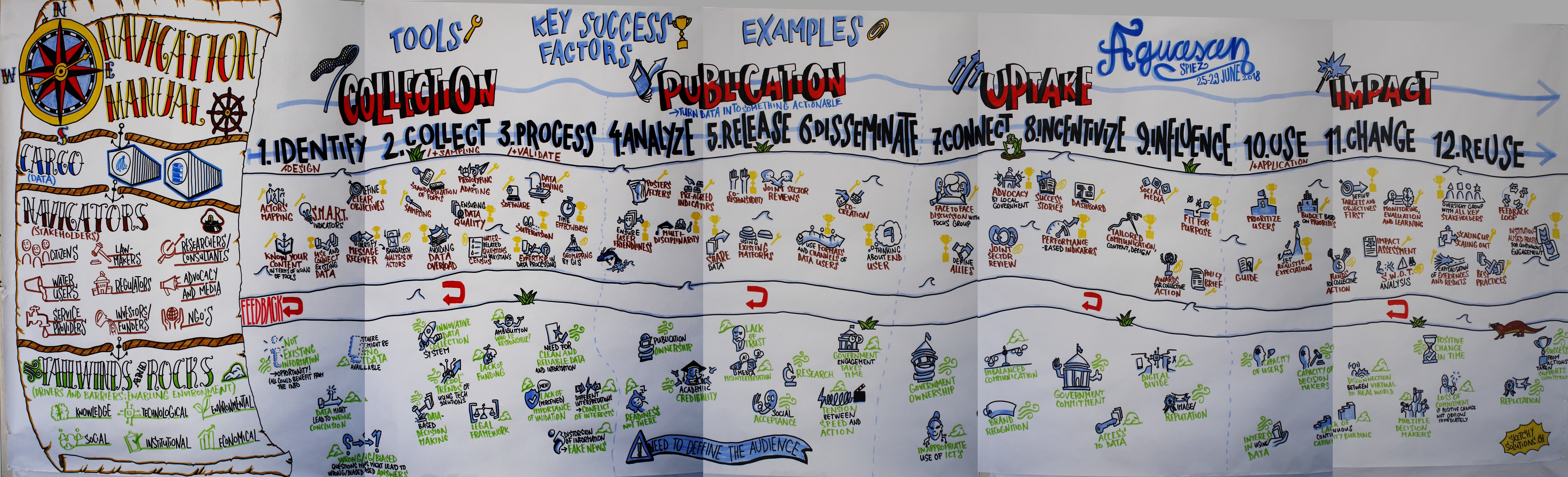
AGUASAN workshops aim to come out with useful output and what was proposed was a practical guideline that pulled together they key points from the presentations and discussions, around a common framework, which was beautifully illustrated on the wall of the plenary room at the end:


aguasan.jpg
Preliminary result of the AGUASAN workshop: the “Navigator manual” (click/tap to expand) designed by Filippo Buzzini (Sketchy Solutions)


I was not completely convinced by the linear conceptual framework that was proposed because what I have observed previously, and came out in the discussion and presentations, is that WASH systems are generally messy, non-linear processes. However, what was clear is that good quality monitoring, mapping and data is a critical “fuel” for driving positive feedback loops for short-term operational decision-making and longer term learning and adaptation cycles.

aguasan.jpg
A not-so-pretty graphical summary by your correspondent (click/tap to expand).

Despite Skat’s long association with the AGUASAN workshop this was my first workshop and I enjoyed it, and found it useful to have the opportunity to have a few days away from the distractions of emails, to focus on one topic with knowledgeable colleagues from all over the world and all over the WASH sector. The field trips also took us to explore some of Switzerland fascinating water history and modern challenges.

29323801718_3e5594b0cc_z.jpg
Your correspondent giving a lighthearted recap of key learning points (and Swiss World Cup win against Serbia) from Day 1 (Photo. J. HeeB)

Tandi Erlmann, Johannes Heeb and the Cewas team did a great job with the facilitation and event design and also thanks to SDC for their continued financial and thematic support to the event. As well as good for networking – it was also a good international crowd to be around with the World Cup going on!

The final report will be published on www.aguasan.ch where you can find outputs from previous workshops. Most of the presentations and background documents can be on the SDC ResEau website.  Photos from the event can be found here on Flickr.

Below are my sketch-notes of some of the presentations (click/tap to enlarge):

“Monitoring & Data for Rural Water Supplies” (click/tap to open PDF version)


Photos: Johannes Heeb (Cewas) – Main Image: group shot of workshop participants

You cannot manage what you do not measure; but should you measure what you cannot manage?

Countries have committed to reach SDG 6, providing universal access to their population with safely managed water supply services, with country specific targets. This is a process that governments, as duty bearers, need to manage. Therefore they also need to measure progress in that.
Continue reading “You cannot manage what you do not measure; but should you measure what you cannot manage?”

#RWSN @ #WWW : the presentations

RWSN co-convened two sessions at last week’s SIWI World Water Week in Stockholm and presentations are available to download:

WASHoholic Anonymous – Confessions of Failure and how to Reform

All presentations: http://programme.worldwaterweek.org/sites/default/files/panzerbeiter_lt_1400.pdf

Build and Run to Last: Advances in Rural Water Services

Continue reading “#RWSN @ #WWW : the presentations”

Sharing water point data is easier than ever using the new Water Point Data Exchange #WPDx platform

guest blog by Brian Banks, GWC

Over the past decade, a dramatic shift has taken place in the water sector that fundamentally changes the way that work is done. During this time, water point mapping around the world has accelerated at unprecedented rates. Dropping costs of technology and innovative software has enabled national governments, as well as funders, NGOs, academics, and others to inventory, share, and even monitor the work they have contributed to.

Continue reading “Sharing water point data is easier than ever using the new Water Point Data Exchange #WPDx platform”