There is a multibillion-dollar finance gap slowing progress towards universal drinking water services. Focusing on how governments are investing to address this gap, a new open access research article examines the different elements that contribute to this gap, and argues that the funds needed for operations & maintenance (O&M) of services should be considered differently from the funds needed for infrastructure. With the functionality and sustainability issues the sector faces, these differences are worth paying attention to.
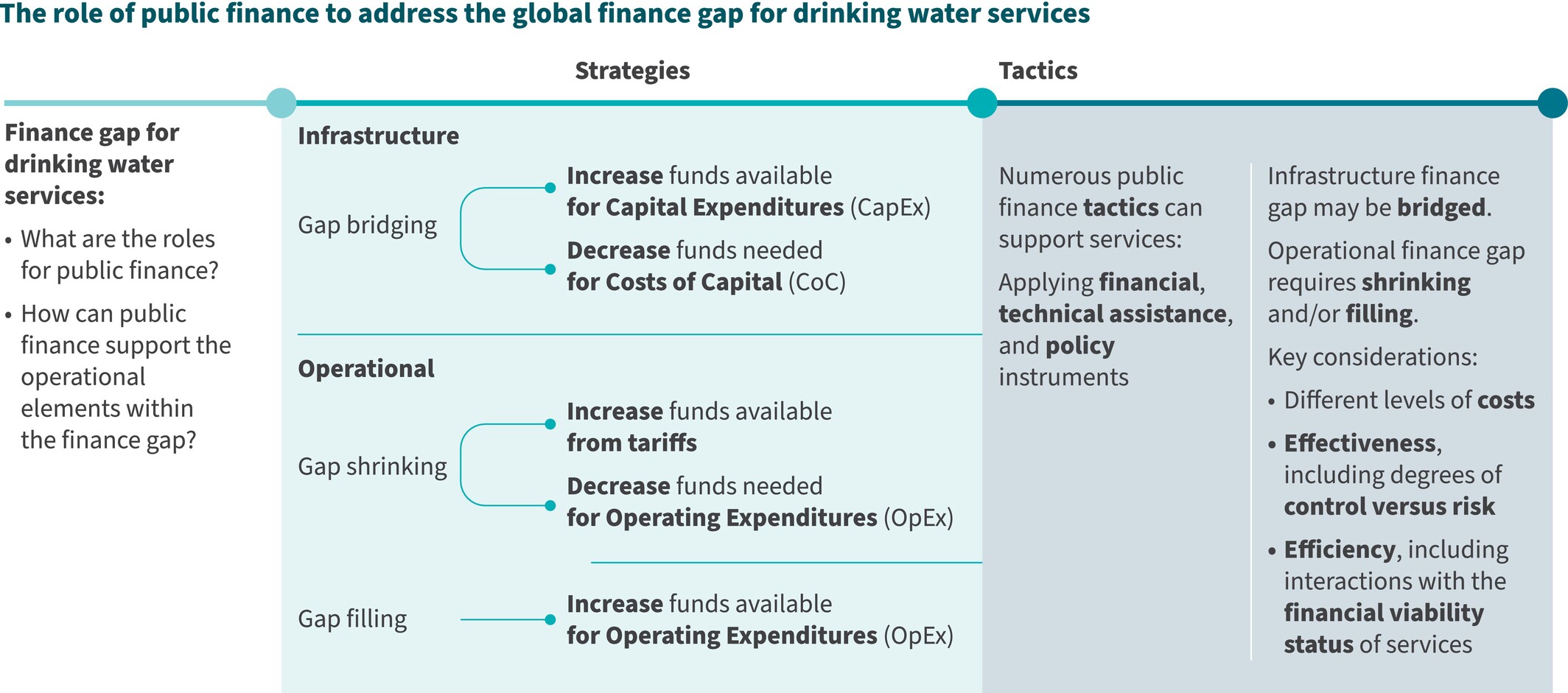
This research suggests a framework of five strategies for bridging, shrinking, and filling the finance gap for drinking water services, based on how the funds available from tariffs, taxes, and transfers compare to the life-cycle costs of services.
A framework for bridging, shrinking, and filling the finance gap for drinking water services (Nilsson, 2025)
Do we need a new framework?
Maybe, yes! Approaches for targeting gaps in infrastructure finance have been well studied, with many frameworks already available to guide actions and suggest new funding sources and mechanisms. However, the parts of the finance gap related to operational needs has been less analysed, even though there is an increasingneed foroperationalfinance.
The water sector continues to struggle with the financial sustainability of drinking water services. Most repayable finance sources are not suitable for operational costs, and so it falls to governments and service providers to see how to balance ongoing costs and revenues. This framework shows that, after construction, there are fairly limited options: increase tariffs, cut costs, and/or set up subsidies.
How can the operational finance gap be addressed, to keep water services flowing?
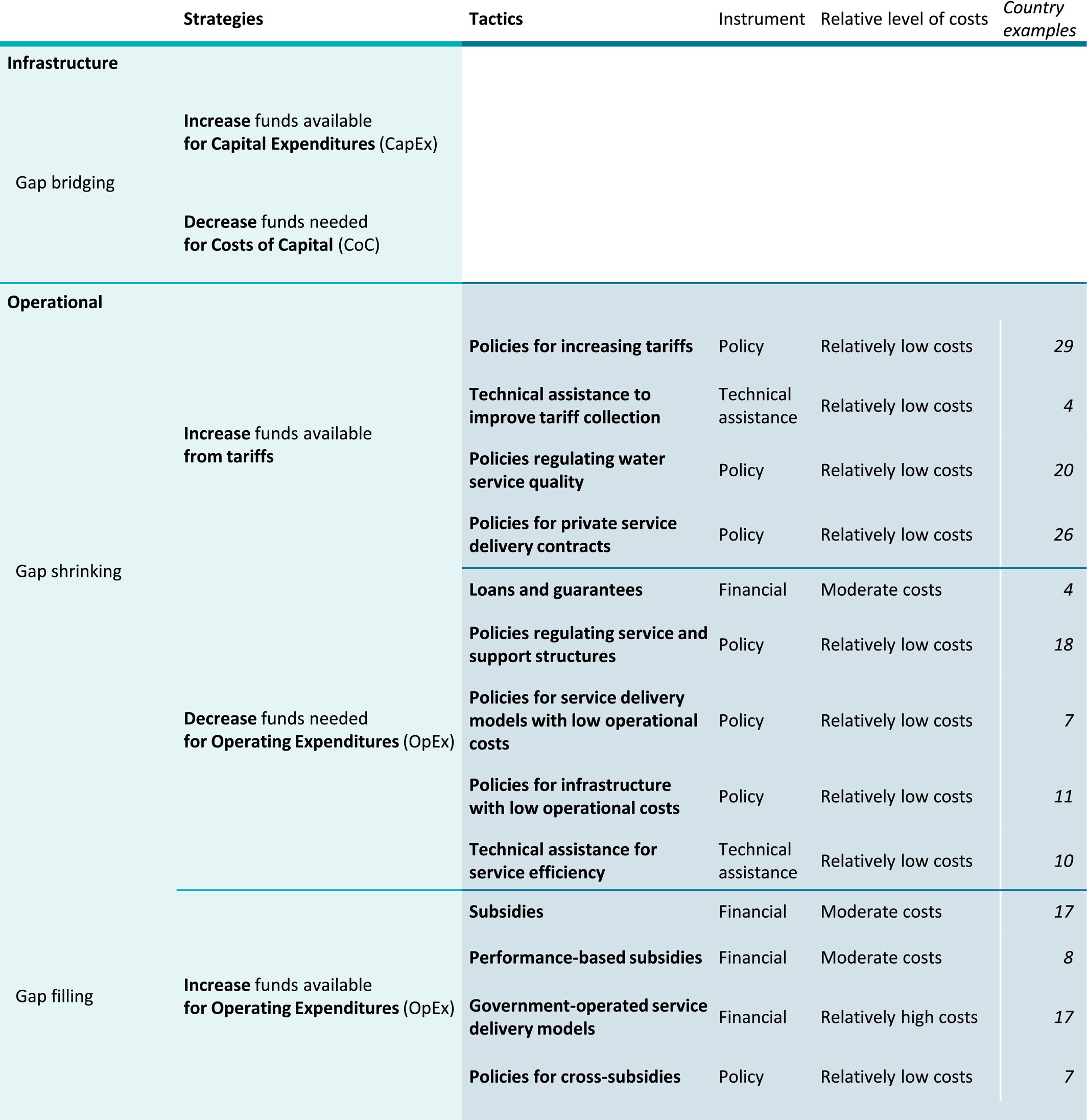
This research studied 213 examples of government investments for drinking water services, from 68 countries, to see how public finance is being used to address the operational finance gap. It found 13 tactics being used by governments from around the world, using financial, technical assistance, and/or policies, to:
increase funds available from tariffs, and/or
decrease funds needed for operations & maintenance, and/or
increase funds available for operations & maintenance through subsidies.
These tactics, and their investment requirements, are presented here:
Public finance tactics to support operations of drinking water services (Nilsson, 2025)
Which tactics are being applied in your areas, by governments, or by other sector actors? Which are not?
Are the tactics being used achieving what is needed, supporting services for more people, and services which are more financially sustainable?
Are there other tactics being used that are not captured here?
About the author: Kristina Nilsson is a governance and development professional with over a decade of experience working on water and sanitation service delivery in Africa and Asia. She is currently a PhD student at the University of Oxford, researching public finance support for rural drinking water services.
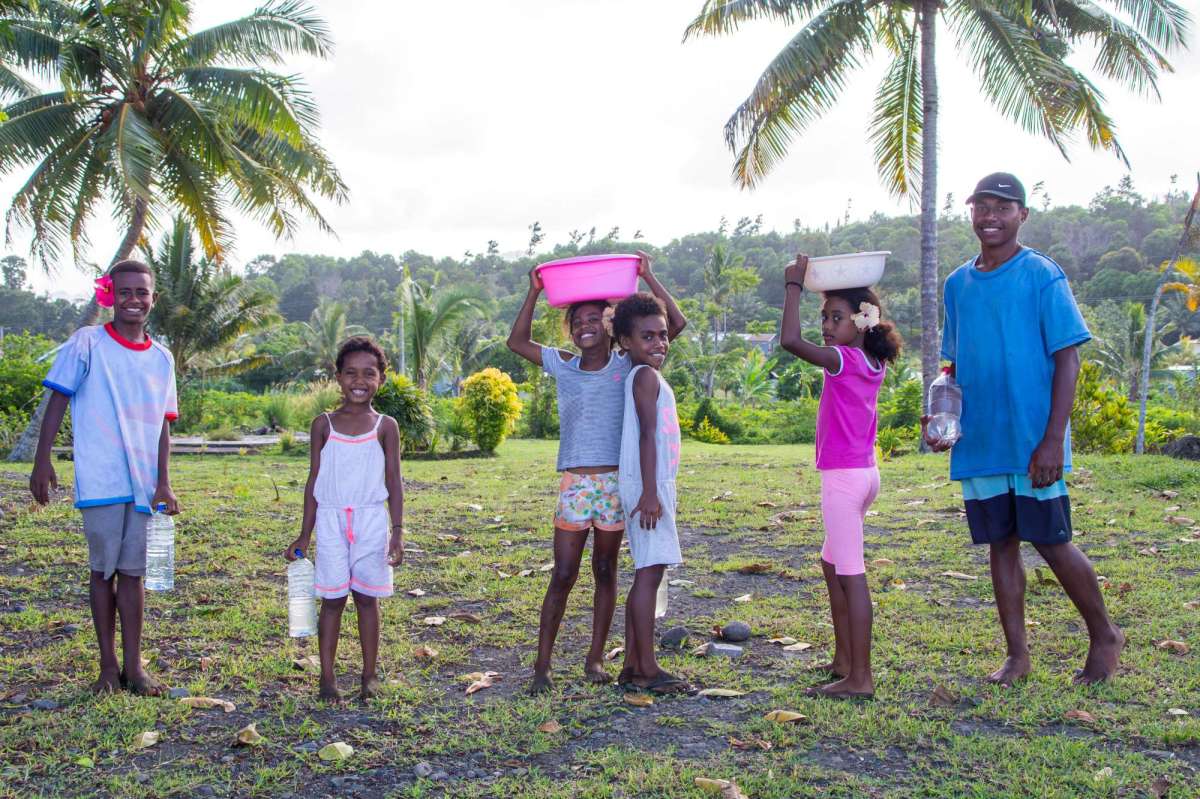
Access to safe and healthy drinking water is a fundamental human right. Yet for many island and rural coastal communities worldwide, this right remains fragile or unattainable. Fiji, an archipelago of more than 300 islands, vividly illustrates this challenge. Despite its tropical climate and abundant rainfall, freshwater resources in Fiji are increasingly under pressure. Over-abstraction, particularly in water-intensive tourism sectors, combined with the accelerating impacts of climate change, threatens the sustainability of water systems. Fiji’s experience reflects a universal struggle for water security in island nations and rural coastal regions.
Island environments are naturally constrained when it comes to freshwater. Unlike continental landmasses, islands have limited rivers, streams, and shallow aquifers. In Fiji, water is sourced from rivers, streams, natural springs, rainwater harvesting systems, and underground aquifers. These sources are highly sensitive to variations in rainfall, land-use changes, and contamination. Once compromised, alternatives are often scarce, making water security a central concern for both rural villages and small island nations.
“Sustaining access to safe and healthy drinking water is not just about scarcity, it is about how water is managed, shared, and protected.”
Over-Abstraction and Tourism Pressures
Over-abstraction has become a critical issue in Fiji. Population growth, urban expansion, and changing lifestyles have steadily increased water demand across the islands. Coastal zones and smaller islands are particularly vulnerable, where shallow freshwater lenses can be quickly depleted. Once over-extracted, these lenses may collapse or become contaminated with saltwater, leaving water unsuitable for consumption.
Tourism, a major pillar of Fiji’s economy, further intensifies pressure on freshwater resources. Hotels, resorts, and other facilities consume large volumes of water for swimming pools, gardens, laundry, and guest services. In many cases, tourist water use exceeds that of local residents. When regulation and conservation measures are weak, tourism can compete directly with community water needs, a challenge common to island destinations worldwide.
Climate Change and Extreme Weather
Climate change magnifies existing water challenges. Rising temperatures increase evaporation, reducing water availability in rivers, reservoirs, and storage tanks. Altered rainfall patterns have caused longer dry periods and more frequent droughts, disproportionately affecting rural and outer-island communities that rely on rainwater harvesting. During extended dry seasons, households often face water rationing or must rely on untreated sources.
Extreme weather events, including cyclones and floods, further threaten water systems. Floodwaters can damage infrastructure, carry debris and pathogens into freshwater sources, and overwhelm natural filtration processes. Sea-level rise also poses a long-term risk for coastal groundwater, as saltwater intrusion contaminates shallow freshwater lenses. Recovery, if possible, may take decades, underscoring the lasting impact of climate change on water security.
Health and Social Implications
Unsafe or unreliable water has serious health consequences. Limited access to clean water increases vulnerability to waterborne diseases, including diarrhea, typhoid, cholera, and skin infections. Children, the elderly, and immunocompromised individuals are particularly at risk. In rural areas with limited infrastructure, households often rely on untreated sources, further increasing health risks and placing additional strain on local healthcare systems.
Inequality in water access compounds the problem. Urban populations generally benefit from centralized treatment and distribution systems, while rural and outer-island communities rely on small, self-managed infrastructure such as rainwater tanks and natural springs. These systems are often outdated, poorly maintained, and highly susceptible to contamination.
Toward Sustainable Solutions
Fiji’s challenges reflect broader patterns among islands and rural coastal regions: limited freshwater resources, competing demands, climate change impacts, and unequal access to infrastructure. Addressing these issues requires integrated, multi-faceted solutions:
Investment in climate-resilient infrastructure to protect storage systems, pipelines, and natural water sources.
Community engagement and local management to ensure maintenance and equitable access.
Promotion of responsible water use across all sectors, particularly tourism.
By implementing these strategies, Fiji can move toward sustainable water management that balances economic development, environmental protection, and public health.
Sustaining access to safe drinking water is more than a development goal, it is a matter of survival, health, and dignity. Over-abstraction, tourism pressures, climate change, and social inequality threaten the long-term resilience of water systems. Protecting freshwater resources, investing in resilient infrastructure, and promoting equitable water management are critical steps not only for Fiji but for island and coastal communities worldwide.
“Ensuring safe drinking water for present and future generations is not only a matter of development, but a commitment to the survival and dignity of island communities everywhere.”
Save our Fiji is dedicated to addressing these pressing water challenges in Fiji and beyond. They work directly with local communities to improve water infrastructure, promote sustainable water management practices, and build resilience to climate-related impacts. By combining research, community engagement, and practical interventions, they aim to ensure that every island and coastal community has reliable access to safe, clean, and sustainable drinking water for generations to come. Save our Fiji joined the RWSN member organisations in April 2024.
by Tapio S. Katko, Jarmo J. Hukka, Petri S. Juuti, Riikka P. Juuti and Eric J. Nealer.
Illustrations: Pertti O. Väyrynen. Publisher: IWA Publishing, London.
Is bottled water better for you than tap water? Is the pollution created by wastewater treatment plants a major issue? Is privatisation the best solution for more efficient water use? These are just a few of the myths busted in Dispelling Myths About Water Services.
In any society, water and wastewater systems are of fundamental importance to the development of communities and the well-being of both people and the ecosystem. Unfortunately, this fact has been reinforced by the COVID-19 pandemic, by all manner of natural disasters, and by recent armed conflicts around the world. In such situations, clean water and sanitation are among the first things that need to be organised.
In this book, internationally renowned experts examine 21 common misconceptions regarding water supply and wastewater services, dispelling the myths by drawing on their global insights and avoiding technical jargon, while simultaneously raising questions of concern relating to water services.
Access to clean water and safe sanitation is essential for life. Without it, our time on this planet becomes dangerously short. People do not necessarily think about the challenges relating to water services, but the message is clear: to build sustainable water services, proper rules, accountable and responsive leadership, and well-informed stakeholders are vital, alongside resilient organisations and robust physical systems.
Originally published in Finnish, this English edition has been completely rewritten and includes examples and references from countries across the world. Original illustrations bring the content to life.
Whether you’re a water professional, policy maker, or environmental enthusiast, Dispelling Myths About Water Services helps sort the fact from the fiction regarding our most vital resource: water.
The book is freely available as an e-version: DOI: https://doi.org/10.2166/9781789064162 and a printed copy can be bought as well from the website for 20% off seasonal offer for the printed version by the code “DMAWS25”, Valid until 21st Dec 2025.
Blog by Jeff Tan, Aga Khan University – Institute for the Study of Muslim Civilisations (AKU-ISMC). Featured photo: Hunza Valley, Gilgit-Baltistan, Pakistan, Jeff Tan
The limitations of community-based management (CBM), and the conditions for its success, were identified as early as 1990 in a World Bank discussion paper. From very early on, it was recognised that communities needed ongoing external support from donors, NGOs and governments. However, management training, capacity building, technical input, financial assistance, and supportive policy and legislation necessary to create an “enabling environment” for successful community management rarely materialised. This raises a number of questions: Why has this external support not been forthcoming? Why has community management continued to be promoted despite the absence of support and lack of sustainability? Why has there been ‘a reluctance amongst academics and practitioners to challenge the CBM model’?
To answer these questions requires some appreciation of the wider discourse on development and in particular the anti-state rhetoric of neoliberalism that has sought to downsize, decentralise and ultimately bypass government. This has had the effect of fragmenting and hollowing out the state while at the same time prioritising markets and the private sector. Given that there is no profit to be made from delivering water services to low-income households that cannot afford to pay cost-covering tariffs, it is not surprising that previous state failure was replaced by market failure, with the private sector failing to step in to deliver water services.
One obvious solution would have been to address the sources of state failure, specifically underfunding, fragmentation and the loss of technical capacity. Instead of rebuilding state capacities, the distrust of, and ideological aversion to, the state has shifted the responsibility of water services from governments to local communities, built around the narrative of community participation, empowerment and self-help, with communities expected to take responsibility of their circumstances. It is hardly surprising then that community management is seen to enable ‘government officials and donors alike to abdicate responsibility for ensuring long-term sustainable water services’.
The recent turn against community management, not least by the World Bank, shows the persistence of CBM problems. But the Bank’s promotion of “professionalization” of water services as an alternative reflects a failure to examine the underlying tensions and problems in the CBM model and the wider delivery of rural water services, and reinforces an anti-state bias and blind faith in private sector participation. There are three structural tensions in the CBM model that have been noted in the literature and that need to be more cogently articulated.
The first tension is between access to water and cost recovery (a cornerstone to the sustainability of CBM), with low tariffs (to ensure access to water) unable to cover operating costs, let alone major repairs and capital refurbishment. Compounding this is the inability of households to pay already very low tariffs, with irregular, if any, tariff payments or collections.
The second tension is the long-term needs of water services and the short-term horizons of donors and NGOs. Only the state has a sufficiently long-term horizon to provide the indefinite support needed to sustain community management and ensure ongoing water services. But this added burden on the state for this comes at a time when the state in lower middle income countries (LMICs) is severely constrained financially and technically, having had fiscal discipline imposed on it and broken up and hollowed out in the name of decentralisation and localisation. If governments do not have the capacity to provide the so-called “enabling environment” to support community management, as has been the case since 1990, then a model that requires continued external support that is not forthcoming cannot be sustainable, “islands of success” notwithstanding.
Finally, and perhaps most significantly, the funding model for CBM is short-term, project driven (rather than programmatic or cross-sectoral) and fragmented, where the needs of water services are indefinite, with the choice being between reaching a greater number of underserved communities in the short term or serving fewer communities but with longer term support and greater sustainability. Longer-term support is especially needed because communities cannot even finance major repairs let alone capital refurbishment needed at the end of the lifespan of water infrastructure (typically 15-20 years) and to expand services to cater for population growth.
These structural features of CBM can be illustrated in the constraints faced by an otherwise successful delivery of clean drinking water through piped water networks to 459 settlements serving around 48,000 households and over 400,000 people under the Water and Sanitation Extension Programme (WASEP) in Gilgit-Baltistan, northern Pakistan. The challenges of sustaining and scaling up this textbook implementation of community management are reported in the results of a two-and-a-half-year British Academy-funded research involving a large-scale household survey of over 3,000 households, interviews with water management committees and a review of financial records, focus group discussions, an engineering audit and water quality tests.
Unlike qualitative and selective case studies, the combination of quantitative and qualitative analysis here presents important insights into the resilience but also limits of communities in sustaining water services, particularly given weak state capacities and the lack of external support. It also highlights the importance of “hardware” (engineering and water infrastructure) in sustaining water delivery, and best practices in the implementation and delivery of water services that can transcend some of the limitations of the CBM model.
The views and opinions expressed in this blog post are those of the author. They do not necessarily reflect the views of the Rural Water Supply Network (RWSN) or its Executive Committee.
Jeff Tan is a Professor of Political Economy at AKU-ISMC and was Principal Investigator on a British Academy grant on the sustainability and scalability of community water management in Northern Pakistan.
Trends come and go quickly in the WASH sector. When a new concept shows early signs of success, it is often promoted as the next big solution, packaged by development partners, donors, and foundations. These actors, in turn, push governments to adopt the latest approach, frequently triggering wide-reaching reforms with mixed results.
We have seen this cycle play out repeatedly: private sector participation, on-site sanitation, blended finance, carbon credits, and the list goes on. In rural water service delivery, the pattern is even clearer. Municipalities and local governments were once seen as the appropriate service providers. In the 1990s, the spotlight shifted to Community-Based Management (CBM). When the limitations of unsupported CBM systems became apparent, public rural utilities were pushed as a more “professional” solution. Today, Safe Water Enterprises (private companies heavily supported by international donors) are the rising stars.
These shifts are often driven more by the perceived failure of one model than by strong, scalable evidence of success from another. Governments are influenced to adopt new service delivery models, often initiating complex reform processes. Yet, the sector lacks solid evidence to prove that such reforms lead to better performance or more sustainable services.
A recent example comes from Ghana, where a now-concluded USAID-funded study sought to investigate this issue. The research compared three rural water service delivery models for piped schemes, aiming to identify what actually drives performance. This was especially relevant in a context where the Government of Ghana is increasingly backing service provision through the Community Water and Sanitation Agency, acting as a new rural public utility, while development partners strongly advocate for Safe Water Enterprises. Meanwhile, support for the still-widespread CBM model has all but disappeared.
Surprisingly, the study found small performance differences among the models. Performance outcomes were more closely linked to socio-economic context and the service provider practices than to the model itself. Although the findings are specific to Ghana, they raise a broader question: are we focusing on the wrong thing? Perhaps it is not about the model at all, but rather about how it is implemented and whether critical elements like professionalism, regulation, and accountability are in place.
This idea was reinforced in a recent webinar we hosted in April this year, where case studies from across the globe showcased how different models can succeed when implemented well and supported by an enabling environment.
Cambodia: Fully private rural providers invest in, operate, and maintain water systems, under government regulation and licensing.
Peru: CBM remains the dominant model in rural areas, but the sector is actively working to professionalize and regulate service provision.
Morocco: Public utilities manage rural service delivery as an extension of their urban mandates.
Senegal: A global best practice in public-private partnerships for rural water service delivery.
These examples show that success is not determined by the management model itself, but by the conditions in which it operates. Instead of chasing the next big trend, we should be focusing our energy and resources on strengthening the elements that matter most, regardless of the model. These include cost-reflective tariffs, regulatory oversight, accountability mechanisms, participation, professionalized staffing, and robust monitoring systems.
Let’s stop asking, “What is the right model?” and start asking, “What makes the model work?”
The UN WWDR 2026 shall serve as a vital resource, illustrating how global trends and phenomena are reshaping gender dynamics in societies around the world. The interplay between conflict, migration, and gender equity in WASH reveals stark realities. In regions afflicted by conflict and instability, women’s safety and access to essential services are severely compromised.
The plight of women in conflict zones is further exacerbated by migration. Women and girls face an increased risk of sexual and gender-based violence during conflicts. Yet, amid these challenges, women remain indispensable agents of change—actively participating in peace-building, conflict resolution, and post-conflict reconstruction. This resilience highlights the need to recognize and harness women’s potential for positive transformation in their communities.
Migration and its intersection and climate change also alters traditional gender roles and expectations, as families adapt to new environments; it presents opportunities for economic independence and education, empowering them to challenge restrictive gender norms. Still Migrant women often encounter exploitation, discrimination, and limited access to resources, underscoring the urgent need to address these barriers.
Corruption emerges as another formidable barrier to WASH and gender equity. It restricts women’s access to essential services and undermines their participation in leadership and decision-making processes, as demonstrated in weaponisation of water. U.N. Women has called for urgent action to protect Sudanese women and girls, emphasizing the need for accountability in addressing high levels of sexual violence and exploitation. “We cannot let Sudan become a forgotten crisis,” asserts U.N. Women’s Addou, highlighting the critical necessity for action in conflict-affected regions.
On my blog on Diversity in Water sector leadership I emphasise the concerning underrepresentation of women. A World Bank report highlights that less than 18% of the workforce in water utilities are women and that two-thirds of sanitation leaders are white according to a FLUSH LLC publication that I co-authored. This systemic inequity reflects deeper societal structures, suggesting that without diverse leadership, the water sector risks stagnation and failure in meeting SDG6 targets.
by Sean Furey, Director – RWSN Secretariat @ Skat Foundation
Rural Water, Sanitation and Hygiene (WASH) is such a local, personal, issue that does global-level exchange make sense?
At first glance, rural areas and communities worldwide seem too diverse for networking and knowledge exchange to be useful or meaningful. What does WASH for isolated hamlets in the Nepalese Himalayas have in common with a fishing village on the Peruvian coast or a small town in northern Nigeria? Quite a lot, it turns out.
When it comes to shear financial clout and convening power, Multi-lateral Development Banks (MDBs) are hard to beat, but even they have had mixed success with rural WASH – but there have been successes and they have recognised that they can learn from each other so that they can provide their client governments with the technical assistance and financial options to deliver sustained improvements. So, last year the relevant focal points from the African (AfDB), Asian (ADB) and Inter-American (IDB) met and agreed on a Call to Action with three priorities:
Information-based decision-making and rural WASH investments and service monitoring.
Institutional strengthening & coordination.
Rural sanitation.
From this, we organised a webinar mini-series drawing on their recommendations for case studies on each topic from each region.
Finding the common threads and bringing them together to make them stronger
This year, we took more steps to build an understanding and appreciation of the solutions that have the potential to transcend the variability of local contexts and be adapted. With growing interest, our colleagues at the World Bank also joined the small group and together we organised a special SIRWASH breakfast meeting and an open session on “Coordinating Rural Water Investments to Promote Security and Stability” with REAL-Water :
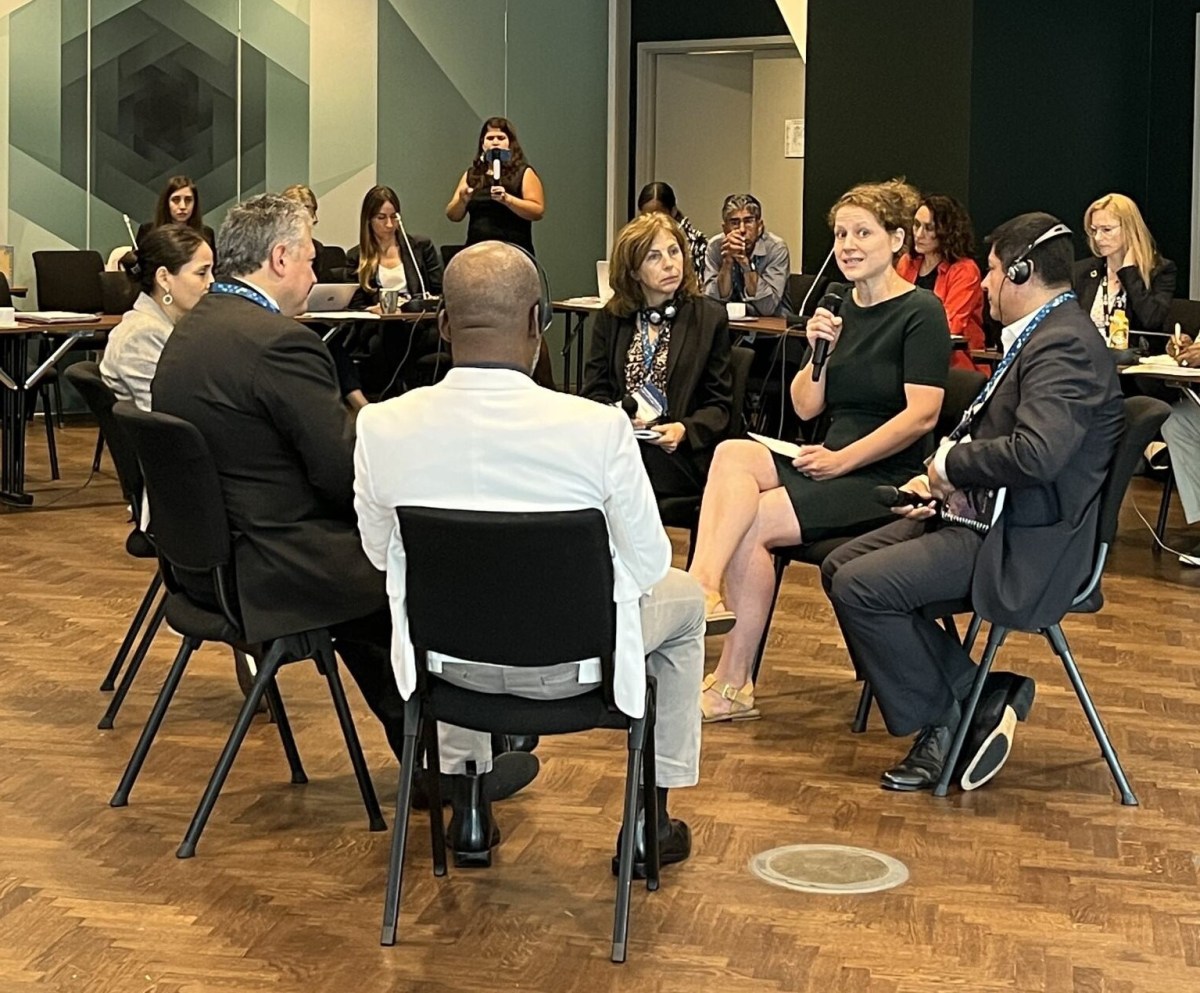
The SIRWASH breakfast meeting that followed was in the spirit of collaboration among countries in the global south, using knowledge sharing as a catalyst for innovative and sustainable solutions. It was attended by more than 40 representatives from countries (Haiti, Brazil, Peru, Chile, Nigeria and Uganda), multilateral banks, multilateral and bilateral agencies (SDC, AECID, SIDA, WHO, OAS, UNICEF), NGOs and philanthropists (including, One Drop, Water For People, Avina, Aguatuya, mWater, Global Water Center), as well as networks, partnerships and research (RWSN, SuSanA, WASH Agenda for Change, WASH Funders Group, SIWI, Uptime, the Aquaya Institute).
Using the “Fishbowl” method, participants exchanged their perspectives in an open and dynamic way on how strategic partnerships can increase impact in the sector. Discussions focused on two key questions:
1. How can technological innovations in rural WASH information systems be supported to be truly effective in decision making and incentivize scaling up?
2. What are practical solutions to improve the design and implementation of national rural WASH programs so that their benefits are sustained over the long term?
One of the central themes was innovation through sector information systems, a crucial tool for planning and managing water and sanitation services in rural areas. Three countries shared their experiences on how they have adapted and improved these systems:
Haiti highlighted the use of information systems for decision-making;
The importance of institutionalizing information at the national level and ensuring that communities participate in the validation and appropriation of data and decisions was emphasized.
In addition to information systems, the event underscored the need to integrate both technological and social innovations to improve rural services. Social innovations and behavioural change are essential for communities to take ownership of the systems and actively participate in their management and maintenance. Participants agreed that long-term sustainability is about finding the sweet spot between community-ownership/responsibility and external support.
The second critical issue addressed was the sustainability of rural water and sanitation services. Participants stressed that the successful implementation of these services cannot depend solely on initial investments in infrastructure. Innovative mechanisms need to be developed to ensure their financing and continued operation. The examples of Brazil and Nigeria were instructive, both countries demonstrating how the combination of effective governance and innovative financial models can ensure the operational sustainability of services:
Brazil presented its comprehensive implementation of their National Rural Sanitation Program (PNSR).
Nigeria highlighted the ways a results-based SURWASH programme is strengthening institutional capacity.
The Uptime Consortium shared their experiences and successes with Results-based Contracting on rural water service delivery across many contexts.
The discussion emphasized the need for functionality and quality indicators for rural services, linking reliable information to financial incentives for operators. This strategy can enhance the long-term sustainability of these systems. The working group concluded that collaboration is essential to ensure countries have reliable information for decision-making, aimed at improving the quality of rural services.r decision-making aimed at enhancing the quality of services in rural areas.
In the final discussion, consensus was reached on the need to create and maintain an enabling ecosystem for the development and sustainability of rural services. The great opportunity for development partners to join efforts and seek synergies, contributing technical and financial resources to this ecosystem in the countries was highlighted.
The event concluded with a clear call to action: all actors – governments, development banks, cooperation agencies, NGOs, networks and the private sector – must remain committed to financing and strengthening rural water and sanitation services. The MDBs will continue to work together on a concrete action plan to exchange and replicate successful and innovative experiences to ensure universal and quality WASH services in the countries.
Knowledge exchange is not just talk and powerpoint presentations, it is about building connections and trust between individuals and organisations, finding those common interests and encouraging co-creation of new insights and more sustainable solutions.
The symbolic activity organized by One Drop, where participants bonded to represent their intention to work together towards a common goal, was a powerful reminder of the importance of lasting partnerships. This symbolic gesture is just the beginning; it is essential to continue to scale up efforts so that the most vulnerable communities can access quality water and sanitation services in a sustainable and equitable manner.
Top-Down meets Bottom-Up
After this event, our partner Aguatuya convened an online meeting of Latin American WASH networks to encourage bottom-up exchange to complement our high-level approach. But we will follow that thread in the next post…
Many thanks to the large number of people involved, but in particular to Sergio Campos, Manuela Velasquez-Rodriguez and Cristina Mecerreyes at IDB; Diane Arjoon at AfDB, Vivek Raman and Tanya Huizer at ADB, Awa Diagne and Sarah Nedolast at the World Bank, Janine Kuriger at SDC, and to the wonderful RWSN/SuSanA team: Dr Aline Saraiva, Batima Tleulinova, Susanna Germanier, Lourdes Valenzuela, Paresh Chhajed, Chaiwe Sanderse and all the speakers and panellists for the webinars and sessions.
The sustainability of drinking water supply infrastructure remains a challenge in rural areas of low-and middle-income countries. Through this research to identify factors contributing to functionality, we analyzed monitoring data from ten non-governmental organization drinking water supply programs across nine sub-Saharan African and South Asian countries. Data were from 1,805 randomly selected water points, including tap stands, spring protections, rainwater collection systems, and hand pumps.
We found an impressive 92% of sampled water points constructed within the prior year were functional, versus only 79% of those constructed earlier (average 3.5 years, range: 1–12 years old).
Tap stands from piped water systems exhibited 74% lower odds of functioning than boreholes with hand pumps within the older construction sample. This disparity underscores the necessity of considering the suitability and reliability of various water supply systems in rural contexts.
As global efforts to expand piped water services align with international development goals, our results advocate for a nuanced approach. Higher water service levels offer undeniable benefits, but the accompanying technological, institutional, and financial requirements must be carefully weighed. Particularly in rural settings, where challenges of limited resources and infrastructure maintenance persist, comprehensive strategies are essential to mitigate risks and maximize the effectiveness of water supply interventions.
Read the full Open Access paper here:
Murray, A. L., Stone, G., Yang, A. R., Lawrence, N. F., Matthews, H., & Kayser, G. L. (2024). Rural water point functionality estimates and associations: Evidence from nine countries in sub-Saharan Africa and South Asia.Water Resources Research, 60, e2023WR034679. https://doi.org/10.1029/2023WR034679
Many countries are looking to expand rural water services and improve service levels for people living in small towns and rural areas by investing in small, decentralised piped water services. Francophone West Africa has a long history of delegating water services (usually piped) in small towns and rural areas to professional operators, both public and private.
The RWSN Secretariat in partnership with the REACH programme spent the last year investigating the experience of the delegation of rural water services and the drivers behind recent rural water policy reforms in several countries of francophone West Africa. We did a detailed desk review, and spoke to 25 experts in rural water sector in the region to understand why and how rural water policy reform happened, and what lessons can be drawn from their experiences in delegating rural water services to professional operators.
De nombreux pays cherchent à développer les services d’eau en milieu rural et à améliorer les niveaux de service pour les habitants des petites villes et des zones rurales en investissant dans des réseaux d’eau décentralisés et de petite taille. L’Afrique de l’Ouest francophone a une longue histoire de délégation des services d’eau potable (généralement des petits réseaux) dans les petites villes et les zones rurales à des opérateurs professionnels, qui peuvent être des associations publiques ou des opérateurs privés.
Le Secrétariat du RWSN, en partenariat avec le programme REACH, a passé l’année passée à enquêter sur l’expérience de la délégation des services d’eau et les moteurs des récentes réformes de la politique de l’eau potable en milieu rural dans plusieurs pays d’Afrique de l’Ouest francophone. Nous avons réalisé une étude documentaire détaillée et parlé à 25 experts du secteur de l’eau en milieu rural dans la région pour comprendre pourquoi et comment les réformes des politiques d’eau potable en milieu rural se sont produites, et quelles leçons peuvent être tirées des diverses expériences de délégation des services d’eau potables en milieu rural à des opérateurs professionnels.



 Rural Water Supply Network - blog