History of the Rapid Hand pump Corrosion Problems in Zambia and Potential Next Steps

Stop the Rot at ZAWAFE 2023 Zambia – 1/4

This blog is part of a four-part series covering the presentations given at the 11th Zambia Water Forum and Exhibition. The event, themed “Accelerating Water Security and Sanitation Investments in Zambia: Towards Agenda 2023 through the Zambia Water Investment Programme”, lasted three days. 

Our blog series takes a focused look at the presentations and discussions that revolved around “Addressing Rapid Hand Pump Corrosion in Zambia – Stop the Rot!”, which was co-convened by UNICEF and WaterAid,  together with Ask for Water GmbH and the RWSN, hosted by Skat Foundation. 

Cover Photo: Removal of corroding riser pipe in Hoima District, Uganda in 2012 (source: Larry Bentley). In 2018 the Government of Uganda issued a directive to prevent further use of galvanised iron riser pipes throughout the country.

First session:

History of the Rapid Hand Pump Corrosion Problems in Zambia and Potential Next Steps

In Sub-Saharan Africa (SSA), an estimated 200 million people rely on a handpump for their main source of drinking water. They most likely use about 700,000 handpumps (Danert, 2022). Although the popularity of other technologies is growing, handpumps are likely to remain important in the region for decades to come, particularly in areas that are remote or with low population density. Unfortunately, many handpump services perform poorly or fail prematurely due to technical or installation defects with the borehole or the pump, as well as weaknesses with operation and maintenance or financial constraints. 

In Zambia, it has been estimated that handpumps are the main source of drinking water for 19% of the urban and 32% of the rural population. It is worth to highlight that all metallic components that are submerged in water, or move in and out of water will eventually corrode, and so corrosion must be considered as part of the long-term maintenance of water wells with handpumps (or motorised pumps). 

About rapid handpump corrosion

Rapid handpump corrosion occurs when aggressive groundwater reacts with galvanised iron (GI) riser pipes and rods of a handpump, and the India Mark II in particular. The materials corrode, with the pumped water becoming bitter in taste, with an unpleasant smell and a rusty colour. This not only renders the water unfit for drinking from a user perspective but also considerably reduces the pump lifespan. In Zambia, the main cause of rapid handpump corrosion is contact between groundwater with a pH of less than 6.5 and GI pipes and rods. However, salinity is also a problem in some parts of the country and can result in rapid corrosion too. 

The use of alternative materials to GI, particularly stainless steel (SS) riser pipes and rods and uPVC rider pipes fitted with stainless steel connectors, can prevent rapid handpump corrosion. While rapid handpump corrosion was documented in West Africa in the late 1980’s ((Langenegger, 1989), and actions to prevent it have been taken in some places, the phenomenon still occurs in over 20 countries in sub-Saharan Africa. Zambia, with an estimated 22,000 handpumps in use, serving 32% of the population with their main drinking water supply, is among these countries. 

Figure 1: Soil reaction map (pH) map of Zambia, 2014. (Shitumbanuma et all, 2021)

Figure 2: Zambia’s Agro-Ecological Zones (1987) and the 10 Provinces (Makondo & Thomas, 2020

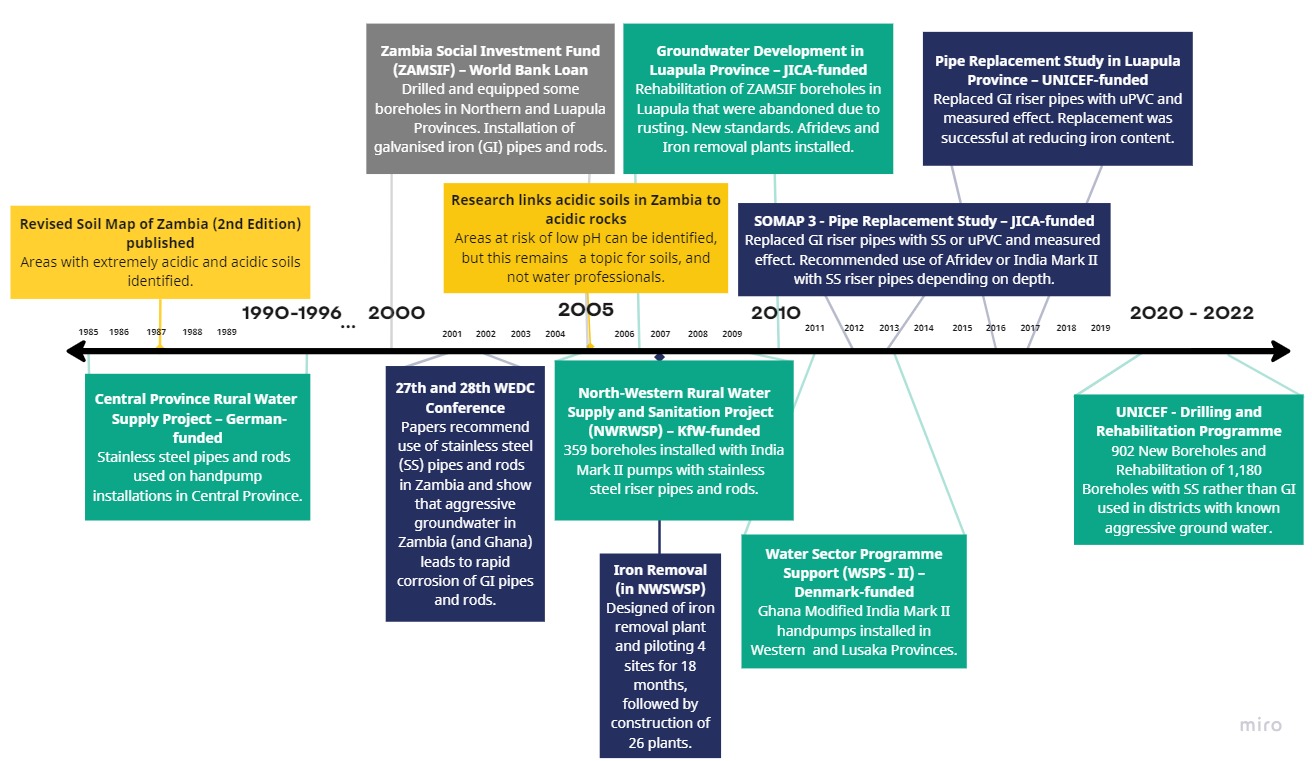
Figure 3: History of efforts in Zambia in relation to rapid handpump corrosion – Overview

In Zambia, while the geographical extent of aggressive water is not fully understood by water sector professionals, it has been documented and explained with respect to soils.  A Soil Survey by the Mount Makulu Research Station from 1990 presents the situation clearly, with extreme soil acidity in the north, and soil acidity in the central parts of the country. Further, in Zambia the traditional Chitemene – ‘slash and burn’ – method of cultivation in the high rainfall region has been used since time immemorial to neutralise low pH in soils in order to cultivate crops. Leaching from these highly acidic soils affects the pH of the groundwater. 

The problem of rapid corrosion in handpumps in Zambia has been known for more than 30 years (Pitcher, 2001) and is well documented, including in the following: 

  • The Central Province Rural Water Supply Project (CPRWSP) (1985 – 1996) – which installed 564 handpumps with stainless steel riser pipes rather than using GI to prevent rapid corrosion. 
  • The North-Western Province Rural Water Supply and Sanitation Project (2004 – 2009) – over 350 handpumps were installed with stainless steel riser pipes, also in response to the same issue. 
  • In Luapula Province under the Japan International Cooperation Agency (JICA)-supported Groundwater Development Project (2007 – 2010), some Afridev handpumps with uPVC riser pipes were installed. The project rehabilitated existing, corroded handpumps which the community had previously abandoned. Replacing the GI pipes with uPVC stopped the iron problem, indicating that in these boreholes, using iron pipes had been the cause of corrosion. Iron removal plants were also installed on some boreholes. 

However, while solutions were implemented at scale in the aforementioned projects in Central and North-Western Provinces, as well as the study in Luapula, the use of GI riser pipes and rods still continued in subsequent projects in the same areas.

Some stepbacks

  • There was a change in the ministry responsible for drilling works. The period 1985 – 1996 saw borehole drilling under the Department of Water Affairs, while the Department of Infrastructure and Support Services under the Ministry of Local Government and Housing took on this role after it had been created in 1995. 
  • National Guidelines for Sustainable Operation and Maintenance of Handpumps in Rural Areas (MLGH, 2007) includes neither aggressive water as a criterion for handpump selection nor the use of stainless steel riser pipes, and so the use of GI pipes in aggressive water as the cause of the ensuing rapid corrosion was in effect further supported. 

Initiatives undertaken in the last 10 years

  • Under the SOMAP 2 project (2012 – 2013), the JICA-supported programme carried out pipe replacement of GI at 20 sites in four provinces (Luapula, Copperbelt, Central and the North Western) whereby GI pipes were removed, the boreholes flushed and then installed with uPVC pipes. The replaced handpumps performed well without the water turning rusty, and the communities continued to draw water from them, whereas previously they had been abandoned. 
  • UNICEF also carried out pipe replacement in Mansa and Milenge districts of Luapula Province. In the study, India Mark II handpumps GI pipes at 45 sites were replaced with uPVC riser pipes. After the pipe replacement of GI riser pipes, the community used the handpumps that had previously been abandoned, with unsafe water sources being used instead. The pipe replacement study was successful, with the water users returning to previously abandoned boreholes which had clear, rust-free water. 
  • There is some evidence of other projects and organisations starting to use either stainless steel riser pipes, or uPVC riser pipes with stainless steel connectors in their projects, but documentation is limited. While stainless steel riser pipes have been used effectively, there are also some outstanding technical issues – particularly in relation to the removal of narrower diameter riser pipes, which require suitable tools that are not in the standard India Mark II toolkit. Further, the use of uPVC pipes has also been found to be problematic, as they need to be cut on removal and cannot easily be re-threaded. However, at least one NGO in Zambia has been using an alternative, comprising uPVC with stainless steel couplers which is available on the Zambian market. A further complication is that some parts of Zambia appear to exhibit naturally occurring iron. Tests are available to determine whether iron is naturally occurring or a result of corrosion, but there is no comprehensive map to indicate areas at risk of high levels of geogenic iron.

While stainless steel riser pipes have been used effectively, there are also some outstanding technical issues – particularly in relation to the removal of narrower diameter riser pipes, which require suitable tools that are not in the standard India Mark II toolkit. Further, the use of uPVC pipes has also been found to be problematic, as they need to be cut on removal and cannot easily be re-threaded. However, at least one NGO in Zambia has been using an alternative, comprising uPVC with stainless steel couplers which is available on the Zambian market. A further complication is that some parts of Zambia appear to exhibit naturally occurring iron. Tests are available to determine whether iron is naturally occurring or a result of corrosion, but there is no comprehensive map to indicate areas at risk of high levels of geogenic iron.  Despite all of the efforts to date, and notwithstanding the widespread nature of rapid handpump corrosion of GI riser pipes and pump rods, the problem still persists in 2023. 

Potential Next Steps for GRZ / International Donor Community / Universities 

  1. Revise the National Water Policy to include aggressive groundwater in community boreholes 
  2. Restrict Types of Handpumps to Certain Regions. 
  3. Enact a Law and a Statutory Instrument on Aggressive Groundwater in Community Boreholes. 
  4. Incentivise the private sector for provision of corrosion-resistant pipes and rods 
  5. Regulation of Quality of Handpumps by Zambia Bureau of Standards. 
  6. Standardise Handpumps Used in Zambia. 
  7. Further studies and replacement of galvanised iron riser pipes. 
  8. Further Research Studies on the phenomenon of naturally occurring iron in ground and surface water and 
  9. Research Studies on Saline Water in Western Province

You are invited to access the presentations HERE, along with the session’s concept and the study report:  Nkhosi. J and Danert, K. (2023). ‘Stop the Rot: History of the Rapid Handpump Corrosion Problem in Zambia and Potential Next Steps. Action research on handpump component quality and corrosion in sub-Saharan Africa’. Ask for Water GmbH, Skat Foundation and RWSN, St Gallen, Switzerland. https://doi.org/10.13140/RG.2.2.27489.28006.

If you would like to dive deeper into the enriching exploration of water challenges and solutions through the Stop the Rot initiative, visit this page.

About the author:

 Javan Nkhosi presenting at ZAWAFE 2023

Javan Nkhosi is a Zambian water professional. He has worked in the rural water sub-sector for more than 25 years on many water supply projects funded by the government, NGOs and donor agencies as a private consultant across Zambia. He has a passion for improving water supply to the unreached areas of rural Zambia. He holds a Diploma in Agricultural Engineering from NRDC, Lusaka, Advanced Diploma in Water Engineering from the Copperbelt University and an MSc in Project Management from the University of Lusaka. He is a Registered Engineer with Engineering Institute of Zambia (EIZ) and also a member of the Association of Consulting Engineers of Zambia (ACEZ) , an affiliate of the International Federation of Consulting Engineers (FIDIC). 

References:

In Memoriam: Mansoor Ali

Mansoor Ali, an active early member of the Hanpump Technology Network (HTN), recently passed on.

Main Photo: 5 June, 2003: HTN Meeting at Durban – Vishwas, Raj, Mansoor (R K Daw)

by Raj Kumar Daw

Summer, 1973, Groundwater Surveys & Development Agency – GSDA, Pune had just been created and was acquiring its drilling rigs. The founding Director of GSDA, Dr. Venkataraman, constantly raided the NGOs for whatever he could get. He sent me word that he was coming to Vadala. I was trying my first attempt at rehabilitating an abandoned bore well adjacent to our workshop. The work had gone well. Dr. Venkataraman arrived, passing through Geological Investigation Team, Ahmednagar, headed at that time by Sarma Nidamarthy. Sarma had sent two of his staff with Dr. Venkataraman. Gautam and Mansoor.

That was the first time I met Mansoor.

Continue reading “In Memoriam: Mansoor Ali”

In Memoriam: Ken McLeod – India Mark II development lead

en McLeod, who died of cancer in Cairns, Australia, on January 23rd at the age of 88, was recruited by Unicef to support India’s village water supply programme from 1974-1978, and played a pivotal role in the development of the India MK II hand pump.

by Rupert Talbot (former UNICEF and past Chair of HTN/RWSN)

Remembering Ken

Ken McLeod, who died of cancer in Cairns, Australia, on January 23rd at the age of 88, was recruited by Unicef to support India’s village water supply programme from 1974-1978, and played a pivotal role in the development of the India MK II hand pump.

The Government of India’s fourth, five year development plan (1969-1974) envisaged the ambitious goal of providing drinking water in the hard rock, drought prone regions of the country, using innovative down-the-hole-hammer drilling and deep well hand pump technology. Drill rigs were to be imported by Unicef and locally made, cast iron hand pumps, supplied and maintained by Government. In 1974, at the end of the plan period, hand pump surveys concluded that 75% of some 40,000 installations were not working. The viability of drilling and hand pump technology was in question and there was the real prospect of UNICEF, the Government of India’s main partner, withdrawing support. The programme was in serious crisis.

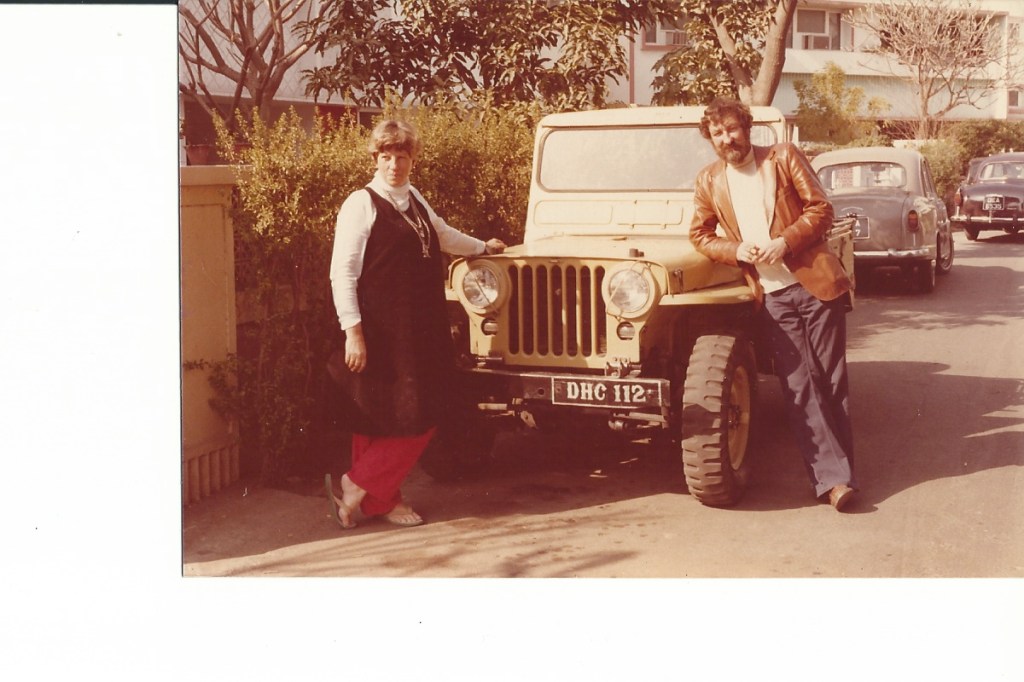
Ken McLeod, his 1942 Jeep, and Myra who designed the first India MK II hand pump poster, New Delhi, 1976 (Photo: Rupert Talbot)

Water well drilling was virgin territory for Unicef in the early 1970s and Unicef’s Executive Board had been divided over the decision to invest in such costly technology in the first place. It was now faced with the hard option of either scrapping the programme or keeping faith. It was a close run thing. Fortunately, the ‘pro’ lobby won with the eminently wise decision to halt the supply of drill rigs until the hand pump problem was fixed. Which is where Ken McLeod comes in.

Ken was a pragmatic, no–nonsense, straight talking, tell-it-as-it-is Australian with a diverse engineering background which ranged from marine and civil engineering to blast hole and water well drilling with down-the-hole-hammers. He had an innate sense of what would probably work and what wouldn’t. Obstinacy was also a hallmark. A serious asset as it turned out. Once he had made up his mind it was difficult to persuade him otherwise. And he had a droll sense of humour. His repertoire of stories and anecdotes are legendary within the water well fraternity. It would seem that seriousness of purpose combined with good humour are prerequisites for successful development enterprises. Ken had both these qualities in spades.

Over the course of the next 4 years it fell to Ken to identify, coordinate, argue with and cajole, myriad organisations and individuals to develop what became known as the India MK II hand pump. This was an extraordinarily complex, collaborative venture, involving pioneering NGOs in Maharashtra, birth place of the fabricated steel Jalna, Jalvad and Sholapur pumps, spearheaded by Raj Kumar Daw and Oscar Carlson (names participants in the RWSN Sustainable Groundwater Development Forum will be familiar with); WHO, who were independently trying to develop their own cast iron ‘Bangalore Pump’; The Government of India, whose programme was in dire straits and who were being prevailed upon by the country-wide hand pump industry to continue with the supply of their cast iron products (‘junk pumps,’ in McLeod Speak); and an engineering enterprise, Richardson and Cruddas, a Government of India undertaking tasked with making prototype and then production pumps. It took a McLeod to handle all of that.

Ken McLeod, Arun Mudgal (Richardson and Cruddas) and Rupert Talbot, MK II test area, Coimbatore, 1975. A ‘what to do ?’ moment after experimental cylinders had failed. (Photo: Rupert Talbot)

It is getting on for 50 years since it was eventually agreed by all parties that the Sholapur pump would form the basis of a new design and we were able to make and test the first dozen prototypes under the deep water table conditions of Coimbatore, Southern India. The fact that the India MK II then went successfully into mass production was largely due to Ken’s clarity of vision, direction, smart technical choices and perseverence.

I spoke with Ken for the last time two weeks before he died. We talked of those heady days of trying to get the MK II programme off the ground, of the internal arguments, external battles and technical problem solving in the field and in the factory.

His voice was strong and his mind as clear as a bell as he recalled people, places and events in great detail and he spoke warmly of those free spirits with their out of the box thinking who strove to make better hand pumps.

He was amazed to learn that there are now several million MK IIs in India alone and that it is exported to 40 or more countries. But hugely disappointed that the third party quality assurance procedures set up in his day and honed over the years to become the corner stone of the MK II programme under Ken Gray, had been allowed to slide back and that MK II look-a-like ‘junk pumps’ are being exported from India to Africa. That, we agreed, is a great tragedy.

There were many brilliant, dedicated people involved in the development of the India MK II. Ken never claimed any credit for it himself, but we all know who led the charge. It wouldn’t have happened without him. He was the right man in the right place at the right time. It needed his force of personality, tough and uncompromising ways, solid understanding of technical issues and absolute determination to get the job done in the face of industrial strength, bureaucratic wranglings. Aussie grit personified.

After Unicef, Ken McLeod worked with Shaul Arlossoroff and his UNDP-World Bank Hand Pumps Project, initially based in Nairobi then out of Australia, spending much of his time in China where I have no doubt he brought the same skills and energy to bear as he did in India.

Pragmatic and stoic to the very end he told me he hadn’t got long and was resigned to being on the ‘home stretch’ as he called it.

No funeral for Ken. No grave, no head stone, no epitaph. He wanted none of that. Instead, he has the lasting legacy of the India Mark II hand pump itself. Millions of them in fact.

Kenneth Robert McLeod, 1932 – 2020

RIP

Rupert Talbot
RWSN
26/1/20

Achieving Professional and Sustainable Drilling in Madagascar? Yes, we can!

Guest blog by Charles Serele, UNICEF Madagascar

As part of its Water, Sanitation and Hygiene (WASH) program in Madagascar, UNICEF is committed to supporting the Ministry of Water, Sanitation and Hygiene (MWSH) to build the capacity of the drilling sector. With this in mind, UNICEF organized a training on “Drilling Techniques and Supervision” in collaboration with the MWSH. The training targeted various stakeholders in the water sector, including government departments, drilling companies and consultancy firms who manage water supply projects, supervise or drill boreholes.

The training was held in Antananarivo (Madagascar) and organized in three different sessions of three days each, from February 7th to 23th, 2018. Fifty-four participants, including fifteen women attended the training course. The training was facilitated by Charles Serele, an experienced WASH Specialist from UNICEF Madagascar.

madagascar

To enhance individual knowledge and ensure sharing of experiences among participants, the overall approach used to deliver the course involved a mixture of lectures, interactive discussions, group exercises and presentation of drilling videos. Extensive reading materials from RWSN and UNICEF were shared along with exercises to be carried out by the participants.

The course participants actively engaged in the discussions and group activities. The training provided an opportunity to learn from each other and to reflect on what can be improved.

Course Modules

1.      Professionalization of the drilling sector

2.      Methods of borehole siting

3.      Construction of boreholes

4.      Supervision of boreholes

5.      Management of drilling data

The course review showed that participants’ technical knowledge in borehole drilling and supervision greatly improved. Participants also expressed their satisfaction with the course content and the relevance of the topics that were covered.

Forty-five participants (83%), including fourteen women passed the evaluation test conducted on the last day of the training. During the official closing ceremony each successful participant received a poster on cost-effective boreholes, in addition to a certificate.

As a next step, a field-based training should be organized to better illustrate best practices in drilling professional and sustainable boreholes.

Feedback2

madagascar2

Additional resources


The training course was facilitated by Charles Serele, UNICEF Madagascar and organized under the supervision of the Chief of WASH, Silvia Gaya and with the support of the UNICEF WASH team. For additional information, contact UNICEF Madagascar on antananarivo@unicef.org.


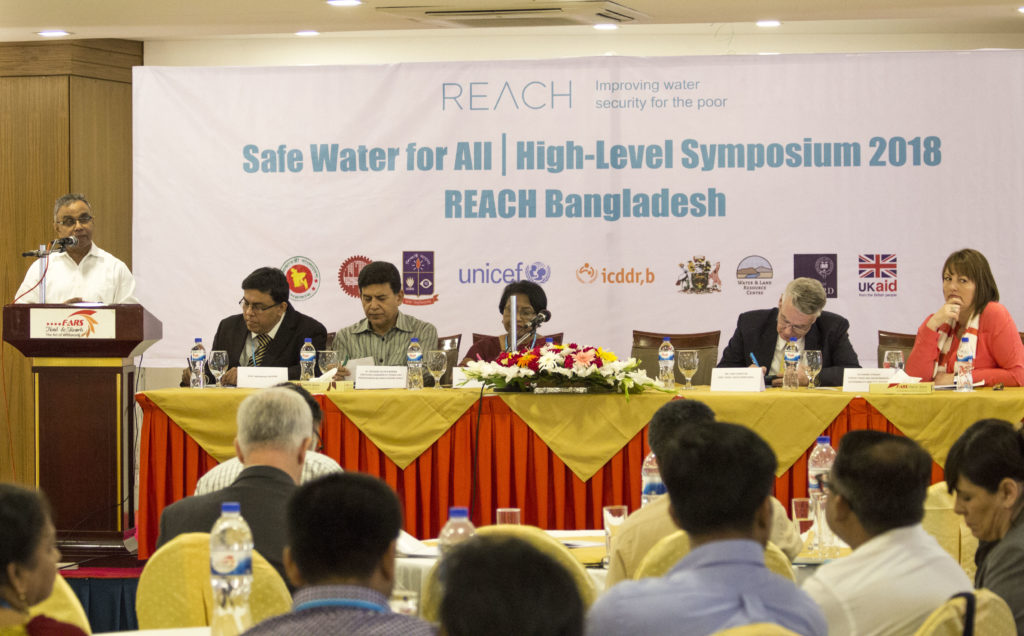
Safe Water for All: REACHing everyone in Bangladesh

by Dr. Rob Hope, University of Oxford, Prof. Mashfiqus Salehin, Bangladesh University of Engineering and Technology and Dara Johnston, UNICEF Bangladesh , re-posted from REACH

A large concrete pipe belches untreated sewage into the Buriganga River in Dhaka, whilst men wade through the water to shift aggregate to construct more buildings for more people. The riverbanks team with life and colour as hospital bed sheets dry after being recently washed in the river, bamboo poles float-in-waiting for the next tower block and mountains of fresh fruit lie ready for sale in nearby markets while countless children play without a care in the water.

Continue reading “Safe Water for All: REACHing everyone in Bangladesh”

Grown-up finance for the rural water sector

The challenge of achieving the SDGs is upon us and with this concrete and short-term objective, the sector is finally taking the issue of financing more seriously, which is a very good thing but not before time. Whilst a few years ago finance was the privilege of a selected few, everyone is now talking about it; however, whether this is a case of better late than never still needs to be proven.

by , re-posted from Aguaconsult with thanks

The challenge of achieving the SDGs is upon us and with this concrete and short-term objective, the sector is finally taking the issue of financing more seriously, which is a very good thing but not before time. Whilst a few years ago finance was the privilege of a selected few, everyone is now talking about it; however, whether this is a case of better late than never still needs to be proven.

Last week, I chaired with interest the RWSN webinars on “grown up finance” for rural water supply. Kelly-Ann Naylor (UNICEF), Catarina Fonseca (IRC WASH), Sophie Trémolet and John Ikeda (World Bank) and Johanna Koehler (Oxford University) gave great presentations and here are my few take aways from the discussions:

The magnitude of the challenge is huge and greater than we probably think. We often hear about the figure of USD 114 billion to achieve SDGs 6.1 and 6.2, but this is only part of the story. This figure covers investment and maintenance of new services, but excludes the crucial maintenance of existing services and the broader sector support.

We know there is a huge funding gap and the current finance model will not fit the bill. Official Development Assistance (ODA) has not increased as much for WASH as it has for other sectors and concessional finance as well as domestic investments only accounts for a fraction of the required investments. The sector has the potential to attract other sources of finance, but we need to take a few steps.

We need to have an honest conversation about the exact magnitude of the challenge at national and district level to support planning and budgeting. This is taking place at national level as part of the SWA process in some countries, but only partially at district level. More robust data on service levels as well as cost of services, which are currently insufficiently researched, can help us in this direction, but we need to move faster.

We need to get better at understanding budgeting processes and supporting strategic multi-year budgeting both at national and district levels. Most countries are not very good at this at the moment and it has to change.

We need to advocate beyond the WASH sector and target more important political decision makers – Ministries of Finance and even the office of the president) to prioritise domestic investment in WASH and increase it through a larger tax base and increasing tariffs. Again, evidence will take us a long way in bringing politicians round the table.

We need to look at other sources of finance, particularly private finance to complement existing funding sources. Making the sector more attractive to private investment will be a necessary first step, but this will hinge on Governments playing a crucial role in strengthening the enabling environment and de-risking the sector. ODA, currently crowding the sector will need to focus on the riskiest segments and leave space for private investments to come in (e.g. stop lending to urban utilities and focus on rural water supply). Assessing sector entities’ performance and risk profile will be a necessary first step.

We need to start experimenting with innovative “blended finance” models, learn from them and adjust. Examples are already out there from Benin, where subsidised concessions are being tested; but also from Kenya and other countries.

After decades of ODA dependency, the WASH sector is slowly opening up to the real world of finance to reach its ambitious targets. This means being transparent and accountable, providing evidence of performance and better understanding what will incentivize the commercial finance world. A huge task ahead and surely a dramatic and positive change in culture!

Photo: Inspecting community-level financial records in Tajikistan (S. Furey)

What’s happening in RWSN?

So this week, Kerstin Danert , Dotun Adekile and Jose Gesti Canuto are in Zambia running a “Procurement, Contract Management and Costing and Pricing of Borehole Projects” course with 40 water sector professionals as part of the RWSN collaboration between Skat and UNICEF on cost effective boreholes.

In Perú, The World Bank and SDC have been running a RWSN side event on rural water supply at this year’s Latinosan conference. This is first of two preparatory meetings (the second will be in Bangkok in May) for the 7th RWSN Forum, which will be 29th Nov – 2 December 2016

The World Bank, IRC, WaterAid and UNICEF will be actively involved in next week’s SWA High Level Meeting of WASH sector Ministers in Addis Ababa helping to make sure that rural water (and indeed sanitation and hygiene) become a high political priorities on government agendas and budgets.

and finally, World Water Day is on 22nd of March, so you have any rural water stories to share, then get in touch.

Funding opportunity – Water Security

Happy New Year!

Let’s start 2016 with a bang:  a call for expressions of interest (EOIs) for ‘Catalyst Grants’ which are commissioned under the REACH programme.

Dr Katrina Charles explains the REACH Catalyst Grant process
Dr Katrina Charles explains the REACH Catalyst Grant process (click picture to see YouTube video)

These Catalyst Grants of between £10,000 and £50,000 each are designed to explore novel approaches to water security and poverty research and policy that complement the core research conducted by the REACH programme. These grants will promote the co-production of effective tools and technologies relevant for and adopted by policy makers, practitioners, civil society organisations and enterprise.

There are three themes for this call:

  1. Water security for vulnerable people
  2. Water security risk science
  3. Water security partnerships.

Continue reading “Funding opportunity – Water Security”

“Your challenges are our challenges”, reflections from Oklahoma, USA

Today I write from Oklahoma, USA, having just come to the end of the two and a half day University of Oklahoma 4th biennial WaTER Conference.  I had the honour of being one of the keynote speakers at this event, which was attended by over 170 people from 27 countries. It has been an extremely worthwhile experience on many fronts.

There is a growing interest in water supply and sanitation in “developing nations” in the USA.  The Senator Paul Simon Water for the Poor Act 2005 seems be one of the catalysts for this change.  Over the past week I have engaged with numerous undergraduate and graduate students from the University of Oklahoma, Emory University, Mercer University and other US institutions. They are learning about the realities of millions without adequate water supply or sanitation as well as undertaking research. These students want to make a difference.

I was particularly touched by the opening speech of Dr Jim Chamberlain who reflected on the realities today in the USA, where there are people without adequate water supply.”your challenges are our challenges” he observed. He went on to mention common water quality and resource issues between here and other parts of the world.   And he was talking about Oklahoma today – a city that is expanding beyond the reach of its piped water supply network. I have learned about people in this State and more widely in the USA who are not connected to a piped water supply or sewerage system. They mostly rely on their own private boreholes, some hand dug wells, and septic tanks. What was particularly surprising though is that as in Lagos, Lusaka or Kampala, up-to-date statistics on the numbers of wells and population depending on them are lacking.  And private well regulation, including water quality testing falls between the cracks and is beyond the current remit of the US Environmental Protection Agency.

My keynote was entitled Sustainable Groundwater Development in Africa: More than Engineering. I tried to present an overview of some of the groundwater development opportunities and challenges of the African continent. The presentation was well received, in particular reflections on the diversity of the African continent, both above and below ground, as well as the size of Africa. Few people are aware that Africa is larger than the USA and China and a considerable part of Europe put together.

Dr David Sabatini of the Water and Technologies for Emerging Regions (WaTER) Centre asked all presenters to be mindful of a very broad audience, from anthropologists to engineers, from first year undergraduates to seasoned experts.  I tried my best, also aware that there would be people in the audience who had never been to Africa in their lives, alongside scholars and professionals from the continent.  And so we journeyed together from the phenomenal expansion of manual drilling in Nigeria and elsewhere, to the challenges of trying to escape poverty with irrigated agriculture to geology (including the continent’s mineral resources and resource curse), then onto hydrogeology, urban groundwater and finally a vision for future policy and implementation.

As a keynote speaker it was rather humbling to present the fact that the first continental estimates of the quantity of groundwater resources in African were only published three years ago; and to explain that very few African countries have good quality hydrogeological maps and studies. Having worked in rural water supply for seventeen years now, I scratch my head to find defendable reasons for the lack of organised and reliable drilling logs and groundwater data despite decades of development projects from the water decade through the MDGs.

However, I was relieved to present the work supported by UNICEF, WSP, UKAid and USAID over the past ten years to provide guidance for drilling in the form of documents and films; to share that UNICEF, together with WaterAid and Skat has an ongoing collaboration to try and raise the professionalism of both manual and mechanised drilling. And of course to recommend the ongoing UK-funded research to enable sustainable use of groundwater for the benefit of the poor – UPGro.

Undergraduate students ask very pertinent questions. The frankness of potential newcomers to the Water, Sanitation and Hygiene (WASH) and Water Resources sector is very refreshing and I hope that they will join in solving some of the problems that those of us who have been around a bit longer are struggling with. But to do that, they need to be able to work in this field. Care’s Peter Lochery and winner of the 2015 University of Oklahoma Water Prize, talked of the importance of being a connector, rather than a leader. And so I close this blog with some questions.

How can better connections be made? What can we all do to enable new talent, whether from the USA, Nigeria, or anywhere else, to flow into the Water, Sanitation and Hygiene (WASH) and Water Resources sector? Who can offer internships? What about apprenticeships or first jobs?  Where are the jobs? If we are to reach the Sustainable Development Goal targets for water supply we need an awful lot more skilled people – whether entrepreneurs, field staff, project managers or academics.  And we have to find ways of bringing them in to join us!  Do you have any tangible ideas? Or any offers for that matter?