WaSH and Coronavirus – knowns, unknowns, and implications for monitoring and management

A novel coronavirus emerged in Wuhan, China in late 2019. The novel coronavirus, SARS-CoV-2 (or COVID-19), is believed to have originated in bats, and has rapidly progressed to a global pandemic that has infected hundreds of thousands of individuals (1, 2).

Author: Dr. Michael B. Fisher, University of North Carolina at Chapel Hill. Acknowledgement to Dr. Mark Sobsey for critical review and input.

Ensuring adequate water, sanitation, and hygiene measures is essential to controlling the spread of COVID-19 (1), but much remains unknown with respect to the optimizing and quantifying the impacts of WaSH interventions and best practices in combating the current COVID-19 pandemic.

Water and Hygiene
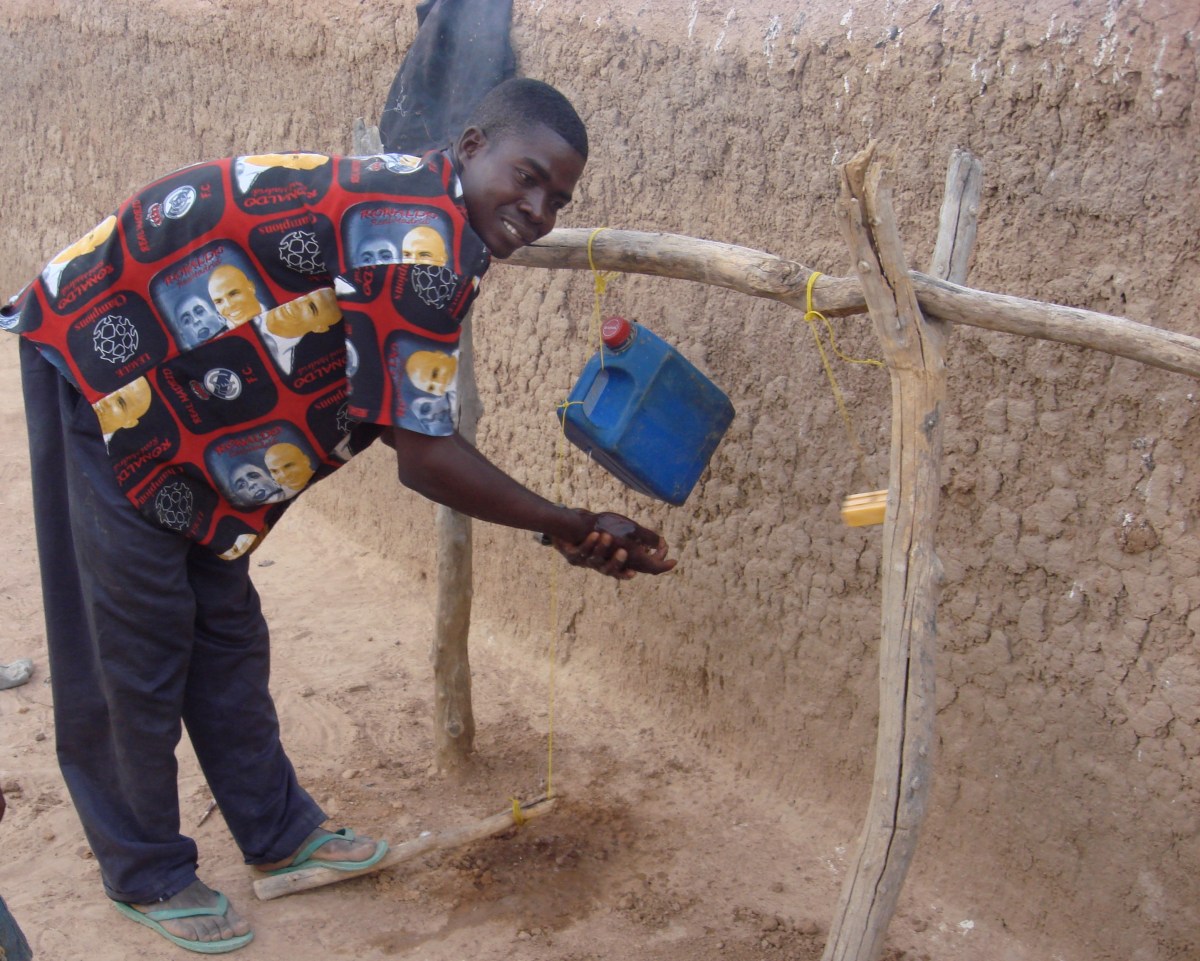
Adequate hand and personal hygiene prevent COVID-19 transmission. Handwashing with soap (3) or alcohol-based hand sanitizer (4) is an effective means to disrupt transmission, along with social distancing, identification and isolation of cases, contact tracing and follow-up, etc. Adequate quantities of available water are essential to maintaining hand hygiene and personal hygiene (5). While these universal prevention measures are well-known, the relative impact of hand hygiene as compared to other infection prevention and control measures such as social distancing, surface disinfection, etc., as a means of slowing COVID-19 transmission has not yet been characterized. However, the availability of water and cleaning products such as soap and chlorine are essential for basic hygiene and infection prevention measures such as hand washing, surface disinfection, and laundry, and should be regarded as universal prerequisites for effective control of the COVID-19 pandemic and other outbreaks (1).

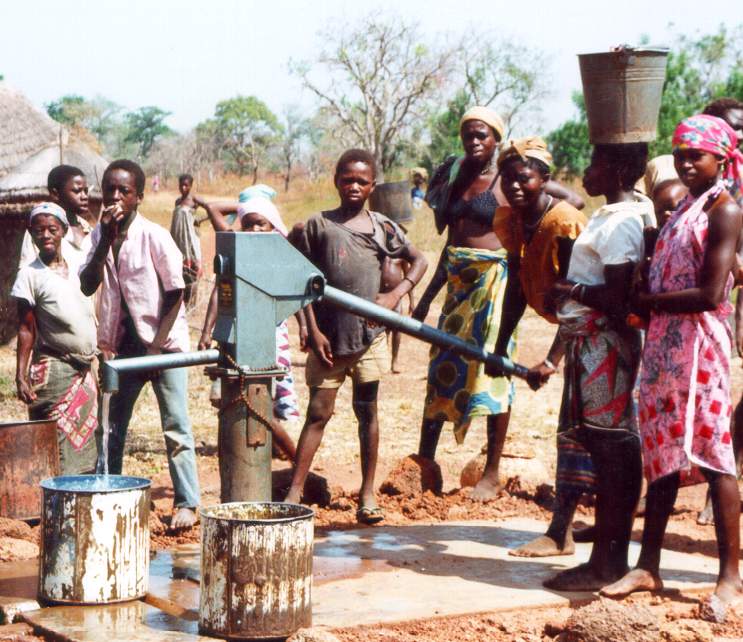
Waterborne transmission has not been documented, and the survival of COVID-19 in water remains unknown (but the virus is thought to persist for hours to days); however, WHO advises that waterborne transmission is unlikely based on available evidence for other similar viruses, and current best practices for safe management of drinking water should be sufficient during the COVID-19 outbreak (1). In addition to direct waterborne transmission, person-to-person transmission may be a concern at communal water sources, where crowding may lead to direct and indirect contact between individuals. Guidelines for practicing appropriate social distancing while accessing communal water sources have not yet been developed, but general social distancing and hand hygiene guidelines may be applicable here as well. The extent to which communal water sources may be hotspots for person-to-person COVID-19 transmission is currently unknown.

IMG_5793
Northern Ghana, between 2011 and 2014

Surface disinfection
The persistence of COVID-19 on surfaces and hands under different environmental conditions is being actively studied. Available evidence suggests that the virus can likely persist and remain infectious for up to 3 days on many surfaces (6). Chlorine rapidly inactivates COVID-19 and other viruses on contact. Current recommendations indicate that a dilute chlorine solution (e.g. 0.1% free chlorine, which can be prepared by adding one part household bleach [~5% free chlorine] to 49 parts water- i.e. 20 mL of bleach per liter, 7) or a 70% ethyl alcohol solution can be used for surface disinfection at least once per day (1, 8). However, further validation of best practices for optimal surface disinfection and optimal cleaning frequencies to prevent COVID-19 transmission may be useful to review and/or refine this guidance.

Sanitation
COVID-19 RNA has been detected in the feces of infected individuals (9), but it is not yet known whether infectious virus is also shed in feces. Furthermore, the survival of COVID-19 in feces and wastewater has not yet been characterized. To date, transmission of the virus via feces/wastewater has not been documented, and risk of transmission by this pathway is believed to be relatively low (10). Current WHO recommendations on safe management of human excreta are therefore currently deemed sufficient for preventing fecal-oral transmission of COVID-19. However, where sanitation facilities are shared between known COVID-19 cases and those without symptoms, additional precautions may be warranted- specifically, the facilities should be disinfected at least twice daily by a trained worker wearing suitable personal protective equipment (PPE, 1). Furthermore, adequate plumbing of flush toilets is needed to prevent backflow and/or aerosolization of excreta, which may contribute to COVID-19 transmission by aersosols (1). Where these recommendations are not implemented, the extent to which unsafe management of excreta may contribute to COVID-19 transmission has not yet been quantified. Furthermore, the extent to which sanitation workers may be at risk from transmission of COVID-19 through the feces of infected persons likewise remains unknown. The use of PPE and frequent handwashing should reduce risks to sanitation workers; where latrines that may contain excreta from infected individuals must be emptied, hydrated lime may be added to disinfect the excreta prior to emptying (1).

While available evidence is sufficient to reinforce the need for adequate water, sanitation, hygiene, and cleaning services and methods to prevent COVID-19 transmission in homes, communities, and health care facilities, many important questions still remain unanswered.

  • How is your organization confronting the current COVID-19 pandemic?
  • Are you involved in work to answer any of these WaSH-related questions?
  • What next steps are needed to inform efforts by rural water supply implementers and rural environmental health professionals to combat the current coronavirus pandemic?
  • What additional monitoring activities (if any) are needed for an effective COVID-19 response where you work?

Share your responses by joining the RWSN e-discussion: Responding to the current COVID-19 crisis: questions, resources, and implications for rural water supply at the operational level


References
1. World Health Organization. (2020). Water, sanitation, hygiene and waste management for COVID-19: technical brief, 03 March 2020 (No. WHO/2019-NcOV/IPC_WASH/2020.1). World Health Organization. https://globalhandwashing.org/wp-content/uploads/2020/03/WHO-2019-NcOV-IPC_WASH-2020.1-eng-5.pdf
2. Perlman, S. (2020). Another decade, another coronavirus. https://www.nejm.org/doi/full/10.1056/NEJMe2001126
3. Centers for Disease Control and Prevention. (2020). Interim infection prevention and control recommendations for patients with confirmed 2019 novel coronavirus (2019-nCoV) or persons under investigation for 2019-nCoV in healthcare settings. https://www.cdc.gov/coronavirus/2019-ncov/infection-control/control-recommendations.html
4. Siddharta, A., Pfaender, S., Vielle, N. J., Dijkman, R., Friesland, M., Becker, B., … & Brill, F. H. (2017). Virucidal activity of WHO-recommended formulations against enveloped viruses including Zika, Ebola and emerging Coronaviruses. The Journal of infectious diseases. https://academic.oup.com/jid/article/215/6/902/2965582
5. Pickering, A. J., Davis, J., Blum, A. G., Scalmanini, J., Oyier, B., Okoth, G., … & Ram, P. K. (2013). Access to waterless hand sanitizer improves student hand hygiene behavior in primary schools in Nairobi, Kenya. The American journal of tropical medicine and hygiene, 89(3), 411-418. https://www.ajtmh.org/content/journals/10.4269/ajtmh.13-0008
6. van Doremalen, N., Bushmaker, T., Morris, D. H., Holbrook, M. G., Gamble, A., Williamson, B. N., … & Lloyd-Smith, J. O. (2020). Aerosol and Surface Stability of SARS-CoV-2 as Compared with SARS-CoV-1. New England Journal of Medicine. https://www.nejm.org/doi/full/10.1056/NEJMc2004973?query=recirc_mostViewed_railB_article
7. https://www.who.int/publications-detail/home-care-for-patients-with-suspected-novel-coronavirus-(ncov)-infection-presenting-with-mild-symptoms-and-management-of-contacts
8. Zhang, J., Wang, S., & Xue, Y. (2020). Fecal specimen diagnosis 2019 Novel Coronavirus–Infected Pneumonia. Journal of Medical Virology. https://onlinelibrary.wiley.com/doi/full/10.1002/jmv.25742
9. Kampf, G., Todt, D., Pfaender, S., & Steinmann, E. (2020). Persistence of coronaviruses on inanimate surfaces and its inactivation with biocidal agents. Journal of Hospital Infection. https://www.sciencedirect.com/science/article/pii/S0195670120300463
10. US Centers for Disease Control and Prevention, 2020. Water Transmission and COVID-19 Drinking Water, Recreational Water and Wastewater: What You Need to Know. Website, accessed March 25, 2020. https://www.cdc.gov/coronavirus/2019-ncov/php/water.html

In Memoriam: Mansoor Ali

Mansoor Ali, an active early member of the Hanpump Technology Network (HTN), recently passed on.

Main Photo: 5 June, 2003: HTN Meeting at Durban – Vishwas, Raj, Mansoor (R K Daw)

by Raj Kumar Daw

Summer, 1973, Groundwater Surveys & Development Agency – GSDA, Pune had just been created and was acquiring its drilling rigs. The founding Director of GSDA, Dr. Venkataraman, constantly raided the NGOs for whatever he could get. He sent me word that he was coming to Vadala. I was trying my first attempt at rehabilitating an abandoned bore well adjacent to our workshop. The work had gone well. Dr. Venkataraman arrived, passing through Geological Investigation Team, Ahmednagar, headed at that time by Sarma Nidamarthy. Sarma had sent two of his staff with Dr. Venkataraman. Gautam and Mansoor.

That was the first time I met Mansoor.

Continue reading “In Memoriam: Mansoor Ali”

Regulating the WASH sector from a human rights lens – IWA/RWSN webinar

Featuring a presentation from the United Nations Special Rapporteur on the human rights to safe drinking water and sanitation, this webinar aims to:

• exchange experience with and among regulatory actors and practitioners, in particular highlighting barriers and opportunities and share good practices and practical approaches to promoting and implementing the human rights to water and sanitation
• discuss the way forward for the next decade on the realization of the human rights to water and sanitation
• provide input/suggestions for the mandate of the Special Rapporteur

SIGN-UP

TYPEWebinar
DURATION60 mins
START DATE13 Feb 2020
START TIME15:00 (Amsterdam time)
LANGUAGEEnglish
FORMATPresentation, Discussion + Q&A

Target Audience

Practitioners in WASH sector, representatives of regulatory agencies

Regulatory actors have an important role in how individuals enjoy their human rights to water and sanitation. They contribute towards the enjoyment of human rights by taking measures to monitor how utilities comply with rules and standards that are in line with the human rights to water and sanitation. Further, they are responsible to ensure that utilities are held accountable for non-compliance. Such regulators are able to oversee services, and to ensure that all – especially the most disadvantaged – are provided with the services they need and deserve. Therefore, in the current world where 1 out of 3 people do not have access to safe drinking water, the role of regulation has been steadily gaining ground in the water (as well as sanitation and hygiene) sector.

It is equally important to note the challenge of regulating WASH services in rural areas and peri-urban informal settlements. In such unserved or underserved areas, many households have no choice but to turn to informal, small-scale providers that operate beyond any institutional oversight. Regulating these actors might not be an easy endeavour, but it is instrumental in guaranteeing the compliance of the services provided with human rights standards.

Learning Objectives

Featuring a presentation from the United Nations Special Rapporteur on the human rights to safe drinking water and sanitation, this webinar aims to:

• exchange experience with and among regulatory actors and practitioners, in particular highlighting barriers and opportunities and share good practices and practical approaches to promoting and implementing the human rights to water and sanitation
• discuss the way forward for the next decade on the realization of the human rights to water and sanitation
• provide input/suggestions for the mandate of the Special Rapporteur

Host

IWA, UN Special Rapporteur on the human rights to water and sanitation, WaterAid & Rural Water Supply Network (RWSN)

Panelists

  • Léo Heller UN Special Rapporteur on the human rights to water and sanitation
  • Kelvin Chitumbo Director, National Water Supply and Sanitation Council (NWASCO)

SIGN-UP

In Memoriam: Ken McLeod – India Mark II development lead

en McLeod, who died of cancer in Cairns, Australia, on January 23rd at the age of 88, was recruited by Unicef to support India’s village water supply programme from 1974-1978, and played a pivotal role in the development of the India MK II hand pump.

by Rupert Talbot (former UNICEF and past Chair of HTN/RWSN)

Remembering Ken

Ken McLeod, who died of cancer in Cairns, Australia, on January 23rd at the age of 88, was recruited by Unicef to support India’s village water supply programme from 1974-1978, and played a pivotal role in the development of the India MK II hand pump.

The Government of India’s fourth, five year development plan (1969-1974) envisaged the ambitious goal of providing drinking water in the hard rock, drought prone regions of the country, using innovative down-the-hole-hammer drilling and deep well hand pump technology. Drill rigs were to be imported by Unicef and locally made, cast iron hand pumps, supplied and maintained by Government. In 1974, at the end of the plan period, hand pump surveys concluded that 75% of some 40,000 installations were not working. The viability of drilling and hand pump technology was in question and there was the real prospect of UNICEF, the Government of India’s main partner, withdrawing support. The programme was in serious crisis.

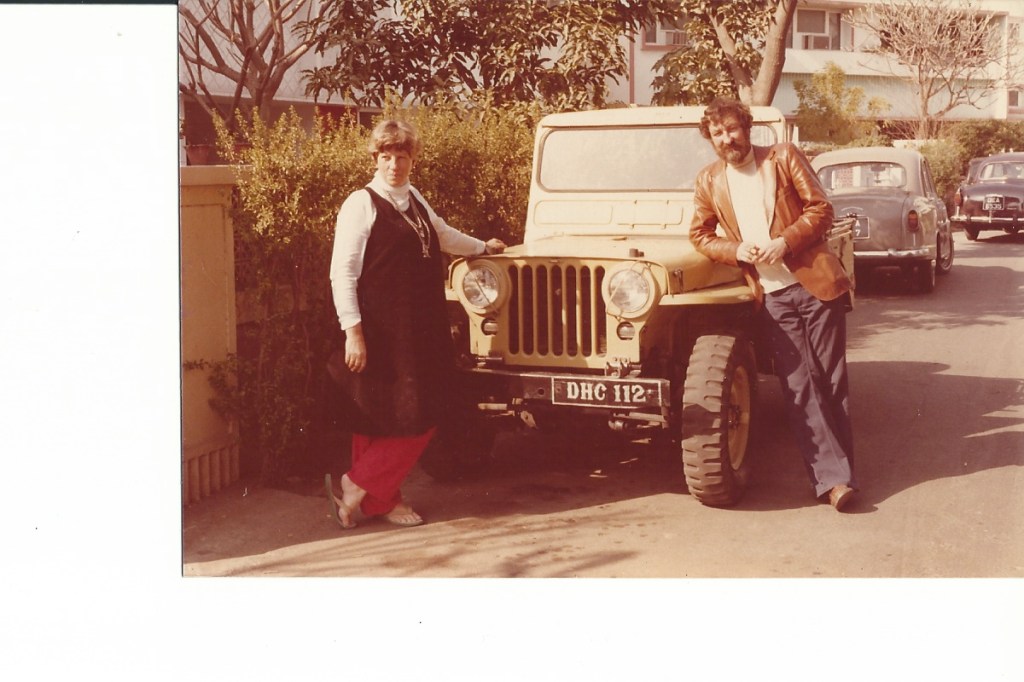
Ken McLeod, his 1942 Jeep, and Myra who designed the first India MK II hand pump poster, New Delhi, 1976 (Photo: Rupert Talbot)

Water well drilling was virgin territory for Unicef in the early 1970s and Unicef’s Executive Board had been divided over the decision to invest in such costly technology in the first place. It was now faced with the hard option of either scrapping the programme or keeping faith. It was a close run thing. Fortunately, the ‘pro’ lobby won with the eminently wise decision to halt the supply of drill rigs until the hand pump problem was fixed. Which is where Ken McLeod comes in.

Ken was a pragmatic, no–nonsense, straight talking, tell-it-as-it-is Australian with a diverse engineering background which ranged from marine and civil engineering to blast hole and water well drilling with down-the-hole-hammers. He had an innate sense of what would probably work and what wouldn’t. Obstinacy was also a hallmark. A serious asset as it turned out. Once he had made up his mind it was difficult to persuade him otherwise. And he had a droll sense of humour. His repertoire of stories and anecdotes are legendary within the water well fraternity. It would seem that seriousness of purpose combined with good humour are prerequisites for successful development enterprises. Ken had both these qualities in spades.

Over the course of the next 4 years it fell to Ken to identify, coordinate, argue with and cajole, myriad organisations and individuals to develop what became known as the India MK II hand pump. This was an extraordinarily complex, collaborative venture, involving pioneering NGOs in Maharashtra, birth place of the fabricated steel Jalna, Jalvad and Sholapur pumps, spearheaded by Raj Kumar Daw and Oscar Carlson (names participants in the RWSN Sustainable Groundwater Development Forum will be familiar with); WHO, who were independently trying to develop their own cast iron ‘Bangalore Pump’; The Government of India, whose programme was in dire straits and who were being prevailed upon by the country-wide hand pump industry to continue with the supply of their cast iron products (‘junk pumps,’ in McLeod Speak); and an engineering enterprise, Richardson and Cruddas, a Government of India undertaking tasked with making prototype and then production pumps. It took a McLeod to handle all of that.

Ken McLeod, Arun Mudgal (Richardson and Cruddas) and Rupert Talbot, MK II test area, Coimbatore, 1975. A ‘what to do ?’ moment after experimental cylinders had failed. (Photo: Rupert Talbot)

It is getting on for 50 years since it was eventually agreed by all parties that the Sholapur pump would form the basis of a new design and we were able to make and test the first dozen prototypes under the deep water table conditions of Coimbatore, Southern India. The fact that the India MK II then went successfully into mass production was largely due to Ken’s clarity of vision, direction, smart technical choices and perseverence.

I spoke with Ken for the last time two weeks before he died. We talked of those heady days of trying to get the MK II programme off the ground, of the internal arguments, external battles and technical problem solving in the field and in the factory.

His voice was strong and his mind as clear as a bell as he recalled people, places and events in great detail and he spoke warmly of those free spirits with their out of the box thinking who strove to make better hand pumps.

He was amazed to learn that there are now several million MK IIs in India alone and that it is exported to 40 or more countries. But hugely disappointed that the third party quality assurance procedures set up in his day and honed over the years to become the corner stone of the MK II programme under Ken Gray, had been allowed to slide back and that MK II look-a-like ‘junk pumps’ are being exported from India to Africa. That, we agreed, is a great tragedy.

There were many brilliant, dedicated people involved in the development of the India MK II. Ken never claimed any credit for it himself, but we all know who led the charge. It wouldn’t have happened without him. He was the right man in the right place at the right time. It needed his force of personality, tough and uncompromising ways, solid understanding of technical issues and absolute determination to get the job done in the face of industrial strength, bureaucratic wranglings. Aussie grit personified.

After Unicef, Ken McLeod worked with Shaul Arlossoroff and his UNDP-World Bank Hand Pumps Project, initially based in Nairobi then out of Australia, spending much of his time in China where I have no doubt he brought the same skills and energy to bear as he did in India.

Pragmatic and stoic to the very end he told me he hadn’t got long and was resigned to being on the ‘home stretch’ as he called it.

No funeral for Ken. No grave, no head stone, no epitaph. He wanted none of that. Instead, he has the lasting legacy of the India Mark II hand pump itself. Millions of them in fact.

Kenneth Robert McLeod, 1932 – 2020

RIP

Rupert Talbot
RWSN
26/1/20

External support programs to improve rural drinking water service sustainability: a systematic review

This is a guest blog by Meghan Miller. Meghan is completing her PhD in the Department of Environmental Sciences and Engineering at the University of North Carolina at Chapel Hill and has conducted both her masters and doctorate research through The Water Institute.

The Water Institute recently published a systematic review on external support programs (ESPs) that target rural, often community-managed water systems. ESPs are of vital importance to long-term functionality and sustainability of rural drinking water service, as all water systems fail eventually and rural water committees can lack the resources and/or capacity to rehabilitate the systems independently.

The purpose of the systematic review was to determine how ESPs in low-, medium- and high-income countries are described and measured. The aims of the analysis were to: create a typology of ESP activities based on ESPs for rural drinking water systems; identify barriers to ESP access and implementation; and determine how ESPs effect the sustainability of rural water systems.

So what do external support programs do?

The types of ESP activities described in the literature were: technical assistance, financial assistance, monitoring and regulation, communication and coordination, administrative assistance, capacity-building, and creation of policies and enforcement of regulations. Technical assistance, financial assistance, and capacity-building were described in the majority of publications included (66%, 57%, and 53% respectively).

Need for a typology of activities and precise language

The language used to describe ESPs was not consistent between publications about low-, middle-, and high-income countries. When ESP activities go underreported, knowledge transfer is limited and support for ESPs is reduced. Communication and coordination between ESP providers is further limited by inconsistent and imprecise language. We identified twenty-one terms that were used to describe ESPs. Some terms imply that support occurs at specific phases or with specific actors. Post-construction support, for example, assumes that projects have a single construction event. The terminology should reflect how and when support is provided. The better ESP terminology is defined, the better we can compare ESPs in different settings.

External support was the most commonly used term (27% of publications) and we propose using the term “external support programs” to describe the continued support for water systems. Based on our analysis we propose the following definition for ESPs: “the set of activities provided by NGOs, government, private and community-based entities to community-member managers to ensure continued safe operation of a drinking water system.”

What are the barriers to external support programs?

Barriers to ESPs were grouped into six categories: inadequate resources, inadequate ESP support, restrictive policies, lack of communication and coordination, little access to ESPs, and insufficient training of water system managers. The barriers to ESP varied by country income classification. Lack of communication within ESPs and between ESPs and stakeholders was most frequently mentioned in publications about high-income countries (36% of the publications); lack of communicate was often characterized by unclear roles and responsibilities, lack of trust between ESPs and stakeholders, inability to resolve disputes and misunderstanding of local context. Insufficient training of staff and insufficient resources for ESP wa identified as the most common barriers to ESP in publications about low and lower-income countries (57% and 45% of publications respectively).

Little comprehensive monitoring and assessment of ESPs

Twenty studies evaluated the effects of ESPs on water service levels. Most publications described ESP activities but did not undertake data collection to assess the programs. Without a rigorous assessment of ESPs, it is difficult to identify the most effective components of ESPs. Proper monitoring requires that stakeholders understand the activities and models implemented by ESP providers. Presence of ESPs and access to spare parts were used as the indicators of ESP activity by studies assessing the effect of ESPs on households and water systems. Better monitoring would include indicators that measure the six types of ESP activities, such as the frequency and attendance rate of water committee training events. Indicators should also measure the effectiveness of different providers – these outcome indicators should be developed according to the type and purpose of the ESP. Additional assessments of ESPs will help stakeholders identify which ESP activities and models promote sustainability. Support programs can then incorporate those that promote sustainability.

Majority of publications report on ESPs for point sources

The majority of publications addressed ESPs for point sources. The focus on point sources ignores water sources in community institutions and the implementation of more complex water systems. Community institutions, such as schools and health care facilities, have different water use characteristics and management structures than community drinking water systems and support to these community institutions will require adaptations to existing ESPs. Piped water systems, compared to point sources, are more complex, have larger one-time repair costs, typically require repairs more frequently, may require specialist technicians, and may require more expensive parts. Descriptions of ESPs in community settings and for more complex systems will improve knowledge about how ESPs for can be adapted to better serve community needs.

Further reading

The full article is available as:

Miller, M., Cronk, R., Klug, T., Kelly, E.R., Behnke, N., Bartram, J., 2019. External support programs to improve rural drinking water service sustainability: A systematic review. Sci. Total Environ. 670, 717–731. https://doi.org/10.1016/j.scitotenv.2019.03.069

Figure: Model of the variables that affect and are affected by external support programs based on data from quantitative and qualitative evaluations of external support programs and review of the literature. Plus signs represent a positive relationship and negative signs represent a negative relationship. The dashed lines represent relationships that have been identified in the literature, but were not assessed in the ESP evaluations. Credit: Authors.


Floods with silver linings: Redefining how aquifers replenish in dryland Africa

This blog by Sean Furey was originally published in GeoDrilling International and is available here.

Drilling for water is only useful if there is good water to be had now and into the future. Since 2013, researchers in the UK-funded programme Unlocking the Potential of Groundwater for the Poor, have been working all over Africa to understand better the continents aquifers and how their hidden wealth can be used to benefit everyone. Now after years of patient work, exciting results and resources are emerging.

One is that the Africa Groundwater Atlas, curated by the British Geological Survey, now has downloadable GIS maps for 38 countries. They are quite large scale, so not detailed enough for individual borehole siting, but a good starting point for identifying where major aquifers are. This supports the wealth of other useful information, in English and French, on the soils, climate and groundwater use in all 52 of Africa’s countries.

Meanwhile a major finding published in the leading science journal Nature in August overturns our understanding of how aquifers are recharged in Africa’s drylands. In humid areas of the continent, like the tropical Congo Basin, there is a direct relationship between the rain that falls on an area of rainforest and what percolates down into the soil and rock. Not so in the Savannah’s and scrub land of the Sahel, the Horn of Africa and Savannah’s of East and Southern Africa.

Analysis of the precious few long groundwater records, combined with local studies in Niger, Ethiopia and Tanzania have shown that here rainwater is only able to percolate into the aquifer in well-defined locations, like ponds and riverbeds, and only after very intense storms. As a hydrogeologist that used to work on the Chalk aquifers of South East England, this is almost is a polar opposite. In the UK, nice steady drizzle over the winter maybe unpleasant for most people but it is heaven for ducks and water resource managers, because the soil gets saturated and water flows down into cracks and pore-spaces of the underlying rock, then on to providing baseflow for rivers and wetlands.

In the African drylands, it is the floodwater that is critical for focused recharge along ephemeral river valleys and depressions in the landscape. In parallel to this work, research on climate change indicates that in these areas of West and East Africa, rainy seasons are likely to come later and have fewer rain days – but with the same or more volume of rainfall. The inference from this is that when it does rain, it will rain harder – and more of it will find its way into the ground.

So, looking ahead, the role of aquifers in acting as a buffer between periods of flood and drought will become more and more important. This makes Managed Aquifer Recharge (MAR) look increasingly important to capture floods, both to protect lives and property from damage and to have that water available through the long dry seasons.

One such low-cost opportunity is the way that road drainage is designed so that instead of dumping storm water into already swollen rivers, they divert the water into infiltration ponds and ditches, which can farmers can use when the storm subsides.

Tropical and sub-Tropical climates around the world are always challengingly variable, and these extremes look set to expand, but for drillers and water users at least there is this one silver lining.


Opportunité de publication: les pompes à motricité humaines pour les services d’eau potable

(photo: (C) Skat Consulting Ltd.)

Chers collègues,

Il a récemment été suggéré d’entreprendre une revue des questions relatives aux pompes à motricité humaine (PMH) dans les services d’eau potable.  Il s’agirait d’un livre qui remplacerait les documents publiés dans les années 1980, notamment le document “Community water supply : the handpump option” d’Arlosoroff et les Technical Papers 10 et 25 de l’IRC. 

Le nouveau livre ne serait pas une mise à jour directe, puisque ces documents ont été publiés dans le cadre de la Décennie des Nations Unies pour l’eau : une époque pendant laquelle l’intensité des efforts pour tester les PMH en laboratoire et sur le terrain à grande échelle, ainsi que la mise en œuvre d’autres initiatives, n’ont pas été égalées depuis.  Cependant, il y a eu beaucoup d’expérience et de réflexions, ainsi que des recherches et des évaluations depuis cette époque, qui devraient maintenant être rassemblées dans une publication. 

J’envisage un livre qui place les services de PMH dans le contexte plus large des ODD, le droit de l’homme à l’eau, l’auto-approvisionnement, l’entretien communautaire, les considérations financières, les nouveaux modèles de gestion et les transitions des points d’eau avec PMH aux services en réseau (par exemple) avec pompage solaire.  Cet ouvrage permettrait de rassembler à part égale les sciences naturelles et l’ingénierie, d’une part, et les questions de gestion et de financement, les aspects sociaux et les arrangements institutionnels, de l’autre. 

Ce livre s’adresserait principalement aux organisations et aux individus impliqués dans la planification, le financement, la mise en œuvre et le soutien de la programmation de l’eau en milieu rural – un public qui a besoin d’un aperçu général mais raisonnablement détaillé du sujet.  Les messages destinés aux décideurs politiques et aux décideurs de haut niveau devront être extraits du livre, sous une forme plus courte.  De même, le livre ne se veut pas un document technique détaillé ; en effet, il est probable que seuls deux chapitres sur les 12 qui seront inclus se concentreront sur les technologies des pompes à motricité humaine.

Étant donné le large éventail d’aspects à couvrir, j’envisage la nécessité d’un grand nombre de co-auteurs et d’évaluateurs (peer-reviewers).  Un éditeur a déjà manifesté un vif intérêt, et je serais optimiste quant à la possibilité de lever des fonds pour permettre le libre accès à la publication finale. 

Ce message – le premier sur le sujet – vous invite donc à répondre à trois questions : (1) Pensez-vous qu’une telle publication serait une contribution utile aux tentatives actuelles visant à fournir à tous des services d’eau potable sûrs et durables ? (2) Souhaitez-vous être tenu informé de l’avancement de la rédaction du livre ? (3) Seriez-vous intéressé(e) à participer à titre de co-auteur ou d’évaluateurs(si oui, veuillez m’envoyer une brève déclaration décrivant votre domaine d’intérêt et d’expertise).  Veuillez noter que le livre sera publié en anglais, et que les co-auteurs ou évaluateurs doivent avoir un bon niveau pour pouvoir rédiger dans cette langue.

Enfin, je suis bien conscient qu’il y a des opinions et des voix fortes dans la communauté des personnes intéressées par les pompes à motricité humaine ; cela fera partie de mon rôle d’auteur/éditeur principal d’essayer de présenter une analyse équilibrée et basée sur des données tout en minimisant les opinions et préjugés.  J’aimerais particulièrement trouver des contributeurs et des évaluateurs qui ont de l’expérience dans la mise en œuvre de programmes de PMH, mais qui ne se font pas entendre dans les groupes de discussion en ligne. 

N’hésitez pas à me contacter en écrivant à mon adresse courriel personnelle (ci-dessous) avec vos réponses initiales aux questions ci-dessus et, bien sûr, avec vos autres opinions sur la question.

En supposant que l’idée recueille l’approbation de ceux d’entre vous qui ont lu cette correspondance, j’établirai une liste provisoire du contenu et commencerai à identifier les coauteurs et les évaluateurs potentiels.  Surveillez donc cet espace pour d’autres nouvelles !

Cordialement,

Richard Carter
richard ^at^ richard-carter.org
[www.richard-carter.org]

Opportunity to publish: handpumps in drinking water services

(photo: (C) Skat Consulting Ltd.)

Dear Colleagues,

It has recently been suggested that an up-to-date review of the issues around handpumps in drinking water services be undertaken.  This would be in the form of a book, which supersedes the documents published in the 1980s including Arlosoroff’s “Community water supply: the handpump option” and IRC’s Technical Papers 10 and 25. 

The new book would not be a direct update, since those documents were published in the UN Water Decade at a time of large-scale laboratory- and field-testing of handpumps and other initiatives which have not been matched in intensity since that time.  However there has been much experience and reflection as well as some research and evaluation in the intervening years which now needs to be brought together in one place. 

I envisage a book which places handpump services in the wider context of the SDGs, the human right to water, self-supply, community-based maintenance, financing considerations, emerging management models, and transitions from handpumped point water sources to (for example) solar pumped networked services.  The book would bring together in roughly equal measures natural sciences and engineering on one hand, with issues around management and financing, social aspects and institutional arrangements on the other. 

The book would be primarily addressed to organisations and individuals involved in planning, financing, implementing and supporting rural water programming – a readership which needs a broad but reasonably detailed overview of the subject.  The messages for policy-makers and higher-level decision-makers will need to be distilled from the book, in shorter form.  Likewise the book would not attempt to be a detailed technical document; indeed it is likely that only two chapters out of the 12 which will be included would focus on handpump technology per se.

Given the wide range of aspects to be covered, I envisage the need for a good deal of co-authorship and peer review.  A publisher has already shown keen interest, and I would be optimistic that funds could be raised to enable open access to the final publication. 

This message – the first on the matter – therefore invites your response to three questions: (1) do you think such a publication would be a useful contribution to current attempts to bring safe and sustainable drinking water services to all? (2) Would you like to be kept informed as to progress in the drafting of the book? (3) Would you be interested in participating as a co-author or peer-reviewer (if so, please send me a short statement outlining your area of interest and expertise). 

Finally, I am well aware that there are some strong opinions and loud voices in the community of those interested in handpumps; it will be part of my lead-author/editor role to try to present evidence-based and balanced analysis while minimising opinionated and biased views.  I am especially keen to find contributors and reviewers who are well-experienced in implementing handpump programmes but who are not vocal in the online discussion groups. 

I look forward to hearing from you by writing to my personal email address (below) with your initial answers to the questions above, and of course any other views you may have on the matter.

Assuming the idea meets with some approval from those of you who read the correspondence on this discussion group, I will put together a draft list of contents and start to identify potential co-authors and reviewers.  So please watch this space for further news!

Best wishes,

Richard Carter
richard ^at^ richard-carter.org
[www.richard-carter.org]

My experience at the World Water Week Conference: Water for Society Including all

This is a guest blog by Benson Kandeh, winner of the RWSN@WWW competition for young professionals.. For more information on RWSN’s activities for Young professionals, see here.

My name is Benson Kandeh and I am a young water professional from Sierra Leone. I work on providing water supply for rural communities in my country through the EMAS technologies and by training technicians to enable self-supply by and for communities. You can find out more about my organisation here and my work here.

This year, I won a competition for young professionals organized by RWSN to attend World Water Week in Stockholm. Getting to Stockholm from Sierra Leone was a challenge: I had to apply for a visa to Sweden in Nigeria, where I had to stay over two weeks waiting for the outcome of the visa process. My visa was initially denied by the Swedish authorities and later approved thanks to an appeal from the RWSN Secretariat. I got the news that my visa has been appealed on Monday 19th August, and two days later, on Wednesday I was on a plane to Abuja to collect my visa and fly out to Stockholm the next day. It has been a whirlwind and quite an adventure for me!

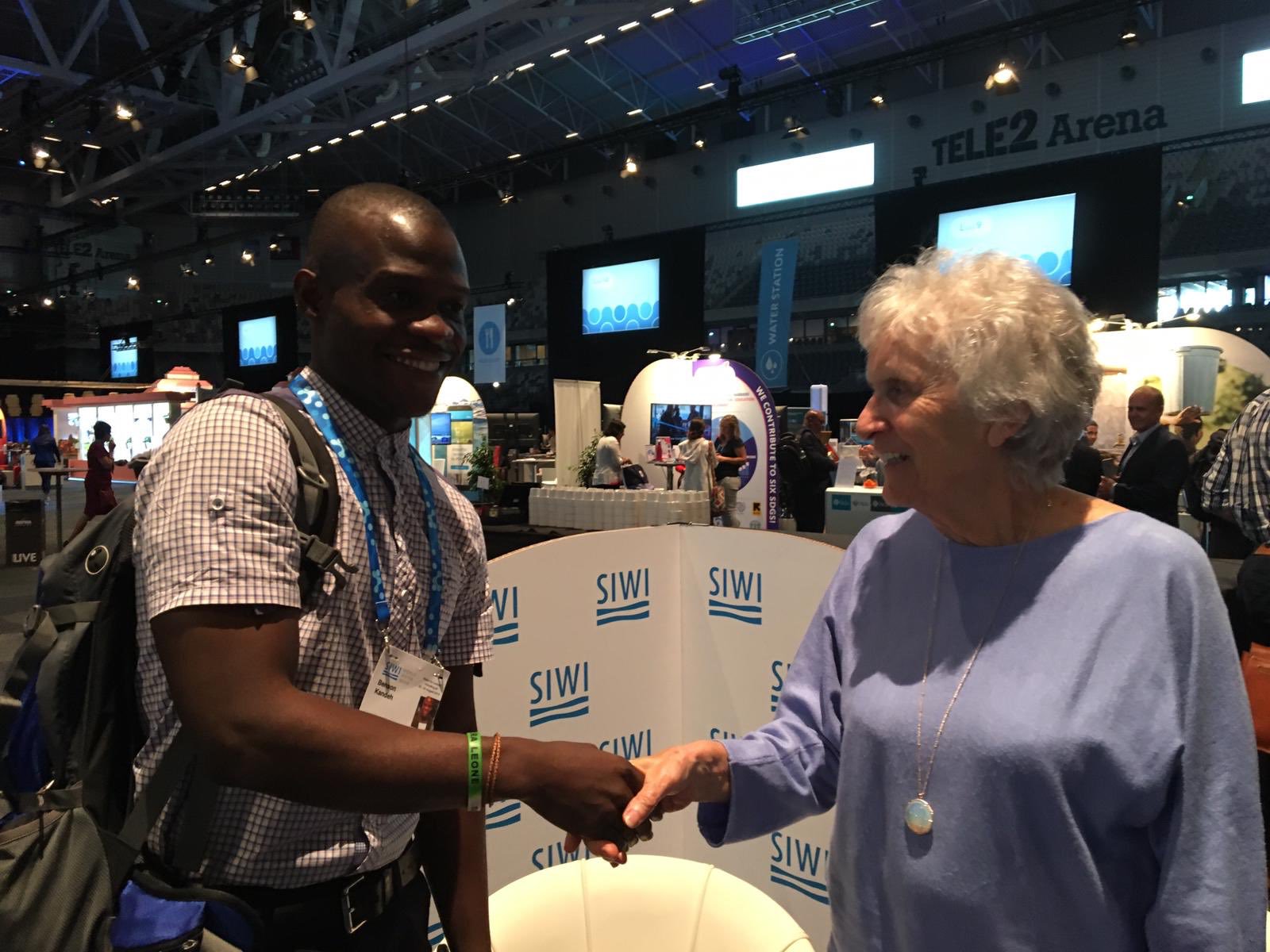
This year’s World Water Week conference was held from August 25-30, 2019 and organized by the Stockholm International Water Institute (SIWI) with over 3,300 people from 130 countries – including Sierra Leone. The 6-day programme consisted 270 sessions with the Theme: Water for society – including all”. Two of the highlights of the event were the Stockholm Water Prize ceremony, and the Stockholm Junior Water Prize competition honouring outstanding young people between the age of 15 and 20 who have made an innovation in the water sector. 23 countries were represented this year in the Stockholm Junior Water Prize competition but only Nigeria and South Africa represented Africa as a whole. I was fortunate to meet with the Stockholm Water Prize winner, Dr Jackie King during the conference.

JackieKing

Meeting Dr Jackie King, winner of the 2019 Stockholm Water Prize

The conference gathered many experts, practitioners, decision-makers, business innovators and young professionals from a range of sectors and countries. It featured many interesting sessions, of which I was fortunate to attend the following, and learn and interact with many water professionals:

  1. Shared and Public Toilets: Equitable access everywhere
  2. Joined-Up thinking: Sanitation in the Broader context of slum improvement
  3. From success to scale: improving rain fed agriculture in Africa
  4. Entrepreneurship driving water impact for all (3/3)
  5. Water and Sanitation solutions for the people left behind
  6. Remote WASH: Quality and Lasting services for rural communities
  7. Entrepreneurial model for rural, domestic water for all
  8. Sanitation for Society, including for all (1/3)
  9. Safely Managed Drinking Water Services for Rural People, where I served as a panelist

Here are some of my highlights of World Water Week:

Shared and Public Toilets: Equitable access everywhere

This session was very important especially for organizations and individuals that have interests in rural communities for water and sanitation. The presenter was able to clearly outline the shared sanitation model as it is important when considering household access as well as access outside the home. Toilet/latrine access is a challenge in the African region especially in institutions (schools, religious buildings, medical or other institutions). However, with this model, it can reduce the disparity greatly as it considers students, workers and anyone who lives outside their home.

According to the presenter, the quality of these services is often poor, because of limited monitoring standards, and the funding needed for such work is inadequate. The presenter made it very clear that shared sanitation is not just a service needed at one’s home but people need to access safely managed sanitation facilities, while they are away from home, whether at school, work, a market, or anywhere else they might go.

A pitching competition for 9 young water professionals

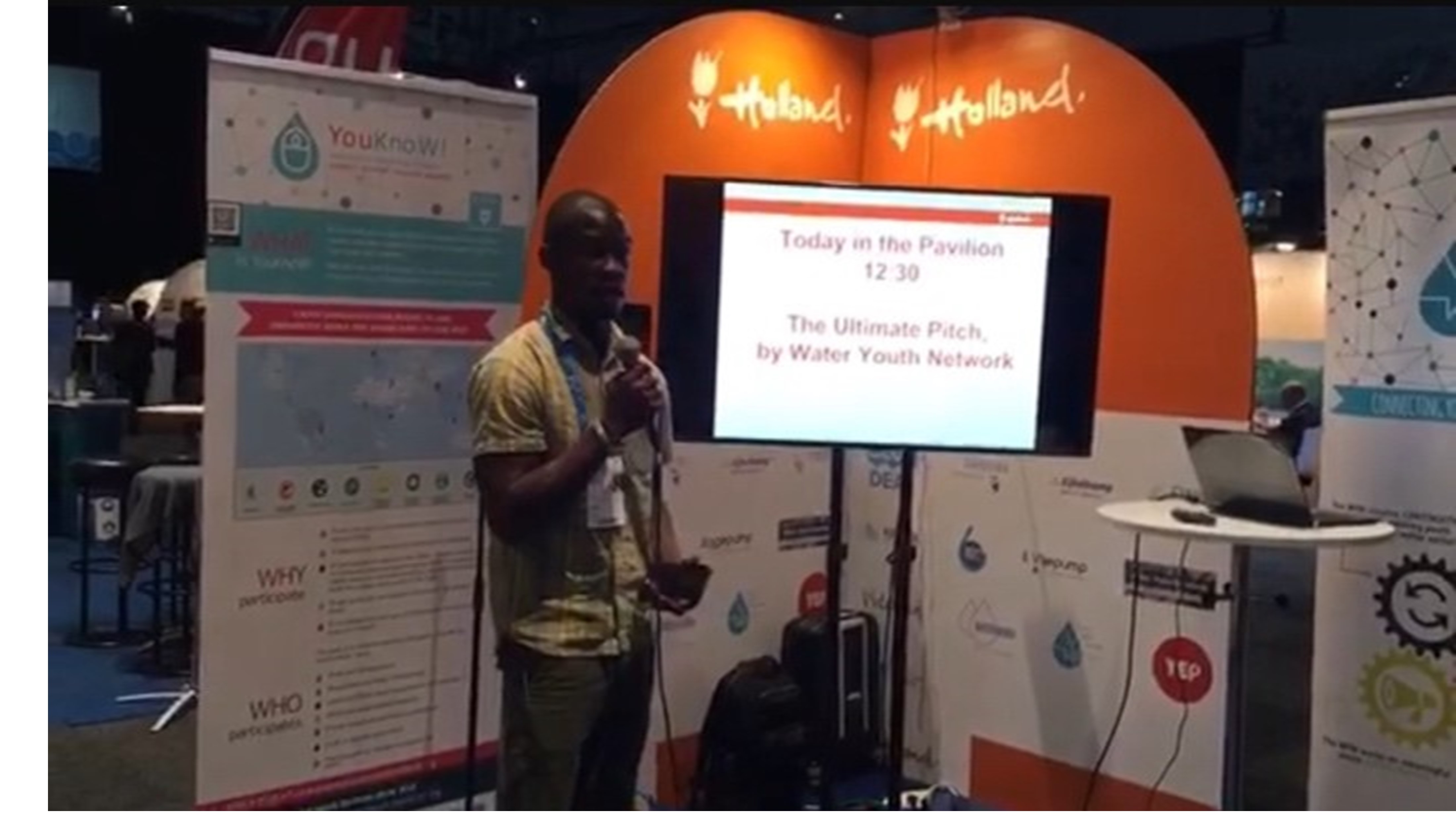
Thanks to the Water Youth Network for organizing an interesting and educative short pitching competition among nine young people, who work in the water sector.  In fact, the group work was so amazing after the problems were presented to participants with the aim to discuss and offer solutions on how to make sure that water supply projects use an entrepreneurial approach to overcome inclusion challenge. We also talked about the difference between water accessibility and use.

Presentation4

My pitch at the Water Youth Network event

Key projects highlighted during the discussion were mini-grid piped water schemes in Bangladesh, scalable water services in Uganda and a Football for Water project in Kenya (Aqua for All), all reaching rural, poor, underserved households. During the various young water professionals’ presentations, I was able to learn about the impacts colleagues are making in their various countries to improve access to water and sanitation.

Safely Managed Drinking Water Services for Rural People – the Last Mile

This was one of the most important sessions for me during World Water Week in Skockholm. I served as a panelist, representing the rural communities among other personalities from the WASH sector with the topic: “Safely Managed Drinking Water Services for Rural People”.

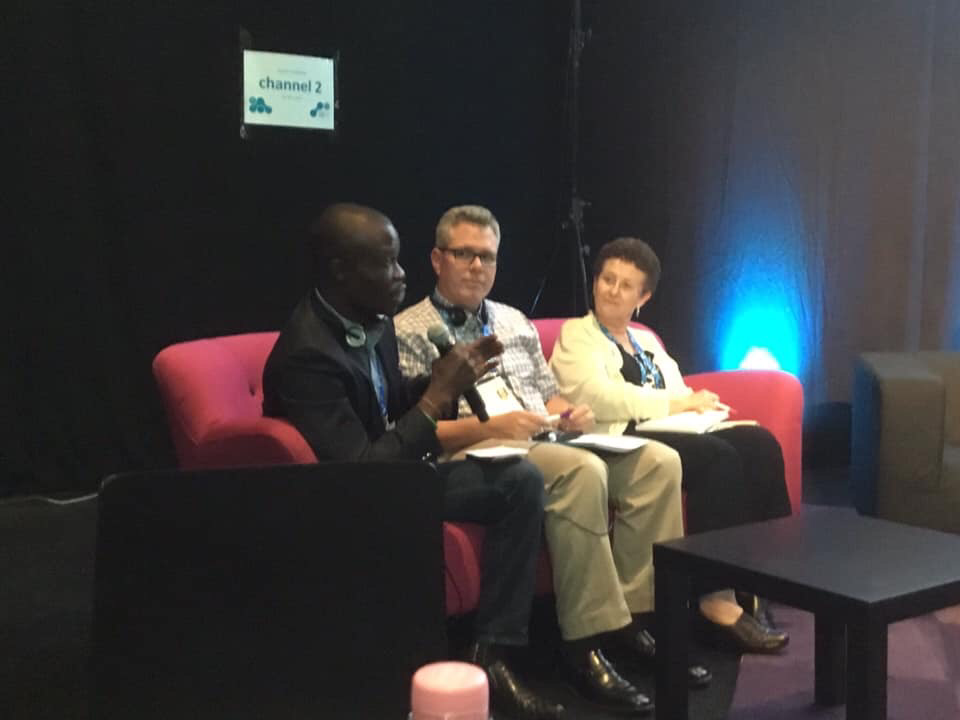
Benson4.png

Speaking as a panelist with Clarissa Brocklehurst (Water Institute at UNC) and Peter Harvey (UNICEF)

I shared my experience using the EMAS technologies in the Sierra Leone context. The EMAS technology is a self-supply concept that entails local public or private initiatives by individuals, households or community groups to improve their own WASH supplies, without waiting for help from governments or non-government organizations. Self-supply is more about self-sustained initiative, rather than donor subsidies or external support. It empowers individuals and communities to gradually improve their WASH supplies at their own pace with regard to technical and financial capacities. Once the basic services are available, families make their own decisions on how to improve those services based on affordability and technical capacities at local level.

The most interesting part about this session was the mixed backgrounds of the presenters (knowledge, skills, cultures, etc.). All were centered on the water crisis and solutions with an emphasis on sustainability, affordability and accessibility for everyone everywhere.

Finally, the different presentations were able to examine the various technologies and hand-pump types that are utilized in various countries and provided evidences for technology options that can yield much for ease of maintenance, accessibility and sustainability.

Conclusion

Participating in World Water Week has been a great opportunity for me to present my work, make contacts, and contribute my perspective as a young professional from Sierra Leone. I am looking forward to staying in touch with some of the people I met during World Water Week, and hopefully this will help me on my mission to provide safe water in rural communities in my country.

Since coming home I have created my own group for young water professionals in Sierra Leone. I am trying to connect with other young professionals in Sierra Leone, to see how we can come together and contribute to the water sector. Any young professional interested in water in Sierra Leone is welcome to join here. I believe we can do a lot!

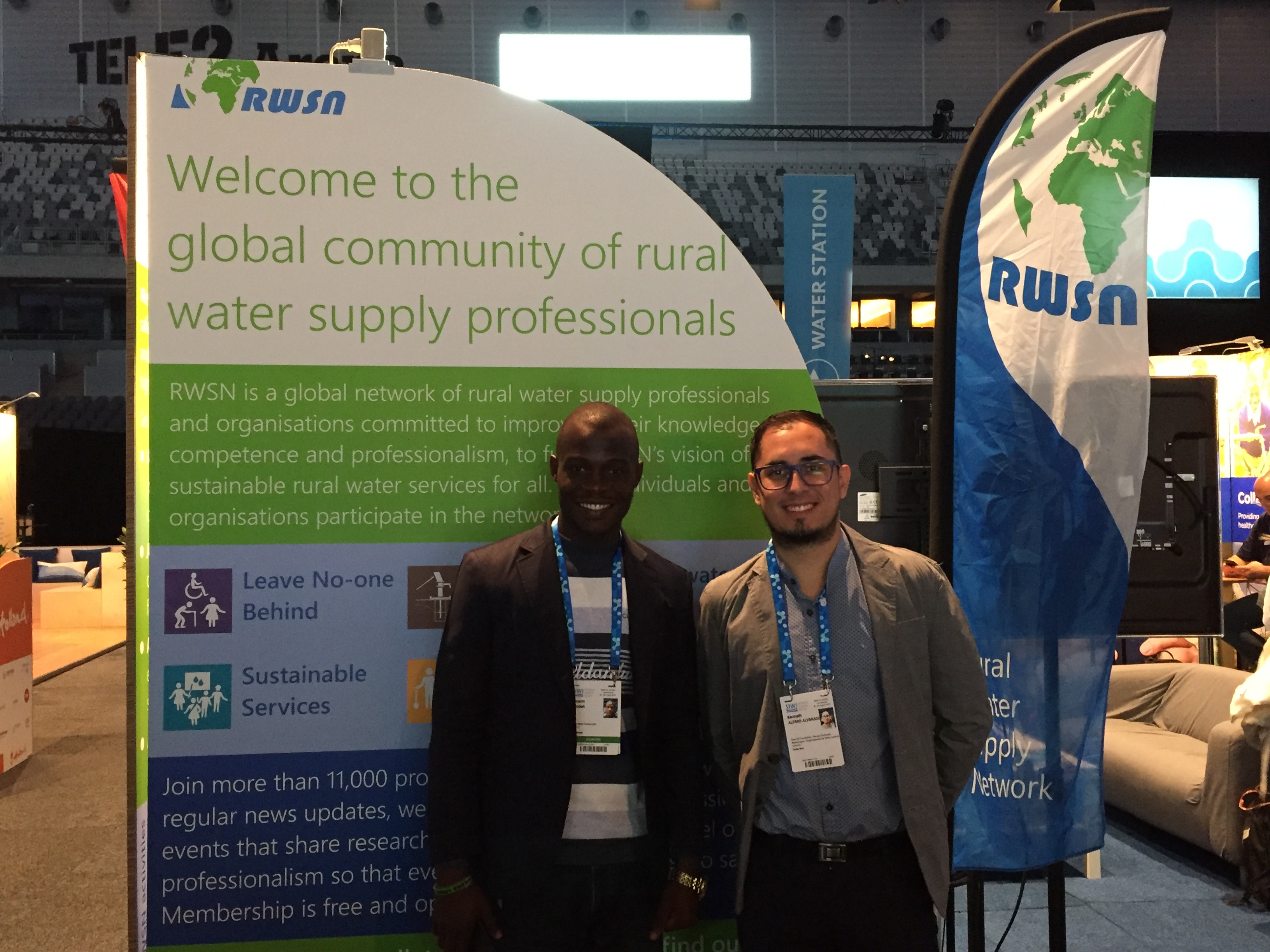
2019-08-25 09.23.30 Benson and Kenneth

Meeting with RWSN Young Professional Kenneth Alfaro Alvarado from Costa Rica

Rural water supply is changing. Be part of it.

The Rural Water Supply International Directory that is available to download from today aims to track the organizations and businesses fostering this change.

by Philip T. Deal, University of Oklahoma, USA

The Sustainable Development Goals are pushing the water and sanitation community to reach higher than ever before. After decades of fighting for the human right to water, universal coverage is the next, challenging summit to climb. “Access to an improved source” has been upgraded to “safely managed drinking water” – a standard that requires continuous service, good water quality, increasing coverage, and affordability. Considering that rural infrastructure often lags behind when compared with urban environments, accomplishing this standard can sometimes feel more like a cliff than a mountain. For these reasons, rural water supply requires new ideas – experimentation – innovation.

The 2019 RWSN directory of rural water supply services

The The 2019 RWSN directory of rural water supply services, tariffs, management models and lifecycle costs that is available to download (and in French) from today aims to track the organizations and businesses fostering this change. These entities are the catalysts to novel service delivery and management models. Some offer minor changes to technology or accountability mechanisms that increase functionality. Some create new financing opportunities that were not previously accessible. Some create a complex management system to maintain water systems over large geographical areas. Some could potentially fail. All are valuable.

The cases described in the Directory are meant to foster growth, learning, and inspiration. The successes, challenges, and failures depicted by one organization could spark a solution for another across the continent. Financing and life cycle cost discussions could become more transparent, uniform, and clear across borders. Networking opportunities and connections become easier – there may even be a neighboring WASH partner nearby that fits your needs!

This new Directory is intended to be an annual compilation. Current cases can be updated with new developments and research. Other innovations and businesses can be added. If a future reader thinks some other information should be included, there’s potential for expansion. We are open to your input.

Questions to Consider

When reviewing the cases within this directory, I would encourage any reader to think on the following questions:

  • What are some common management traits that you observe? What is similar or different when compared to traditional water and sanitation models?
  • What are the most striking innovations that can be observed?
  • What role does each case hold in their water and sanitation ecosystem? What are their responsibilities, and for what are they dependent upon others?
  • Which cases seem more conducive to scaling up?
  • What life cycle costs do various organizations consider their responsibility? What costs should realistically be expected to be covered by tariffs?
  • How would an organization react if international or support funding were reduced or lost? What would be the ramifications to the customers or beneficiaries?
  • What monitoring schemes seem to be effective in maintaining quality water services?
  • What information or data would you be interested in evaluating for these programs?

Bio – Philip T. Deal

At the end of 2015, I began my doctoral research on service delivery models at the University of Oklahoma. My first significant reference was, “Supporting Rural Water Supply”, by Lockwood and Smits (2011), which has often guided my thought process. Understanding how various management models can improve, disrupt, or maintain the status quo for water service has become a focus of my efforts. I want to know if each case is really sustainable, if there is measurable impact, and if equity is truly equal when applying these models.

Since I began, I have had the opportunity to investigate these types of questions in partnership with Water4 and Access Development in Ghana. You may notice this case was not yet included in the directory. This is because I have wanted to give excellent, data supported answers before I do. The team involved has been working diligently to measure and evaluate the level of service provided, the associated life cycle costs, and the effectiveness or their company. Keep an eye out in the next year for these results in multiple studies.

I would encourage all who would like to be a part of the directory in the future to do similar investigations. Challenge your assumptions and dig into the details. Determine what is working and what should be changed. Put resources into evaluating your organization. Then, be honest about it. It is not an easy or glorious task, but it keeps us accountable.

If you do not know where to start – RWSN is a great place to begin. Connect with experts, practitioners, and researchers that can provide excellent guidance. Sean Furey reached out for help on the Directory project in the fall of 2018 through a Dgroup discussion. Since agreeing to participate, I have had the opportunity to grow my knowledge base and network.  We hope this directory will offer the same opportunity to innovative and budding organizations across the world.