2023 is racing by all too quickly! But as we enter the second half of the year, let’s look at how rural water professionals are using our the network:
membership of our RWSN LinkedIn group is going wild: 16,795 people! This is up from 12,748 in January (by comparison it took the group 8 years, from 2012 to 2020, to get to over 5,000 members)
Although our Twitter following grew from 4,174 to 4,455 so far this year, engagement is down. Is Twitter dead? For serious exchange, perhaps yes.
Nearly 10,000 documents were downloaded from the RWSN online library so far this year, and here is the current top ten:
Well, we try and curate a variety of resources that we think are likely to the most useful for rural water operators, regulators, researchers and policy-makers, but it is clear that from our online library of more than a 1,000 reports, books and presentations, what you want from us is practical guidance.
It’s interesting that some the resources above are more than a decade old, but that shows that good advice is timeless. We don’t just hold work from RWSN, but from wherever we can find it, but it is notable that the work of RWSN legends Peter Morgan, Kerstin Danert, Dotun Adekile, Richard Carter, Sally Sutton, John Butterworth, Moustaphe Diene, and Jon Naugle are so prominent in what users download. And thank you to all our authors, reviewers, presenters and members who generate and share such valuable content.
This year we are preparing our RWSN strategy to 2030, the end of the SDGs. So, what practical guidelines or standards are missing from your work that we could work with partners to create?
This year we are celebrating 30 years since the Rural Water Supply Network was formally founded. From very technical beginnings as a group of (mostly male) experts – the Handpump Technology Network- we have evolved to be a diverse and vibrant network of over 13,000 people and 100 organisations working on a wide range of topics. Along the way, we have earned a reputation for impartiality, and become a global convener in the rural water sector.
RWSN would not be what it is today without the contributions and tireless efforts of many our members, organisations and people. As part of RWSN’s 30th anniversary celebration, we are running a blog series on rwsn.blog, inviting our friends and experts in the sector to share their thoughts and experiences in the rural water sector.
This is a guest blog by RWSN Member Jaime Aguirre, based in Bilbao, Spain.
EMAS is the Spanish acronym for “Escuela móvil del agua y saneamiento” meaning Mobile School of Water and Sanitation; the acronym was coined in the 1980´s in Bolivia by Wolfgang Buchner, supported by a group of volunteers.
The main mission of EMAS is to teach families how to obtain clean water by themselves. “Hand-on learning” is the most optimal way to learn these techniques.
The EMAS WaSH scheme include various Do-It-Yourself technologies like the EMAS manual pump, manual well drilling up to 90 metres, water storage tanks, and VIP toilets among others. All technologies have been in constant development since the 1990’s. They have been implemented in more than 25 countries, mostly in Latin America and Africa. The RWSN library hosts documentation and assessments of the use of EMAS technologies in Uganda, Sierra Leone, Panama and Bolivia amongst others.
The goal of EMAS technologies is to provide access to clean water and sanitation through training of local technicians and beneficiaries. These trainings are compact courses where over several weeks all techniques are demonstrated and practiced. In a long term, all facilities can be maintained by the user due to the technology’s simplicity. The result:
Improved access to clean drinking water for the world’s rural populations combined with simple sanitary facilities, thus preventing the spread of infectious diseases and reducing mortality rates.
Increased quality of life, e.g. by eliminating laborious water-hauling, thus saving women and children time and enabling small farming operations.
The trained well builders are self-sufficient and independent, and can, if necessary, receive repeated advising and training.
Sustainability: The wells and water facilities are very affordable. Experience has shown that the owners maintain the facilities quite well, which results in long service lives. Any repairs that may be needed are usually easy to complete.
All materials needed for these repairs can be obtained locally.
The materials and methods are environmentally responsible and most of the steps are performed manually.
The withdrawal of moderate amounts of water and its disciplined use have no negative impact on the environment or groundwater levels.
Improved opportunities for people to stay in their home regions permanently.
The EMAS hand pump is the key component of the EMAS-technologies because it is capable of pumping water vertically up to 50 m. While other hand pumps have higher resistance to intensive or even inappropriate use (many times when the pump is being used by a whole community), the EMAS pump is designed mainly for household use. EMAS pumps have a long service life since any repairs that may be needed are usually easy to complete by the user.
Video-instructions can be viewed on a YouTube channel which counts about 15.000 followers with some videos having over 700.000 views.
Sometimes adaptions of the technologies have to be made or are even necessary in some countries due to material availability.
As of now, approximately 70.000 EMAS wells have been drilled worldwide. The majority have been financed by the families or beneficiaries. Since the 1980’s, worldwide more than 100 trained technicians have created a micro enterprise offering WASH services to their community. EMAS technologies have been implemented in over 25 countries through cooperations with various local and international organizations (e.g. PAHO (Pan American Health Organization) ). As a result of the cooperation with Welthungerhilfe more than 3.000 EMAS wells have been drilled in Sierra Leone.
EMAS aims to partner with organizations which include WASH in their programmes and also wish to implement the mentioned technologies trough training projects in WASH. Projects should include follow-up and support to trained WASH technicians to help them in becoming SMEs. Many cases show that workers of SMEs create their own company and serve other regions which have high demand for WASH services.
An EMAS learning page will be launched shortly in order to share all experiences in various countries and also facilitate all available material. This webpage will also target users with technical skills who wish to learn more about the technologies.
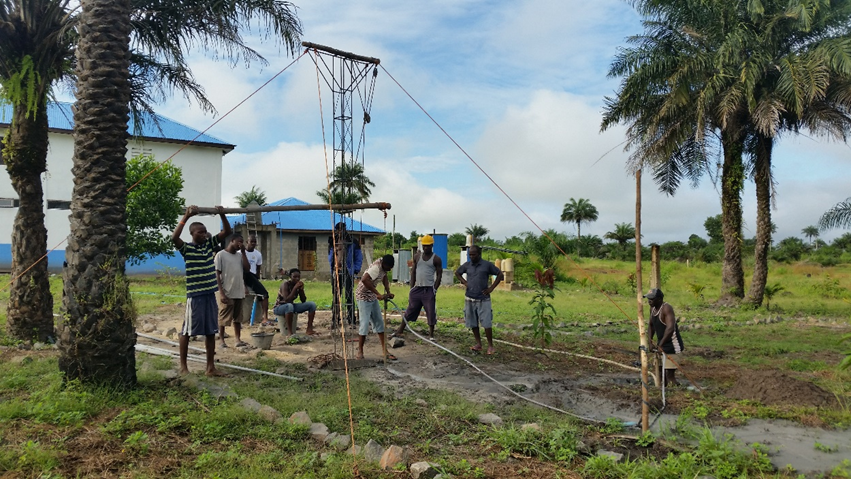
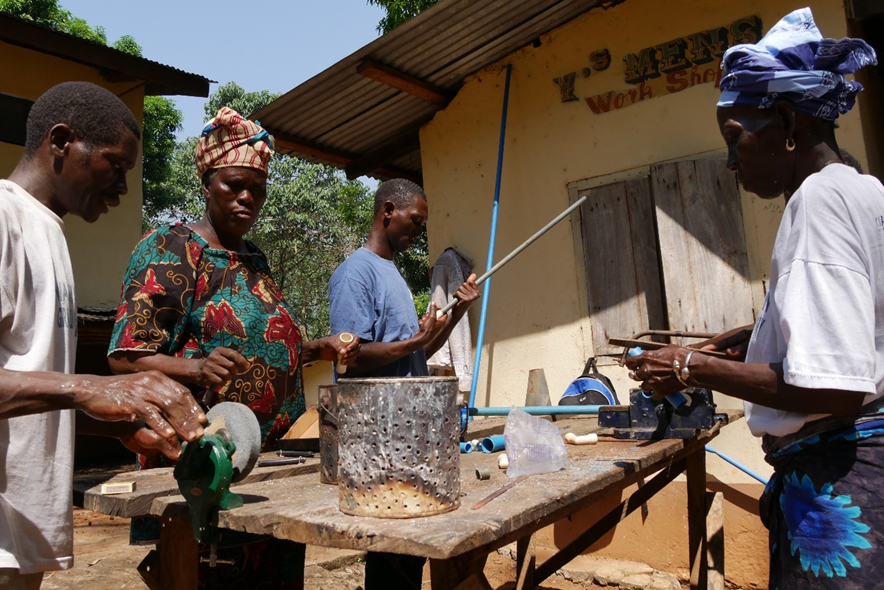
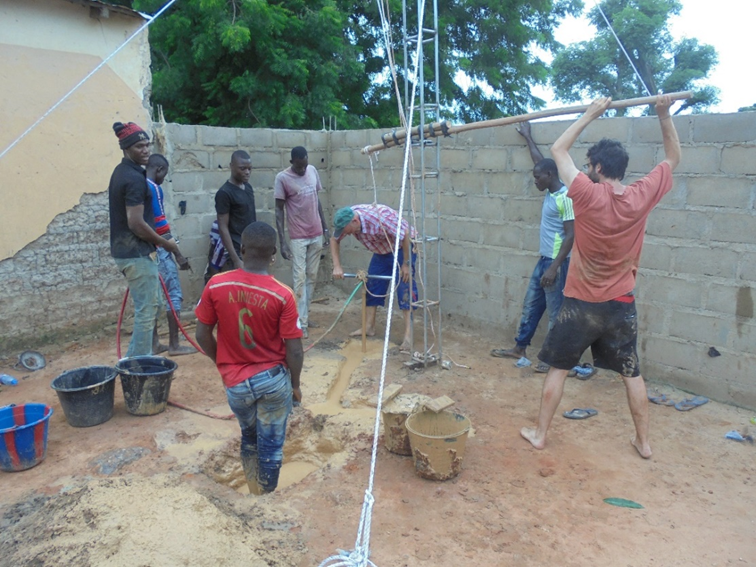
Drilling a well in Sierra Leona WASH Center
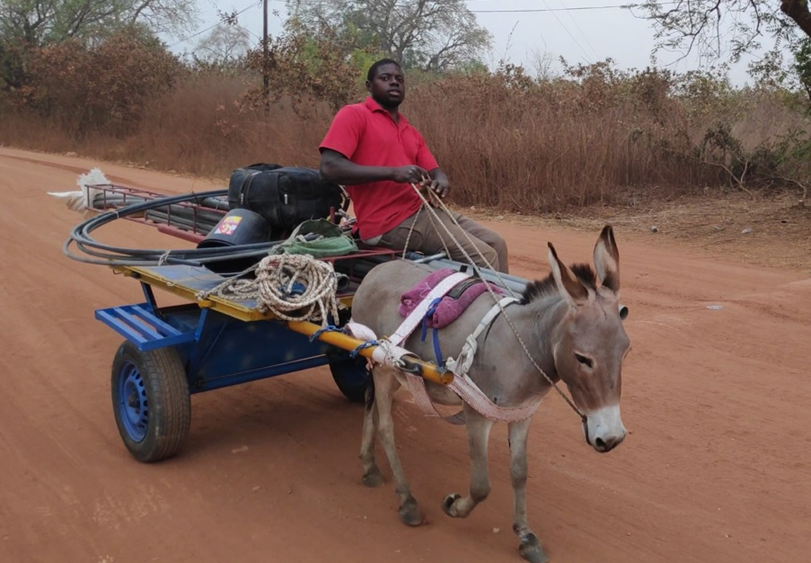
Amadou, EMAS technician from Senegal going with his drilling equipment to make a new well
Training of EMAS pump making at Sierra Leone
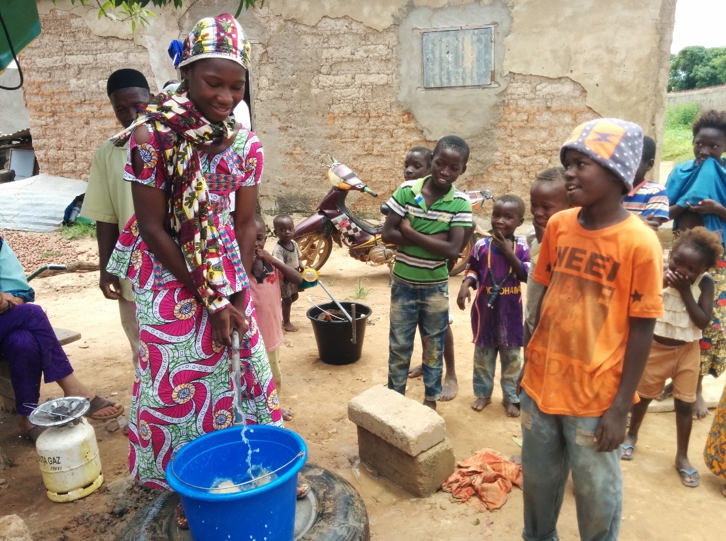
Drilling training at Mali
EMAS systems including rainharvesting, underground tank, bomba manual, toilet, shower and sink
About the Author: Jaime Aguirre is originally a mechanical engineer who acted many years as design engineer in the wind energy sector. After some disappointing experiences with the implementation of high-tech WaSH technologies he joined in 2014 voluntarily an EMAS training in Bolivia. Since then, he has permanently been engaged in providing training together with German based NGO EMAS-International e.V. In 2015 he initiated the Spanish NGO TADEH in Bilbao, Spain which provides training in EMAS Self Supply technologies worldwide.
Did you enjoy this blog? Would you like to share your perspective on the rural water sector or your story as a rural water professional? We are inviting all RWSN Members to contribute to this 30th anniversary blog series. The best blogs will be selected for publication. Please see the blog guidelines here and contact us (ruralwater[at]skat.ch) for more information. You are also welcome to support RWSN’s work through our online donation facility. Thank you for your support.
This year we are celebrating 30 years since the Rural Water Supply Network was formally founded. From very technical beginnings as a group of (mostly male) experts – the Handpump Technology Network- we have evolved to be a diverse and vibrant network of over 13,000 people and 100 organisations working on a wide range of topics. Along the way, we have earned a reputation for impartiality, and become a global convener in the rural water sector.
RWSN would not be what it is today without the contributions and tireless efforts of many our members, organisations and people. As part of RWSN’s 30th anniversary celebration, we are running a blog series on rwsn.blog, inviting our friends and experts in the sector to share their thoughts and experiences in the rural water sector.
This is a guest blog by RWSN Member Sally Sutton, based in the United Kingdom.
2003 saw the emergence of the more colourful RWSN butterfly from the HTN chrysalis – and my first venture with dirty hands from practical water supply development into the heady heights of international conferences. The move from whether to use foam or mud, ABS, stainless or mild steel casing, resistivity or water diviners, had for me begun two decades earlier to embrace issues of health, social cohesion, equity and marketing (and even childcare (see photo below)). These aspects combined the technical and social issues in rural water supply, which equally reflected my interests and training.
Sally and her daughter Sarah supervising drilling in Western Province, Zambia. Never too young to learn? (Photo credit: Sally Sutton)
2003 was also the year of the Third World Water Forum in Kyoto, a meeting of 24,000 participants. Mingling among them were Piers Cross, Rupert Taylor, Erich Baumann, and Peter Wurzel. All key players in the HTN network committed to turning it into a broader organization, covering more aspects of rural supply. By chance, as a result of leading a four year DFID-funded research project, I had won a ‘Water Action Prize’ bursary to present a poster session on ‘Community-led improvements to rural water supply’ in Kyoto. I was a very small fish in a big and truly awesome pond. Piers et al were looking for someone to build up a new theme on small water supplies and seeing my poster session, they seemed to think that greater household/community involvement was one way to go. They, as HTN, gave me four months to set up the theme and organize a full set of papers and presenters as part of the Durban conference at which RWSN was born. This was quite a frightening task since the theme didn’t exist and I didn’t know many people in the sector, or the organisation and until Kyoto hadn’t been involved in international conferences at all. Truly a baptism by fire.
The name of the theme has been heatedly debated many times from that day on. ‘Small group water supplies’, ‘household and small community supplies’, and ‘household solutions’, amongst many other alternatives were discussed at meetings, in Durban, St Gallen, and Vienna. With the help of Joe Narkevic as the link to the Water and Sanitation Program (WSP) at the time, ‘Self-supply’ emerged as a pithy title, which accentuated the key element of owner investment which the other options lacked. It has many drawbacks but is also gaining ground as a label for similar approaches in other fields, such as electricity. Here the parallels in off-grid solutions justify the adoption of the same name. So RWSN has stuck with ‘Self-supply’ and it has slowly gained ground as a concept.
Ground-gaining is not the same as acceptance, or adoption into everyday practice. It is a start in what seems to be a long-term development process- reminiscent of turning around the Queen Elizabeth 2, (a most cumbersome ocean liner). And here RWSN plays a vital role. It provides continuity, linkages, platforms for dialogue and discussion and a credibility on which progress can be built in the introduction of new approaches and technologies. For instance, in the first eight years, pilot studies were established through RWSN’s links to WSP, which funded both coordination and pilot projects to explore what self-supply could mean on the ground. The same is true for groundwater development and links to UNICEF with Kerstin Danert at the helm. With four sub-Saharan countries exploring self-supply through WSP and UNICEF / WaterAid (see photo below) and two more through other channels (WeltHungerHilfe and SHIPO/SMART centres), some of the potential and lessons learnt on the ground became clearer and strengthened RWSN’s ability to lead the field. These and many other self-supply experiences in developed and developing countries are examined in our recently published book. (see below in notes about the author for more information).
Piloting brings cooperation between both government and non-government organisations in action research (Photo credit: Sally Sutton)
With Andre Olschewski and subsequently with Matthias Saladin as theme leaders, a strong network of interested members has been fortified through forums, Dgroups and through e-discussions, notifications of articles, conferences, and much, much more. It highlights the importance of networking, and particularly the roles of committed individuals, national champions and the international dimension that RWSN brings. Yet rural water supply remains the ugly duckling, with limited donor interest and their continued devotion to business as usual, and with little or no inquisitiveness into who the remaining unserved really are and what they want, rather than what they ‘need’ (see photo below). The ‘Need’ with an outsider’s perception leads only to solutions outsiders identify and with which they are familiar, impacting on long-term sustainability and necessitating donor dependence.
Self-supply encourages pride in ownership and choice in what colour boot polish or paint to use to show it! (Photo credit: Peter Morgan)
RWSN with its themes of self-supply, sustainable groundwater and leaving no-one behind embraces aspects which are particularly relevant to the remaining un-served, reflecting the voices of the more marginalized, the more expensive to supply with standard solutions, and looks more at how to reach them equitably and sustainably. Its history shows it has the potential to channel donor interest into more relevant hybrid strategies, mixing levels of service and technology options to fit different socio-hydrological conditions, a potential which is increasingly, but not yet adequately fulfilled. The strength of voice is being magnified through the linking by RWSN of many NGOs who are of the same view but individually are unheard. RWSN is a unique and invaluable asset, hopefully with the power to shout even louder in the future and with even greater effect. A luta continua!
About the author: Sally Sutton was originally a geographer, who explored both physical and social aspects of the subject and is happy to have found a field which employs both equally. After 8 years of – doctoral research in hydrogeochemistry and then in Omani traditional groundwater systems in the 1970’s, she acted as principal hydrogeologist for a major consulting engineering company, mainly in the Middle East. After ten years she moved to work in Africa building up Zambian government services in drilling but also focusing more on aspects of sustainability of systems and different service levels for different socio-economic and hydrological situations. From 1997 onwards her principal focus has been on household investment in individual and group supplies, all over Africa, culminating in the swan song book written with John Butterworth ‘Self-Supply, filling the gaps in public water supply provision’. This explores self-supply in developed and developing countries.
Photo credits: Sally Sutton; Peter Morgan; Rik Haanen.
Did you enjoy this blog? Would you like to share your perspective on the rural water sector or your story as a rural water professional? We are inviting all RWSN Members to contribute to this 30th anniversary blog series. The best blogs will be selected for publication. Please see the blog guidelines here and contact us (ruralwater[at]skat.ch) for more information. You are also welcome to support RWSN’s work through our online donation facility. Thank you for your support.
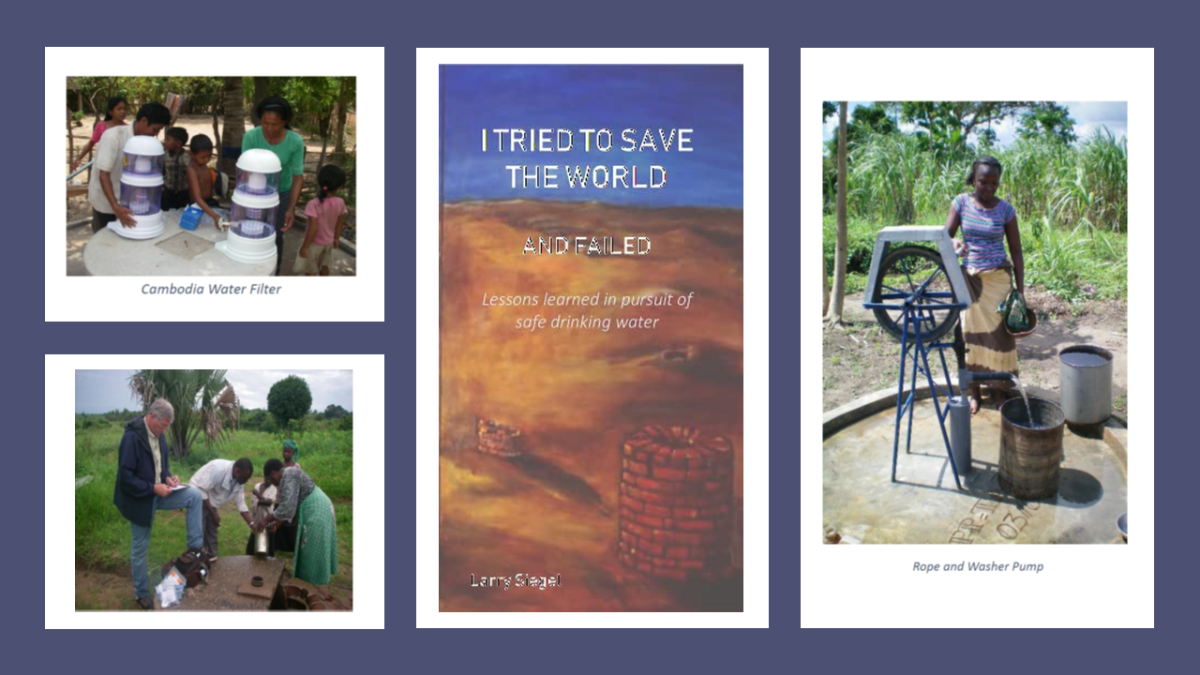
My book, I Tried to Save the World and Failed, reflects on a time and effort to find rural water solutions in Mexico, Malawi and Cambodia that could be used everywhere
by Larry Siegel
My book, I Tried to Save the World and Failed,reflects on a time and effort to find rural water solutions in Mexico, Malawi and Cambodia that could be used everywhere. The effort started during the Vietnam war while working on an Army Civil Affairs team. There I was confronted with the reality that not everyone turns on the tap and drinks good water. Several of the rural communities I worked in desired more water, cleaner water, and more convenient water. Echoes of that experience grew from travels in later years.
A drinking water partnership formed when as a Congressional staffer I worked on the Safe Water Act of 1974. Years later I joined with a few of those colleagues to form Safe Water International (SWI), which had dreams of a silver bullet solution for the billion or so citizens around the world with only contaminated water to drink.
SWI put Rotary funds and private donations to the task of seeking that silver bullet through rural drinking water projects in Mexico, Malawi, and Cambodia. As these projects moved from one country to the next, it became clear that every rural drinking water project demanded a long-term commitment to the project community.
It is said that 35% of water well projects break down or are abandoned by users. Sad to say, the work of SWI in three countries met this unfortunate goal. As a consequence, I Tried to Save the World seeks to identify lessons learned from those drinking water efforts in remote rural communities. The observations that result come largely from field work and then from reflection in succeeding years on the successes and failures of those projects.
The book closes with a set of lessons aimed at sustainability. The lessons are not meant to be the final word. It is hoped they will provoke discussion on how to go about achieving project sustainability.
While there are stories of disappointment, there is also praise for the commitment and perseverance of all who undertake work to improve the health and sanitation of those desperately in need of help. The closing anthem of the book is “Help is Help.” Even unsuccessful projects can bring life-long benefits to those who for some short space of time have safe water and good sanitation.
Este es un blog de la Dra. Sally Sutton, el Dr. John Butterworth y Matthias Saladin. Ofrece una visión general de la presentación virtual del libro “Self-supply – filling the gaps in public water supply provision”, que ocurrió el 25 de marzo.
Figura 1 El suministro de agua in situ se utiliza para muchos fines. Tener un pozo propio suele mejorar la seguridad alimentaria y los ingresos, entre otros beneficios.
El primer libro dedicado al autoabastecimiento
El evento comenzó con una presentación de la autora principal, la Dra. Sally Sutton, en la que se destacaron brevemente cuestiones específicas del libro. Entre otras cosas, mencionó la magnitud del autoabastecimiento, proporcionando una estimación de más de mil millones de personas que beben agua de fuentes a las que han accedido o mejorado ellos mismos (sin incluir a las personas que invierten como grupos/cooperativas). El hecho de que esta cifra sea sólo una estimación aproximada es otro recordatorio de lo mucho que se ha pasado por alto el autoabastecimiento en las últimas décadas, al menos entre los donantes, las ONG internacionales, el mundo académico y la mayoría de las demás partes interesadas en el sector. Después de siglos (o milenios) en los que la gente se ha abastecido de agua por sus propios medios (=autoabastecimiento), éste es el primer libro dedicado al tema, y el evento fue una oportunidad para llamar más la atención sobre él.
Comentarios de expertos del sector del agua
A continuación, Dr. John Butterworth (IRC) destacó ejemplos de autoabastecimiento en Zimbabue y Etiopía de los que fue testigo de primera mano, y cómo la falta de sistemas de apoyo al autoabastecimiento en muchos lugares limita el alcance y el nivel de servicio que la gente puede alcanzar mediante este mecanismo. A continuación, los autores de los estudios de caso de Tanzania y Escocia hicieron sus aportaciones, así como una serie de comentarios de expertos de todo el mundo. Nos gustaría destacar algunos de los comentarios de estos expertos (las citas de los expertos en inglés han sido traducidas al español por nosotros).
Matt Bower, Jefe del equipo de operaciones del organismo regulador de la calidad del agua potable en Escocia
Azzika Tanko Yussif, Senior Policy Advisor – AMCOW (Consejo de Ministros Africanos del Agua)
Patrick Moriarty, Director General del IRC
Louisa Gosling, Presidenta de la Red de Abastecimiento de Agua en Zonas Rurales (RWSN) y Senior Manager – Responsabilidad y Derechos, WaterAid
Didier Allely, Miembro del equipo GLAAS/OMS
Los comentarios fueron seguidos por una sesión de open mic, en la que los participantes sacaron a relucir cuestiones como el acceso universal, la calidad del agua (y la importancia de la proximidad del agua), y los múltiples fines para los que se utiliza el agua cuando está disponible in situ. El evento concluyó con un gran agradecimiento a todos los participantes y con muchas felicitaciones a los autores por este hito.
Grabación y recursos adicionales
Si no tuviste la oportunidad de seguir el evento completo, o si quieres acceder a recursos adicionales relacionados con el libro, haz clic en los siguientes enlaces (disponible sólo en inglés) :
Enlace para descargar (gratuitamente) o comprar el libro (librería Practical Action)
Grabación del evento de presentación virtual del libro
Los organizadores del evento y los autores del libro agradecen al IRC por permiti que la versión en línea sea de descarga gratuita y que haya sufragado los costes de producción. Las personas interesadas en adquirir el libro al por mayor, o en utilizarlo con fines didácticos, pueden ponerse en contacto con John Butterworth.
Mantener el impulso
Este evento marcó un hito en la historia del Autoabastecimiento. Habiendo sido creado como un Tema de la RWSN hace más de 15 años, ahora observamos que (lentamente) el tema está atrayendo más interés y esperamos que este proceso siga ganando impulso en los próximos meses y años. Más de mil millones de personas dependen del autoabastecimiento como mecanismo principal para acceder al agua, y es evidente que es necesario apoyar a estas personas para que suban la escalera de los niveles de servicio, ya sea mejorando su suministro de agua privada o accediendo al agua por otros mecanismos, incluidas las redes de agua corriente.
Ce blog a été rédigé par la Dre Sally Sutton, le Dr John Butterworth et Matthias Saladin. Il donne un aperçu du lancement virtuel du livre “Self-supply – filling the gaps in public water supply provision”, qui a eu lieu le 25 mars.
Image 1 Les sources d’eau sur place sont utilisées à de nombreuses fins. Avoir son propre puits tend à améliorer la sécurité alimentaire et les revenus, entre autres.
Le premier livre consacré à l’auto-approvisionnement
L’événement a débuté par une présentation de l’auteure principale, la Dre Sally Sutton, qui a donné de brefs coups de projecteur sur certains éléments spécifiques du livre. Elle a notamment évoqué l’ampleur de l’auto-approvisionnement, estimant à plus d’un milliard le nombre de personnes qui boivent de l’eau à partir de sources auxquelles elles ont accédé ou qu’elles ont améliorées elles-mêmes (sans compter les personnes qui investissent en tant que groupes/coopératives). Le fait que ce chiffre ne soit qu’une estimation approximative rappelle à quel point l’auto-approvisionnement a été négligé au cours des dernières décennies, du moins parmi les bailleurs de fonds, les ONGs internationales, le monde universitaire et la plupart des autres acteurs du secteur. Après des siècles (ou des millénaires) de personnes fournissant de l’eau par leurs propres moyens (= auto-approvisionnement), il s’agit du premier livre consacré à ce sujet, et l’événement de lancement du livre était une excellente occasion d’attirer davantage l’attention sur ce sujet.
Commentaires des expert-e-s du secteur de l’eau
Dr. John Butterworth (IRC) a ensuite mis en évidence des exemples d’auto-approvisionnement au Zimbabwe et en Ethiopie dont il a été le témoin direct, et comment le manque de systèmes de soutien à l’auto-approvisionnement dans de nombreux endroits limite l’étendue et le niveau de service que les gens peuvent atteindre par ce mécanisme. Ont suivi les contributions des auteurs des études de cas en Tanzanie et en Ecosse, et une série de commentaires d’experts du monde entier. Nous aimerions mettre en lumière certains des commentaires de ces experts (les citations des expert-e-s en anglais ont été traduites en français par nos soins).
Matt Bower, Chef d’équipe des opérations à l’organisme de réglementation de la qualité de l’eau potable en Écosse.
Azzika Tanko Yussif, Senior Policy Advisor – AMCOW (Conseil des ministres africains de l’eau)
Patrick Moriarty, Directeur général – IRC
Louisa Gosling, Présidente du Réseau d’approvisionnement en eau en milieu rural (RWSN) et Senior manage – responsabilité et droits, WaterAid.
Didier Allely, Membre de l’équipe GLAAS/OMS
Les commentaires ont été suivis d’une session open mic, où les participants ont soulevé des questions telles que l’accès universel, la qualité de l’eau (et l’importance de la proximité de l’eau), et les multiples usages de l’eau lorsqu’elle est disponible sur place. L’événement s’est conclu par un grand merci à toutes les personnes impliquées et par de nombreuses félicitations aux auteur-e-s pour cette réalisation importante.
Enregistrement et ressources supplémentaires
Si vous n’avez pas eu l’occasion de suivre l’événement dans son intégralité, ou si vous souhaitez accéder à des ressources supplémentaires liées au livre, cliquez sur les liens ci-dessous (disponible en anglais uniquement):
Lien pour télécharger (gratuitement) ou acheter le livre (Practical Action bookstore)
Enregistrement de l’événement de lancement virtuel du livre
Les organisateurs de l’événement et les auteur-e-s du livre tiennent à remercier l’IRC d’avoir rendu la version téléchargeable en ligne gratuite et d’avoir pris en charge les coûts de production. Les personnes intéressées par l’achat en gros du livre, ou par son utilisation à des fins d’enseignement, sont priées de contacter John Butterworth.
Maintenir la dynamique amorcée
Cet événement a marqué un moment fort dans l’histoire de l’auto-approvisionnement. Après avoir été créé en tant que thème au sein de RWSN il y a plus de 15 ans, nous constatons aujourd’hui que le sujet suscite (lentement) de plus en plus d’intérêt et nous nous attendons à ce que ce processus continue à prendre de l’ampleur au cours des prochains mois et années. Plus d’un milliard de personnes dépendent de l’auto-approvisionnement comme principal mécanisme d’accès à l’eau, et il est nécessaire d’aider ces personnes à gravir l’échelle des niveaux de service – que ce soit en améliorant davantage leur source d’eau privée ou en accédant à l’eau par d’autres mécanismes, y compris les réseaux d’eau courante.
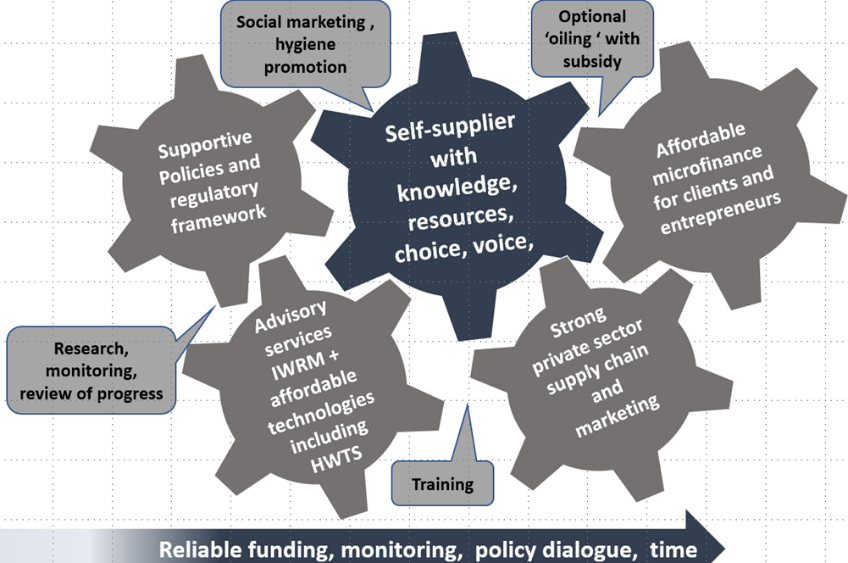
Image 2 Environnement favorable à l’auto-approvisionnement
This is a blog by Dr Sally Sutton, Dr John Butterworth, and Matthias Saladin. It gives an overview of the virtual launch of the book “Self-supply – filling the gaps in public water supply provision”, which took place on March 25.
Figure 1 On-site water sources are used for many purposes. Having your own well tends to improve food security and income, among other benefits.
The first book dedicated to self-supply
The event started with a presentation by the main author, Dr. Sally Sutton, shining short spotlights on specific issues of the book. Among others, she mentioned the scale of self-supply, providing an estimate of more than one billion people drinking water from sources they have accessed or upgraded themselves (not including people investing as groups/cooperatives). Many more share these sources as their main drinking water source and for other purposes as well. The fact that this number is only a rough estimate is another reminder on just how much self-supply has been overlooked over the past decades, at least among donors, international NGOs, academia and most other stakeholders in the sector. After centuries (or millennia) of people providing water by their own means (=self-supply), this is the first book dedicated to the subject, and the event was a great opportunity to draw more attention to it.
Comments from experts of the water sector
Dr. John Butterworth (IRC) then highlighted examples of self-supply in Zimbabwe and Ethiopia he witnessed first-hand, and how the lack of support systems to self-supply in many places limits the extent and service level people can reach through this mechanism. This was followed by inputs from the authors of the case-studies in Tanzania and in Scotland, and by a series of comments from experts from around the world. We would like to highlight some of the comments made by these experts.
Matt Bower, Operations Team Leader at Drinking Water Quality Regulator for Scotland
Azzika Tanko Yussif, Senior Policy Advisor – AMCOW (African Ministers’ Council on Water)
Patrick Moriarty, Chief Executive Officer – IRC
Louisa Gosling, Chair of the Rural Water Supply Network & Senior Manager – Accountability & Rights, WaterAid
Didier Allely, Member of the GLAAS/ WHO team
The comments were followed by an open-mic session, where participants brought up issues such as universal access, water quality (and the importance of proximity of water for that matter), and the multiple purposes water is used when available on premises. The event concluded with a big thank you to everyone involved, and with many congratulations to the authors on this milestone achievement.
Recording and additional resources
If you did not have the opportunity to follow the full event, or if you would like to access additional resources related to the book, click on the links below:
Link to download (for free) or purchase the book (Practical Action bookstore)
The organizers of the event and the authors of the book would like to thank IRC for making the online version free to download, and to pay for the production costs. People who are interested to purchase the book in bulk, or to use it for teaching purposes, please contact John Butterworth.
Keep up the momentum
This event marked a highlight in the history of Self-supply. Having been created as a Theme within RWSN more than 15 years ago, we now observe that (slowly) the topic is attracting more interest and we expect that this process will continue to gain momentum over the next months and years. More than one billion people rely on Self-supply as primary mechanism to access water, and there clearly is a need to support these people to climb the ladder of service levels – be it by upgrading their private water source further or by accessing water by other mechanisms, including piped water networks.
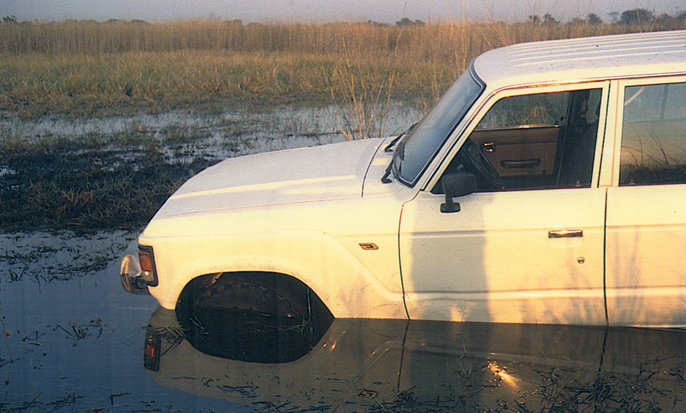
After 14 years working as a hydrogeologist in the deserts of the Middle East on traditional water supplies and wellfield construction, I moved to sub-Saharan Africa, which presented a whole new challenge.
The easier availability of water was the most obvious difference – sometimes too much so (see photo)- but other important ones were the low quality of water and scattered population.
My name is Benson Kandeh and I am a young water professional from Sierra Leone. I work on providing water supply for rural communities in my country through the EMAS technologies and by training technicians to enable self-supply by and for communities. You can find out more about my organisation here and my work here.
This year, I won a competition for young professionals organized by RWSN to attend World Water Week in Stockholm. Getting to Stockholm from Sierra Leone was a challenge: I had to apply for a visa to Sweden in Nigeria, where I had to stay over two weeks waiting for the outcome of the visa process. My visa was initially denied by the Swedish authorities and later approved thanks to an appeal from the RWSN Secretariat. I got the news that my visa has been appealed on Monday 19th August, and two days later, on Wednesday I was on a plane to Abuja to collect my visa and fly out to Stockholm the next day. It has been a whirlwind and quite an adventure for me!
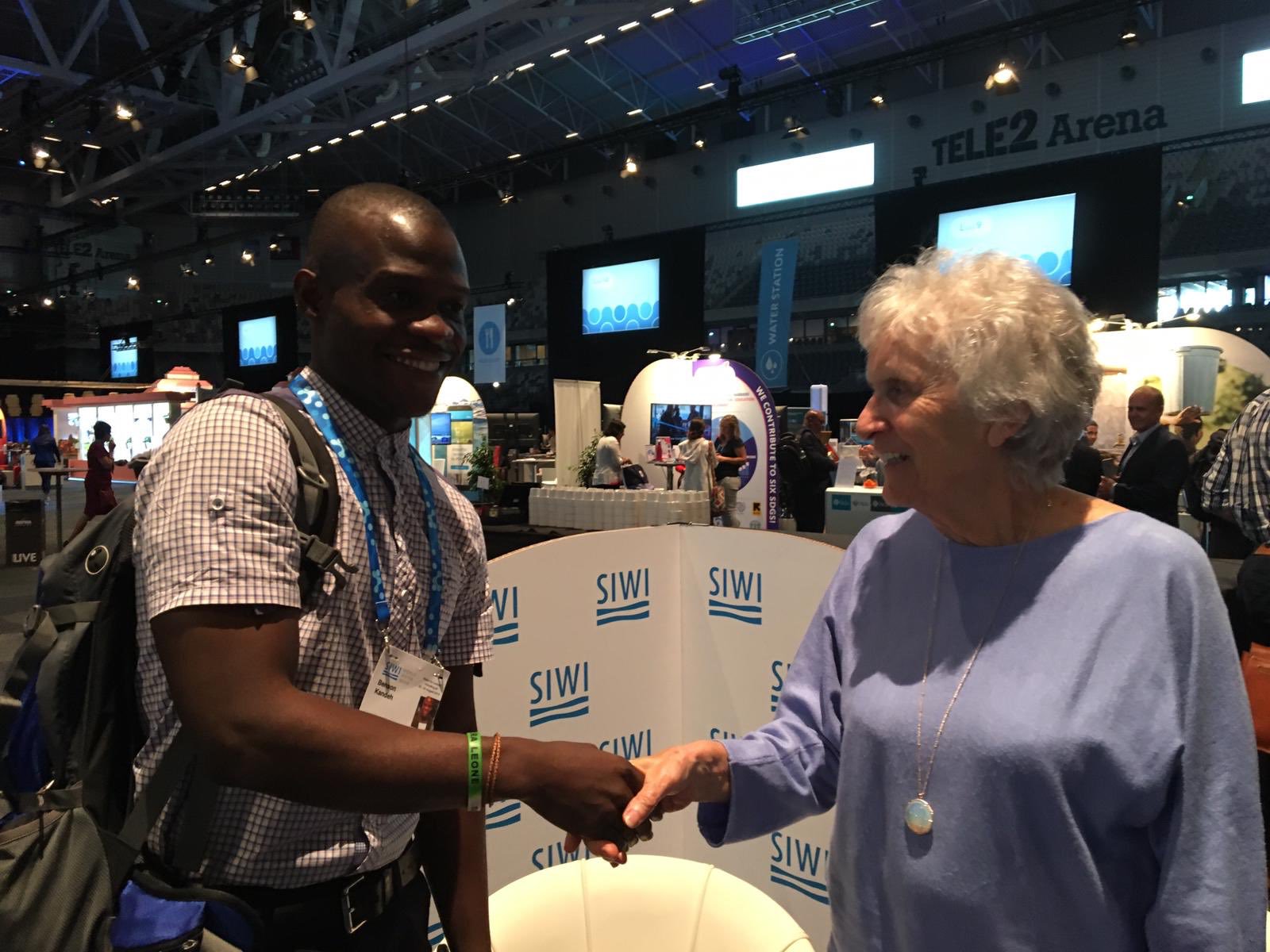
This year’s World Water Week conference was held from August 25-30, 2019 and organized by the Stockholm International Water Institute (SIWI) with over 3,300 people from 130 countries – including Sierra Leone. The 6-day programme consisted 270 sessions with the Theme: “Water for society – including all”. Two of the highlights of the event were the Stockholm Water Prize ceremony, and the Stockholm Junior Water Prize competition honouring outstanding young people between the age of 15 and 20 who have made an innovation in the water sector. 23 countries were represented this year in the Stockholm Junior Water Prize competition but only Nigeria and South Africa represented Africa as a whole. I was fortunate to meet with the Stockholm Water Prize winner, Dr Jackie King during the conference.
Meeting Dr Jackie King, winner of the 2019 Stockholm Water Prize
The conference gathered many experts, practitioners, decision-makers, business innovators and young professionals from a range of sectors and countries. It featured many interesting sessions, of which I was fortunate to attend the following, and learn and interact with many water professionals:
Here are some of my highlights of World Water Week:
Shared and Public Toilets: Equitable access everywhere
This session was very important especially for organizations and individuals that have interests in rural communities for water and sanitation. The presenter was able to clearly outline the shared sanitation model as it is important when considering household access as well as access outside the home. Toilet/latrine access is a challenge in the African region especially in institutions (schools, religious buildings, medical or other institutions). However, with this model, it can reduce the disparity greatly as it considers students, workers and anyone who lives outside their home.
According to the presenter, the quality of these services is often poor, because of limited monitoring standards, and the funding needed for such work is inadequate. The presenter made it very clear that shared sanitation is not just a service needed at one’s home but people need to access safely managed sanitation facilities, while they are away from home, whether at school, work, a market, or anywhere else they might go.
A pitching competition for 9 young water professionals
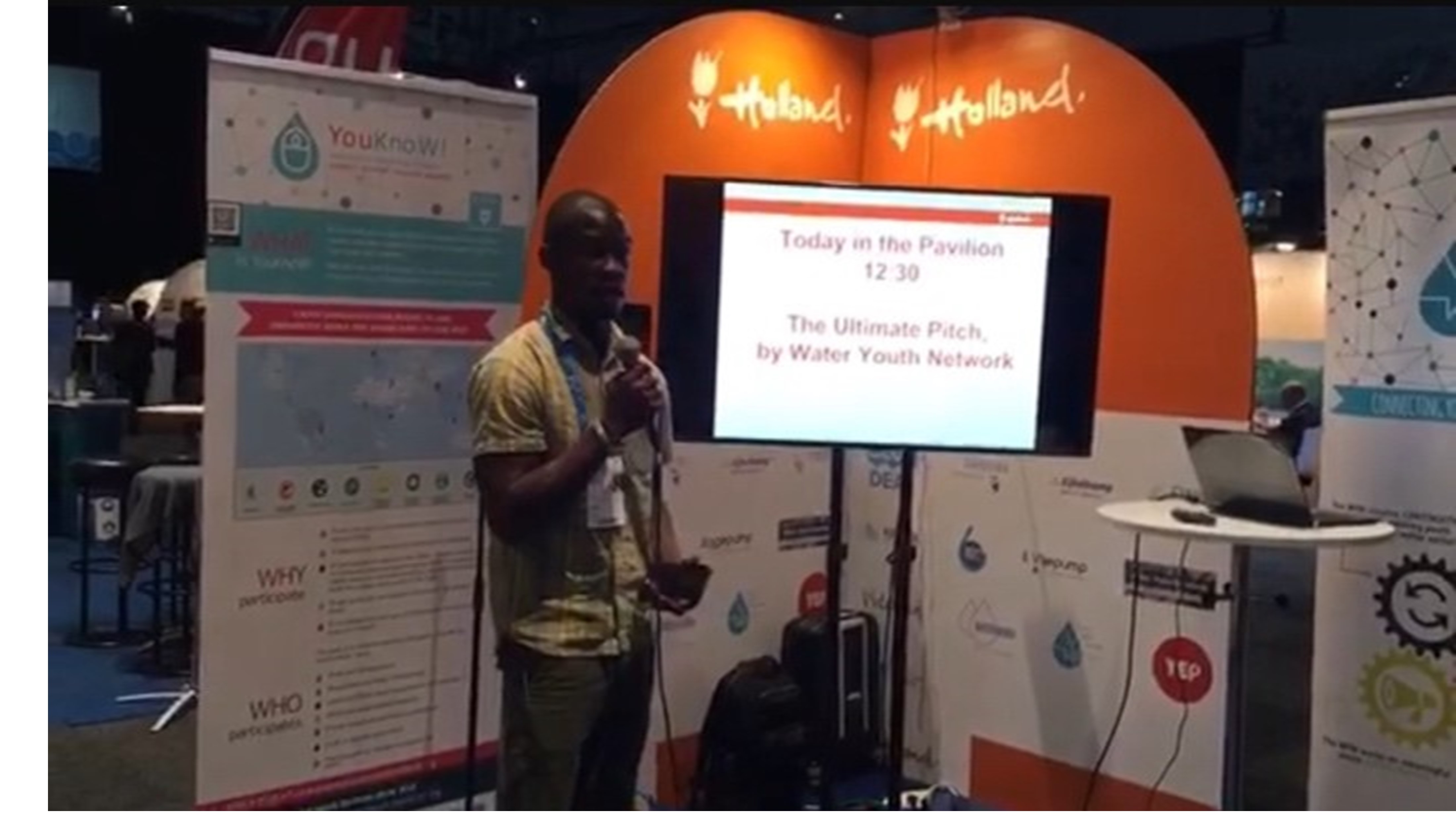
Thanks to the Water Youth Network for organizing an interesting and educative short pitching competition among nine young people, who work in the water sector. In fact, the group work was so amazing after the problems were presented to participants with the aim to discuss and offer solutions on how to make sure that water supply projects use an entrepreneurial approach to overcome inclusion challenge. We also talked about the difference between water accessibility and use.
My pitch at the Water Youth Network event
Key projects highlighted during the discussion were mini-grid piped water schemes in Bangladesh, scalable water services in Uganda and a Football for Water project in Kenya (Aqua for All), all reaching rural, poor, underserved households. During the various young water professionals’ presentations, I was able to learn about the impacts colleagues are making in their various countries to improve access to water and sanitation.
Safely Managed Drinking Water Services for Rural People – the Last Mile
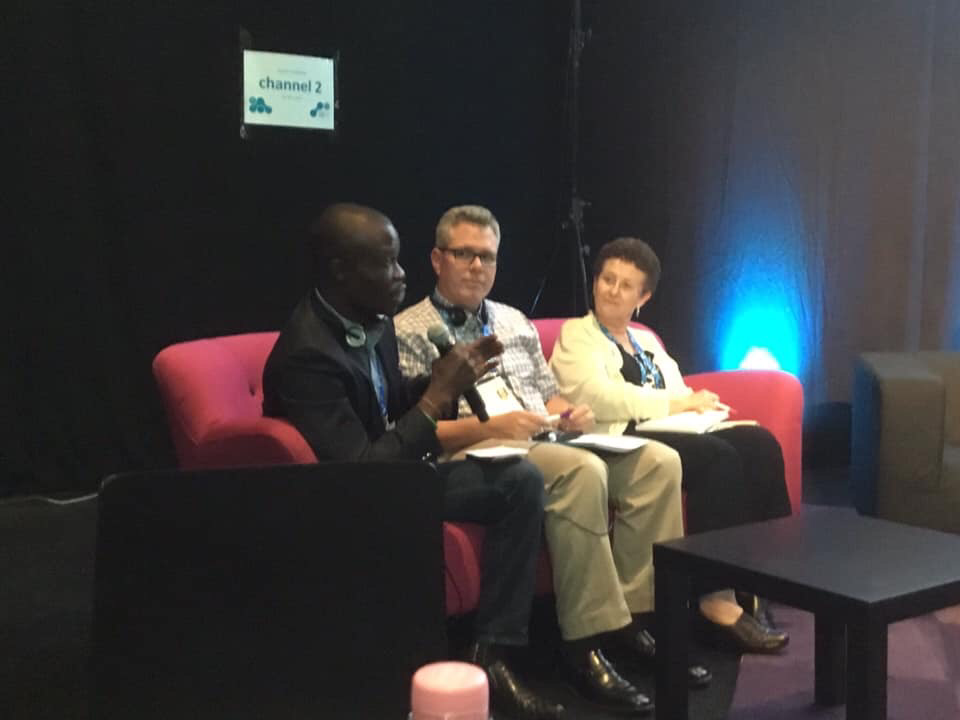
This was one of the most important sessions for me during World Water Week in Skockholm. I served as a panelist, representing the rural communities among other personalities from the WASH sector with the topic: “Safely Managed Drinking Water Services for Rural People”.
Speaking as a panelist with Clarissa Brocklehurst (Water Institute at UNC) and Peter Harvey (UNICEF)
I shared my experience using the EMAS technologies in the Sierra Leone context. The EMAS technology is a self-supply concept that entails local public or private initiatives by individuals, households or community groups to improve their own WASH supplies, without waiting for help from governments or non-government organizations. Self-supply is more about self-sustained initiative, rather than donor subsidies or external support. It empowers individuals and communities to gradually improve their WASH supplies at their own pace with regard to technical and financial capacities. Once the basic services are available, families make their own decisions on how to improve those services based on affordability and technical capacities at local level.
The most interesting part about this session was the mixed backgrounds of the presenters (knowledge, skills, cultures, etc.). All were centered on the water crisis and solutions with an emphasis on sustainability, affordability and accessibility for everyone everywhere.
Finally, the different presentations were able to examine the various technologies and hand-pump types that are utilized in various countries and provided evidences for technology options that can yield much for ease of maintenance, accessibility and sustainability.
Conclusion
Participating in World Water Week has been a great opportunity for me to present my work, make contacts, and contribute my perspective as a young professional from Sierra Leone. I am looking forward to staying in touch with some of the people I met during World Water Week, and hopefully this will help me on my mission to provide safe water in rural communities in my country.
Since coming home I have created my own group for young water professionals in Sierra Leone. I am trying to connect with other young professionals in Sierra Leone, to see how we can come together and contribute to the water sector. Any young professional interested in water in Sierra Leone is welcome to join here. I believe we can do a lot!
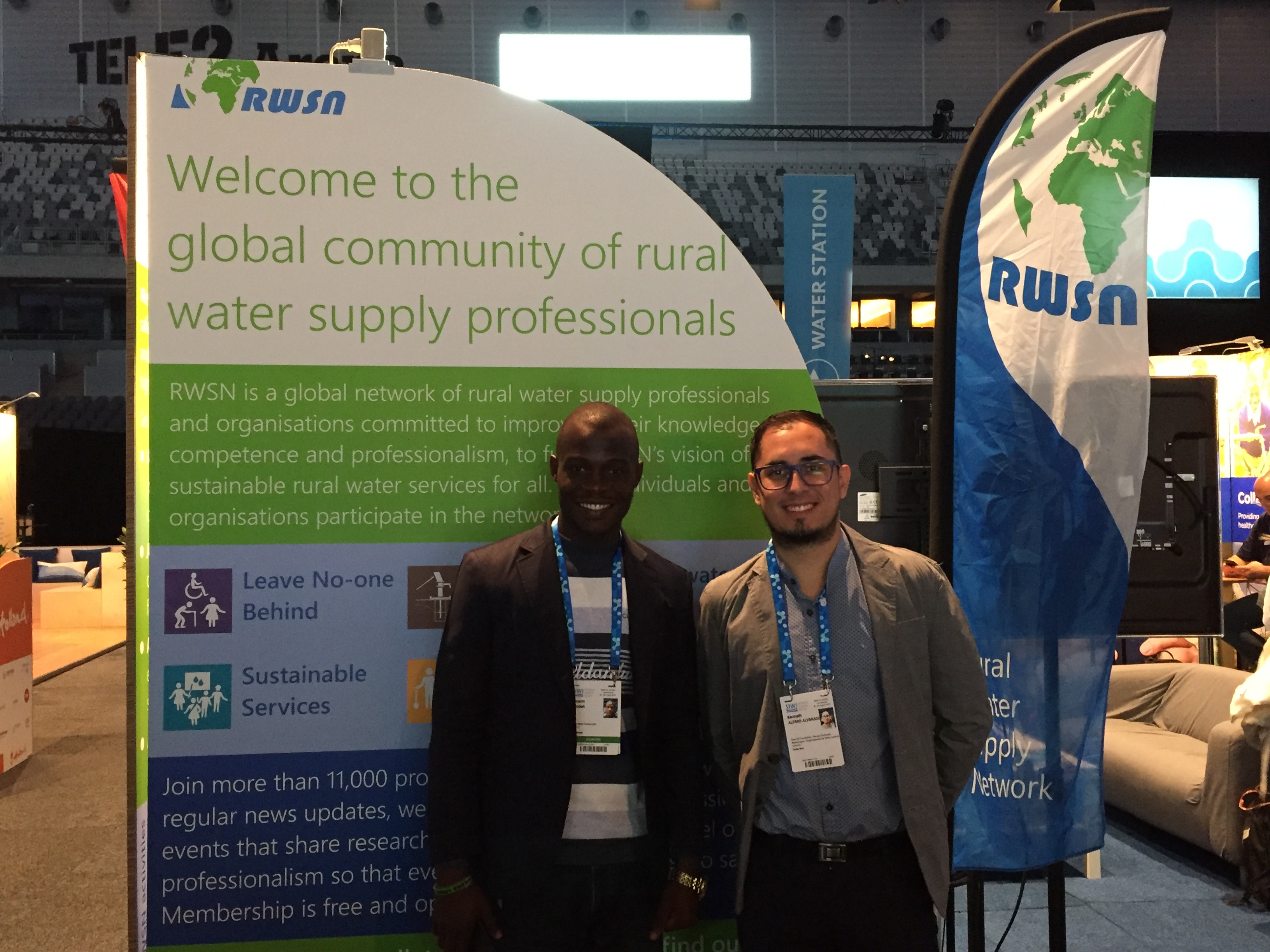
Meeting with RWSN Young Professional Kenneth Alfaro Alvarado from Costa Rica












 Rural Water Supply Network - blog