Reposted from IRC International Water and Sanitation Centre: see the original post here. The article is written by Digbijoy Dey and reviewed by Ruchika Shiva. Photo: IRC.
Rural water supply services are evolving quickly because of technology, climate stress, financing models, and governance changes. And these changes differ from country to country and within countries. However, the changes have some common characteristics as well, at least in lower middle-income countries. During our recent visits to Nepal, we have tried to understand the dynamics of rural water supply in this country. Here rural water supply essentially includes small urban and rural municipalities.
Common trends in rural water supply
Recent research and publications have documented the changing models of rural water supply, including Shiva and Saha (2025), Odhiambo et al. (2025), USAID (2023), and SFF (2020). An AI-assisted trend analysis based on these works highlights several shifts. Globally, rural water supply is moving from handpumps to piped schemes, as exemplified by India’s Jal Jeevan Mission and Ethiopia’s HoA-GW4R Project. Management is becoming more professionalised through private operators, public–private partnerships, and utility-style agencies, replacing traditional community-based volunteer committees. At the same time, digitalisation is transforming service delivery with Internet of Things (IoT) sensors, prepaid meters, and mobile payment systems that improve monitoring, detect leaks, and enhance cost recovery.
Other major trends include the integration of climate resilience and source diversification, such as combining groundwater, rainwater harvesting, and surface water treatment with climate-proofed infrastructure and energy-efficient pumping. Solar-powered and hybrid renewable energy systems are replacing diesel pumps, while water safety planning, real-time quality monitoring, and low-cost treatment are gaining ground. Financial sustainability is being strengthened through volumetric tariffs, prepayment, and blended finance, while regionalisation is clustering small schemes under federated utilities. Equity and inclusion are also central, with greater focus on women, marginalised groups, and people with disabilities. Finally, rural water networks are increasingly designed for multiple uses, linking drinking water to irrigation, sanitation, and livelihoods.
Why Nepal is different
Nepal has a population of about 30 million, 23 million of them live in rural areas, mostly in mountainous and remote regions. As per JMP 2024, 77.2% of the population is accessing basic drinking water services, only 16.5% of the population access safely managed drinking water (the remaining 6.3% have limited or unimproved services). With an aspiration to deliver reliable services, Nepal is trying to change its water service delivery ecosystem. If we look closely, we will see that the trends in Nepal are similar to those mentioned above. The difference is, while most countries are adopting more professionalised private or utility-managed services, Nepal is embracing a more formal version of community-managed services to address the rural water need. Historically, water supply in rural areas of Nepal has been managed voluntarily by the community. At present, the Water Users’ and Sanitation Committees (WUSCs) are being formalised into legal entities under sector laws.
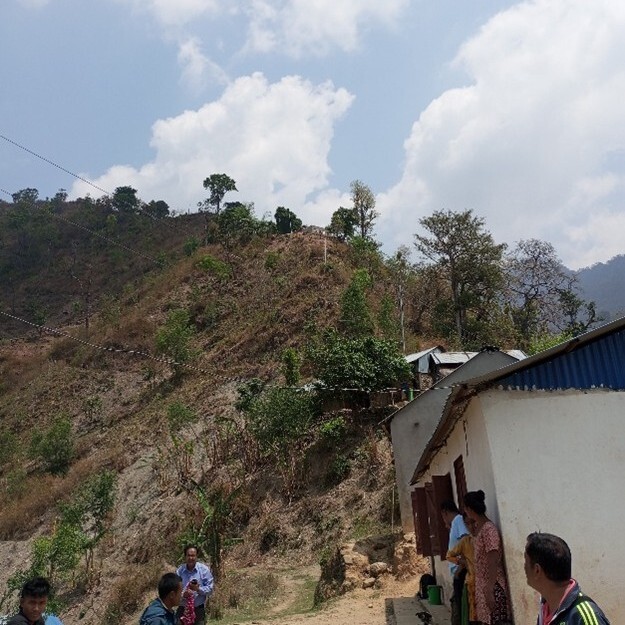
Blog by Jeff Tan, Aga Khan University – Institute for the Study of Muslim Civilisations (AKU-ISMC). Featured photo: Hunza Valley, Gilgit-Baltistan, Pakistan, Jeff Tan
The limitations of community-based management (CBM), and the conditions for its success, were identified as early as 1990 in a World Bank discussion paper. From very early on, it was recognised that communities needed ongoing external support from donors, NGOs and governments. However, management training, capacity building, technical input, financial assistance, and supportive policy and legislation necessary to create an “enabling environment” for successful community management rarely materialised. This raises a number of questions: Why has this external support not been forthcoming? Why has community management continued to be promoted despite the absence of support and lack of sustainability? Why has there been ‘a reluctance amongst academics and practitioners to challenge the CBM model’?
To answer these questions requires some appreciation of the wider discourse on development and in particular the anti-state rhetoric of neoliberalism that has sought to downsize, decentralise and ultimately bypass government. This has had the effect of fragmenting and hollowing out the state while at the same time prioritising markets and the private sector. Given that there is no profit to be made from delivering water services to low-income households that cannot afford to pay cost-covering tariffs, it is not surprising that previous state failure was replaced by market failure, with the private sector failing to step in to deliver water services.
One obvious solution would have been to address the sources of state failure, specifically underfunding, fragmentation and the loss of technical capacity. Instead of rebuilding state capacities, the distrust of, and ideological aversion to, the state has shifted the responsibility of water services from governments to local communities, built around the narrative of community participation, empowerment and self-help, with communities expected to take responsibility of their circumstances. It is hardly surprising then that community management is seen to enable ‘government officials and donors alike to abdicate responsibility for ensuring long-term sustainable water services’.
The recent turn against community management, not least by the World Bank, shows the persistence of CBM problems. But the Bank’s promotion of “professionalization” of water services as an alternative reflects a failure to examine the underlying tensions and problems in the CBM model and the wider delivery of rural water services, and reinforces an anti-state bias and blind faith in private sector participation. There are three structural tensions in the CBM model that have been noted in the literature and that need to be more cogently articulated.
The first tension is between access to water and cost recovery (a cornerstone to the sustainability of CBM), with low tariffs (to ensure access to water) unable to cover operating costs, let alone major repairs and capital refurbishment. Compounding this is the inability of households to pay already very low tariffs, with irregular, if any, tariff payments or collections.
The second tension is the long-term needs of water services and the short-term horizons of donors and NGOs. Only the state has a sufficiently long-term horizon to provide the indefinite support needed to sustain community management and ensure ongoing water services. But this added burden on the state for this comes at a time when the state in lower middle income countries (LMICs) is severely constrained financially and technically, having had fiscal discipline imposed on it and broken up and hollowed out in the name of decentralisation and localisation. If governments do not have the capacity to provide the so-called “enabling environment” to support community management, as has been the case since 1990, then a model that requires continued external support that is not forthcoming cannot be sustainable, “islands of success” notwithstanding.
Finally, and perhaps most significantly, the funding model for CBM is short-term, project driven (rather than programmatic or cross-sectoral) and fragmented, where the needs of water services are indefinite, with the choice being between reaching a greater number of underserved communities in the short term or serving fewer communities but with longer term support and greater sustainability. Longer-term support is especially needed because communities cannot even finance major repairs let alone capital refurbishment needed at the end of the lifespan of water infrastructure (typically 15-20 years) and to expand services to cater for population growth.
These structural features of CBM can be illustrated in the constraints faced by an otherwise successful delivery of clean drinking water through piped water networks to 459 settlements serving around 48,000 households and over 400,000 people under the Water and Sanitation Extension Programme (WASEP) in Gilgit-Baltistan, northern Pakistan. The challenges of sustaining and scaling up this textbook implementation of community management are reported in the results of a two-and-a-half-year British Academy-funded research involving a large-scale household survey of over 3,000 households, interviews with water management committees and a review of financial records, focus group discussions, an engineering audit and water quality tests.
Unlike qualitative and selective case studies, the combination of quantitative and qualitative analysis here presents important insights into the resilience but also limits of communities in sustaining water services, particularly given weak state capacities and the lack of external support. It also highlights the importance of “hardware” (engineering and water infrastructure) in sustaining water delivery, and best practices in the implementation and delivery of water services that can transcend some of the limitations of the CBM model.
The views and opinions expressed in this blog post are those of the author. They do not necessarily reflect the views of the Rural Water Supply Network (RWSN) or its Executive Committee.
Jeff Tan is a Professor of Political Economy at AKU-ISMC and was Principal Investigator on a British Academy grant on the sustainability and scalability of community water management in Northern Pakistan.
by Sean Furey, Director – RWSN Secretariat @ Skat Foundation
Rural Water, Sanitation and Hygiene (WASH) is such a local, personal, issue that does global-level exchange make sense?
At first glance, rural areas and communities worldwide seem too diverse for networking and knowledge exchange to be useful or meaningful. What does WASH for isolated hamlets in the Nepalese Himalayas have in common with a fishing village on the Peruvian coast or a small town in northern Nigeria? Quite a lot, it turns out.
When it comes to shear financial clout and convening power, Multi-lateral Development Banks (MDBs) are hard to beat, but even they have had mixed success with rural WASH – but there have been successes and they have recognised that they can learn from each other so that they can provide their client governments with the technical assistance and financial options to deliver sustained improvements. So, last year the relevant focal points from the African (AfDB), Asian (ADB) and Inter-American (IDB) met and agreed on a Call to Action with three priorities:
Information-based decision-making and rural WASH investments and service monitoring.
Institutional strengthening & coordination.
Rural sanitation.
From this, we organised a webinar mini-series drawing on their recommendations for case studies on each topic from each region.
Finding the common threads and bringing them together to make them stronger
This year, we took more steps to build an understanding and appreciation of the solutions that have the potential to transcend the variability of local contexts and be adapted. With growing interest, our colleagues at the World Bank also joined the small group and together we organised a special SIRWASH breakfast meeting and an open session on “Coordinating Rural Water Investments to Promote Security and Stability” with REAL-Water :
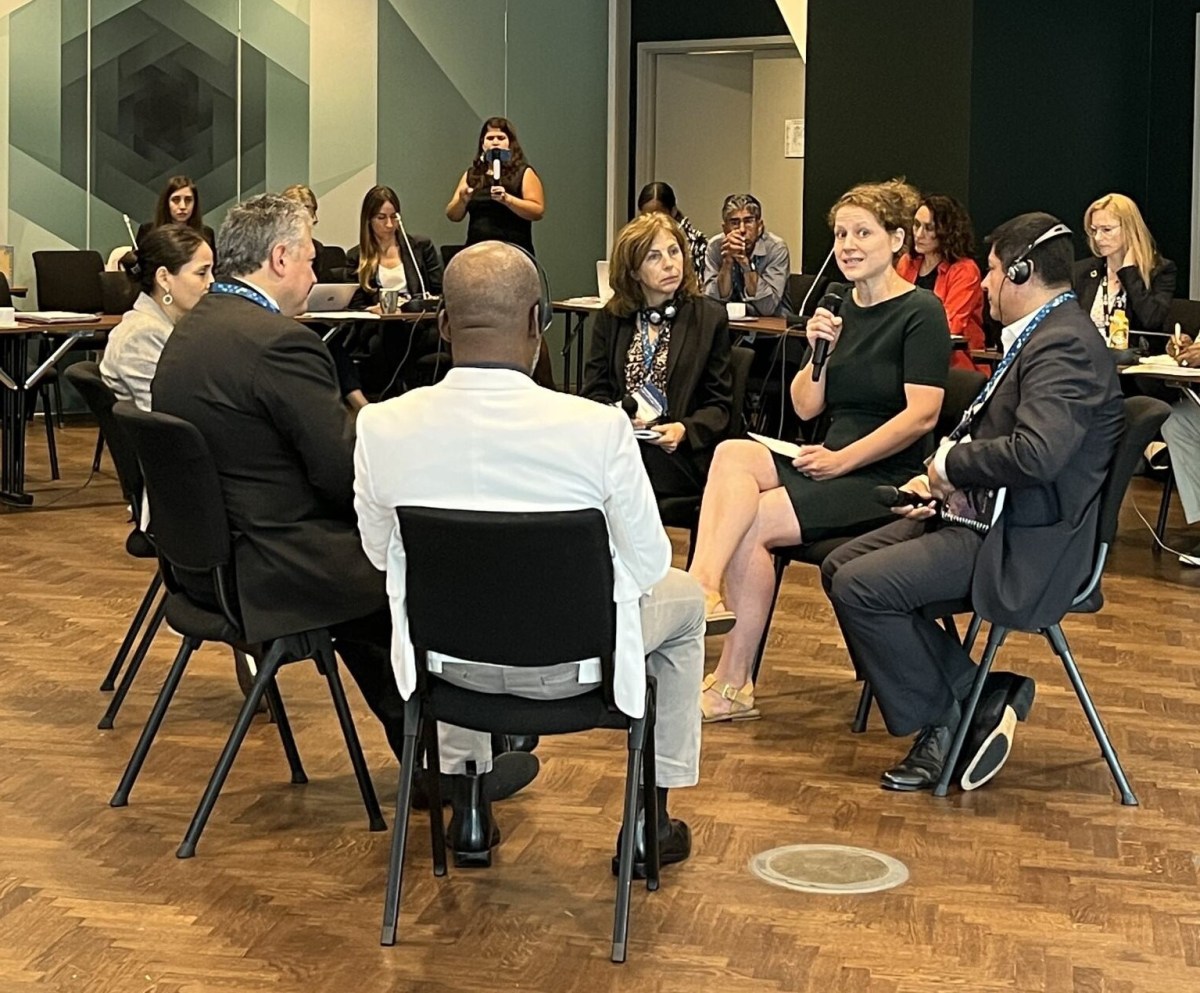
The SIRWASH breakfast meeting that followed was in the spirit of collaboration among countries in the global south, using knowledge sharing as a catalyst for innovative and sustainable solutions. It was attended by more than 40 representatives from countries (Haiti, Brazil, Peru, Chile, Nigeria and Uganda), multilateral banks, multilateral and bilateral agencies (SDC, AECID, SIDA, WHO, OAS, UNICEF), NGOs and philanthropists (including, One Drop, Water For People, Avina, Aguatuya, mWater, Global Water Center), as well as networks, partnerships and research (RWSN, SuSanA, WASH Agenda for Change, WASH Funders Group, SIWI, Uptime, the Aquaya Institute).
Using the “Fishbowl” method, participants exchanged their perspectives in an open and dynamic way on how strategic partnerships can increase impact in the sector. Discussions focused on two key questions:
1. How can technological innovations in rural WASH information systems be supported to be truly effective in decision making and incentivize scaling up?
2. What are practical solutions to improve the design and implementation of national rural WASH programs so that their benefits are sustained over the long term?
One of the central themes was innovation through sector information systems, a crucial tool for planning and managing water and sanitation services in rural areas. Three countries shared their experiences on how they have adapted and improved these systems:
Haiti highlighted the use of information systems for decision-making;
The importance of institutionalizing information at the national level and ensuring that communities participate in the validation and appropriation of data and decisions was emphasized.
In addition to information systems, the event underscored the need to integrate both technological and social innovations to improve rural services. Social innovations and behavioural change are essential for communities to take ownership of the systems and actively participate in their management and maintenance. Participants agreed that long-term sustainability is about finding the sweet spot between community-ownership/responsibility and external support.
The second critical issue addressed was the sustainability of rural water and sanitation services. Participants stressed that the successful implementation of these services cannot depend solely on initial investments in infrastructure. Innovative mechanisms need to be developed to ensure their financing and continued operation. The examples of Brazil and Nigeria were instructive, both countries demonstrating how the combination of effective governance and innovative financial models can ensure the operational sustainability of services:
Brazil presented its comprehensive implementation of their National Rural Sanitation Program (PNSR).
Nigeria highlighted the ways a results-based SURWASH programme is strengthening institutional capacity.
The Uptime Consortium shared their experiences and successes with Results-based Contracting on rural water service delivery across many contexts.
The discussion emphasized the need for functionality and quality indicators for rural services, linking reliable information to financial incentives for operators. This strategy can enhance the long-term sustainability of these systems. The working group concluded that collaboration is essential to ensure countries have reliable information for decision-making, aimed at improving the quality of rural services.r decision-making aimed at enhancing the quality of services in rural areas.
In the final discussion, consensus was reached on the need to create and maintain an enabling ecosystem for the development and sustainability of rural services. The great opportunity for development partners to join efforts and seek synergies, contributing technical and financial resources to this ecosystem in the countries was highlighted.
The event concluded with a clear call to action: all actors – governments, development banks, cooperation agencies, NGOs, networks and the private sector – must remain committed to financing and strengthening rural water and sanitation services. The MDBs will continue to work together on a concrete action plan to exchange and replicate successful and innovative experiences to ensure universal and quality WASH services in the countries.
Knowledge exchange is not just talk and powerpoint presentations, it is about building connections and trust between individuals and organisations, finding those common interests and encouraging co-creation of new insights and more sustainable solutions.
The symbolic activity organized by One Drop, where participants bonded to represent their intention to work together towards a common goal, was a powerful reminder of the importance of lasting partnerships. This symbolic gesture is just the beginning; it is essential to continue to scale up efforts so that the most vulnerable communities can access quality water and sanitation services in a sustainable and equitable manner.
Top-Down meets Bottom-Up
After this event, our partner Aguatuya convened an online meeting of Latin American WASH networks to encourage bottom-up exchange to complement our high-level approach. But we will follow that thread in the next post…
Many thanks to the large number of people involved, but in particular to Sergio Campos, Manuela Velasquez-Rodriguez and Cristina Mecerreyes at IDB; Diane Arjoon at AfDB, Vivek Raman and Tanya Huizer at ADB, Awa Diagne and Sarah Nedolast at the World Bank, Janine Kuriger at SDC, and to the wonderful RWSN/SuSanA team: Dr Aline Saraiva, Batima Tleulinova, Susanna Germanier, Lourdes Valenzuela, Paresh Chhajed, Chaiwe Sanderse and all the speakers and panellists for the webinars and sessions.
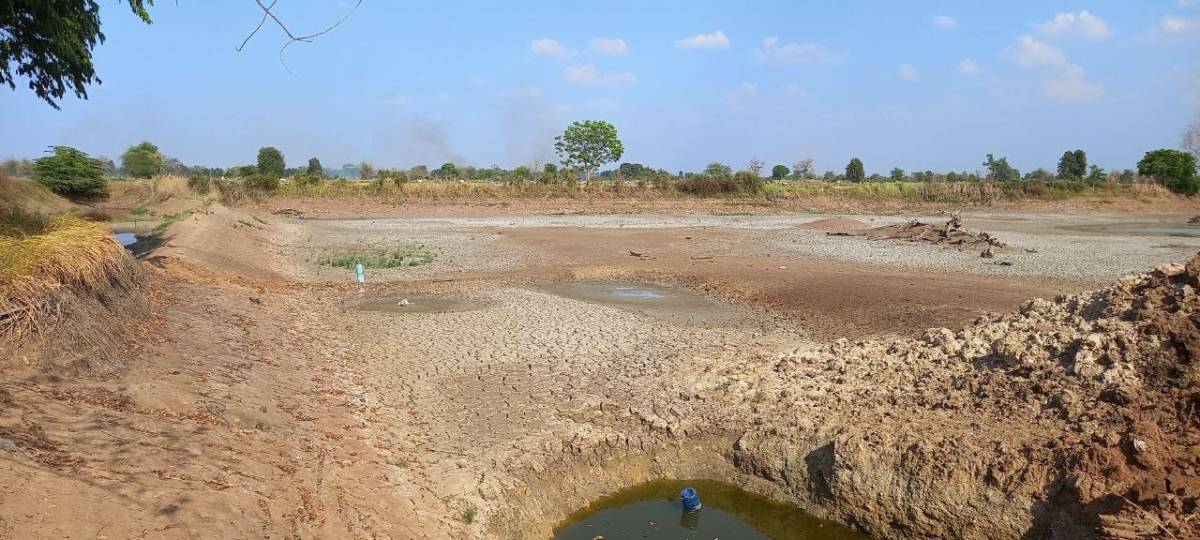
Image: Pond dried up in Banteay Meanchey province.
by Amandine Muret, Chief Partnerships Officer, 1001fontaines, RWSN Member Organisation Am.muret@1001fontaines.com
As Asia grapples with an intense heatwave, exacerbating the already acute lack of access to safe drinking water for vulnerable communities, the call for innovative and resilient water supply solutions becomes increasingly urgent. The World Water Forum, held in Bali from May 18 to 24, brought together governments and experts from around the world, including 1001fontaines, a global NGO distinguished by its two decades of on-the-ground experience in providing safe water to communities in challenging contexts.
A Water Crisis Exacerbated by Climate Change
South and Southeast Asia are currently experiencing record temperatures. In Cambodia, where the mercury has soared to over 40°C several times, levels unprecedented in 170 years, the situation is alarming. This extreme heat wave increases the vital need for drinking water while compromising access to uncontaminated water sources, crucial to meeting this need. In rural areas, the majority of inhabitants still rely on self-supply water solutions, such as wells or ponds – with increasingly intense droughts and floods due to climate change, vulnerable populations see their water sources affected, with impacts on their resilience and health.
The World Bank recently estimated that $36.1 billion would be needed to develop missing water access infrastructure in Asia (source: “Funding a Water-Secure Future: An Assessment of Global Public Spending” report, published in May 2024). Climate change, impacting the accessibility and quality of water resources, requires even larger investments to establish sustainable and efficient supply systems in the face of new constraints, particularly in maintenance and treatment.
In development contexts, where financial and technical resources are limited, and existing service providers already struggle to cover maintenance costs due to low household purchasing power, the idea of having a tap of safe drinking water in every home seems increasingly out of reach. Innovative approaches like those proposed by 1001fontaines appear essential to avoid regression in achieving Sustainable Development Goal 6: ensuring universal access to safe water.
Social Innovation to Address the Vital Need for Safe Drinking Water
For over 20 years, 1001fontaines has been designing and deploying sustainable solutions for access to safe drinking water for vulnerable populations in Asia and Africa. By focusing on the needs of vulnerable communities, the organization emphasizes the quality of the water produced and the strengthening of local capacities through social entrepreneurship.
In concrete terms, 1001fontaines installs decentralized water treatment stations (“Water Kiosks”) and trains local entrepreneurs to deliver the produced drinking water directly to households and schools, all in reusable 20-liter bottles.
This service, offered at an affordable price, now reaches a million consumers daily across rural Cambodian communes, where the model was initiated, while covering its operating costs. After 20 years, 90% of the deployed Water Kiosks are still operational, and consumer satisfaction reflects sustainable behavior change benefiting public health improvement.
Sharing Experiences at the World Water Forum
At the World Water Forum in Bali, 1001fontaines will share the lessons learned from its innovative approach. With operations now expanded to four countries (Cambodia, Madagascar, Vietnam, Bangladesh), the organization has demonstrated the resilience of its model in the face of development and climate change challenges.
Unlike traditional water supply systems, which aim to provide between 50 and 100 liters of water per person, often costly to implement in sparsely populated areas, 1001fontaines focuses on a more targeted consumption, between 1 and 3 liters of safe water per person per day. This cost-effective approach ($15 subsidized per beneficiary) reduces pressure on water resources while offering better quality control. By using reusable bottles delivered directly to homes, the distribution model is less susceptible to infrastructure aging or climate-related damage, with maintenance focused on water treatment facilities.
Another key advantage is adaptability. In Cambodia, 4 regional laboratories monthly monitor water quality at the 330 active sites, allowing the identification of quality changes, often localized and related to the effects of climate change, and enabling the local technical team to implement targeted and low-cost mitigation measures.
Amandine Chaussinand, General Manager of 1001fontaines’ local entity in Cambodia, Teuk Saat 1001, testifies: “We have achieved remarkable results over two decades of operations. We are proud to share them with academic institutions, development financing institutions, and governments at the Forum in Bali because we believe that better consideration of alternative water supply systems, such as bottled water, could accelerate access to safe water for the benefit of populations facing the impacts of climate change.”
Amandine Muret, Chief Partnerships Officer, emphasizes that “Collaboration with local authorities is a key factor in the success of 1001fontaines’ programs, as is the mobilization of development aid to finance infrastructure construction and capacity building, at the heart of the sustainability of the services implemented.”
As the G7 recently announced the creation of a global coalition to address the global water crisis, high-level political dynamics could promote exchanges of successful experiences and stimulate, in the coming years, social innovations in the field of access to safe drinking water. 1001fontaines intends to contribute at its level by continuing to grow its impact.
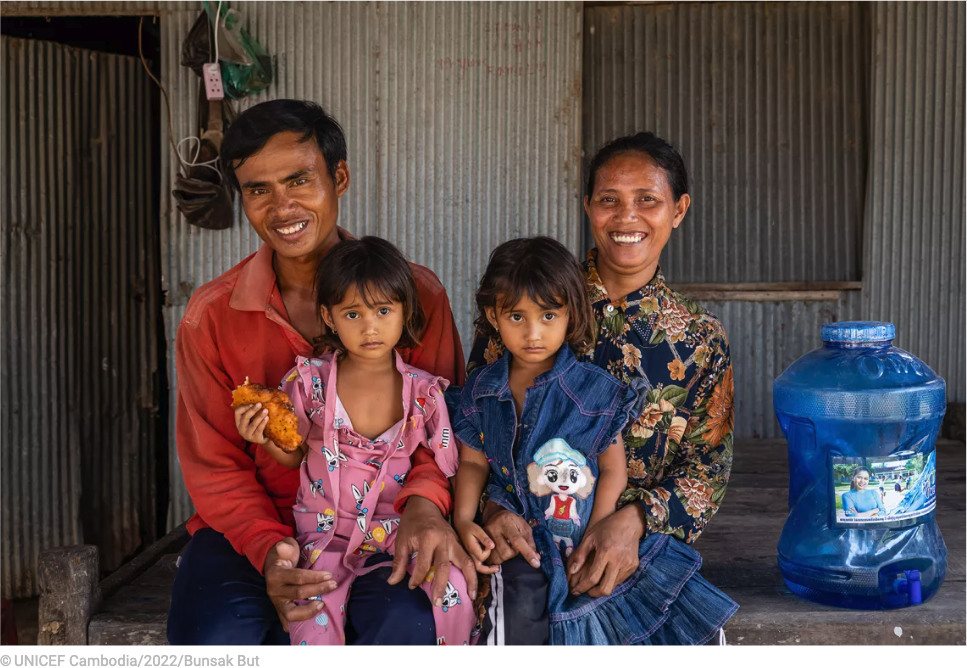
Choum Sophorn poses with her husband and twin four-year-old daughters in her home next to the 20 litre drinking water bottle that is delivered to her home every three days.
Teuk Saat 1001’s entrepreneur stands next to the UV filtration system and holds up some freshly filled bottles, ready to be sealed before delivering directly to customers in Kouk Pou commune.
About: For two decades 1001fontaines have worked to meet the needs of underserved communities through resilient water purification infrastructure and affordable and convenient services. We aim to encourage long-term behavior change and are proud that a million consumers across four countries in Asia and Africa have adopted our safe drinking water solutions.
Our 2030 ambition is to extend our impact by proving the relevance of our safe drinking water solutions in five countries and ensuring all our local partners are on track to reach financial viability at scale.
by Afsana Afrin Esha, REACH Research Associate and PhD student at Durham University, re-blogged from REACH
Every year, the southwestern coastal zone of Bangladesh faces weather-related disasters, worsening a perpetual drinking water crisis. Cyclone Sidr in 2007 and Cyclone Aila in 2009 caused widespread destruction. While people were still recovering, Cyclone Amphan caused heavy damage to infrastructure and contamination. Saltwater intrusion due to cyclones and storm surges is having devastating consequences on groundwater and freshwater resources. Different water treatment options and alternative strategies are being applied by the local government institutions, NGOs and aid agencies, whilst informal or small water service providers too, are on the rise, addressing critical gaps in public investments in the rural water sector. However, in the face of rising climatic changes along with other socio-political factors, water shortages persist. In this short piece, I portray the effects of disaster on drinking water sources to understand the nuances of climate resilience.
This is a guest blog by RWSN members D. Daniel, Trimo Pamudji Al Djono, and Widya Prihesti Iswarani, based in Indonesia.
Data tell us many things. We can learn the patterns of any phenomenon using data. In this blog, we bring you to the archipelago country of Indonesia where water access is still a challenge, especially in rural areas. As of 2020, only 82% of households in rural Indonesia have access to basic water services, while almost 95% of urban households enjoy those water services.
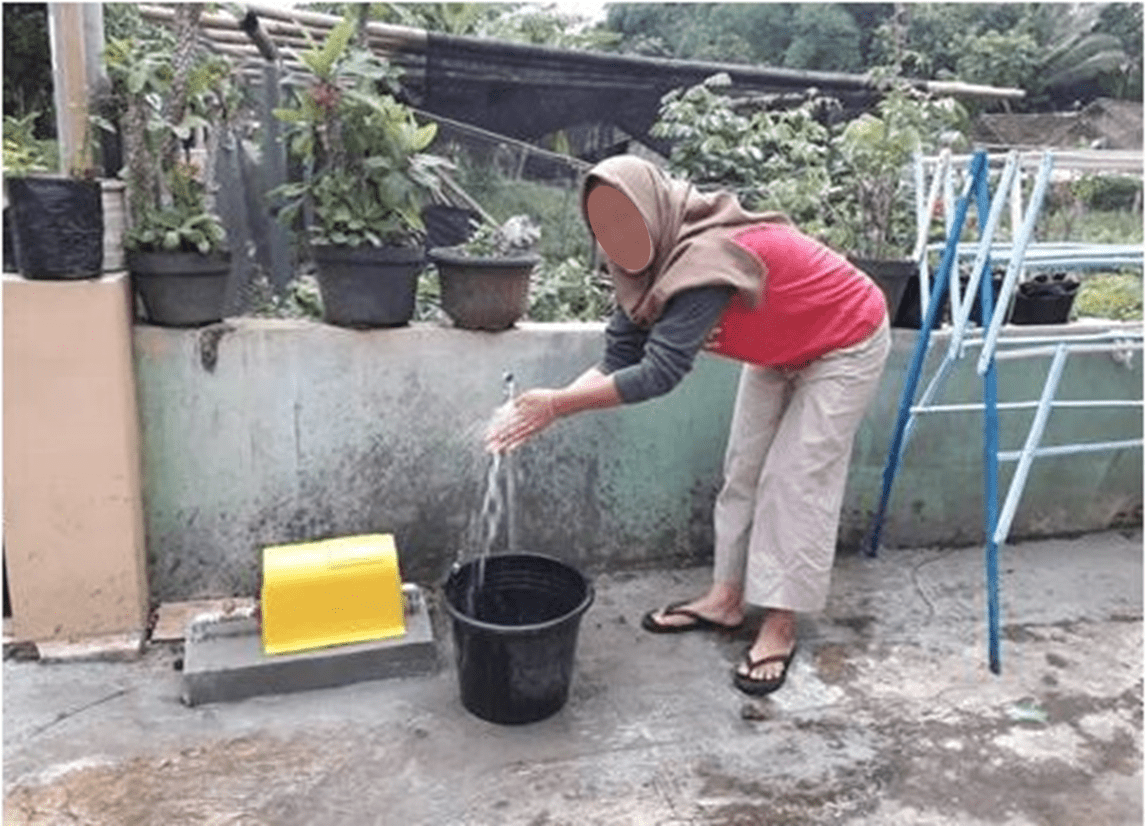
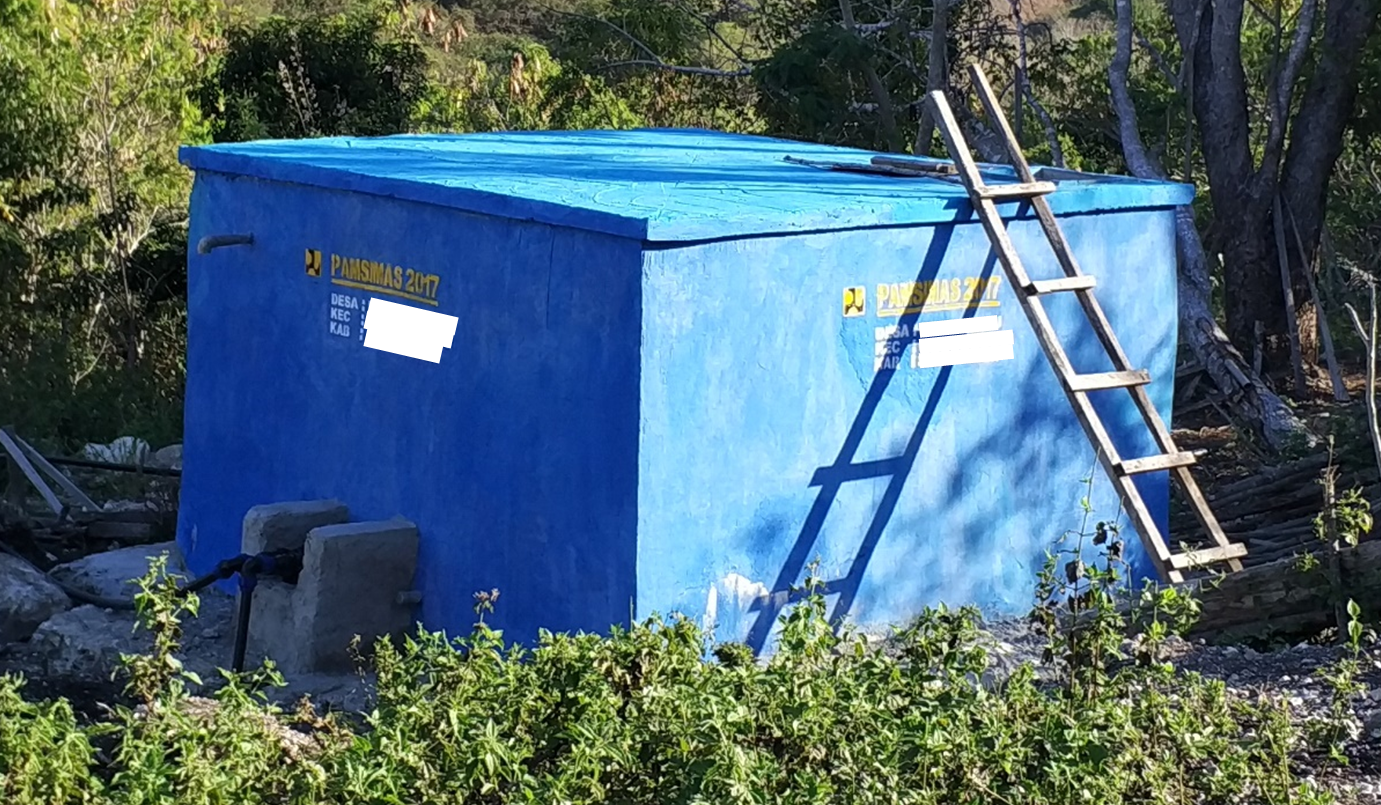
To tackle this, the Indonesian government launched the community-based drinking water supply program, called “Program Penyediaan Air Minum dan Sanitasi Berbasis Masyarakat (PAMSIMAS)” in 2007. Almost 22 million people in 32 thousand villages throughout Indonesia got PAMSIMAS access from 2008 to 2020. PAMSIMAS is one of the biggest rural water supply programs in the world. Unfortunately, not many stories from PAMSIMAS are shared with the global community, so we are here to tell you the story!
PAMSIMAS infrastructure
PAMSIMAS is conducted at the village level and managed by the community itself. If we talk about functionality, the data in 2020 indicates that 85.4% of the PAMSIMAS programs were fully functioning, 9.1% were partially functioning, and 5.5% were not functioning. Thus, we can say that the success rate for this program is quite high.
The main question now is what can we learn from the PAMSIMAS program? Here are some lessons learned from our study:
First, household connections have a higher chance of being sustainable (99%) than communal or public connection (69%), e.g., public tap. We can relate it to the payment system. Almost 40% of the communal connections had no payment system, compared to only 3.5% of the household connection. From the field experience, it is relatively challenging to implement and collect water fees in the communal systems, especially because there is no water meter measuring the actual use of households. We should take into account also that other people from outside often come and draw water without paying for it, which can cause jealousy from the actual beneficiaries and make them hesitate to continue paying for the water service. All of these can result in not enough money for the water board to maintain and repair any damage in the system.
Second, let’s talk about the contribution made by the community or beneficiaries toward the program. We all agree that it is important for the community to contribute to the program, either in form of in-kind, e.g., in the program planning, pipe and system construction, etc., or in-cash, e.g., monthly tariff or construction cost. We may think that the more people participate in those activities, the higher the chance of the water service being sustainable. And yes, it is true. However, our analysis found that community contribution in the form of regular-monthly payment is more influential than in-kind contributions at the beginning of the project to sustain the PAMSIMAS program. We again highlight that regular payment by the beneficiaries is important to sustain the program.
PAMSIMAS infrastructure
Third, the success of the rural water supply program cannot be achieved without favorable human factors, such as a well-performing water board and good support or contributions from the community. For the former, we suggest that mentoring of the village water board by the district facilitator can be done to ensure that the water board has sufficient capacity to efficiently manage the piped system, e.g., repair broken pipes or implement cost-effective operation & maintenance.
Fourth, financial support from the national and district government is critical, e.g., by providing extra subsidies or incentives outside the main fund scheme. In this case, only well-performing water boards or PAMSIMAS programs have a chance to apply for these extra funds. Thus, this will trigger the water board to perform well before they apply for it. In short, we need support from all governmental levels: national, district, and village.
Fifth, we have to understand the relationship between water board performance and support from the community. Let’s have a look, for example, at monthly payments: the well-performing water boards will increase the trust of the community and minimize any interruption in water delivery. As a result, the community would be happy to pay the water fee regularly and support the water board activities. In other words, this will create positive conditions for the water board.
Lastly, we know that water access is a human right. We (and the government) are trying to provide water to everyone in need, especially vulnerable groups, e.g., poor people or those who live in difficult areas. On behalf of human rights, the government is willing to spend a lot of money on those groups, which may result in a very high investment per capita. Some reasons for the high investment per capita are a small number of beneficiaries, wide coverage area of the water supply system, or scattered housing in remote areas. However, our analysis found that a high investment per capita is not associated with a sustainable PAMSIMAS program. We don’t want to say stop providing water for them, but rather the need for a comprehensive economic analysis and system design in the feasibility study before the project starts.
There are many things to share with you but we don’t have enough space to write everything here. If you are still curious, please check our scientific publications about PAMSIMAS below. See you!
Factors related to the functionality of community-based rural water supply and sanitation program in Indonesia. Geography and Sustainability. https://doi.org/10.1016/j.geosus.2022.12.002
The effect of community contribution on the functionality of rural water supply programs in Indonesia. Groundwater for Sustainable Development. https://doi.org/10.1016/j.gsd.2022.100822
A System Dynamics Model of the Community-Based Rural Drinking Water Supply Program (PAMSIMAS) in Indonesia. Water. https://doi.org/10.3390/w13040507
About the authors:
(D.) Daniel is a lecturer and researcher at Public Health Graduate program, Universitas Gadjah Mada, Indonesia. His main topics of interest are water, sanitation, and hygiene (WASH) system in rural areas, household water treatment practice/behaviour, the sustainability of WASH services, drinking water quality at the household level, and public health issue in general.
Trimo Pamudji Al Djono has 25 years of experience in community development and empowerment programs/projects in urban and rural. Trimo has worked for the World Bank for 14 years managing national programs and has experience as a researcher and lecturer by becoming a Lecturer in Environmental Engineering at the Jakarta Sapta Taruna College (STTST) and Singaperbangsa Karawang University. Other experiences include working as a consultant at GHD, Plan International, Unicef, UNIDO, Aguaconsult, and NORC University of Chicago.
Widya Prihesti Iswarani is a lecturer/researcher in the field of environmental science and engineering. She is currently working at Avans University of Applied Sciences and Centre of Expertise Biobased Economy in The Netherlands. Her main topics of interest are water and wastewater treatment, resource recovery, and the sustainability of WASH in developing countries.
Photo credits: D. Daniel, Trimo Pamudji Al Djono, and Widya Prihesti Iswarani
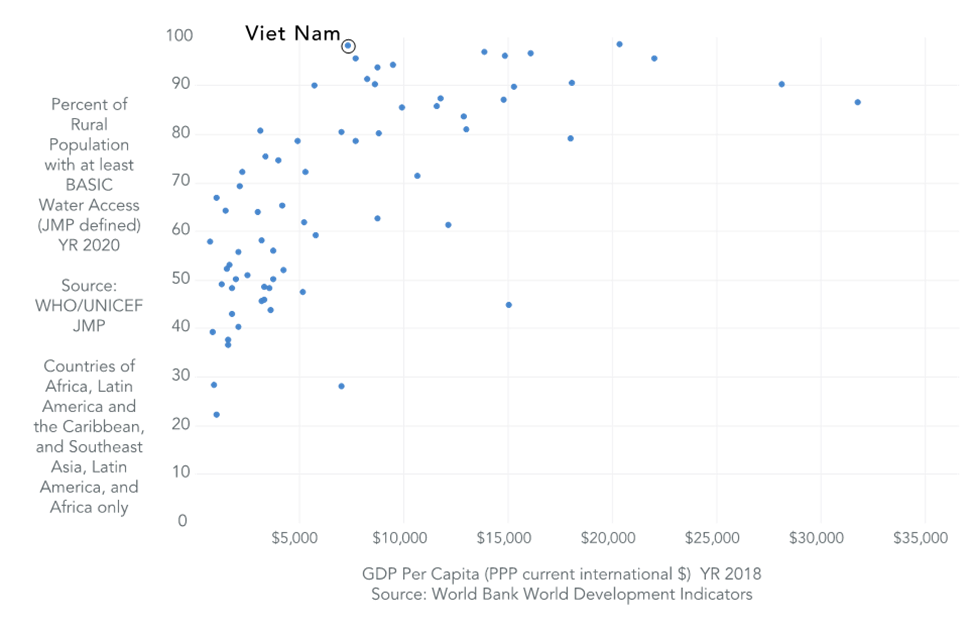
As of 2020, Vietnam had the highest levels of rural water coverage among any country of comparable economic level, with coverage equivalent to countries with two to three times its per capita Gross Domestic Product (GDP). We were curious: what was the contribution to this success by the billion dollar Asian Development Bank Water Sector Investment Fund (“the Fund”)?
En 2020, le Vietnam avait les niveaux les plus élevés de couverture en eau en milieu rural parmi tous les pays de niveau économique comparable, avec une couverture équivalente aux pays ayant deux à trois fois son produit intérieur brut (PIB) par habitant. Nous étions curieux : quelle a été la contribution à ce succès du Fonds d’investissement pour le secteur de l’eau de la Banque asiatique de développement (“le Fonds”), doté d’un milliard de dollars ?
Pour répondre à cette question, nous avons invité Hubert Jenny, anciennement de la Banque asiatique de développement (ADB) et maintenant consultant pour l’UNICEF, pour une conversation sur le podcast REAL-Water (disponible en anglais sur Anchor, Spotify, and Apple Podcasts, parmi d’autres plateformes).
1. More accurate and granular analysis of climate risk is needed to increase relevance of climate information
2. Metrics for monitoring climate resilience in water systems are critical to track progress and inform investments for water security
3. New institutional models that improve water security will be critical for climate resilience
The REACH programme has been partnering with RWSN since 2015.
Water security and climate resilience are interlinked.
This may seem like a simple statement, but in reality it is a complex relationship. Water security and climate resilience are both about managing risks – from water-related issues and climate-related hazards, respectively – to achieve better outcomes for all sectors of society. There are intuitive relationships at large scales, but underlying them are complexities shaped by the environment, and our interactions with it.
Climate change headlines often focus on temperature increases. These changes will be significant and have severe impacts as highlighted by the heatwaves in recent weeks in North America, Pakistan and India. These increases in temperature come with dramatic changes to our weather, in turn affecting the complex water systems that are essential to so much of our lives and our planet. Floods and droughts are the most visceral example of this impact, which also receive regular coverage on the news. But climate change is affecting water security for humans and ecosystems in many more subtle ways.
Climate change is impacting our drinking water supplies. There is a limit to how much capacity they have to absorb weather extremes, especially for smaller systems. Heavy rainfall is linked to many major waterborne outbreaks in developed countries. A major drought led to severe water rationing in Cape Town in 2018, nearly causing the city’s taps to run dry, known as Day Zero. The report highlights that for smaller water systems that people outside cities rely on the impact of weather is often less clear, but the evidence is that there is limited climate resilience.
Water quality varies with weather. Rainfall increases the mobility of faecal contamination, with different types of system more vulnerable to heavy rainfall, exposing the users to diseases such as typhoid. Without reliable water supplies, people use a range of water sources to meet their water needs year-round, trading off risks between reliable water supplies that might be saline or expensive, with seasonal but unsafe water sources. Climate change will increase weather extremes leading to increased contamination and less reliability.
Fresh water scarcity is increasing. Industrialisation and urbanisation are increasing both the demand for fresh water and its pollution, with toxic compounds that are difficult to remove. Climate change is amplifying these threats by reducing the availability of reliable water, increasing salinity, especially in coastal areas, and changing river flows that flush saline and polluted water. Reduced river flows from changing rainfall patterns will increase exposure to pollution for those who rely on river water for washing and bathing, and increase saline intrusion from the coast. Building resilience requires better management of fresh water resources to reduce the increasing contamination that is making water harder to treat.
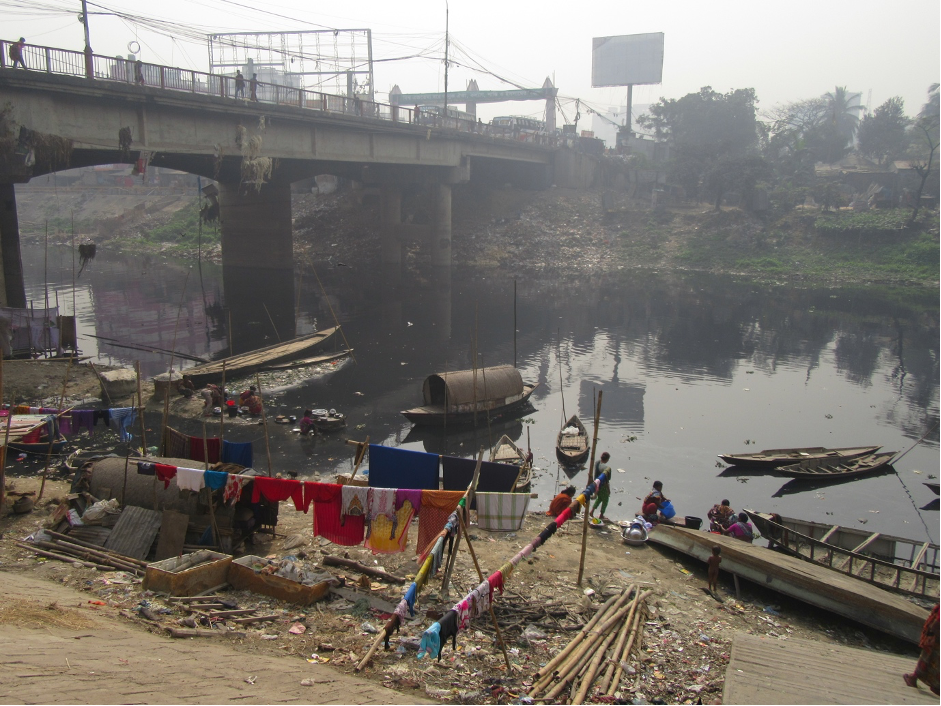
Women using river water for washing in Dhaka, Bangladesh. Credit: Sonia Hoque
To build the adaptive capacity of water systems to cope with changes in climate, climate information needs to be available to water managers at the appropriate spatial and temporal scale. Ensembles of global climate models provide useful information about global climate, but analysis is needed to identify the relevant climate models that best capture local climate. More investment is needed to provide the tools that water managers need to make informed decisions to increase climate resilience, such as accurate projections at local scales and seasonal forecasting based on understanding of local climate drivers. The information needed varies for different users, but is critical to build resilience for managers of small water systems, reservoirs, and basins.
The report synthesises six years of interdisciplinary research by the REACH team across Sub-Saharan Africa and South Asia. Collaborations in our Water Security Observatories have allowed us to understand how water security risks are experienced, how inequalities are created and reproduced with new policies, and how new tools and science can support better decision making. The report highlights the impact the REACH programme has achieved with funding from the Foreign, Commonwealth & Development Office (FCDO), in partnership with UNICEF, for the benefit of millions of people. It concludes with three recommendations for to advance water security for climate resilience:
More accurate and granular analysis of climate risk is needed to increase relevance of climate information
Metrics for monitoring climate resilience in water systems are critical to track progress and inform investments for water security
New institutional models that improve water security will be critical for climate resilience
Climate change will increasingly affect water availability and quality, with devastating consequences for the most vulnerable. Improving water security is critical to build resilience to the changing climate.
Hi! A chemical engineer by education; I have been a water and wastewater treatment professional for last 24 years. Having started career at Ion Exchange (I) ltd; Mumbai in 1996, I moved to Singapore and worked with Hyflux and Chartered Semiconductor Mfg Ltd for around 5 years before moving back to India and starting on my own as “Nixie Engineers Pvt Ltd”.








 Rural Water Supply Network - blog