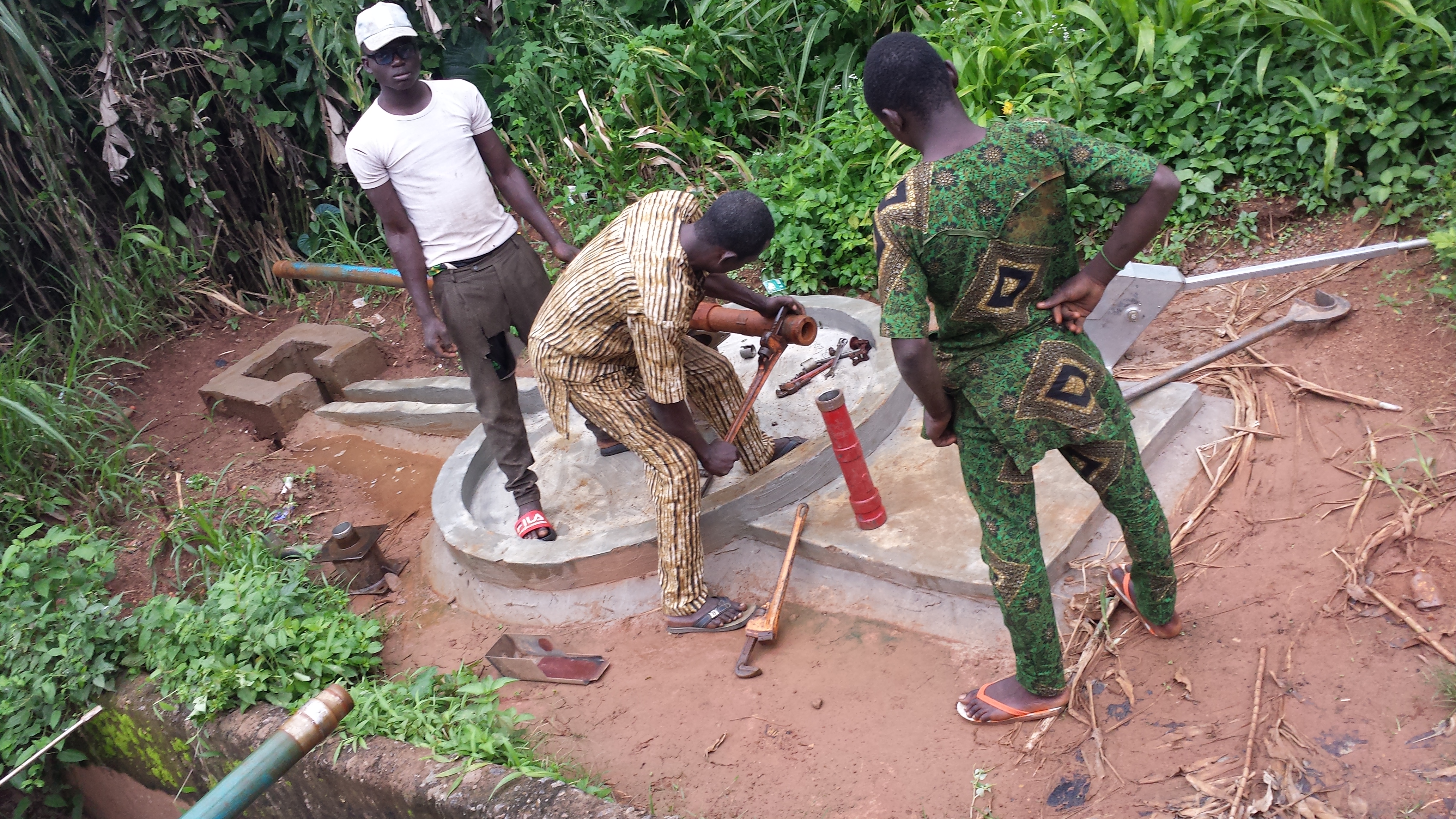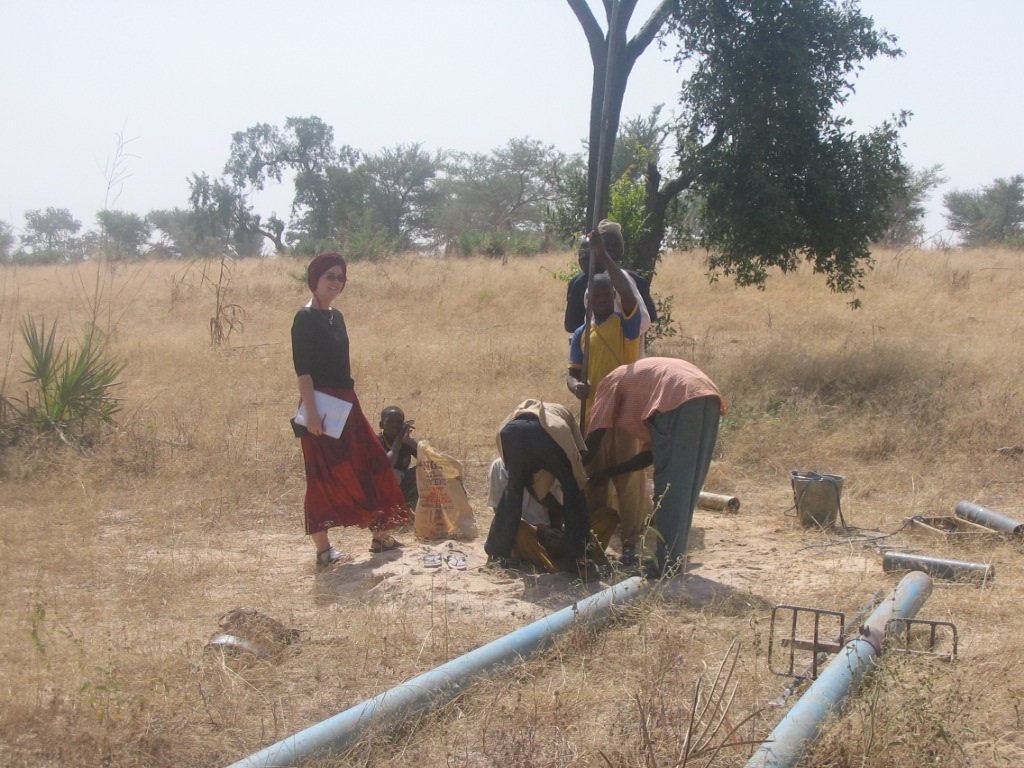
A final personal tribute the Erik Nissen-Petersen (1934-2022)

Dear fellow Rainwater Harvesting Enthusiasts,

It is with a heavy heart that I wanted to report to this network the sad news I recently received about the recent passing of Erik Nissen-Petersen in Nairobi.

While I am not party to all the details, I understand he had been in hospital for some weeks following an incident in which he was attacked by a stranger with a stun-gun while he was riding a taxi. Nevertheless, it is his life’s work that I want to focus on in this short personal tribute and I invite others, particularly those who knew or worked with Erik in East Africa and beyond to add their own tributes.

Continue reading “A final personal tribute the Erik Nissen-Petersen (1934-2022)”

Stop the Rot – Stakeholder perspectives on handpump corrosion and quality – Part 1

A summary of discussions at the RWSN webinar (April 2022)

Handpump reliance, rapid corrosion, component quality and supply chains in sub-Saharan Africa (SSA) were the subject of the trilogy of reports from the ‘Stop the Rot’ published in 2022. The research looked specifically at the main public domain handpumps – the India Mark Pump, and the Afridev Pump, and drew learnings from the Zimbabwe Bush Pump. A RWSN-hosted webinar in April 2022 presented the findings, heard from seven panellists and the chair as well as the audience. So, in a nutshell, what was discussed? With this blog I share with you a number of stakeholder perspectives as the Stop the Rot Action Group to tackle handpump corrosion and improve component quality is established.

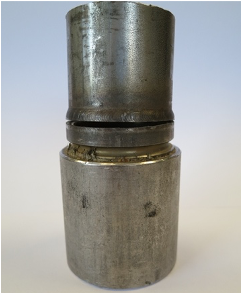
Weld failure in riser pipe, source: Tony Beers.

Donald John MacAllister (British Geological Survey – BGS) recognised Stop the Rot complements on the work of the BGS Hidden Crisis project, which investigated the underlying factors of handpump borehole functionality in SSA. It is great to see the new estimates of the number of people relying on handpump boreholes, and how important they will remain in the future, and have light shone on the corrosion problem that many rural communities face. In addition, it is useful for the wider causes such as procurement modes and supply chains issues to be considered, areas that require more. From a BGS perspective, there is interest in looking at where there are risks for corrosion across SSA, and what can be done to alleviate the problem, given that we know that handpumps will remain important in the future.

Levy Museteka (Water Resources Management Authority – WARMA, Zambia) explained that the country has suffered from handpump corrosion, especially in the north, where naturally low pH, compounded with the use of galvanised iron (GI) pipes led to most of the pumps failing due to corrosion. When he worked in the north-western province, Levy mentioned that there used to be an annual budget for rehabilitation, with most of that money used to replace GI pipes, returning activity every year. If there is no proper plan for replacement, after a few years you have a “graveyard of boreholes”. Zambia currently lacks regulations regarding pump materials. Switching handpump pipes from GI to stainless steel would come at a significantly higher capital cost, and any changes would require advocacy with the multi-lateral agencies in the country.

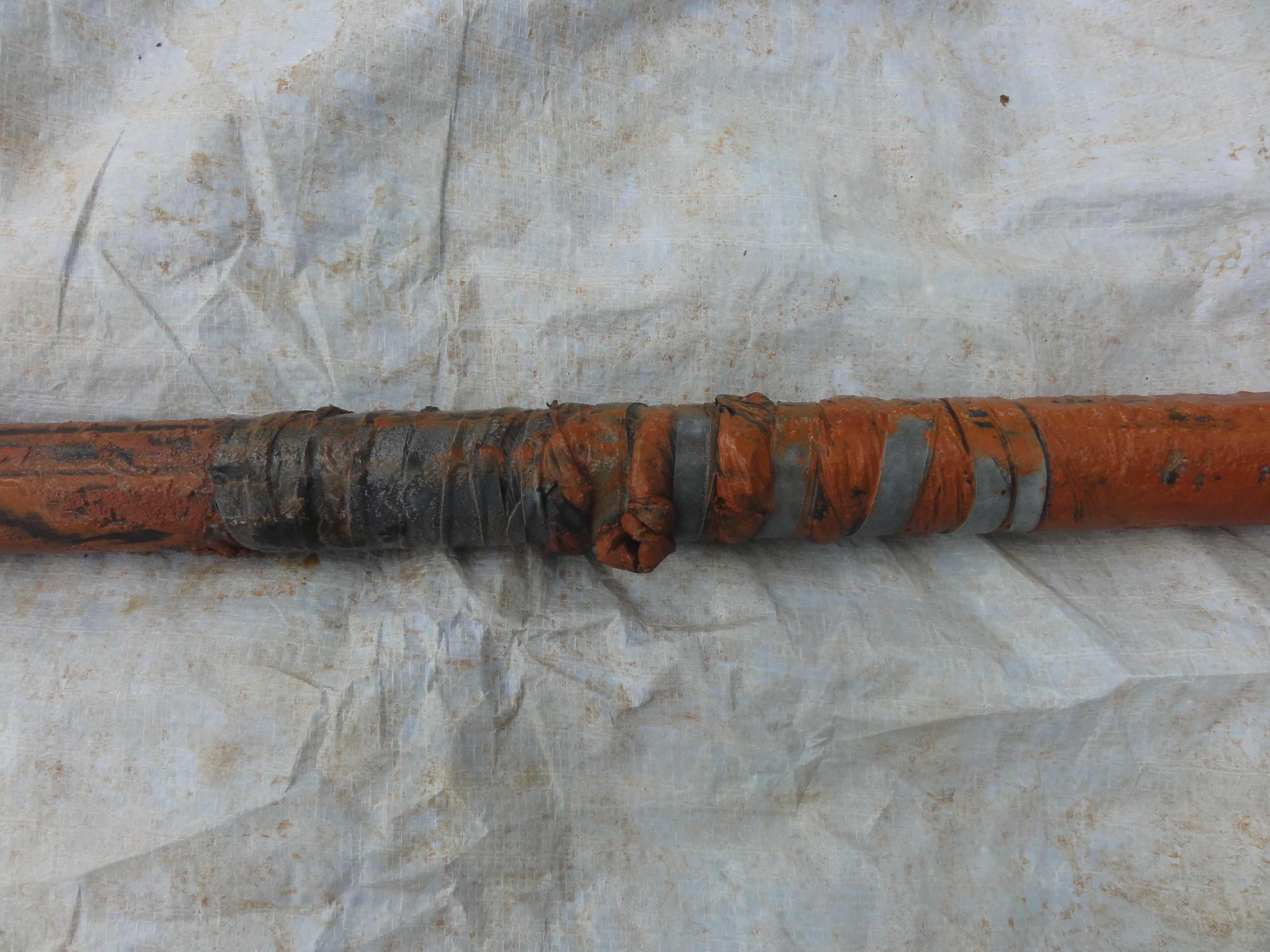
Corroded Galvanised Iron (GI) riser pipe repaired with bicycle inner tube (source: Richard Carter)

Duncan Marsh (Pump Aid and Beyond Water) is involved in an organisation developing professional repair and maintenance services in Malawi, where there is a very high rate of non-functionality of handpumps. The shift in a ‘payment by results model for asset management’ amongst some donors, involves being paid to increase pump functionality. The quality and costing of spare parts is vital in such a model, whereby service providers and governments, need to be able to forecast repair and maintenance costs over a multi-annual basis. Such forecasts are used in contracts between the service provider and government to provide a minimum guaranteed uptime (functioning time) of water supply services. Rapidly corroding spare parts increase the servicing costs considerably, and there is also less certainty with respect to providing that sustainable service. From the perspective of Beyond Water, it is essential that spare parts imports are regulated, and budgeting of repair costs is accurate over a number of years. Poor quality spare parts have an associated opportunity cost, but regulation and increased quality spares also have associated costs.

Christopher Lindsay (IAPMO Group) IAPMO, is an industry trade association, formed by water officials who recognised problems with the way that the water infrastructure was coming together, and now develops standards, provides training and runs testing and certification labs around the world. The Stop the Rot initiative is dealing with performance problems in a complex ecosystem. Christopher states that it is time to engage industry processes better; to protect the quality and performance of handpumps. This involves three major steps: (1) standards development organisation to develop international standards for these pumps (recognising the work by Skat and RWSN to date); (2) adoption of the international technical standard into national regulations; (3) for products that impact public health and safety, there is need for a layer which formalises testing and certification requirements. With these three steps in place, it is then possible to focus on local enforcement mechanisms and ultimately increase the market share for quality products.

Ron Sloots (TGS Water Ltd and WE Consult, Uganda): TGS water is currently rehabilitating about 60 boreholes in Uganda, and each one of them has a corrosion issue. All of the GI pipes are being replaced with stainless steel, in line with the Ugandan government policy mandatory installation of stainless steel pipes. To address the issues raised by Stop the Rot, there is need for a stronger involvement and larger responsibility of the donor community. Unfortunately, existing standards and specifications, are not always used. One problem is that the budgets prepared by certain NGOs are not very realistic, and risks, such as of drilling dry boreholes, or facing deeper water tables, or the water chemistry, tend to be transferred to the contractor, despite the fact that they cannot do anything about these risks. However, NGOs operate in a very competitive environment and rely on money from donors. And so, they quote very low, and do not include the cost of the risks, which are simply transferred to the contractors. Meanwhile, many donor organisations are not even aware of these challenges and just follow and engage the NGOs. The donor agencies need to take responsibility, and put more effort into project design – don’t just find a project but make sure that you know everything about the area where they are taking place, and influence so that standards are used.

Handpump Borehole Rehabilitation, source: UNICEF Nigeria

Abdou Aziz Linjouom (Consultant, Cameroon): the phenomenon of handpump corrosion is a reality in Cameroon, with handpumps an important source of drinking water for rural dwellers, as well as those who lack piped water supplies in urban areas and for institutions such as schools and hospitals. Following discussions with numerous stakeholders in Cameroon, notably the enterprises import and sell handpump components, it is clear that there is a lack of knowledge about material standards. Further, those installing the pumps have also stated that component quality is often poor. This has negative consequences for handpump users, and can affect water quality. Users have explained that while for the first months, they are satisfied with the source, that after a few months, the water quality deteriorates with rust from the pump. This has a knock on effect on use of the source, and ultimately upon children. There is need to fully quantify and qualify the extent of the corrosion problem, and invest in training to improve the situation, as well as monitor sources.

Steven Kumwenda (Baseflow, Malawi) concurs with the findings of Stop the Rot. Borehole forensics is a methodical way of trying to investigate issues affecting a borehole, from the boreholes pump parts, and yield as well as siting. Baseflow has undertaken forensics on more than 200 boreholes in Malawi. The handpump corrosion due to low pH that has been found in the Stop the Rot study is rare, but corrosion as a result of highly saline wells does occur. However, it has also been observed, that the less a handpump is used, the more serious the iron problem becomes. In Malawi, if you find a borehole affected by iron, the communities still use it, and the more they use it, the clearer the water becomes, with the water mostly reddish early in the morning. Highly saline boreholes will rarely be used, and so salinity is this a bigger issue for Malawi than iron. Over the years borehole drillers have mushroomed in the country, hundreds and hundreds of boreholes drilled. However, a cohort of boreholes do not last long, breaking down within and one or two years.

Malawi faces a problem whereby boreholes are not being drilled to the standards required, which is further compounded by the fact that, unlike other construction sub-sectors, the borehole drilling sector does not follow the accepted arrangement of having an independent consultant (in this case, a hydrogeologist) for quality control and ensuring adherence to contractual requirements and standards. Target numbers are a key part of the problem, with NGOs and donors wanting to see numbers of handpump boreholes. A well supervised drilling process should take no longer than two days to complete, which also allows for data collection, taking measurements and checking the quality of the installed parts. However, all of this is rushed. While this issue has been raised, checks that standards for drilling and spare parts are being complied with are still lacking. This presentation needs to be shared at higher policy levels, and regionally, there is need to look at mechanisms that can improve drilling quality and the quality of handpump parts.

Peter Harvey (UNICEF), chaired the webinar recognising that change takes time. There are many common threads from the panellists, in terms of professionalisation, not just going for the lowest cost, ensuring quality and giving the necessary attention to that. With the SDGs and their focus on sustainable services, there is no excuse to be making the mistakes of old. Finance is important – not just for maintenance, but also for the regulatory framework. There is need for the consideration of realistic per capita costs of delivering sustainable services, while true value for money means the value of an ongoing service rather than static infrastructure that may not function after some time.

While many professionals in the sector are aware of this problem, not everybody is. What we hope from Stop the Rot in the future, is to see how we can work collectively, communicate better and advocate for changes with decision makers.

If you would like to know more about, or engage with the ongoing Stop the Rot initiative, please contact info@rural-water-supply.net or ask@ask-for-water.ch

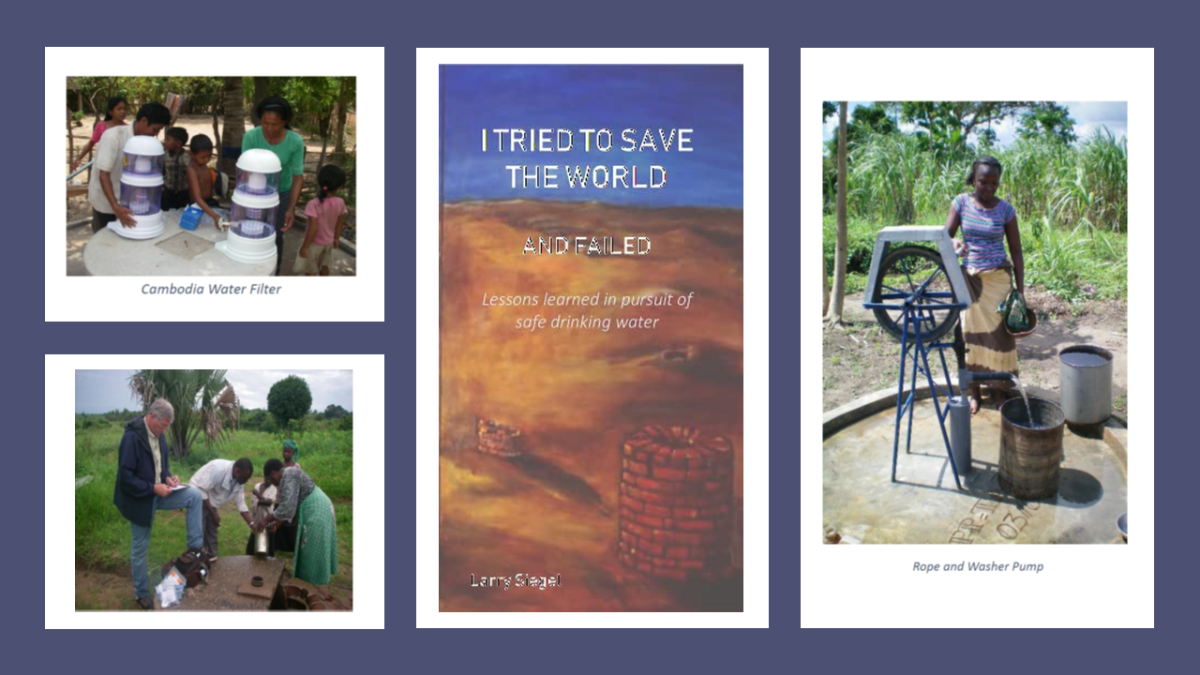
I Tried to Save the World and Failed

by Larry Siegel

My book, I Tried to Save the World and Failed, reflects on a time and effort to find rural water solutions in Mexico, Malawi and Cambodia that could be used everywhere

by Larry Siegel

My book, I Tried to Save the World and Failed, reflects on a time and effort to find rural water solutions in Mexico, Malawi and Cambodia that could be used everywhere.  The effort started during the Vietnam war while working on an Army Civil Affairs team. There I was confronted with the reality that not everyone turns on the tap and drinks good water.  Several of the rural communities I worked in desired more water, cleaner water, and more convenient water.  Echoes of that experience grew from travels in later years.

A drinking water partnership formed when as a Congressional staffer I worked on the Safe Water Act of 1974.  Years later I joined with a few of those colleagues to form Safe Water International (SWI), which had dreams of a silver bullet solution for the billion or so citizens around the world with only contaminated water to drink.

SWI put Rotary funds and private donations to the task of seeking that silver bullet through rural drinking water projects in Mexico, Malawi, and Cambodia. As these projects moved from one country to the next, it became clear that every rural drinking water project demanded a long-term commitment to the project community. 

It is said that 35% of water well projects break down or are abandoned by users.  Sad to say, the work of SWI in three countries met this unfortunate goal. As a consequence, I Tried to Save the World seeks to identify lessons learned from those drinking water efforts in remote rural communities. The observations that result come largely from field work and then from reflection in succeeding years on the successes and failures of those projects.

The book closes with a set of lessons aimed at sustainability.  The lessons are not meant to be the final word.  It is hoped they will provoke discussion on how to go about achieving project sustainability.

While there are stories of disappointment, there is also praise for the commitment and perseverance of all who undertake work to improve the health and sanitation of those desperately in need of help.  The closing anthem of the book is “Help is Help.”  Even unsuccessful projects can bring life-long benefits to those who for some short space of time have safe water and good sanitation. 

Also available on Kindle from Amazon.com

Un fondo de préstamos de mil millones de dólares y el camino hacia unos servicios de agua mejor gestionados

As of 2020, Vietnam had the highest levels of rural water coverage among any country of comparable economic level, with coverage equivalent to countries with two to three times its per capita Gross Domestic Product (GDP). We were curious: what was the contribution to this success by the billion dollar Asian Development Bank Water Sector Investment Fund (“the Fund”)?

de USAID Global Waters. La RWSN es miembro del consorcio de investigación REAL-Water

En 2020, Vietnam contaba con los niveles más altos de cobertura de agua rural entre cualquier país de nivel económico comparable, con una cobertura equivalente a la de países con dos o tres veces su Producto Interior Bruto (PIB) per cápita. Sentimos curiosidad: ¿cuál fue la contribución a este éxito del Fondo de Inversión en el Sector del Agua del Banco Asiático de Desarrollo, dotado con mil millones de dólares (“el Fondo”)?

Para responder a esta pregunta, invitamos a Hubert Jenny, antiguo miembro del Banco Asiático de Desarrollo (BAD) y actual consultor de UNICEF, a una conversación en el podcast de REAL-Water (disponible en inglés en Anchor, Spotify, y Apple Podcasts, entre otras plataformas).

Continue reading “Un fondo de préstamos de mil millones de dólares y el camino hacia unos servicios de agua mejor gestionados”

Un fonds de prêt d’un milliard de dollars et la voie vers des services publics de l’eau mieux gérés

As of 2020, Vietnam had the highest levels of rural water coverage among any country of comparable economic level, with coverage equivalent to countries with two to three times its per capita Gross Domestic Product (GDP). We were curious: what was the contribution to this success by the billion dollar Asian Development Bank Water Sector Investment Fund (“the Fund”)?

de l’USAID Global Waters. RWSN est membre du consortium de recherche REAL-Water.

En 2020, le Vietnam avait les niveaux les plus élevés de couverture en eau en milieu rural parmi tous les pays de niveau économique comparable, avec une couverture équivalente aux pays ayant deux à trois fois son produit intérieur brut (PIB) par habitant. Nous étions curieux : quelle a été la contribution à ce succès du Fonds d’investissement pour le secteur de l’eau de la Banque asiatique de développement (“le Fonds”), doté d’un milliard de dollars ?

Pour répondre à cette question, nous avons invité Hubert Jenny, anciennement de la Banque asiatique de développement (ADB) et maintenant consultant pour l’UNICEF, pour une conversation sur le podcast REAL-Water (disponible en anglais sur Anchor, Spotify, and Apple Podcasts, parmi d’autres plateformes).

Continue reading “Un fonds de prêt d’un milliard de dollars et la voie vers des services publics de l’eau mieux gérés”

A Billion Dollar Loan Fund, and the Path to Better-run Water Utilities

As of 2020, Vietnam had the highest levels of rural water coverage among any country of comparable economic level, with coverage equivalent to countries with two to three times its per capita Gross Domestic Product (GDP). We were curious: what was the contribution to this success by the billion dollar Asian Development Bank Water Sector Investment Fund (“the Fund”)?

from USAID Global Waters. RWSN is a member of the REAL-Water research consortium

As of 2020, Vietnam had the highest levels of rural water coverage among any country of comparable economic level, with coverage equivalent to countries with two to three times its per capita Gross Domestic Product (GDP). We were curious: what was the contribution to this success by the billion dollar Asian Development Bank Water Sector Investment Fund (“the Fund”)?

To answer this question, we invited Hubert Jenny, formerly of the Asian Development Bank (ADB) and now consulting for UNICEF, for a conversation on the REAL-Water podcast (available on Anchor, Spotify, and Apple Podcasts, among other platforms).

Continue reading “A Billion Dollar Loan Fund, and the Path to Better-run Water Utilities”

Professional Drilling Management – Online Course 2022

An estimated 50% of the global and 75% of the African population rely on groundwater for their drinking water supplies. This is likely to increase in the future, especially in the face of climate change.

Drilled water wells are vital to achieving universal, clean drinking water, with the sources safe, affordable, reliable and available. Services also need to be constructed in order to last. To achieve this, water wells, or boreholes must be drilled, developed and completed in a professional manner. Key elements of a professional drilling sector are procurement, contract management, siting, borehole design, construction, and supervision. Water resources must also be considered and long-term support is required to maintain water supply services.

Drilling Supervision Course in Sierra Leone (source: Kerstin Danert)

This new online course on professional drilling management, will equip participants with knowledge on: groundwater information, siting, costing and pricing, procurement and contract management, borehole drilling and supervision and how professional water well drilling is affected by the wider regulatory framework and institutional environment. By the end of the course participants will:

  • Have an understanding of the key elements of a professional water well drilling sector including key reasons that boreholes fail, or perform poorly and why drilling supervision is important.
  • Recognise the value of groundwater data and know what constitutes good borehole siting.
  • Appreciate the importance of drilling supervision.
  • Have improved their knowledge of drilling procurement and contract management
  • Understand what constitutes a strong institutional framework (at national or state level) for borehole drilling, including driller licencing, borehole permits and drillers associations.
Course content
Groundwater Data and Siting 
Procurement and Contract Management 
Borehole Drilling and Supervision 
Legal and Institutional Considerations 
Actions to Raise Drilling Professionalism

The course is designed for professionals already engaged in the management of water well drilling, or those that expect to do so, with an emphasis on low– and middle–income countries. Target participants include government, NGO, UN and donor organisation staff, as well as those working in the private sector. Participants may be working in development or humanitarian aid/emergency contexts.

Interested applicants are welcome to apply between Tuesday, 10th May and Wednesday, 15th June 2022, with successful participants informed by 20th June. The course will start on Friday, 24th June and run up to the 29th October 2022. Application link: https://cap-net.org/pdm/

Stop the rot: evidence and action for handpump quality

Currently, about half a billion people, in sub-Saharan Africa (SSA), equivalent to half of the population, rely on protected and unprotected groundwater point sources for their main drinking water supplies. With the expected increases in rainfall variability due to climate change, sustainable groundwater sources will be evermore important in supporting resilience in the future.

Access to safe, reliable water supplies in low-income countries, particularly in rural areas has been improved through handpumps, which provide a viable alternative to contaminated surface water, open wells and unprotected springs.

Three new reports from the ‘Stop the Rot’ initiative published in March 2022 examine handpump reliance, rapid corrosion, the quality of handpump components and supply chains in SSA. The research looked specifically at the main public domain handpumps – the India Mark Pump, and the Afridev Pump, and also drew on learnings from the Zimbabwe Bush Pump.

Using the most recent data published by the World Health Organization (WHO) and the United Nations Children’s Fund (UNICEF) through the Joint Monitoring Programme (JMP), the ‘Stop the Rot’ research estimates that almost 200 million people in SSA (18.5% of the total population) rely on handpumps to provide them with their main drinking water supply (Figure below). Further, an estimated 700,000 handpumps are in use in SSA. Meanwhile, 23% of the SSA population still rely on unsafe and distant water sources, of which many could benefit from a handpump. At least for a generation, if not much longer, handpumps are here to stay.

Estimated proportion of the total population relying on handpumps for their main drinking water supply

Despite their merits, criticism has been directed towards handpumps. Limited ability to transport large quantities of water, coupled with a lack of storage capacity at the home, means that water from handpumps is usually fetched on a daily basis. Handpumps have also made the headlines: in 2010, an estimated two out of three handpumps in SSA were working; a decade later it was estimated to have only improved to three out of four.  

A handpump breaks down for a specific technical reason (such as the breakage of the chain, an O-ring failing or corroded riser pipes), but its repair depends on the ability of the users, often a community, to raise funds, organise a mechanic and source spare parts. In turn, these depend on other factors within the locality and country, including the available services support mechanisms by governments, NGOs and the private sector. When water services fail, there are negative impacts on health and other human development gains, not to mention the burden on users of finding alternative sources. These may be distant, overcrowded, or contaminated.

A sizeable drop in handpump functionality in the first one to two years after installation is a common occurrence, and represents a premature technical failure. Something went wrong with the engineering – such as the borehole siting, design and/or construction, pump quality or installation, or the pump use – or there was vandalism or theft. Alternatively, the installation may have been rejected by the users from the outset due to its location, or the appearance or taste of the water.

The series of three ‘Stop the Rot’ publications draw attention to rapid handpump corrosion, whereby aggressive groundwater destroys the galvanising layer and so galvanised iron (or poor-quality stainless steel) riser pipes and pump rods essentially rot in the ground at a very fast rate (see Figures below). The term ‘aggressive’ refers to the ability of the groundwater to corrode, disintegrate and deteriorate materials it is in contact with, and includes, but is not limited to acidity is one type of pump.

This phenomenon has been known about since the 1980s. However, this new study finds evidence of rapid corrosion in in at least 20 SSA countries. A related problem is the quality of handpump components. The research draws attention to long supply chains from manufacture to installation, shows that component quality is not consistent and that there is limited guidance on quality assurance, and that in many cases, procedures are lacking.

The study proposes the establishment of an action group of key organisations involved in Rural Water Supplies in SSA, and handpumps in particular, to join hands and take a lead in tackling the challenge. Many actions are needed at international, national and local level. These including raising awareness of the extent that handpumps are used in SSA, which will continue into the future. There is need for sensitization regarding the ongoing rapid corrosion issue, and how it can be addressed alongside incentives for doing so. There is also the need to invest in updating handpump specifications, improving quality assurance mechanisms and strengthening procurement procedures and practice.

The full set of research reports can be downloaded in English and French. There is also a 20 minute presentation available here, and a recording of the RWSN webinar involving the presentation and discussions is available here.

This is a shortened version of a blog that was originally published by PLOS Latitude.

World Water Forum 9: “We need to act and now, because there is no green without blue and life is blue”

Short reflection by Maimouna Diop, a Senegalese Young Water Professional who chaired Session 2a4 “Rural Water Supply Management Models” at the World Water Forum 2022, on behalf of RWSN.

Maimouna Diop, Ing. MBA, PMP

This forum is definitely the most impactful ever. Dakar has been the capital of water for 6 days.

Young people have been mobilized around the world to show their commitments. We will live through difficult times in the coming decades: resources will become scarce, demography will experience an exponential rise and funding will be difficult to mobilize due to the global crisis we are already experiencing. The expected action is therefore human and it is now. We must be at the heart of politics by investing ourselves intellectually and physically.

Just a quick reminder : issues related to water control and food security in Senegal were discussed 39 years ago, during a session at the National Assembly on April 14, 1983, with the late Minister Samba Yela Diop (May his soul rest in peace). It simply means that water security is nothing new and that our elders knew how to sound the alarm at an early stage. We have to be as benevolent as our elders to identify new challenges to be met in the coming years.

Understanding the issues related to water will ensure that appropriate decisions can be made and for future generations.

We need to act and now, because there is no green without blue and life is blue.


Session Presentations:

Groundwater Resources Management New Online Course – 2022 

Apply by 11th April 2022

An estimated 75% of the African population relies on groundwater for their drinking water. Groundwater supports social and economic development and will become increasingly important in the face of climate change, droughts and floods. If groundwater is to provide reliable, safe and sustainable water supplies now and for future generations, the resource must be well-managed. This requires consideration of the entire system of policies & laws, strategies & guidance, monitoring & management as well as investments & projects. Those that manage and develop groundwater need to be equipped with appropriate skills and knowledge.

This new online course on groundwater resources management, launched in 2022 will provides participants with a comprehensive overview what impacts upon groundwater. Echoing the theme of the World Water Day 2022, this course will make the invisible visible. 

Participants who successfully complete the course will have an awareness of the importance of groundwater, understand the need to preserve it and be equipped with basic knowledge to engage in the management of groundwater resources at national and transboundary levels.

Transboundary aquifers in Africa: Approaches and mechanisms

Course content
– Characterisation of Aquifer Systems from a Management Perspective
– Groundwater monitoring and data/information management & communication
– Groundwater quality and source water protection
– Groundwater regulation, licensing, allocation and institutions for aquifer management
– Transboundary aquifers in Africa: Approaches and mechanisms

The online course is open to 250 participants from governments, NGOs, basin organisations, private sector, training organisations, academic organisations and donors. The course will start on Friday 29th April and run up to the 29th August. The application process is open to Tuesday 11th April 2022. 

Successful participants will be informed by the 22nd April 2022. 

Application link: https://cap-net.org/grm/