Getting to the heart of climate resilient WASH

by Dr John Butterworth, IRC WASH Ethiopia – re-posted with permission

Climate resilient WASH is about new ways of working across the traditional humanitarian and development sectors. We went to one of the harshest spots in Ethiopia, and surely in the world, to find out more.

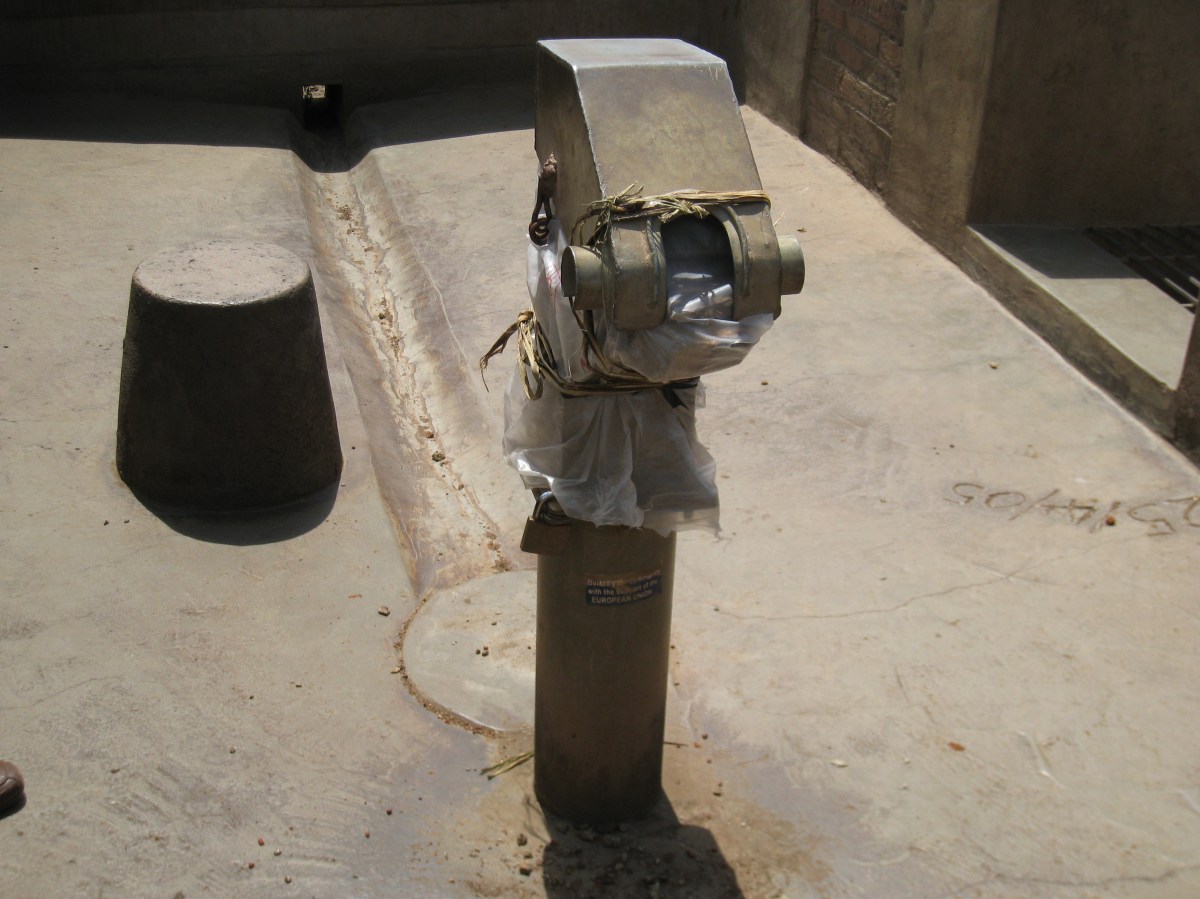
Photo: An existing water point in Afdera, Afar

Continue reading “Getting to the heart of climate resilient WASH”

Grown-up finance for the rural water sector

The challenge of achieving the SDGs is upon us and with this concrete and short-term objective, the sector is finally taking the issue of financing more seriously, which is a very good thing but not before time. Whilst a few years ago finance was the privilege of a selected few, everyone is now talking about it; however, whether this is a case of better late than never still needs to be proven.

by , re-posted from Aguaconsult with thanks

The challenge of achieving the SDGs is upon us and with this concrete and short-term objective, the sector is finally taking the issue of financing more seriously, which is a very good thing but not before time. Whilst a few years ago finance was the privilege of a selected few, everyone is now talking about it; however, whether this is a case of better late than never still needs to be proven.

Last week, I chaired with interest the RWSN webinars on “grown up finance” for rural water supply. Kelly-Ann Naylor (UNICEF), Catarina Fonseca (IRC WASH), Sophie Trémolet and John Ikeda (World Bank) and Johanna Koehler (Oxford University) gave great presentations and here are my few take aways from the discussions:

The magnitude of the challenge is huge and greater than we probably think. We often hear about the figure of USD 114 billion to achieve SDGs 6.1 and 6.2, but this is only part of the story. This figure covers investment and maintenance of new services, but excludes the crucial maintenance of existing services and the broader sector support.

We know there is a huge funding gap and the current finance model will not fit the bill. Official Development Assistance (ODA) has not increased as much for WASH as it has for other sectors and concessional finance as well as domestic investments only accounts for a fraction of the required investments. The sector has the potential to attract other sources of finance, but we need to take a few steps.

We need to have an honest conversation about the exact magnitude of the challenge at national and district level to support planning and budgeting. This is taking place at national level as part of the SWA process in some countries, but only partially at district level. More robust data on service levels as well as cost of services, which are currently insufficiently researched, can help us in this direction, but we need to move faster.

We need to get better at understanding budgeting processes and supporting strategic multi-year budgeting both at national and district levels. Most countries are not very good at this at the moment and it has to change.

We need to advocate beyond the WASH sector and target more important political decision makers – Ministries of Finance and even the office of the president) to prioritise domestic investment in WASH and increase it through a larger tax base and increasing tariffs. Again, evidence will take us a long way in bringing politicians round the table.

We need to look at other sources of finance, particularly private finance to complement existing funding sources. Making the sector more attractive to private investment will be a necessary first step, but this will hinge on Governments playing a crucial role in strengthening the enabling environment and de-risking the sector. ODA, currently crowding the sector will need to focus on the riskiest segments and leave space for private investments to come in (e.g. stop lending to urban utilities and focus on rural water supply). Assessing sector entities’ performance and risk profile will be a necessary first step.

We need to start experimenting with innovative “blended finance” models, learn from them and adjust. Examples are already out there from Benin, where subsidised concessions are being tested; but also from Kenya and other countries.

After decades of ODA dependency, the WASH sector is slowly opening up to the real world of finance to reach its ambitious targets. This means being transparent and accountable, providing evidence of performance and better understanding what will incentivize the commercial finance world. A huge task ahead and surely a dramatic and positive change in culture!

Photo: Inspecting community-level financial records in Tajikistan (S. Furey)

Still barking up the wrong tree? What is the future of community-managed rural water supplies: Join a live webcast from the Water & Health Conference at UNC

Save the date: Tuesday 17 October 2017

  • 07:30 to 08:30 (US Eastern Standard Time) /
  • 13:30-14:30 (Central European Time) /
  • 17:00-18:00 (India Standard Time)

What has happened so far?

The issue of community management of rural water supplies has attracted some interesting debate recently. An RWSN blog post by Ellie Chowns, at that time a researcher at the University of Birmingham, prompted a lively discussion in the RWSN online Sustainable Services and Equality, Non-Discrimination & Inclusion communities.

In parallel to this The Water Institute at UNC, in consultation with RWSN, chose a recent paper by Ellie Chowns as the publication to review for the most recent WaSH Policy Research Digest. This was accompanied by a short literature review written by Harold Lockwood of Aguaconsult, based on work he was doing for the World Bank on a multi-country review of rural water service sustainability.

How you can get involved

The Water & Health Conference at the University of North Carolina is an excellent opportunity to continue this conversation and bring it to an even larger audience. UNC and RWSN will host a one-hour panel discussion and will live stream this as a webcast so that a number of people not attending the conference can take part. Short moderated interventions from panelists will be followed by questions from the audience received both in person and online.  The panel discussion will be designed to bring out diverse points of view (for instance, community management has not worked and should be abandoned vs. that it is still a viable model) but also to explore the nuances of the circumstances under which well-supported community management can be successful.

The panel discussion will also be recorded and made available on the RWSN and The Water Institute at UNC websites.

You can start right away by posting questions to the Sustainable Services community – just send them in an email to ManagementSupport_rwsn@dgroups.org

Unfortunately, the webcast will only be available in English, but questions in other languages can be accepted, if submitted beforehand for translation. Be aware that there will be limited time and a lot of interest so it unlikely that everything can be covered.

Format

Panel:

  • Harold Lockwood, Director, Aguaconsult UK
  • Ellie Chowns, Evaluation and Research Specialist, VSO
  • Eng. Aaron Kabrizi, Director, Ministry of Water and Environment, Uganda
  • Vida Duti, Country Director, IRC Ghana

Moderator: Clarissa Brocklehurst, Adjunct Professor, Water Institute, UNC

Online host: David Fuente, Assistant Professor, School of Earth, Ocean & Environment, University of South Carolina

US: +16465588656,,204142462#  or +16699006833,,204142462#

  • Or Telephone:

Dial (for higher quality, dial a number based on your current location):

US: +1 646 558 8656 or +1 669 900 6833

Webinar ID: 204 142 462

International numbers available: https://uncsph.zoom.us/zoomconference?m=87U9Ga7fnXMIha5ZeJDhjyNMar78REQd

New World Bank study: Sustainability Assessment of Rural Water Service Delivery Models in 16 countries

Download the study here: https://openknowledge.worldbank.org/handle/10986/27988

Abstract: With 2.1 billion people – mostly in rural areas – lacking safely managed drinking water and reported low rural water supply functionality rates, the Sustainable Development Goals pose a triple challenge: to reach unserved mostly rural population groups, to raise service levels, and to sustain existing and future services. This assessment uses a multi-country case study approach to identify good practices and challenges toward building sector capacity and strengthening sustainable service delivery models for rural areas. Recognizing the limitations of the Demand Responsive Approach, the emergence of various management models, the identified need for ongoing support to rural service providers, and the critical role of enabling institutions and policies beyond the community-level, the added value of this assessment lies in: i)the development of a comprehensive analytical framework that can be used to analyze and operationalize a more sustainable service delivery approach for rural water supply; ii) the rich set of cases and good practices from the 16 countries informing the global body of “knowledge in implementation,” and iii) the formulation of recommendations and policy directions to improve the sustainability of services depending on sector development stage. Policy recommendations are centered around five areas: institutional capacity, financing, asset management, water resources management, and monitoring and regulatory oversight.Woman turns on tap for clean water. Sri Lanka

Leo Heller on : Regulation of water and sanitation services

by Léo Heller, UN Special Rapporteur on the human rights to safe drinking water and sanitation

Re-posted from: https://medium.com/@SRWatSan/regulation-of-water-and-sanitation-services-bef44401caf4 

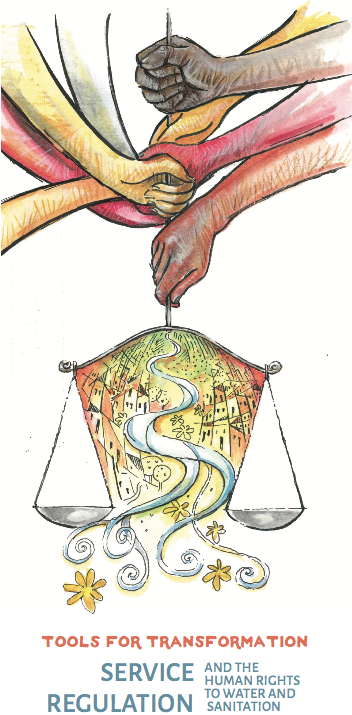
Report A/HRC/36/45, submitted by the Special Rapporteur to the Human Rights Council in September 2017, focuses on the role regulatory frameworks play in the implementation of the human rights to water and sanitation at national level.

art by aicoculturas / anderson augusto

Regulatory frameworks comprise the rules or standards defining how services should be provided to individuals in a given context, and the institutions responsible for monitoring service providers’ compliance with these norms and standards.

The number of States with a regulatory framework for water and sanitation services is increasing and so is the contingent of regulatory actors. However, there is no universal regulatory model. Regulation should be adapted to local circumstances, needs and challenges.

States have interpreted the role of regulation in various ways depending largely on the norms applicable to their particular context and corresponding needs, leading to a range of different institutional arrangements and regulatory models including self-regulation, regulation by contract and regulation by a separate regulatory body.

Being at the interface between policy-makers, service providers and users, while acting as guarantors of accountability, regulatory actors play an essential role in the realisation of the human rights to water and sanitation.

Continue reading “Leo Heller on : Regulation of water and sanitation services”

A third of the glass is three-quarters full

The results of the water and sanitation SDG baseline report are as surprising as finding safely managed drinking water in rural Honduras. But we should be cautious in jumping to conclusions.


It is surprising to meet people like Kristel Castellanos. She is the operator of the drinking water treatment plant of the rural municipality of San Matías in Honduras. She makes sure that the people of San Matías get water that is safely managed. Her work is not common, as rural water supply systems in Honduras rarely have a treatment plant. At most, operators may chlorinate the water, and even that is a big challenge.

Photo: Kristel Castellanos, operator of the San Matías treatment plant, checking the water flow (photo credit: IRC)

As surprising as finding such good water quality management in rural Honduras, were the data on safely managed water supply in the baseline report for the water and sanitation SDGs. According to that report 71% of the World’s population has the same level of service as the people in San Matias, i.e. piped supplies with household connections that is available 24/7 and that has good quality water, or ‘safely managed water’, as the JMP calls it. More surprising is that 56% of the rural population has such water.

Ahead of the publication of the baseline report, there was lots of talk in the WASH sector that thebaseline would come as a big shock. With the adoption of the SDGs, the bar for water supply has been raised. Under the MDGs, we measured whether people had an improved supply. The SDGs require people to have safely managed water. And by raising the bar, it would only be logical that a larger part of the population would not meet that bar. And indeed, the press release that accompanied the report was brought as a shock, using the headline figure that 2.1 billion people don’t have safe water. I found that a way too alarmistic take on the findings of the report. With 71% of the World population having safely managed water the glass is not half full; it is three quarters full!

The figure however is surprising, as the MDG end-line indicated that in 2015, some 58% of the world population had piped on premise (33% in rural areas). Piped on premise doesn’t fully coincide with safely managed services. Safely managed services also require water to be of good quality and availability. One would expect that the percentage of population with safely managed services would be lower than the population with piped on premise in 2015, as there are always piped supplies in which quality and/or availability are not adequate. But, instead we don’t have a glass being half empty; we have one that is three quarters full.

However, we can only see a third of the glass, as Ben Harris mentioned. Sufficient data on safely managed services are only available for half of the countries. No data is available on the biggest countries in the World: China, India, Brazil and Indonesia. Most of the countries for which data are available are in the higher and middle income regions of Europe, Central Asia and Latin America. Only one region – Central and South Asia – has sufficient data on safely managed services in rural areas.

The report is very clear about these methodological limitations. And I think it is truly impressive that the JMP managed to make these estimates in such short time. But, it could have therefore also been more cautious in the message it sent out. It should have either said “more people than expected have safely managed services”, or better “the first estimate shows 2.1 billion don’t have safely managed services, but the data are too limited to jump to strong conclusions”.

Nevertheless, I would say to all sector colleagues: read the report; it really is obligatory reading. And if anything, read the methodological sections. They are not always the most exciting sections to read in a report. But if we don’t understand how the SDGs are monitored, the numbers will really take us by surprise. And by 2030, we should no longer be surprised to find as nicely safely managed water supplies in rural areas as the ones managed by Kristel Castellanos in San Matías.

For  the 2017 JMP report and related data, go to https://washdata.org/

The  original version of this blog is available here: https://www.ircwash.org/blog/third-glass-three-quarters-full.


Still barking up the wrong tree? Community management: more problem than solution

by Dr Ellie Chowns

Received wisdom still suggests that community management is an important component of sustainable water supply in rural areas and small towns. Despite a shift in emphasis “from system to service”, and the idea of “community management plus”, in reality the basic community management model remains standard practice in many countries.  And yet there is plenty of evidence that it is seriously flawed in two key ways.  My own research, a mixed methods study covering 338 water points in Malawi (Chowns 2014, Chowns 2015) demonstrates this clearly.

First, community management is inefficient.  Preventive maintenance is almost never done, repairs are often slow and sub-standard, and committees are unable to collect and save funds.  Average savings are only 2% of the expected level, and only 13% of committees have enough money to buy a single replacement rod.

Equally disappointingly, community management is disempowering. It reinforces existing village power relations, and breeds conflict rather than strengthening social capital.  Often, this conflict is around misuse of funds.  Many committees are defunct; and when they do exist, as one woman said, ‘the committee is higher than the community’ – meaning downward accountability simply doesn’t happen.

There are exceptions, of course, but they are few and far between.  So we need to take off our rose-tinted spectacles and ask why community management is so enduring, despite its failures.

Why does it remain so popular?  Because it’s a fig-leaf for state and donor failure.  Community management enables government officials and donors alike to abdicate responsibility for ensuring long-term sustainable water services.  Instead, they can blame ‘lazy communities’ for ‘lack of ownership’, and suggest that ‘more training is needed’.

I think we need to question the community management model at a more fundamental level. Slight amendments won’t do the job; a more radical re-thinking is required.  Currently, community management transfers responsibility from people with access to finance, skills, and networks (officials & donors) to people with much more limited access to all those things (rural villagers).  This isn’t just ineffective – it’s unfair.

So what might work better?  Here are three suggestions.

  • Build better water points. As a social scientist I am happy to acknowledge that engineering really matters!  There are still far too many poorly-constructed water points being installed.
  • It’s superfluous and expensive to train multiple committees of 10-12 people each, when all that is really needed may be one skilled Area Mechanic with a bike, a phone, and (crucially) an effective means of financing his or her work (see next point…)
  • Pay for results. There’s promising evidence in many sectors that, actually, top-down accountability is part of the solution.  Civil society can’t stand in for a dysfunctional state; investment has to help build state capacity.  Funding needs to flow through ministries and districts, not bypass them – but they need to be held to account for performance, too.

Currently, community management remains the dominant model because it works better for agencies and governments than for communities themselves.  In no other public service sector is so much responsibility placed on users.  We don’t expect communities to bear all the recurrent costs of health or education services, so why should we do so for water?

It’s time to acknowledge that community management is both inefficient and disempowering, stop trying to reform it, and look towards replacing it instead.

Dr Ellie Chowns is a Research Associate at the University of Sheffield, working with Professor Frances Cleaver on a project with the Geneva Water Hub: “The everyday politics of participatory water governance: cooperation and conflict in community management”.

photo: Broken Afridev in Malawi (Erich Baumann, Skat/RWSN 2008)

Call for submissions: IWA Water and Development Congress, Argentina – an opportunity to connect rural and urban

IWA is well known for its many events and publications, but generally with an urban utility focus.  However, the event below is an unusual opportunity to share experiences between urban, peri-urban, small-town and rural water service provides.  Thanks to the initiative of Eleanor Allen, CEO of Water for People, the IWA Water and Development Congress invites submissions on the following topics that are relevant to RWSN member experiences – an in particular those who presented at the RWSN Forum:

  • Raising gender profile in urban/rural (basin) interactions.
  • Developing leadership – diversity, inclusiveness and vision
  • Defining the role of regulation in meeting the SDGs
  • Strengthening the capacity of entrepreneurs to offer water and sanitation services in rural and peri-urban areas
  • Implementing pro-poor approaches
  • Defining tariffs, balancing affordability and cost recovery
  • Initiating and maintaining multi-stakeholder collaboration to achieve improved services
  • Fostering political & social engagement in water issues
  • Ensuring financial sustainability to achieve universal access and service goals.

This is a global event, not just for Latin America, and potentially there is a lot to learn on – and share – on tariff regulation for small rural providers, professionalization of community management, diversity of service delivery models in rural areas, including rural utilities,  and asset management for small rural providers.

So please do consider it if you are looking to reach out to a different audience from the normal rural WASH sector – see the message below for more details and links: http://www.waterdevelopmentcongress.org/

All the best

Sean
RWSN Secretariat

Continue reading “Call for submissions: IWA Water and Development Congress, Argentina – an opportunity to connect rural and urban”

When it comes to water access we keep doing the same thing. And failing

Dear RWSN Members / Chers membres du RWSN (message en français ci-dessous)

We would like to share this thought-provoking article by RWSN member Ajay Paul which appeared on the Guardian’s Global Development Professionals Network. It highlights the need to disclose failure for greater accountability in the sector and sustainability of services.

https://www.theguardian.com/global-development-professionals-network/2017/apr/07/clean-water-everyone-sdg-failure

If you have some experiences you would like to share, the Guardian is collecting people’s stories of project failure and success, particularly around sustainability. Submissions are encrypted and people don’t have to use their real name. To submit yours, you can scroll to the bottom of the article linked above.


****

Chers membres du RWSN,


Nous aimerions partager avec vous cet article écrit par un membre du RWSN, Ajay Paul, qui est apparu en anglais dans la section Global Development Professionals Network du journal The Guardian : En terme d’accès à l’eau on fait toujours la même chose. Et on échoue. Il décrit l’importance de parler des échecs pour faire avancer le secteur et la durabilité des services. Nous l’avons traduit en français et le reproduisons ci-dessous avec permission. L’article original (en anglais) est disponible ici :

https://www.theguardian.com/global-development-professionals-network/2017/apr/07/clean-water-everyone-sdg-failure


Si vous avez des expériences que vous aimeriez partager, le Guardian fait un appel pour demander aux gens de partager leurs histoires d’échec ou de succès de projets, en relation si possible avec la durabilité. Les soumissions sont encryptées et on n’a pas besoin de donner son vrai nom. Pour y contribuer, vous trouverez le formulaire de réponse en bas de la page de l’article dont le lien est ci-dessus.


«  En terme d’accès à l’eau on fait toujours la même chose. Et on échoue 

Cela fait des années qu’on installer des pompes manuelles partout à travers le monde, dans un effort désespéré de fournir de l’eau à ceux qui n’en ont pas. Et dans une certaine mesure, on a réussi; 1,6 milliard de personnes ont eu pour la première fois accès à de l’eau potable entre people 2000 et 2015 [pdf].

Mais derrière cette statistique, la réalité est la suivante: trop de services d’eau et d’assainissement dans les pays en développement ne sont pas fiables, ne répondent pas aux normes et ont besoin de réparations majeures dans les trois à cinq ans qui suivent leur construction.

Ma confession: la façon dont je travaille fait partie du problème.

Je fais toujours la même chose; j’installe une nouvelle pompe ou j’en répare une de cassée, et je forme les gens qui s’en servent. Je leur donne un nom formel– “comité des usagers de l’eau”, ou quelque chose dans le genre– et je m’attends à ce qu’ils gèrent la pompe sans plus d’assistance. Le résultat sans faille est que la pompe arrête de fonctionner, mais je continue à répéter les mêmes actions et à espérer un autre résultat.

Pour être honnête envers moi-même, cette approche a le mérite de fonctionner parfois; peut-être lorsque quelqu’un de dynamique est à la tête du comité. Dans ce cas-là, on met ce projet dans un beau rapport et on en fait la promotion en tant que ‘success story’, ce qui nous aide ensuite à lever plus de fonds.

Mais la plupart du temps, la pompe arrête de fonctionner au bout de quelques années ; à ce moment j’aurai déjà quitté le projet et déménagé dans un autre pays. Une autre ONG ou un autre directeur de projet reprendra la tâche où je l’ai laissée, et le cycle continue.

A chaque fois que nous répétons ce cycle, nous pensons de manière optimiste que notre réponse va fonctionner. Nous attribuons la panne de manière erronée aux politiques du gouvernement, à la corruption des agents locaux, ou à un manque de gestion de la part du comité des usagers de l’eau.

Par conséquence, nous nous mettons en opposition au gouvernement, nous ignorons leurs stratégies et nous ne travaillons pas avec les fonctionnaires locaux.  Nous gérons nos projets en parallèle des leurs, et nous ne faisons pas de lien avec eux ou avec les plans de développement locaux. Quand le projet est fini, nous passons la gestion de la pompe au comité des usagers de l’eau et nous nous en allons. Mais comme nous n’avons pas travaillé avec le gouvernement local, il n’y a pas de raison qu’il apporte une assistance à la communauté lorsque la pompe arrête de fonctionner. L’ONG qui l’a installée est perçue comme étant responsable.

En concevant et en gérant des projets comme je le fais, je fais mon travail. J’ai des outils de suivi qui me permettent de voir combien de pompes on a installé et réparé avec les fonds disponibles. Si je reste dans le budget et que je fais ce que dit l’offre proposée au bailleur, j’ai fait ce que j’avais à faire.

Je n’ai pas besoin de faire le suivi de ce qui se passe après que mon projet soit fini, et je ne suis pas responsible si ou lorsque la pompe arrête de fonctionner. Pourquoi est-ce que je dirais au bailleur qu’une pompe ne marche plus ? Cela pourrait mettre en péril de futurs financements. Cela poserait également une question à laquelle personne n’est capable de répondre : qui est responsable de la réparation d’une pompe cassée?

Mon ONG est soutenue par Viva con Agua et nous avons la chance de pouvoir leur parler de manière ouverte de nos inquiétudes. Ensemble, nous avons décidé surmonter la peur de parler des échecs. C’est seulement en comprenant pourquoi les pompes cassent ou fournissent un service inadéquat que nous pourrons identifier et faire face à la vraie cause.

Nous savons que l’atteinte de l’ ODD6 – eau potable et assainissement pour tous d’ici à 2030 – requiert un meilleur suivi et une plus grande transparence des échecs et des succès une fois que les projets sont finis. Nous avons commence à inclure des fonds pour le suivi post-projet dans tous nos nouveaux projets financés par Viva. Nous avons également commencé un blog – Washaholics Anonymous – où vous pouvez partager vos échecs et vos succès en relation avec la durabilité des services. Après tout,  la première étape dans pour trouver une solution, c’est d’admettre que vous avez un problème.»

New 2017 RWSN Webinar series (18th April – 13th June 2017)

ENG: RWSN is delighted to announce the first of the 2017 series of webinars (on-line seminars) on rural water supply, running every Tuesday from April 18th, 2017 until June 13th, 2017. This series includes 9 weekly sessions on topics, which were presented and debated during the 2016 RWSN Forum in Abidjan, and related to the RWSN themes. For instance, we will find out about local government superheroes and their role in realising the human right to water and sanitation, but also hear about emerging cross-cutting issues such as improving WASH services in protracted crises. Each session will be bilingual, with one webinar in English as well as another language (French or Spanish) as we are trying to cater for a wide and varied audience. The format includes 1-2 presentations, comments from discussants, and a Question & Answer session where all participants are invited to ask questions or make comments. For more details on the first 2017 series, please refer to the table below.
The webinars in English start at 2.30 pm Paris time/ 1.30 pm London time/ 8.30 am Washington DC time. You can check your local time here. To register for one or all of the webinars, and receive an invitation please click on the following link: http://bit.ly/2movPGM

*******

FR : Le RWSN a le plaisir de vous annoncer une nouvelle série de webinaires en 2017 (les séminaires en ligne) qui auront lieu les mardis, du 18 avril 2017 au 13 juin 2017. Cette série comprend 9 sessions hebdomadaires sur des sujets ayant été présentés et débattus lors du RWSN Forum à Abidjan en 2016, et correspondant aux thèmes RWSN. Par exemple, on apprendra le rôle des superhéros des gouvernements locaux pour la réalisation du droit à l’eau et à l’assainissement, mais on découvrira également des sujets transversaux émergeants tels que l’amélioration des services EAH dans les cas de crises prolongées. Chaque session sera bilingue, avec un webinaire en anglais et dans une autre langue (espagnol ou français) selon le sujet, nous souhaitons en effet toujours toucher le public le plus large dans toute sa diversité ! Les thèmes abordés sont le droit humain à l’eau et à l’assainissement, l’auto-approvisionnement, la durabilité des services et le cadre de référence d’applicabilité des technologies. Chaque session comprend 1 ou 2 présentations, des réactions de la part d’un ou plusieurs intervenants et une partie Questions/Réponses lors de laquelle tous les participant(e)s peuvent poser leurs questions ou réagir aux échanges. Vous trouverez le détail de cette première série de webinaires de 2017 dans le tableau ci-dessous.
Les webinaires en français sont à 11h heure de Paris/ 9h heure de Dakar. Pour vérifier l’horaire du webinaire, vous pouvez cliquer ici. Pour vous inscrire à l’un ou à tous les webinaires de cette série et recevoir une invitation, cliquez ici : http://bit.ly/2movPGM

*******
ES: Desde el secretariado del RWSN tenemos el gusto de anunciar la nueva serie de webinars (seminarios en linea), la cual se efectuará entre el 28 de abril y el 13 de junio del 2017. Esta serie comprende 9 sesiones (una sesión por semana) respecto a los temas discutidos en el Foro RWSN en Abidjan en 2016, los cuales corresponden con los ejes temáticos del RWSN. Por ejemplo, aprenderemos sobre el rol de los superhéroes de los gobiernos locales para la realización de los derechos al agua y a saneamiento, pero también descubriremos temas transversales como la mejora de los servicios en agua y saneamiento en crisis humanitarias prolongadas. Cada sesión se implementará en dos idiomas, con una sesión en inglés y la otra o en francés o en español según el tema – de esta forma esperamos poder alcanzar a un público amplio y diverso. El formato incluye, para cada sesión, 1-2 presentaciones en línea, un comentario de al menos una persona, y una sesión de Preguntas y Respuestas donde todos los participantes tendrán la oportunidad de hacer preguntas o comentarios. Para mayor información sobre la serie por favor hacer clic en el vínculo abajo.

Los webinars en español empiezan a la 16.30 (hora de Madrid)/ 09.30 (hora de la Ciudad de México). Se pueden verificar los horarios para su localidad aqui. Para inscribirse a uno o a todos los webinarios de esta serie, haga clic aquí: http://bit.ly/2movPGM

18 April Improving WASH services in protracted crises
18 avril Améliorer les services EAH dans les situations de crises prolongées

25 April Professional Water Well Drilling: Guidance for Ensuring Quality
25 avril Le forage de puits d’eau professionnel : des orientations pour une meilleure qualité

02 May Making rights real – human rights guidance for practitioners
2 mai Faire des droits une réalité – conseils pratiques sur les droits de l’homme pour les professionnels

09 May Making water work for women – inspiring experiences
9 mai Faire fonctionner l’eau pour les femmes : des expériences inspirantes (1ère partie)

16 May Tackling corruption in rural WASH
16 mai S’attaquer à la corruption dans l’eau, l’assainissement et l’hygiène en milieu rural

23. May Making water work for women – inspiring experiences II
23 mai Faire fonctionner l’eau pour les femmes : des expériences inspirantes (2ème partie)

30. May Household wells: A lifeline in Nigeria?
30 mai Les puits d’eau résidentiels: une bouée de sauvetage au Nigéria ?

06 Jun Country-led monitoring
06 juin Le suivi au niveau des pays
6 de junio Monitoreo a nivel de países

13 Jun Searching for universal sustainability metrics for rural water services
13 de junio Buscando maneras universales de medir la sostenibilidad para servicios rurales de agua potable


More Information

» Register