4 lessons about handpump sustainability in Ghana

By Sara Marks, Senior Scientist at Sandec / Eawag
Image
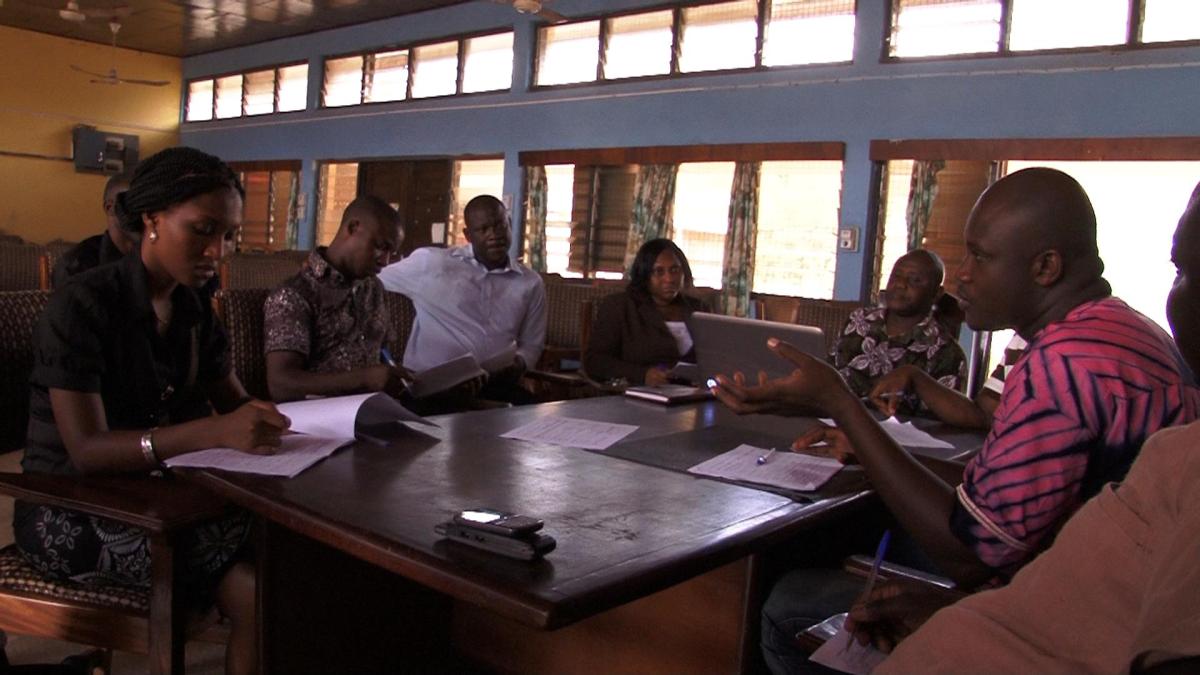
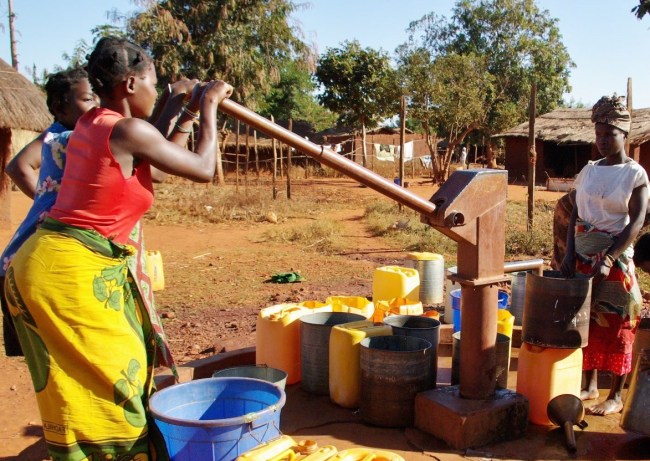
Water users in Ghana (photo: S. Marks)

In 2012 we learned the exciting news that the Millennium Development Goal (MDG) for drinking water access had been met, nearly 3 years ahead of schedule. Yet an important question still looms large: What will it take to ensure that those who have gained access continue to enjoy their water services well into the future? And how will sustainable water services be extended to the remaining unserved?

Continue reading “4 lessons about handpump sustainability in Ghana”

Cautiously optimistic

More useful analysis from the Triple-S team

Sarah Carriger's avatarwater services that last

What will it take to create WASH sectors that work? 

By Patrick Moriarty, Harold Lockwood, and Sarah Carriger

Over the past few months in a series of posts we’ve been advocating for a change in the goal of the WASH sector – from increasing coverage to delivering a service over the long haul; from simply building infrastructure to building infrastructure and managing it into the future to provide services worthy of the name.

And we’ve been calling for a change in approach — from piecemeal projects to strengthening the whole system that delivers services.

We’ve shown how we’ve gone about supporting this type of change in Ghana together with the Community Water and Sanitation Agency, and we’ll continue posting examples from other countries where we’re working.

For now, in the final post in this series, we’d like to talk more about what committing to this change calls for from…

View original post 1,722 more words

Long, expensive & messy: the realities of sector change

Latest update from Triple-S

Sarah Carriger's avatarwater services that last

By Patrick Moriarty, Harold Lockwood, Vida Duti and Sarah Carriger

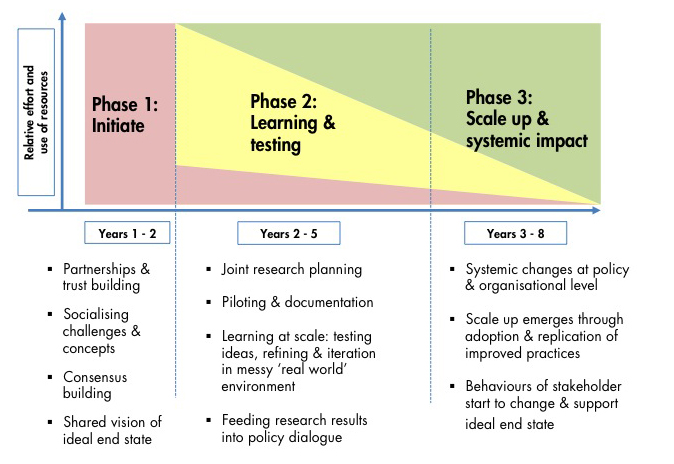
In the last post in this series we described our approach to changing the whole system to deliver water services that people can count on: not just for a few years, but for life. We laid out the main phases in this change: initiation, learning and testing, and finally scaling-up and systemic impact. In this post we’d like to show you what that looks in the real world, using the example of our work in Ghana under the Triple-S (Sustainable Services at Scale) project.

One of the reasons we chose to work in Ghana was that it was typical of many countries: they’d made significant progress in increasing coverage, but they had significant problems, particularly in their rural water sector, with lack of financing for repairs and replacements, weak supply chains for spare parts, and poor support from local government…

View original post 2,116 more words

Musings from Mopti

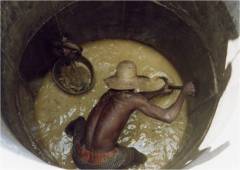
Well digging - Mali (RWSN/Skat)
Well digging – Mali (RWSN/Skat)

by Jonathan Annis, WASHPlus

I’ve spent the last week in the Mopti Region of northern Mali supporting a USAID/WASHplus WASH & Nutrition initiative led by CARE. While behavior change communication related to household- and community-level sanitation, hygiene, and infant nutrition practices is the primary focus of the project, a small sum of funds is dedicated to rehabilitating community water supplies.

The conditions in Mali, as in much of the Sahel, have attracted a plethora of international NGOs, foundations, and do-gooders of every size and intention; increasing access to safe water is a focal point of many of their interventions. The functionality of rural water supplies in Mopti is difficult to ascertain. A number of my colleagues agree that the database of water points maintained by the regional office of the Ministry of Water includes less than 50 percent of the water points existing in the countryside.

Continue reading “Musings from Mopti”

Everyone together for everyone forever: changing the whole system in practice

Sarah Carriger's avatarwater services that last

by Patrick Moriarty and Harold Lockwood

In the first post in this series, we explained why we believe that a paradigm shift is needed in the WASH sector: moving beyond the construction of physical hardware to the universal provision of safe drinking water (and sanitation) services worthy of the name.

Because of the number of activities and actors involved, water and sanitation service delivery is inherently complex. And as much as we may be drawn to the idea of straightforward technological or market-based solutions, this complexity means such solutions will never get us all the way to sustainable services for everyone – particularly for the poorest people in the hardest to reach and most remote areas.

It is not enough that one individual or organisation begins to perform better or that an improvement is made in some technical aspect of service delivery. The whole system of individuals, organisations, technologies and…

View original post 1,220 more words

Changing the whole system to provide water, sanitation and hygiene services that last

editor's avatarwater services that last

By Patrick Moriarty and Harold Lockwood –

For the last six years or so, primarily through our WASHCost and Triple-S initiatives, IRC has engaged deeply with the challenges of what it takes to provide sustainable water, sanitation and hygiene services. We think that we’ve identified many parts of the puzzle (and so have many others working in the same direction – we’re keenly aware that we’re not the only show in town) and we’ve been sharing these regularly through our websites, papers and blogs. But, what does it take for these piecemeal findings to be taken up and to lead to wholesale change: ensuring that the post-MDG goals of universal access with sustainable WASH services can be achieved by 2030?

View original post 1,251 more words

Who serves the in-betweeners?

Stef Smits's avatarwater services that last

By: Marieke Adank, IRC

Small towns and peri-urban areas are by definition found in the grey area in between the truly urban and the truly rural. Also in terms of water supply, fifty shades of grey are found in these types of settlements. People living here often fall in between the cracks of urban utilities and rural water committees. Their water supplies have characteristics of both these service delivery models – though not necessarily the best of those two worlds.

View original post 578 more words

India rural water supply: an orphan of reforms?

dietvorst's avatarwater services that last

By V. Kurian Baby, India Country Director, IRC

Community rural water supply (RWS) in India is an orphan of partially implemented demand responsive sector reforms on the one hand and unsuccessful decentralisation on the other. Historically, rural water supply in India has been outside the sphere of governments (NRDWP 2013). The 73rd and 74th constitutional amendment (Act 1992) made drinking water and sanitation a constitutional mandate of the three tier system of Panchayat Raj Institutions (PRIs). Even after two decades, the decentralisation process is an unaccomplished dream lying between de-concentration and devolution. In many states the progress is either stalled or reversed.

View original post 468 more words

Users perception of rural water services in Ghana: A case of satisfaction or dissatisfaction?

Stef Smits's avatarwater services that last

By: Tyhra Kumasi, Senior Research Officer, Triple-S Ghana

Dora is a 33 year old teacher living in Agbedrafo in the Akatsi South District. She depends on the only handpump in the community for her daily domestic chores; however she laments the difficulties in getting access to fetch water. According to Dora “even though fetching is on a first-come-first-serve basis, people bring very big receptacles and containers that makes it difficult, if not impossible, for others to get the opportunity to fetch. Because of this I am sometimes unable to fetch enough. In such a situation I borrow from a neighbour and replace later”. The problem with the borehole is that, after fetching the first few buckets it becomes difficult and hard to pump, one has to wait for a while, about 15 minutes to resume pumping for water. This is worse in the dry season, when she has to…

View original post 1,274 more words

Handpump management: a rearguard battle or a necessity?

Image
Stef Smits (IRC)

Summary of Post-Webinar Discussion on LinkedIn Group Regarding Handpump Management (click to read and join in)

Stef Smits summarises some key points arising from the webinar and the discussion that followed:

Handpumps have still a role to play in 1) small dispersed rural communities [of less than let’s say 2000 people], and in 2) bigger or more dense communities as a complementary or back-up source to piped supplies. They are and will remain an important source of supply and need to have proper management arrangements. These arrangements should – as much as possible – follow arrangements for other communal supplies, or even drawing on good practices from urban management and when they are located close to a town they could even be managed by an urban provider under a “service area” approach

Professional management arrangements exist, but they do cost. The case of Vergnet comes down then to about 3 US$/family/month or 36 US$/family/year. This is in line with the WASHCost findings, which showed that all minor O&M ánd capital maintenance would be about 3 US$/person/year, or some 15 US$/family/year. But if you add the costs of professional support to that (e.g. in the form of handpump mechanics, or local government support), another 15 US$/family/year should be added, summing to about 30 US$/family/year. So, if we accept that this figure gives the right of order magnitude, rightfully the question may be asked on who pays for what.

Continue reading “Handpump management: a rearguard battle or a necessity?”